
Aurora Expeditions Launches 2026-27 Antarctic Season: 27 Voyages and Onboard Science at Sea

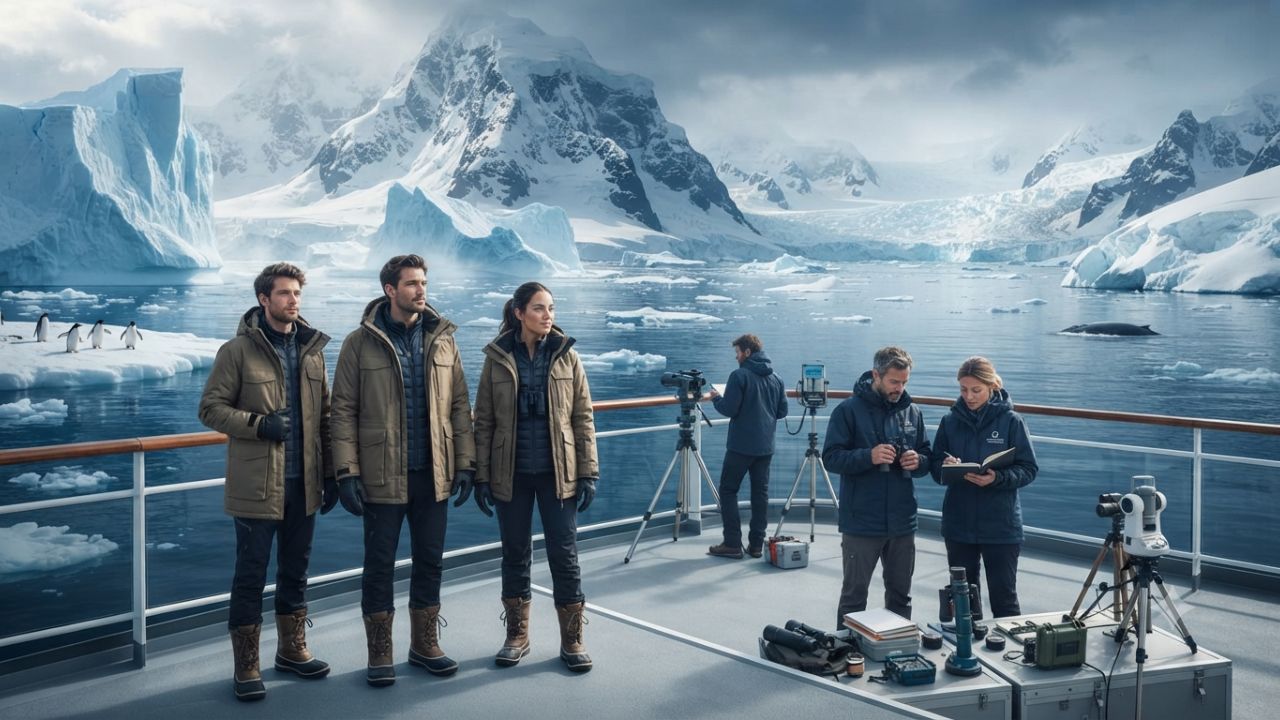
Image generated by AI
Aurora Expeditions has officially launched its 2026-27 Antarctic season, unveiling 27 high-latitude polar voyages across three purpose-built expedition vessels featuring an expanded "Science at Sea" research initiative. Operating the Greg Mortimer, Sylvia Earle, and newly introduced Douglas Mawson, the Australian-founded B Corp certified polar operator will deploy 18 scientists across 11 research-dedicated itineraries to conduct field studies on whale ecology, penguin health, and deep-sea biodiversity while guiding travelers across the Southern Ocean.
Polar Fleet Capabilities: Deploying the Greg Mortimer, Sylvia Earle, and Douglas Mawson
The 2026-27 Antarctic schedule expands Aurora Expeditions' multi-vessel capacity across high-latitude polar corridors. Ranging from 9-day quick peninsula crossings to comprehensive 34-day semi-circumnavigations of the Antarctic continent, the itineraries are structured around small-ship access to fragile landing sites regulated under the International Association of Antarctica Tour Operators (IAATO).
All three ships feature Ulstein X-BOW hull designs engineered for smooth ocean transits through the Drake Passage, low-emission propulsion systems, and dedicated science centers. The Sylvia Earle, named after the renowned oceanographer, serves as the primary mobile research platform, while the newly launched Douglas Mawson expands capacity for long-range voyages into remote East Antarctica and the Ross Sea.
By capping passenger capacities to facilitate rapid Zodiac shore operations, the fleet combines high-volume wilderness access with environmental stewardship compliance.
2026-27 Antarctic Program Framework & Scientific Operations
The table below provides a comprehensive breakdown of fleet allocation, scientific partnerships, research project areas, and geographic destinations for Aurora Expeditions' 2026-27 polar program:
| Expedition Program Metric | 2026-27 Season Operational Framework |
|---|---|
| Expedition Operator | Aurora Expeditions (Certified B Corp Polar Operator) |
| Total Season Voyages | 27 scheduled expedition sailings |
| Voyage Duration Range | 9 days to 34 days |
| Active Expedition Vessels | Greg Mortimer, Sylvia Earle, Douglas Mawson |
| Dedicated Science Sailings | 11 research-integrated expedition voyages |
| Onboard Scientists & Researchers | 18 field specialists across marine biology, oceanography, and ornithology |
| Core Research Projects | 5 multi-institutional field studies (Whales, Penguins, Disease, Biodiversity, Abyssal Fauna) |
| Institutional Partners | UC Santa Cruz, Univ of Tasmania, Reef Life Survey, Oceanites, Te Papa Tongarewa Museum |
| Geographic Sectors Covered | Antarctic Peninsula, Antarctic Circle, Weddell Sea, South Georgia, Falklands, Ross Sea, East Antarctica |
Science at Sea: Five Field Projects Transforming Polar Tourism
Unlike standard expedition cruises where scientific lectures are passive, Aurora's "Science at Sea" framework integrates 18 active field researchers into daily shipboard operations across 11 dedicated voyages. Passengers observe real-time data collection, participate in citizen science programs, and attend briefings detailing preliminary field findings.
The five primary research initiatives for the 2026-27 season include:
- Whale Ecology & Acoustic Tracking: Conducted in partnership with researchers from the University of California, Santa Cruz, studying humpback and minke whale feeding behaviors, fluke identification, and ocean noise impacts.
- Penguin Population Census: Partnering with non-profit research organization Oceanites to conduct long-term nest counts and monitor breeding success amidst changing sea-ice dynamics.
- Wildlife Health & Pathogen Monitoring: Analyzing avian flu strains, parasite loads, and environmental stressors impacting seal and seabird colonies.
- Sub-Antarctic Marine Biodiversity: Collaborating with the Reef Life Survey and the University of Tasmania to execute underwater transect surveys of coastal kelp forests and benthic species.
- Deep-Sea Abyssal Exploration: Partnering with New Zealand's Museum of New Zealand Te Papa Tongarewa to deploy deep-water camera rigs studying colossal squid habitats and abyssal fauna in the Ross Sea.
High-Latitude Geography: Exploring South Georgia, Weddell Sea, and East Antarctica
Aurora's 2026-27 itinerary map spans seven distinct geographical sub-regions within the Southern Ocean. Beyond classic Antarctic Peninsula highlights such as Paradise Harbor and the Lemaire Channel, the season emphasizes remote, less-visited sectors.
Itineraries crossing the Antarctic Circle (66°33′ S) push deep into ice-bound territory, while Weddell Sea voyages navigate heavy pack ice to visit historical Emperor penguin habitats. Sub-Antarctic voyages to South Georgia and the Falkland Islands offer dense wildlife aggregations, hosting king penguin rookeries numbering over 100,000 birds alongside massive elephant seal harems.
Aurora Expeditions' 2026-27 season features 27 voyages emphasizing citizen science and deep-continent exploration. Travelers planning these expeditions should coordinate their transit through official gateways like the Argentine Government, as most Antarctic departures originate from Ushuaia.
For experienced polar travelers, long-range itineraries aboard the Douglas Mawson connect East Antarctica and the Ross Sea, visiting historic polar exploration huts preserved from the heroic age of Antarctic exploration.
Key Takeaways
- 27 Antarctic Sailings: Aurora Expeditions scheduled 27 polar voyages ranging from 9 to 34 days for the 2026-27 Antarctic season.
- Three-Ship Fleet Operation: Expeditions will deploy the Greg Mortimer, Sylvia Earle, and Douglas Mawson across the Southern Ocean.
- 18 Field Scientists Onboard: 11 dedicated voyages will host 18 researchers conducting active field science during passenger sailings.
- Five Active Research Projects: Field studies cover whale ecology, penguin colony tracking, wildlife health, underwater biodiversity, and deep-sea exploration.
- Expansive Geographic Scope: Itineraries encompass the Antarctic Peninsula, Weddell Sea, South Georgia, Falkland Islands, Ross Sea, and East Antarctica.
FAQ: Aurora Expeditions 2026-27 Antarctic Season
How many total voyages will Aurora Expeditions run during the 2026-27 Antarctic season?
Aurora Expeditions will operate 27 polar voyages ranging from 9 to 34 days during the 2026-27 season.
Which expedition ships will operate Aurora's 2026-27 Antarctic voyages?
The season will be operated by three polar fleet vessels: the Greg Mortimer, Sylvia Earle, and Douglas Mawson.
How does the "Science at Sea" program work for passengers onboard?
On 11 dedicated science voyages, 18 field researchers conduct active studies (such as whale tracking and penguin censuses), inviting passengers to participate in data collection and educational briefings.
Which research institutions are partnering with Aurora Expeditions?
Research partners include UC Santa Cruz, the University of Tasmania, Oceanites, Reef Life Survey, and the Museum of New Zealand Te Papa Tongarewa.
Navigating the frozen reaches of the Southern Ocean, pairing scientific inquiry with passenger exploration paves the path for sustainable polar conservation.
Related Travel Guides
Disclaimer
This article is for informational and educational purposes only. It does not constitute legal, financial, or professional advice. While we strive to provide accurate and up-to-date information, travel policies, regulations, and conditions change rapidly. Always verify information with official sources before making travel decisions. Nomad Lawyer makes no representations about the accuracy, reliability, completeness, or suitability of the information provided. Readers should consult qualified professionals for advice specific to their circumstances. The views expressed in this article are those of the author and do not necessarily reflect the views of Nomad Lawyer.
Raushan Kumar
Founder & Lead Developer
Full-stack developer with 11+ years of experience and a passionate traveller. Raushan built Nomad Lawyer from the ground up with a vision to create the best travel and law experience on the web.
Learn more about our team →