
Atlanta's Hartsfield-Jackson Gets 63 Alstom Trains: How 90-Second Headways Transform US Airport Mobility in 2026
Hartsfield-Jackson Atlanta International Airport deploys 63 next-generation Alstom Innovia APM vehicles, reducing train intervals to 90 seconds and reshaping how 95 million annual passengers move between terminals.

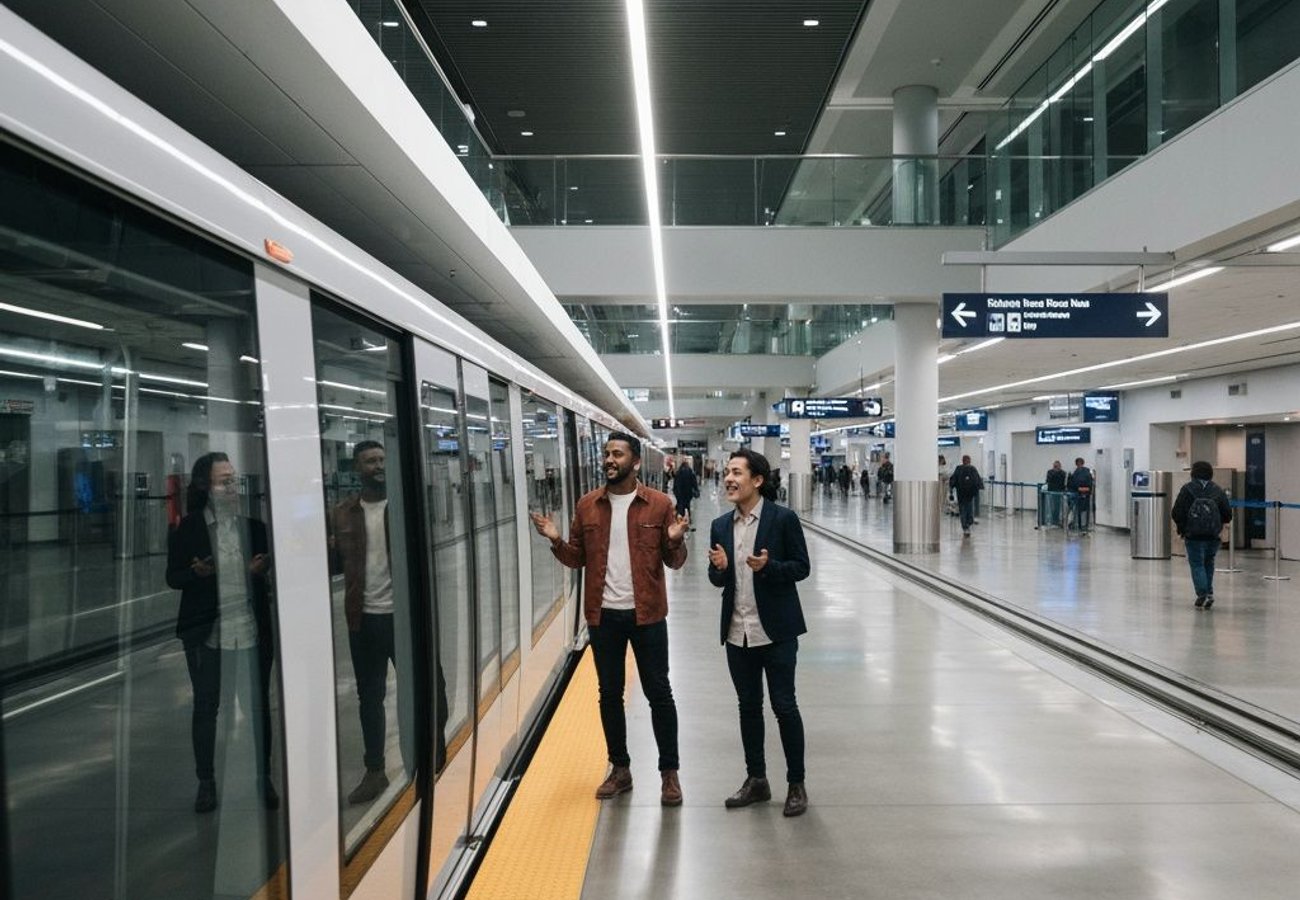
Image generated by AI
The Quiet Revolution Nobody's Talking About
Hartsfield-Jackson Atlanta International Airport (ATL) just pulled off something most travelers will never notice—but should. Beginning June 2026, 63 next-generation Alstom Innovia APM R vehicles are rolling into service, fundamentally restructuring how millions of passengers move between terminals at one of the world's busiest aviation hubs.
This isn't flashy. There are no new gates. No expanded runways. But it matters more than you'd think. ATL handled 95 million passengers in 2025, and that number is climbing. Peak summer travel combined with major sporting events means the airport's internal circulatory system is under unprecedented pressure.
The Plane Train—that automated shuttle most people ignore while rushing to their gate—is now the operational backbone of ATL's efficiency. And it was aging badly.
Why Internal Airport Mobility Actually Determines Airport Success
Here's what airports get wrong: they obsess over terminals and runways while ignoring the infrastructure that makes or breaks passenger experience.
Internal transit delays ripple through everything. A bottleneck at the Plane Train platform doesn't just inconvenience travelers—it cascades into missed connections, delayed security queues, and gate management chaos. The FAA's efficiency standards increasingly recognize this. When a passenger can't transfer between terminals quickly, the entire airport's operational capacity effectively shrinks.
Reddit: "The Plane Train is the difference between making a 45-minute connection and missing your flight. I've seen people run for it like their lives depend on it." — r/travel
ATL's upgrade addresses exactly this vulnerability. With the original system running trains at 107-second intervals, capacity was maxed out. The new configuration reduces headways to 90 seconds during peak periods—a modest-sounding change that actually unlocks structural expansion without rebuilding the entire system.
The Technology: Alstom's Modular Approach to Scale
Alstom Innovia APM R units represent a different engineering philosophy than legacy systems. Rather than requiring complete overhaul, these vehicles work within existing infrastructure while delivering measurable improvements.
Each unit brings operational gains:
- Quieter cabin operation (reduced noise pollution for passengers and staff)
- Advanced door safety systems with redundant sensors
- Modern LED displays and real-time digital information
- Energy efficiency improvements over 40-year-old legacy fleet
- Manufactured in West Mifflin, Pennsylvania, keeping production domestic
The rollout starts with four operational units, expanding to 73 total cars once the 63-vehicle delivery completes. This staged approach allows ATL to validate performance in live conditions before full fleet integration—smart risk management in a 24/7 operation.
The real innovation? New turnback infrastructure. Trains can now reverse direction without disrupting following services. Add 13 refurbished guideway switches, and you've reduced breakdown risk in a system running almost continuously. These aren't sexy upgrades, but they're how you prevent cascading failures in high-density environments.
The Capacity Leap: What 90 Seconds Actually Means
Drop train intervals from 107 to 90 seconds, and you're not just running slightly faster trains. You're restructuring passenger flow fundamentally.
The system now supports:
- Up to 15 simultaneous trains on the network
- Reduced waiting time at connection points
- Improved crowd distribution across platforms
- Faster response to arrival/departure wave surges
During peak summer days when ATL sees 260,000+ passengers, these seconds compound into millions of passenger-minutes saved. That's not trivial. That's the difference between a smoothly functioning airport and one sliding toward operational gridlock.
Most airports overlook this layer entirely. They count gates and runways but ignore the micro-mobility systems that determine whether passengers actually reach those gates on time.
Mega-Events and the Airport City Model
ATL isn't upgrading just for routine operations. The airport is preparing for sustained mega-event demand. International sporting events, seasonal travel surges, and growing international connectivity all create unpredictable spikes in terminal traffic.
Modern airports have evolved beyond being "transit points." They're now airport cities—complex ecosystems where internal mobility functions like urban metro networks. The Plane Train upgrade reflects this reality.
This shift changes how airport planners think:
- Internal mobility is as critical as runway capacity
- Passenger experience depends on micro-transit speed and reliability
- Infrastructure resilience must handle event-driven surges without degradation
- Bottlenecks inside terminals cause more delays than aircraft scheduling
By addressing this often-overlooked layer, ATL is essentially future-proofing its operations while many global airports continue prioritizing visible infrastructure over functional flow systems.
What Global Airports Are Still Missing
Walk through any major international airport and you'll see massive investment in lounges, retail, and terminal aesthetics. But mention automated people movers, and you'll get blank stares from decision-makers.
The blind spot is structural. Airports measure success by:
- Number of gates
- Runway capacity
- Terminal square footage
What they should measure:
- Passenger delay caused inside airport boundaries (not just airside)
- Connection success rates per terminal pair
- Minutes saved per passenger through transit optimization
- Scalability without infrastructure overhaul
ATL's investment signals something others are missing: small improvements in internal transit scale into massive operational gains. A 17-second headway reduction doesn't sound revolutionary. But across millions of annual passengers, it's the difference between efficiency and congestion.
The Long Game: Sustainability and Adaptability
The Alstom partnership positions ATL for two critical future demands: environmental compliance and technological adaptability.
Legacy systems lock airports into fixed capacity with massive overhaul costs. The Innovia APM R platform is designed for software updates and optimization without structural changes. That's future-proofing.
Expected long-term benefits include:
- Lower energy consumption per passenger journey
- Reduced maintenance downtime through redundancy
- Scalable capacity for unpredictable passenger surges
- Integration with airport-wide digital systems and wayfinding
As global aviation capacity expands and environmental standards tighten, airports like ATL that invest in intelligent, efficient internal mobility will maintain competitive advantage. Those that don't risk becoming operationally obsolete despite having modern terminals.
The Blueprint for Airport Engineering Globally
Hartsfield-Jackson's transformation isn't just an Atlanta story. It's a case study in how major hubs must think about infrastructure hierarchy.
The hierarchy usually gets inverted: airports pour billions into visible infrastructure while starving the unglamorous systems that actually move people. ATL reversed that calculus. The Plane Train upgrade proves that sometimes the most critical infrastructure investments are the ones passengers barely notice.
As international travel continues recovering and expanding, airports lacking efficient internal mobility will face systemic congestion. Those with modern automated transit will maintain passenger flow even during demand surges.
The future of aviation isn't only about flying faster. It's about moving smarter on the ground.
Atlanta's already running that race—while others are still building terminals.
Related Travel Guides
Disclaimer
This article is for informational and educational purposes only. It does not constitute legal, financial, or professional advice. While we strive to provide accurate and up-to-date information, travel policies, regulations, and conditions change rapidly. Always verify information with official sources before making travel decisions. Nomad Lawyer makes no representations about the accuracy, reliability, completeness, or suitability of the information provided. Readers should consult qualified professionals for advice specific to their circumstances. The views expressed in this article are those of the author and do not necessarily reflect the views of Nomad Lawyer.
Raushan Kumar
Founder & Lead Developer
Full-stack developer with 11+ years of experience and a passionate traveller. Raushan built Nomad Lawyer from the ground up with a vision to create the best travel and law experience on the web.
Learn more about our team →