
Travel Chaos Devastates Atlanta Airport as Delta, United, and Etihad Suffer 226 Massive Flight Delays and 13 Cancellations: Latest Airline News
A highly disruptive operational bottleneck at Hartsfield-Jackson Atlanta International Airport violently strands passengers as major carriers suffer severe cascading delays and sudden groundings.

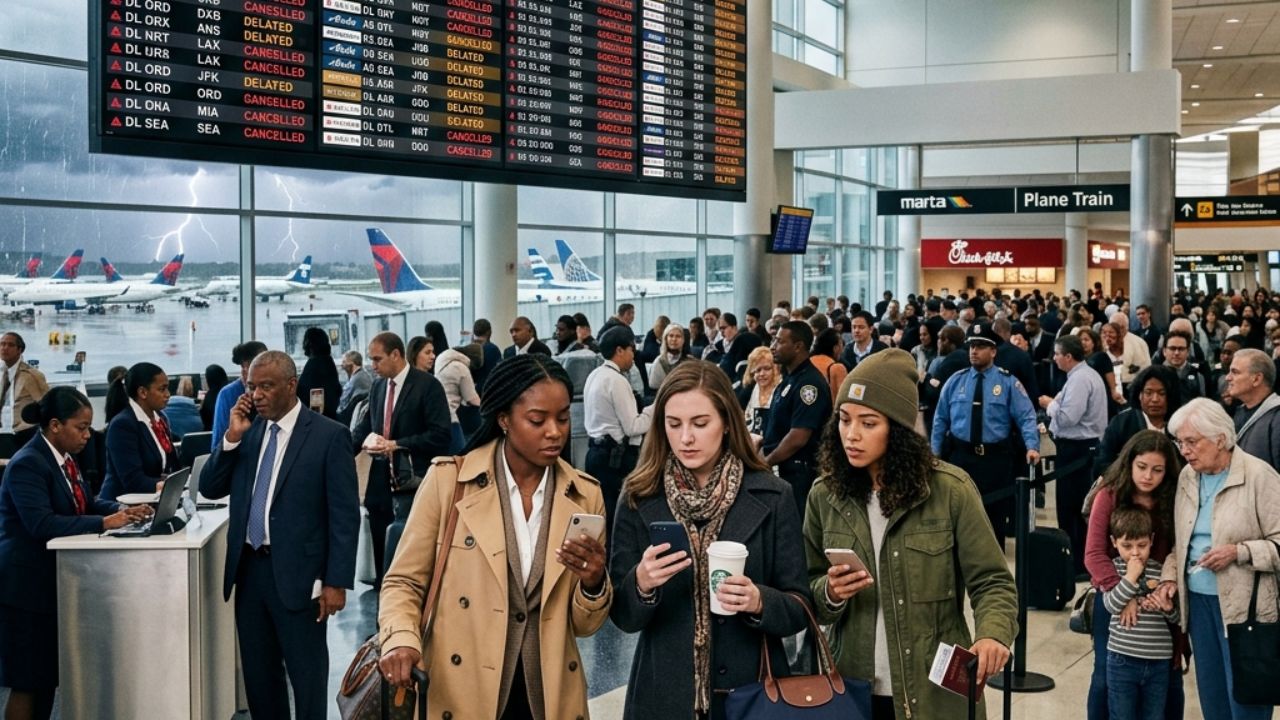
Image generated by AI
A Sudden Logistical Bottleneck in the American South
While the broader global passenger network frequently battles unpredictable localized weather events and massive transcontinental congestion, a highly disruptive wave of operational friction is currently severely straining operations across the busiest airport in the world. Delivering highly urgent, breaking airline news, verified flight data confirms that Hartsfield-Jackson Atlanta International Airport (ATL) succumbed to an unexpected and highly frustrating scheduling bottleneck on May 31, 2026. While desperate travelers attempt to navigate sudden, terrifying airport disruptions, these exclusive aviation updates reveal that major mainline and international carriers—including Delta Air Lines, Alaska, Etihad, United, and Aeroméxico—were violently forced into aggressive ground holds. This resulted in an incredible 226 severe rolling delays and 13 outright flight cancellations. By aggressively stalling critical domestic and transatlantic departures across this massive hub, this localized failure has triggered uncontrollable, rolling travel chaos, leaving thousands of passengers entirely stranded and completely severing vital routes connecting major cities across the US, Canada, the UK, Belgium, and Sint Maarten.
Expanded Overview: The Scale of the Atlanta Gridlock
The sudden execution of these mass cancellations and severe delays serves as an undeniable example of how rapidly carrier-specific operational hurdles can completely dismantle a major aviation hub's highly optimized schedule. Historically, Hartsfield-Jackson Atlanta operates as the premier, highly efficient mega-hub connecting the American South to massive transcontinental and intercontinental connection points.
However, the sheer impact of today's disruption has completely dismantled that reliability. Because Atlanta serves as the absolute core of Delta's massive global network, these cascading service interruptions quickly began affecting thousands of passengers travelling domestically and internationally. The disruptions are directly caused by a highly toxic combination of operational reasons, including severe gate congestion, broken aircraft rotations, sudden crew availability issues, and incredibly high passenger volumes. Furthermore, unpredictable weather conditions actively compounded the logistical nightmare. Passengers flying from Hartsfield-Jackson Atlanta are experiencing terrifyingly extended wait times, suddenly rescheduled departures, and broken connections.
Section-Wise Breakdown of the Hub Disruptions
Domestic Hubs Severely Pinched
The massive bottleneck in Atlanta instantly pushed devastating ripple effects across the entire United States aviation network. Key domestic airports suffered massive cascading delays directly tied to the operational halt at ATL. Boston Logan International (BOS) absorbed 4 delayed inbound flights, reflecting a 28% delay rate for that specific corridor. Houston Bush Intercontinental (IAH) similarly logged 4 delayed flights (33%). Miami International (MIA) recorded 4 delays (25%), while Chicago Midway (MDW) absorbed 3 delays representing an incredible 37% delay rate.
Operations bounding for Denver International (DEN) and LaGuardia (LGA) both logged 3 severe delays. Meanwhile, Orlando International (MCO) recorded 2 delays, matching Newark Liberty (EWR) which also suffered 2 delayed inbound flights. Beyond the massive hubs, localized regional networks were also severely fractured. Affected airports include Birmingham-Shuttlesworth (BHM), Piedmont Triad (GSO), Pensacola (PNS), Des Moines (DSM), Reagan National (DCA), Lehigh Valley (ABE), Southwest Georgia Regional (ABY), Augusta Regional (AGS), and Nashville International (BNA).
International Ripple Effects Reach Europe and the Caribbean
Hartsfield-Jackson’s massive international network is violently impacted today, completely severing intercontinental corridors. Passengers travelling to Europe and Canada are experiencing incredible friction. London Heathrow (LHR), Vancouver International (YVR), and Frankfurt International (FRA) all suffered cascading inbound delays.
More terrifyingly, specific international corridors experienced a 100% total delay rate for scheduled departures out of Atlanta, meaning absolutely nothing took off on time. This includes vital routes bound for Brussels (BRU), Calgary International (YYC), and Princess Juliana International (SXM) in Sint Maarten. Flights bound for Naples International and Honolulu (Daniel K Inouye) also suffered devastating 100% delay rates.
Delta and United Bear the Brunt of Operations
While specific flight numbers are heavily obfuscated by the sheer volume of the crisis, the disruptions violently impact a massive range of carriers. Domestically, Delta Air Lines, American, Southwest, Frontier, and regional feeder Endeavor Air account for the absolute vast majority of the 226 delayed flights. Internationally, major foreign flags—including Air Canada, Air France, Etihad Airways, Turkish Airlines, and Virgin Atlantic—are all heavily affected by the gate congestion.
Verified Atlanta Flight Disruption Metrics Table
To fully comprehend the highly severe operational parameters and massive logistical breakdown dictating this localized network collapse, the following tables explicitly detail the exact delay metrics across the heavily impacted domestic and international destinations connected to Atlanta:
Domestic US Airports Impacted by Atlanta Delays:
| Airport | Delayed Flights | Delay Percentage |
|---|---|---|
| Boston Logan International (BOS) | 4 | 28% |
| Miami International (MIA) | 4 | 25% |
| Houston Bush Intercontinental (IAH) | 4 | 33% |
| Chicago Midway International (MDW) | 3 | 37% |
| Denver International (DEN) | 3 | 20% |
| LaGuardia (LGA) | 3 | 21% |
| Orlando International (MCO) | 2 | 8% |
| Newark Liberty International (EWR) | 2 | 14% |
International Destinations Impacted by Atlanta Delays:
| Airport | Delayed Flights | Delay Percentage |
|---|---|---|
| Calgary International (YYC) | 2 | 100% |
| London Heathrow (LHR) | 1 | 33% |
| Vancouver International (YVR) | 1 | 33% |
| Frankfurt International (FRA) | 1 | 50% |
| Brussels (BRU) | 1 | 100% |
| Princess Juliana International (SXM) | 1 | 100% |
Passenger Impact: Stranded Commuters and Emergency Rebooking
For the modern domestic commuter and transatlantic tourist, the passenger impact of these massive, sudden disruptions is physically exhausting. With an incredible 226 rolling delays, the regional backlog inside the Hartsfield-Jackson terminals is expanding exponentially. Disgruntled travelers face incredibly lengthy queues while gate agents desperately scramble to rebook missed connections.
Stranded travelers must immediately reach out to the airline’s customer service either in person at the airport or over the phone. If caught in the massive lines at Atlanta, utilizing the airline’s online chat system or mobile application can heavily bypass the physical wait. Passengers are strongly urged to aggressively familiarize themselves with airline policies regarding delays. Preparing essential supplies—including snacks, water, and critical medications—is absolutely vital to managing these heavily extended tarmac and terminal waits.
Industry Analysis: The Devastating Ripple of Mega-Hub Congestion
From a macroeconomic and industry operations perspective, the localized flight disruptions at Atlanta underscore the severe vulnerability of interconnected global networks. For travel analysts, these metrics paint a highly terrifying picture of localized volatility ripple-effecting directly into massive international corridors. When the busiest airport in the world suffers gate congestion, aircraft rotations violently break down. The cascading delays underscore the incredible global ripple effect that emerges when long-haul international flights lose their coordinated departure slots.
Conclusion: A Highly Volatile Recovery Phase for Atlanta
The sudden, highly publicized reporting of 13 outright cancellations and 226 massive rolling delays at Hartsfield-Jackson Atlanta International Airport is a textbook example of how rapidly localized operational constraints can devolve into terminal gridlock. By completely severing critical domestic connections and violently stalling international trunk routes to the UK and Canada, the disruption has proven that global scheduling architectures remain highly vulnerable to sudden friction. For now, the focus entirely shifts toward operational recovery as Delta and its international partners work aggressively to clear the massive backlog and stabilize the world's busiest airport.
Key Takeaways
- Massive Hub Gridlock: Hartsfield-Jackson Atlanta International Airport (ATL) suffered a highly concentrated wave of 226 flight delays and 13 absolute cancellations.
- Delta and United Devastated: Domestic operators including Delta, United, American, and Southwest absorbed incredibly massive rolling delays.
- International Corridors Severed: Etihad, Air Canada, Air France, and Turkish Airlines struggled with gate congestion, delaying routes to London, Brussels, and Frankfurt.
- 100% Delay Rates: Routes bound for Brussels, Calgary, and Sint Maarten recorded a devastating 100% delay rate for scheduled departures.
- Passenger Chaos: Stranded travelers are heavily urged to utilize airline mobile apps for instant rebooking and to prepare essential supplies for extended terminal waits.
Disclaimer: The specific flight cancellation counts, delay percentages, and destination impacts presented in this report are based on verified flight tracking data regarding operations at Hartsfield-Jackson Atlanta International Airport on May 31, 2026. Official causes for this operational breakdown, subsequent network recovery timelines, and passenger compensation procedures are highly volatile and subject to continuous, real-time update. Affected passengers are urgently advised to monitor their specific booking status directly via their airline's official portal.
Disclaimer
This article is for informational and educational purposes only. It does not constitute legal, financial, or professional advice. While we strive to provide accurate and up-to-date information, travel policies, regulations, and conditions change rapidly. Always verify information with official sources before making travel decisions. Nomad Lawyer makes no representations about the accuracy, reliability, completeness, or suitability of the information provided. Readers should consult qualified professionals for advice specific to their circumstances. The views expressed in this article are those of the author and do not necessarily reflect the views of Nomad Lawyer.
Kunal K Choudhary
Co-Founder & Contributor
A passionate traveller and tech enthusiast. Kunal contributes to the vision and growth of Nomad Lawyer, bringing fresh perspectives and driving the community forward.
Learn more about our team →