
Hundreds of Travelers Impacted Over Asia as 3,744 Delays and 268 Cancellations Hit Hubs

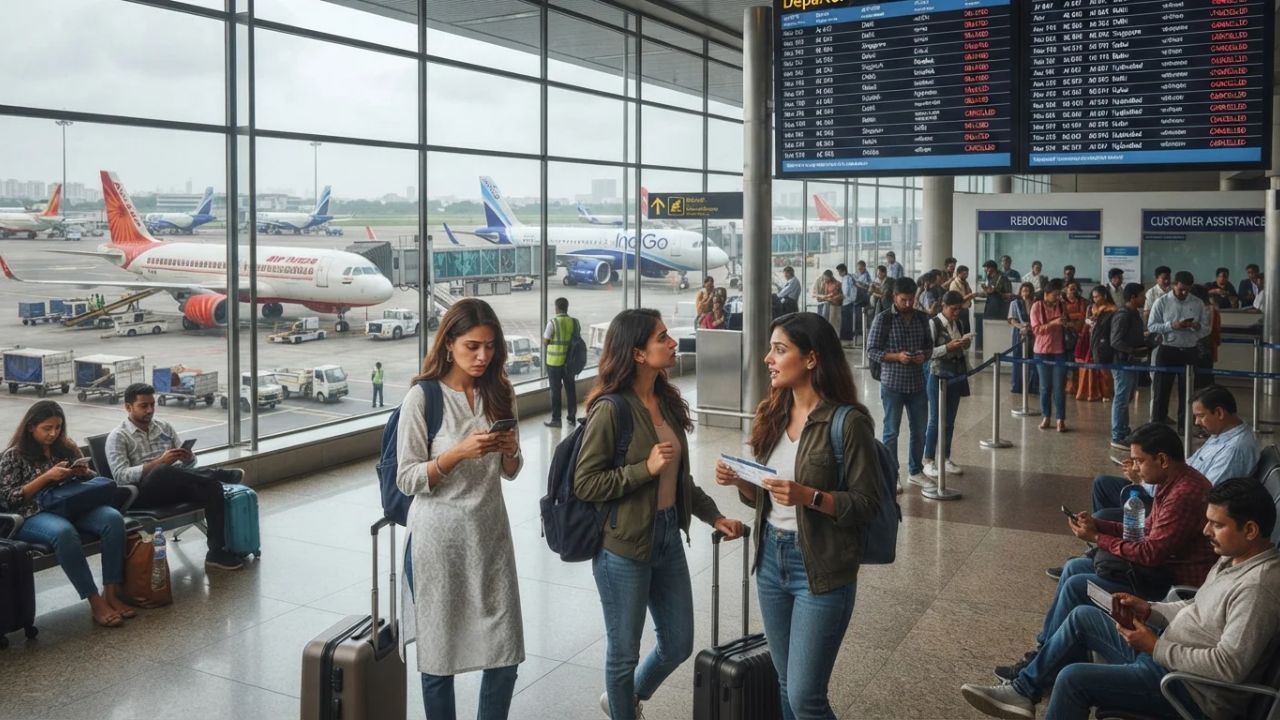
Image generated by AI
Cascading across major intercontinental transit arteries from East Asia to the Arabian Peninsula, an acute wave of 3,744 flight delays and 268 cancellations paralyzed commercial airline operations on September 17 and 18, 2026. Verified operational data monitored via FlightAware confirms that severe scheduling strain at vital connecting gateways—led by Shanghai Pudong with 318 delays and Jakarta Soekarno-Hatta with 15 cancellations—triggered a multi-carrier operational breakdown that compromised thousands of long-haul passenger transfers.
Network Fragility Across Primary Hubs: The Anatomy of a Multi-Hub Gridlock
The severe disruption rippling through Asian airspace highlights the delicate equilibrium governing modern mega-hubs. Unlike isolated delays caused by local ground equipment snags, the September 17–18 operational crisis reflects structural airspace congestion colliding with tight aircraft turnarounds. When high-density airports in East Asia, South Asia, and the Gulf experience simultaneous ground holds, the resulting rotational delays reverberate across entire global alliances.
China’s civil aviation corridor formed the primary epicenter of the disruption. Shanghai Pudong International Airport (PVG) registered the highest overall delay volume across the continent, recording 318 delayed flights alongside 12 outright cancellations. Southern and northern Chinese hubs absorbed parallel shocks: Guangzhou Baiyun (CAN) logged 161 delays and 2 cancellations, Shenzhen Bao’an (SZX) posted 112 delays and 4 cancellations, while the dual gateways serving the capital—Beijing Daxing (PKX) and Beijing Capital (PEK)—accumulated a combined 175 delays and 19 cancellations.
In South Asia, India’s primary metro airports faced acute bottlenecks. Delhi’s Indira Gandhi International Airport (DEL) logged 174 delays and 9 cancellations, while Mumbai’s Chhatrapati Shivaji Maharaj International Airport (BOM) reported 88 delays and 8 cancellations. Secondary national tech corridors were equally strained, with Bengaluru Kempegowda (BLR) recording 73 delays and 4 cancellations, and Hyderabad Rajiv Gandhi (HYD) posting 42 delays and 4 cancellations.
Hub and Fleet Impact Matrix: Analyzing Carrier Reliability and Bottleneck Gateways
The operational shock wave spared neither dominant full-service flag carriers nor ultra-low-cost operators. Fleet scheduling constraints forced airlines into difficult triage: either absorb extended ground delays to protect passenger connections or cancel selected regional frequencies to prevent flight crews from exceeding statutory flight duty time limitations.
Carrier data highlights how schedule unreliability concentrated heavily within regional network operators and domestic workhorses.
| Airport Gateway (IATA) | Delay Count | Cancellation Count | Primary Carrier Exposure | Prevailing Operational Challenge |
|---|---|---|---|---|
| Shanghai Pudong (PVG) | 318 Delays | 12 Cancellations | China Eastern, Juneyao Airlines | Terminal gate saturation & flow-control holds |
| Tokyo Haneda (HND) | 219 Delays | 5 Cancellations | Japan Airlines, All Nippon Airways | High runway utilization & slot delays |
| Jakarta Soekarno-Hatta (CGK) | 215 Delays | 15 Cancellations | Batik Air, Lion Air Group | Peak cancellation rate among Asian hubs |
| Delhi Indira Gandhi (DEL) | 174 Delays | 9 Cancellations | IndiGo, Air India, SpiceJet | Congested peak transit & runway maintenance |
| Guangzhou Baiyun (CAN) | 161 Delays | 2 Cancellations | China Southern, regional carriers | Air traffic flow restrictions across Pearl River Delta |
| Hanoi Noi Bai (HAN) | 157 Delays | 5 Cancellations | Vietnam Airlines, VietJet | Terminal processing & regional aircraft turns |
| Bangkok Suvarnabhumi (BKK) | 148 Delays | 5 Cancellations | Thai Airways, regional connections | Southeast Asian transit hub connection misses |
| Ho Chi Minh City (SGN) | 147 Delays | 4 Cancellations | Vietnam Airlines, low-cost carriers | Single-runway efficiency & apron congestion |
| Jeddah King Abdulaziz (JED) | 120 Delays | 12 Cancellations | Saudia, Flyadeal, pilgrim charters | Middle Eastern connecting bank compression |
| Dubai International (DXB) | 116 Delays | 8 Cancellations | Emirates, flydubai, global transfers | Transcontinental widebody bank holding patterns |
| Riyadh King Khalid (RUH) | 96 Delays | 9 Cancellations | Saudia, Flynas, international carriers | Airfield flow control & gate availability |
| Mumbai Chhatrapati Shivaji (BOM) | 88 Delays | 8 Cancellations | Air India, IndiGo, international links | Cross-runway operations & domestic transfer bottlenecks |
At the carrier level, China Eastern Airlines suffered the highest absolute cancellation volume, logging 38 scrubbed flights (1 percent of its schedule) alongside 296 delays (12 percent). Air China recorded 25 cancellations (1 percent) and 90 delays (5 percent). In Southeast Asia, Indonesia's Batik Air experienced severe schedule disruption, registering 16 cancellations (5 percent) and 85 delays, representing an extraordinary 26 percent of its daily schedule.
In India, budget carrier SpiceJet recorded catastrophic operational reliability metrics: 10 cancellations representing 12 percent of its daily flights, paired with 28 delays affecting 35 percent of operations. Meanwhile, India’s largest airline, IndiGo, maintained a low cancellation count of 5 flights (0 percent), but logged a staggering 197 delayed flights (10 percent), illustrating how tight 30-minute aircraft turnarounds can spread delays throughout an entire domestic network.
The Trans-Asian Transit Corridor: How Hub Delays Rupture Connecting Itineraries
The primary hazard for long-haul international travelers lies in the vulnerability of cross-regional connecting banks. Modern aviation relies on wave-system scheduling: international long-haul flights from Europe and North America touch down at mega-hubs like Dubai, Doha, Bangkok, and Singapore in coordinated banks, allowing passengers 60 to 90 minutes to connect onto regional short-haul sectors.
When feeder flights departing hubs like Mumbai, Delhi, or Ho Chi Minh City experience delays of 45 to 90 minutes, the connection breaks. At Dubai International (DXB), where 116 flights were delayed and 8 cancelled, and Hamad International Airport (DOH) in Doha, which recorded 66 delays and 3 cancellations, transit desks were overwhelmed by stranded passengers missing subsequent long-haul departures.
In Saudi Arabia, the disruption extended across key commercial centers: King Abdulaziz International Airport in Jeddah logged 120 delays and 12 cancellations, King Khalid International Airport in Riyadh posted 96 delays and 9 cancellations, while regional feeder Abha recorded 16 delays and 8 cancellations (a 9 percent cancellation rate). For passengers traveling on single-ticket itineraries, missing an intercontinental flight often results in mandatory 24-hour hotel layovers while waiting for the next available long-haul seat.
Expert Analysis: Crew Duty Timeouts, Slot Inelasticity, and Downstream Passenger Rights
For aviation executives and corporate travel managers, the direct consequence of widespread Asian flight delays is an immediate exhaustion of airline operational reserves. Modern airlines operate with razor-thin pilot and cabin crew reserve margins. When a flight is delayed on the tarmac for two hours awaiting air traffic control clearance, the operating crew risks exceeding statutory Flight Duty Time Limitations (FDTL) established by regulatory bodies like the Directorate General of Civil Aviation (DGCA India) and the Civil Aviation Administration of China (CAAC).
The pricing pressure this creates means that airlines must absorb substantial irregular-operations costs: emergency hotel vouchers, rebooking fees onto competitor flights, and mandatory statutory compensation. To protect core international routes, carriers frequently sacrifice late-evening domestic feeder flights, leading to sudden regional cancellations that leave secondary cities completely stranded.
From a regulatory standpoint, passengers caught in multi-hub disruptions face starkly uneven legal protections. While the International Air Transport Association (IATA) sets overarching technical standards, passenger compensation rules remain fragmented across sovereign jurisdictions. While European Union regulations (EU261) enforce strict cash compensation for delays exceeding three hours, many Asian domestic markets treat air traffic control holds and severe weather as non-compensable "extraordinary circumstances," leaving travelers entitled only to basic meal vouchers and rebooking rights.
To minimize travel risks across congested Asian air corridors, international passengers must adopt defensive booking strategies. Schedulers must avoid tight 60-minute connections, insisting instead on minimum three-hour layovers when transferring through major hubs like Shanghai, Tokyo, Jakarta, or Delhi. Furthermore, securing early-morning departures—which utilize aircraft parked overnight at the gate—insulates passengers from the cascading afternoon delays that routinely dismantle Asian aviation networks.
Key Takeaways
- Massive Regional Disruption: FlightAware recorded 3,744 flight delays and 268 cancellations across Asian and Middle Eastern aviation networks on September 17 and 18, 2026.
- Top Impacted Gateways: Shanghai Pudong recorded the highest delay volume with 318 delays, while Jakarta Soekarno-Hatta led airport cancellations with 15 scrubbed departures.
- Severe Airline Delays: IndiGo accumulated 197 delayed flights, while China Eastern logged 296 delays and 38 cancellations; SpiceJet recorded a 35 percent delay rate and 12 percent cancellation rate.
- Gulf Connection Bottlenecks: Dubai (116 delays), Jeddah (120 delays), and Riyadh (96 delays) experienced severe connection disruptions, breaking long-haul transfer banks.
- Defensive Booking Mandate: Travelers navigating Asian transit hubs must budget minimum three-hour connection buffers to protect against cascading aircraft turn and crew timeout delays.
FAQ: Asian Aviation Flight Disruptions 2026
What caused the 3,744 flight delays across Asia on September 17–18?
The widespread disruption was triggered by heavy airspace congestion, weather holds, and cascading aircraft rotational delays colliding with tight turnarounds at major transit hubs across China, India, Southeast Asia, and the Gulf.
Which Asian airport experienced the highest number of flight delays?
Shanghai Pudong International Airport (PVG) in China experienced the highest disruption volume, logging 318 delayed flights and 12 cancellations in a single reporting period.
Which airlines were most heavily affected by delays and cancellations?
China Eastern led cancellations with 38 grounded flights and 296 delays. IndiGo recorded 197 delayed flights, while Batik Air and SpiceJet posted high cancellation rates of 5 percent and 12 percent respectively.
What should passengers do if their flight through an Asian hub is delayed?
Passengers should monitor flight tracking apps, verify connecting gate statuses before departure, allow at least three hours for international transfers, and promptly contact airline customer service desks for rebooking if a connection is missed.
Across the crowded airways linking the Far East and the Arabian Gulf, the day's gridlock proves that modern commercial aviation is only as dependable as the narrowest connection in the sky.
Related Travel Guides
Minnesota MSP Airport Airline Cost Battle & Winter Hub Travel Guide
US Airports Operating Fee Hikes & Autumn Travel Logistics Guide
Disclaimer
This article is for informational and educational purposes only. It does not constitute legal, financial, or professional advice. While we strive to provide accurate and up-to-date information, travel policies, regulations, and conditions change rapidly. Always verify information with official sources before making travel decisions. Nomad Lawyer makes no representations about the accuracy, reliability, completeness, or suitability of the information provided. Readers should consult qualified professionals for advice specific to their circumstances. The views expressed in this article are those of the author and do not necessarily reflect the views of Nomad Lawyer.
Preeti Gunjan
Contributor & Community Manager
A passionate traveller and community builder. Preeti helps grow the Nomad Lawyer community, fostering engagement and bringing the reader experience to life.
Learn more about our team →