
Travel Alert: Air Travel Across Asia Facing Widespread Delays and Cancellations
Flight disruptions spread across Asia, with 2,316 delays and 143 cancellations recorded at Guangzhou, Jakarta, Delhi, and Dubai airports.

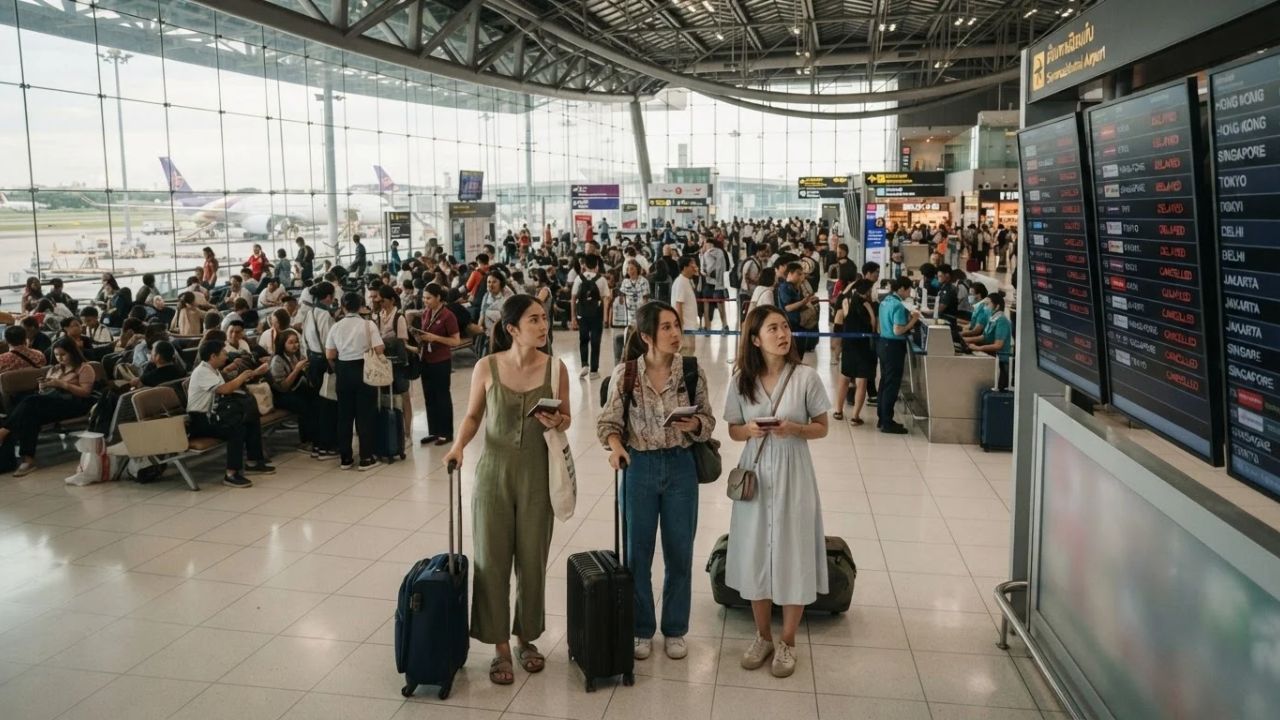
Image generated by AI
Flight disruptions spread across Asia, with 2,316 delays and 143 cancellations recorded at Guangzhou, Jakarta, Delhi, and Dubai airports. The Civil Aviation Administration of China (CAAC) indicates that weather limits and aircraft rotations coordinate flight updates, supporting passenger protection rules across regional transit corridors.
The Transition of Asian Gateways to High-Volume Bottlenecks
A significant trend in Southeast and East Asian transit planning is the transition of metropolitan gateways into high-volume bottlenecks. Historically, regional ministries promoted airport networks primarily as highly synchronized transfer zones with minimal layover windows, planning aircraft rotations tightly to connect long-haul passengers between Europe, North America, and Oceania. In 2026, the combination of summer monsoons, military airspace corridors, and ground support shortages coordinates systemic delays, disrupting connecting itineraries across multiple neighboring countries.
By managing delayed connections, carriers attempt to restructure passenger transfers. This congestion-heavy travel model coordinates pressure across international transit operations, regional hotel bookings, and municipal airport operators.
Analysis of Regional Airport Delays and Cancellations
The flight tracking data, recorded on 23 August 2026 at 5:50 pm ET USA (24 August 2026, 3:20 am IST) via FlightAware, outlines the operational pressure across major Asian terminals:
- Guangzhou Baiyun (CAN): Recorded the highest delay count in Asia with 454 delays and 22 cancellations, primarily affecting China Southern Airlines.
- Jakarta-Soekarno-Hatta (CGK): The Indonesian gateway reported 221 delays and 11 cancellations, impacting low-cost carrier schedules.
- Indira Gandhi International (DEL): The Indian gateway registered 204 delays and 14 cancellations, affecting domestic trunk routes.
- Hong Kong International (HKG): The East Asian transit hub logged 200 delays and 8 cancellations.
- Dubai International (DXB): The Gulf gateway recorded 199 delays and 2 cancellations.
- Suvarnabhumi Bangkok (BKK): The Thai terminal logged 185 delays and 3 cancellations.
- Manila International (MNL): The Philippine hub experienced 123 delays and 5 cancellations.
- King Khalid International (RUH): The Saudi capital terminal logged 96 delays and 15 cancellations.
- Beijing Capital (PEK): The Chinese capital airport recorded 253 delays and 12 cancellations.
These disruptions affected both domestic connecting networks and long-haul international flights.
Airline Delays and Cancellations Performance Metrics
Major carriers experienced varying operational impacts across their regional networks:
- Air China: Recorded the highest delay count with 205 delays and 16 cancellations across PEK, CAN, and XIY.
- Saudia: Recorded the highest cancellation count with 50 cancellations and 65 delays across its domestic and international routes.
- China Southern Airlines: Logged 180 delays and 22 cancellations (including 167 delays and 20 cancellations at Guangzhou Baiyun, and 13 delays and 2 cancellations at Xi'an Xianyang).
- IndiGo: Recorded 101 delays and 3 cancellations across Dubai, Mumbai, and Delhi (including 73 delays at DEL).
- Emirates: Registered 75 delays and 1 cancellation across Dubai, Hong Kong, and Mumbai (including 65 delays at DXB).
- Cathay Pacific: Logged 72 delays and 7 cancellations across Hong Kong and Manila.
- Other Affected Airlines: Delays and cancellations also impacted Batik Air (47 delays, 10 cancellations at CGK), Garuda Indonesia (38 delays, 1 cancellation), Greater Bay Airlines (19 delays), Flydubai (65 delays), SpiceJet (18 delays), Bangkok Airways (55 delays), Thai Airways (31 delays), PAL Express (32 delays), Philippine Airlines (31 delays), Cebu Pacific Air (27 delays), and Hainan Airlines (21 delays).
These figures show how flight delays at primary hubs quickly coordinate disruptions across subsequent carrier schedules.
Asian Aviation Infrastructure and Traffic Coordinates
The table below breaks down the affected Asian airports, recorded delay volumes, cancellation counts, primary carriers, regional partners, and coordinating authorities recorded on August 24, 2026:
| Affected Airport | Recorded Delay Volume | Cancellation Count | Primary Carrier | Regional Partner | Coordinating Authority |
|---|---|---|---|---|---|
| Guangzhou Baiyun (CAN) | 454 delays | 22 cancellations | China Southern | Guangzhou Airport Group | Civil Aviation Admin China |
| Jakarta Airport (CGK) | 221 delays | 11 cancellations | Batik Air | Angkasa Pura II operator | Directorate General Aviation |
| Indira Gandhi (DEL) | 204 delays | 14 cancellations | IndiGo Airlines | GMR Airports Group | Directorate General Civil Aviation |
| Hong Kong Airport (HKG) | 200 delays | 8 cancellations | Cathay Pacific | Airport Authority HK | Civil Aviation Department HK |
| King Khalid (RUH) | 96 delays | 15 cancellations | Saudia | Riyadh Airports Company | General Authority Civil Aviation |
These coordinates outline the airports, delays, cancellations, carriers, partners, and authorities established for the transit recovery programs.
Resource Stewardship and Eco-Aware Transit Management
For the traveler, the benefit of verifying flight status online before driving to the terminal is the avoidance of unnecessary airport transfer emissions and parking zone congestion. Selecting rail transport (such as high-speed links connecting Delhi or Shanghai airports to city centers) reduces carbon footprints.
Additionally, keeping digital copies of all boarding passes and passenger rights receipts reduces paper waste during compensation claims. Supporting independent dining spots and hotels near regional airports distributes tourist spending to local businesses during overnight delays.
For comparison, you can explore the changing dynamics of US Flight Disruptions Weather Cancellations Delays to see how North American hubs manage scheduling delays. For transit updates, comparing flight scheduling matches other networks, such as Australia New Zealand Flight Delays Disruptions updates. This trend is similar to the tourism growth seen in other destinations, as detailed in our guide on the Hacienda Heights Bus Fire Transport Safety regulations.
Passenger Protection Tips: Managing Airport Congestion
If you are currently traveling through Asian airspace, keep these practical tips in mind:
- Verify Status Before Departure: Check your airline's mobile app before leaving your hotel, especially if departing from Guangzhou, Jakarta, Delhi, or Dubai.
- Request Alternative Routing Early: Contact your carrier's customer service chat to request rebooking on the earliest available partner flight.
- Preserve All Expense Receipts: Retain receipts for meals, refreshments, and hotel accommodation during extended delays, as regional civil aviation authorities require carriers to cover these costs during operational faults.
- Arrive Only for Operating Flights: Avoid waiting in terminal queues unless your airline has confirmed that your replacement flight or rescheduled service is active.
- Monitor Jakarta Flight Schedules: Check alternative flights if traveling through Indonesia, as Jakarta recorded 11 cancellations and 221 delays.
Long-Term Outlook for Asian Air Travel Reliability
The long-term outlook for transit in Asia is focused on installing automated passenger rebooking systems, expanding high-speed rail transit corridors near metropolitan airports, and implementing joint regional airspace management agreements. As regional travel volumes expand, international aviation departments and regional civil aviation boards will cooperate to maintain passenger standards.
By developing sustainable transit options and protecting joint logistics networks, the transportation sector aims to build a sustainable transport network.
FAQ
Why are flights in Asia delayed today?
Widespread delays are driven by monsoonal weather fronts, air traffic control restrictions, and aircraft rotation delays affecting carrier schedules.
What are my rights if my flight is cancelled by an Asian airline?
Under regional civil aviation guidelines, passengers are entitled to rebooking, meals, hotel accommodation during overnight delays, and potential cash refunds depending on the cause of the cancellation.
Which airport recorded the highest delays in Asia?
Guangzhou Baiyun International Airport recorded the highest delay count in Asia with 454 flights delayed.
Which airline recorded the highest cancellation count?
Saudia recorded the highest cancellation total among Asian carriers with 50 flights cancelled across its network.
Stay updated on regional travel regulations and air traffic campaigns shaping Asian transit.
Related Travel Guides
Disclaimer
This article is for informational and educational purposes only. It does not constitute legal, financial, or professional advice. While we strive to provide accurate and up-to-date information, travel policies, regulations, and conditions change rapidly. Always verify information with official sources before making travel decisions. Nomad Lawyer makes no representations about the accuracy, reliability, completeness, or suitability of the information provided. Readers should consult qualified professionals for advice specific to their circumstances. The views expressed in this article are those of the author and do not necessarily reflect the views of Nomad Lawyer.
Raushan Kumar
Founder & Lead Developer
Full-stack developer with 11+ years of experience and a passionate traveller. Raushan built Nomad Lawyer from the ground up with a vision to create the best travel and law experience on the web.
Learn more about our team →