
Asia Aviation Crisis 2026: 2,151 Delays and 190 Cancellations Hit Tokyo, Delhi, and Dubai Hubs
A massive wave of disruptions across 16 major Asian airports, including 2,151 delays and 190 cancellations, signals growing operational instability in key transit hubs like Delhi and Dubai.

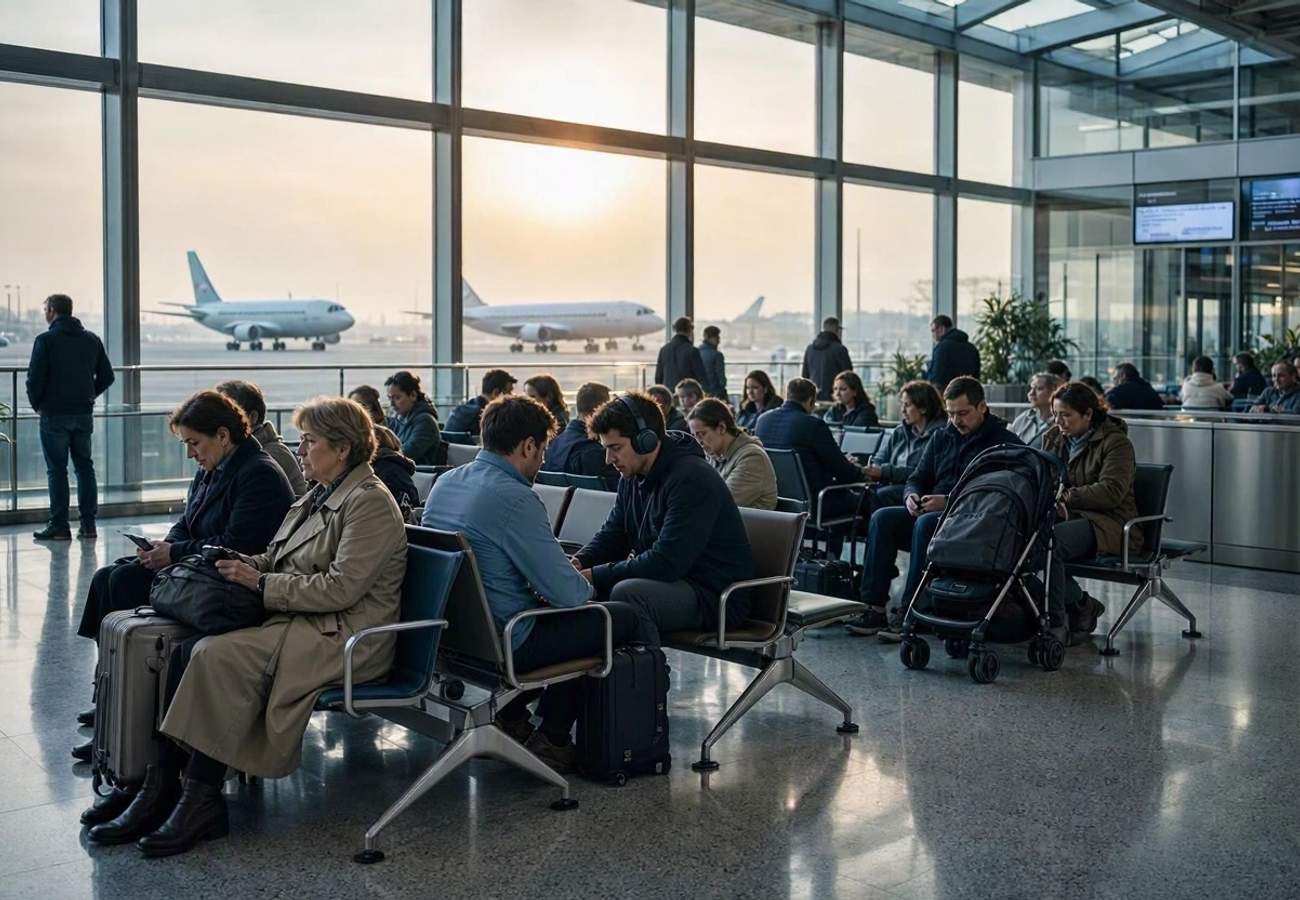
Image generated by AI
Arrival delay rates at Indira Gandhi Airport have hit 27%, while Dubai Airport mirrors this instability with a 28% arrival delay rate. These figures, part of a wider systemic disruption involving 2,151 delays and 190 cancellations across 16 major Asian airports, indicate a significant breakdown in operational efficiency across the region's primary transit arteries.
The Disruption Scale in Numbers
The current volatility is not isolated to a single carrier or city but is distributed across a network spanning Japan, China, India, the Philippines, Türkiye, Indonesia, and the Middle East. Data indicates that the pressure is most acute in South Asia and the Gulf region.
Delhi's Indira Gandhi Airport emerged as the primary bottleneck, recording 350 delays and 10 cancellations. The operational strain is evident in its departure delay rate of 22%. Dubai Airport followed closely with 259 delays and 12 cancellations, while Jakarta's Soekarno-Hatta Airport saw 250 delays and 22 cancellations.
On the carrier side, the data reveals a stark contrast in how airlines are managing these pressures. China Eastern faced the highest volume of disruptions with 432 delays and 26 cancellations. However, in terms of percentage-based reliability, Air Arabia reported the highest delay rate at 38%, followed by Saudia at 35%. Akasa Air, while having fewer total delays, recorded the highest number of cancellations per carrier at 30.
Regional Operational Benchmarks
When comparing the 16 affected airports, a pattern emerges: the major "super-hub" airports are experiencing higher arrival delay rates than departure rates, suggesting that the instability is being imported from other regions or caused by inbound congestion.
The following table breaks down the disruption metrics for the most affected hubs:
| Airport Name | Total Delays | Total Cancellations | Departure Delay Rate | Arrival Delay Rate |
|---|---|---|---|---|
| Indira Gandhi (Delhi) | 350 | 10 | 22% | 27% |
| Dubai International | 259 | 12 | 23% | 28% |
| Soekarno-Hatta (Jakarta) | 250 | 22 | 18% | 23% |
| Chhatrapati Shivaji (Mumbai) | 211 | 11 | 24% | 22% |
| King Abdulaziz (Jeddah) | 168 | 26 | 21% | 26% |
| Sabiha Gokcen (Istanbul) | 170 | 10 | 17% | 16% |
| Kempegowda (Bengaluru) | 167 | 9 | 22% | 21% |
| Hamad (Doha) | 120 | 16 | 15% | 19% |
| Narita (Tokyo) | 101 | 6 | 16% | 10% |
This data suggests that the Middle Eastern and South Asian corridors are currently the most volatile. For a broader look at how these figures compare to global aviation standards, travelers can reference IATA's operational reports or monitor real-time capacity shifts via OAG.
What This Means for Travelers
The current data suggests that "hub-and-spoke" travel—where a passenger relies on a tight connection in a city like Dubai, Doha, or Delhi—is currently high-risk. With arrival delay rates hovering between 19% and 28% at these hubs, the probability of a missed connection is significantly elevated.
Actionable Booking Advice:
- Buffer Zones: If connecting through Delhi or Dubai, ensure a minimum layover of 4-6 hours. The 28% arrival delay rate in Dubai means nearly one in three flights is arriving late, making 90-minute connections statistically dangerous.
- Carrier Selection: Avoid airlines with high percentage-based delay rates. Air Arabia (38%) and Saudia (35%) are currently showing lower reliability than Air China (7%) or Akasa Air (6% delay rate), despite the latter's higher cancellation count.
- Documentation: Given the high volume of cancellations in Jeddah (26) and Jakarta (22), passengers should maintain digital and physical copies of all boarding passes and receipts to facilitate claims through the International Air Transport Association guidelines or local aviation authorities.
Forward Projection: Systemic Fragility
The current trajectory indicates that Asia's aviation infrastructure is struggling to absorb current traffic volumes or is highly susceptible to cascading failures. When a hub like Jeddah records the highest cancellation count (26), it creates a ripple effect that impacts aircraft availability for subsequent legs of the journey.
We are seeing a shift where "operational pressure" is no longer a seasonal occurrence but a structural risk. As airlines like China Eastern manage hundreds of delays, the reliance on a few key aircraft models and crew schedules creates a single point of failure. If these delay rates do not normalize, we can expect a shift toward more decentralized routing, where travelers avoid major hubs in favor of secondary airports to ensure reliability.
FAQ: Asia Flight Disruptions 2026
Will flight prices increase due to these cancellations? Short-term volatility often leads to price spikes on remaining seats. However, systemic delays usually prompt airlines to offer discounted rebooking options to maintain customer loyalty.
Is it a good time to book flights through Dubai or Delhi? Proceed with caution. With arrival delay rates reaching 28%, these hubs are currently unstable. If you must book, prioritize flights with extended layovers.
Which airlines are currently the most reliable in Asia? Based on delay percentages, Air China (7%) and Akasa Air (6%) are showing better punctuality, though Akasa Air has a higher cancellation rate (12%).
How should I handle a cancellation in Jeddah or Jakarta? Immediately check the airline app and document all expenses. Since these airports have the highest cancellation rates, demand a written reason for the cancellation to support insurance claims.
The data is clear: Asia's aviation hubs are operating at a breaking point, and the burden of risk has shifted entirely to the passenger.
Related Travel Guides
Disclaimer
This article is for informational and educational purposes only. It does not constitute legal, financial, or professional advice. While we strive to provide accurate and up-to-date information, travel policies, regulations, and conditions change rapidly. Always verify information with official sources before making travel decisions. Nomad Lawyer makes no representations about the accuracy, reliability, completeness, or suitability of the information provided. Readers should consult qualified professionals for advice specific to their circumstances. The views expressed in this article are those of the author and do not necessarily reflect the views of Nomad Lawyer.
Preeti Gunjan
Contributor & Community Manager
A passionate traveller and community builder. Preeti helps grow the Nomad Lawyer community, fostering engagement and bringing the reader experience to life.
Learn more about our team →