
Arizona Establishes Seven-Destination Solo Travel Corridor to Expand Accessible Transit, Inclusive Infrastructure, and High-Yield Eco-Tourism
Seven Arizona destinations unite to build an accessible solo travel corridor, featuring direct Paris flights, dark-sky protection, and universal design.

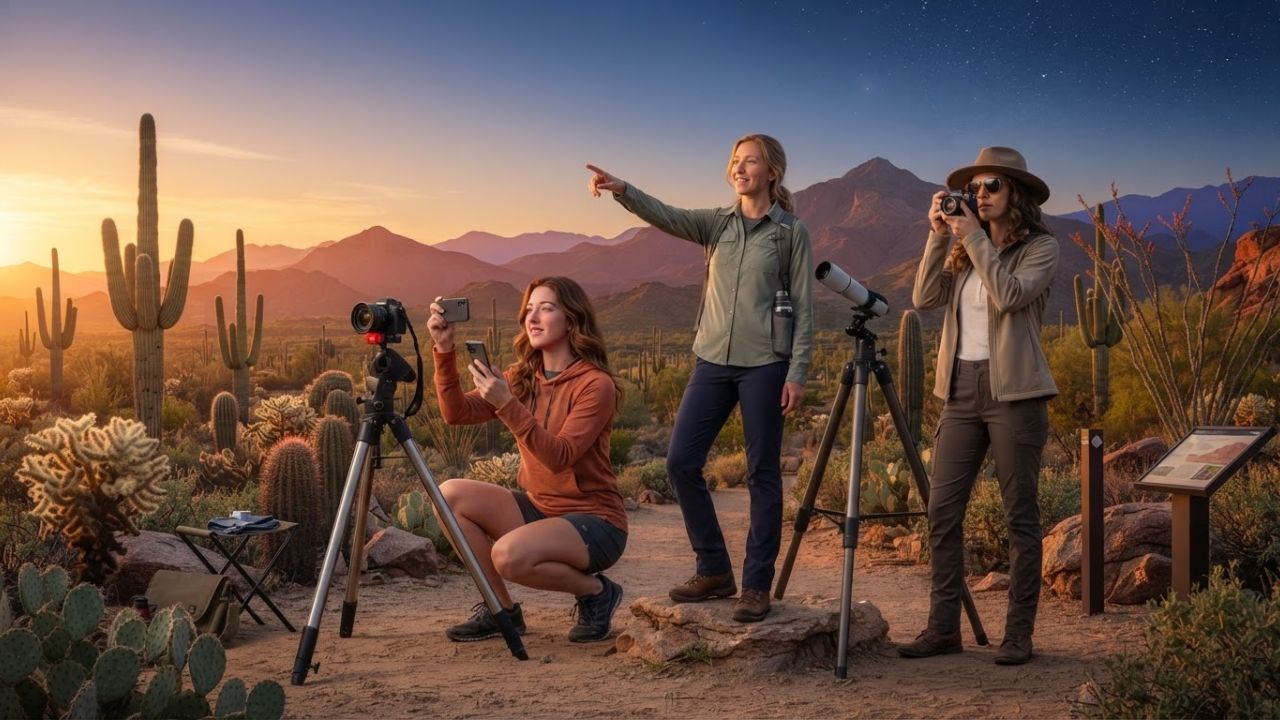
Image generated by AI
Arizona’s primary tourism destinations have established an integrated solo travel network, combining public transit links, Dark Sky sanctuaries, universal accessibility certifications, and heritage preservation across seven major hubs. Spanning Phoenix, Tucson, Scottsdale, Sedona, Flagstaff, Mesa, and Tempe, the initiative adapts state travel infrastructure for independent travelers while capturing high-yield international visitor spending.
Seven Arizona Destinations Unify Urban and Wilderness Transit for Independent Travelers
The Grand Circle consortium has aligned seven municipal tourist hubs across Arizona—Phoenix, Tucson, Scottsdale, Sedona, Flagstaff, Mesa, and Tempe—to create a connected ecosystem for solo travelers. The multi-city framework addresses safety, accessibility, and transit integration, allowing independent visitors to navigate urban art districts, high-altitude pine forests, UNESCO culinary hubs, and dark-sky reserves without relying on personal vehicle rentals.
Supported by Travel Arizona, this infrastructure initiative coincides with a major shift in visitor demographics. Solo travelers account for a growing share of the state's £29.7 billion annual tourism economy. International solo visitors from the UK, the European Union, and East Asia spend between £1,450 and £2,100 per trip, surpassing the domestic visitor average of £850. Rather than purchasing mass-market group packages, independent travelers allocate 35% of their budget directly to local arts, regional heritage sites, and independent culinary businesses, sustaining 193,860 jobs statewide.
Infrastructure Highlights Across Arizona's Solo Travel Network
Each of the seven participating destinations offers specialized municipal infrastructure, safety protocols, and transit links tailored to independent travelers.
- Phoenix: Functions as the state's central aviation and rail hub. Solo hikers utilize Camelback Mountain's Echo Canyon and Cholla trails under municipal ranger supervision. Pedestrian art corridors along Roosevelt Row and cultural institutions like the Heard Museum and Desert Botanical Garden provide accessible spaces for independent exploration connected by Valley Metro Rail.
- Tucson: Recognized as the first UNESCO City of Gastronomy in the United States, Tucson features a 4,000-year agricultural history. The Sun Link Streetcar System links local food trails with outdoor access to Saguaro National Park and the Sabino Canyon tram, supporting a local food sourcing metric of 85%.
- Scottsdale: Focuses on wellness, architecture, and outdoor recreation. It features self-guided audio tours at Frank Lloyd Wright’s Taliesin West and over 200 miles of marked trails in the McDowell Sonoran Preserve, alongside pedestrian corridors in Old Town Scottsdale.
- Sedona: Combines red rock geology with spiritual sanctuary sites like the Chapel of the Holy Cross and Amitabha Stupa. Municipal Sedona Shuttles connect solo travelers directly to crowded trailheads, reducing parking congestion and maintaining transit links.
- Flagstaff: Recognized as the world's first International Dark Sky City. Anchored by the historic Lowell Observatory, Flagstaff integrates smart-city dark-sky street lighting along Route 66 and downtown pedestrian corridors, supported by the Mountain Line Bus system.
- Mesa: Holds the designation of the world's first Autism Certified City. 100% of municipal hospitality staff, park rangers, and public safety personnel complete sensory awareness training. Venues like the Mesa Arts Center campus and Usery Mountain Regional Park offer sensory guides detailing crowd levels, noise, and terrain.
- Tempe: Blends university campus connectivity with outdoor recreation around Tempe Town Lake. Integrated transit links via Valley Metro Rail and the Tempe Streetcar connect visitors to Phoenix and Mesa, alongside trail access up Hayden Butte ("A" Mountain).
| Destination | Primary Tourism Focus | Key Transit Links | Safety & Accessibility Standard | Top Infrastructure Asset |
|---|---|---|---|---|
| Phoenix | Urban Culture & Culinary | Valley Metro Rail & Sky Harbor (PHX) | Monitored trail patrols & pedestrian zones | Roosevelt Row & Heard Museum |
| Tucson | UNESCO Gastronomy | Sun Link Streetcar System | 85% local food sourcing & paved paths | Sabino Canyon Tram & Saguaro NP |
| Scottsdale | Wellness & Architecture | City Trolley & Bike Networks | High resort security & 200+ mi trail markers | McDowell Sonoran Preserve & Taliesin West |
| Sedona | Red Rock & Reflection | Sedona Shuttle System | Ranger-guided hikes & shuttle transit | Red Rock State Park & Stupa |
| Flagstaff | Astro-Tourism & Heritage | Mountain Line Bus System | Low-glare Dark Sky pedestrian lighting | Lowell Observatory & Route 66 |
| Mesa | Inclusive & Accessible | Accessible Bus & Light Rail | World's 1st Autism Certified City | Mesa Arts Center & Usery Mountain Park |
| Tempe | Urban Energy & Lake | Tempe Streetcar & Light Rail | Monitored water patrol & lit lake paths | Tempe Town Lake & Hayden Butte |
Transatlantic Air Links, AI Automation, and High-Yield Fiscal Metrics
The growth of solo travel across Arizona is supported by new international flight routes and hospitality technology upgrades.
Direct aviation access expanded with Air France launching nonstop service between Paris-Charles de Gaulle (CDG) and Phoenix Sky Harbor International Airport (PHX). Eliminating multi-hub layovers at LAX, ORD, or JFK saves international travelers 10 to 12 hours of transit time, driving an 18% increase in European visitor arrivals. European travelers now generate 22% of Arizona's total tourism GDP.
Concurrently, luxury resorts in Scottsdale and Sedona have reached a 94% adoption rate for AI Concierge interfaces. These digital tools analyze mobility choices and schedule preferences to build custom itineraries, reducing trip planning time from 10 hours to 45 minutes. Driven by digital concierge integration, 58% of solo travelers opt for premium suite upgrades. In Flagstaff, dark-sky tourism has achieved a 98% environmental sustainability rating while generating a +30% year-over-year increase in night-sky tour bookings.
| Economic & Operational Indicator | Benchmark Metric | Impact on Visitor Economy |
|---|---|---|
| Statewide Tourism Economic Impact | £29.7 Billion ($38B+) total | High-yield solo spending leads per-capita margin |
| International Solo Tourist Spend | £1,450 – £2,100 per trip | Outpaces domestic average (£850/trip) |
| Local Supply Chain Allocation | 35% expenditure share | Sustains 193,860 hospitality & transit jobs |
| Air France CDG–PHX Direct Route | 10 to 12 hours saved in transit | Triggers +18% surge in European visitor arrivals |
| AI Concierge Adoption Rate | 94% in luxury resorts | Cuts planning time from 10 hrs to 45 mins |
| Mesa Autism Certification Impact | 100% municipal staff trained | Delivers 80%+ anxiety reduction for solo visitors |
Practical Traveler Logistics: Navigating Arizona Independently
Independent travelers can optimize their itineraries by leveraging municipal safety programs, zero-car transit options, and environmental guidelines.
- Zero-Rental Inter-Urban Transit: Connect between Phoenix, Tempe, and Mesa using the 28-mile Valley Metro Rail line. Combine light rail with the Sun Link Streetcar in Tucson, the Sedona Shuttle, and Flagstaff's Mountain Line to travel without a rental car. This keeps daily local transit costs between £85 and £120.
- Free Cultural Access via Library Passes: Solo travelers can check out municipal Culture Passes at local public libraries, granting free admission to major cultural venues including the Desert Botanical Garden, Heard Museum, and regional art institutions.
- The Desert "Heat Rule" Protocol: Arizona State Parks and local municipalities enforce strict heat safety guidelines. All strenuous outdoor hiking must conclude by 10:00 AM during warmer months. Solo hikers must carry and consume at least 1 gallon (3.8 liters) of water per day to prevent dehydration.
- State Park Cabin Lodging: Booking data indicates a 32% increase in State Park Cabin reservations (such as Alamo Lake and Dead Horse Ranch), with solo travelers occupying 68% of these units. Operating on a mid-range budget of £150 to £250 per night, travelers gain secure wilderness access.
- Digital Nomad Infrastructure: Towns in northern Arizona (Coconino and Yavapai counties) offer high-speed fiber-optic connectivity and 99.4% 5G coverage across co-working hubs. This digital infrastructure has driven a +28% increase in stays extending past 14 nights, with digital nomads spending an average of £1,850 per month locally.
- Volunteer Stewardship Opportunities: Solo travelers contribute 14,500 volunteer hours annually toward trail maintenance across Coconino National Forest and Sonoran Desert parks. This stewardship effort provides £1.2 million ($1.5 million) in annual cost savings for state park authorities.
Environmental Sustainability and Route 66 Heritage Upgrades
Arizona’s solo travel network incorporates environmental protection alongside historical preservation ahead of the Route 66 Centennial (1926–2026). Municipalities along northern transit corridors—including Flagstaff and Kingman—have executed multi-million-pound infrastructure overhauls, installing smart-city pedestrian lighting and consolidating historic sites into walkable "Museum Row" precincts. These enhancements have led to a 26% increase in international heritage travelers from the UK and Europe.
Environmental sustainability remains central to the state's tourism strategy. In Tucson, 85% of culinary trail venues source ingredients locally, channeling dining expenditures directly to regional farmers and ranchers. In Sedona and Tucson, thermal wellness resorts report a +42% daily spend premium from solo travelers, with average stays extending to 3.5 days compared to 2.1 days for standard leisure visitors. By integrating universal design, dark-sky protection, and public transit, Arizona presents a model for sustainable, independent travel.
Frequently Asked Questions: Arizona Solo Travel Infrastructure
Is Arizona safe for solo travelers navigating without group tours?
Yes. Participating Arizona cities feature monitored public transit networks, visible park ranger trail patrols, well-marked hiking routes, and emergency signage. Travelers must follow municipal heat safety guidelines, including the 10:00 AM summer trail limit.
What is the "Heat Rule" for hiking in Arizona?
The "Heat Rule" is a safety guideline enforced by Arizona State Parks and municipal authorities requiring all strenuous outdoor hiking to finish by 10:00 AM during hot months. Hikers are required to carry a minimum of 1 gallon (3.8 liters) of water per person per day.
How can travelers explore Arizona cities without renting a car?
Travelers can navigate using the 28-mile Valley Metro Rail connecting Phoenix, Tempe, and Mesa, Tucson’s Sun Link Streetcar, the Sedona Shuttle system, and Flagstaff's Mountain Line bus network.
Why is Mesa’s Autism Certified City status beneficial for solo visitors?
Mesa’s city-wide Autism Certification mandates 100% staff sensory training across public venues, intuitive high-contrast signage, predictable transit schedules, and detailed sensory guides, reducing navigation anxiety by over 80% for all independent travelers.
Related Travel Guides
Disclaimer
This article is for informational and educational purposes only. It does not constitute legal, financial, or professional advice. While we strive to provide accurate and up-to-date information, travel policies, regulations, and conditions change rapidly. Always verify information with official sources before making travel decisions. Nomad Lawyer makes no representations about the accuracy, reliability, completeness, or suitability of the information provided. Readers should consult qualified professionals for advice specific to their circumstances. The views expressed in this article are those of the author and do not necessarily reflect the views of Nomad Lawyer.
Kunal K Choudhary
Co-Founder & Contributor
A passionate traveller and tech enthusiast. Kunal contributes to the vision and growth of Nomad Lawyer, bringing fresh perspectives and driving the community forward.
Learn more about our team →