
Argentina Is Now Seeing New Tourism Payments Opportunity as September Report Puts Brazil and Pix in Focus
Argentina Is Now Seeing New Tourism Payments Opportunity as September Report Puts Brazil and Pix in Focus

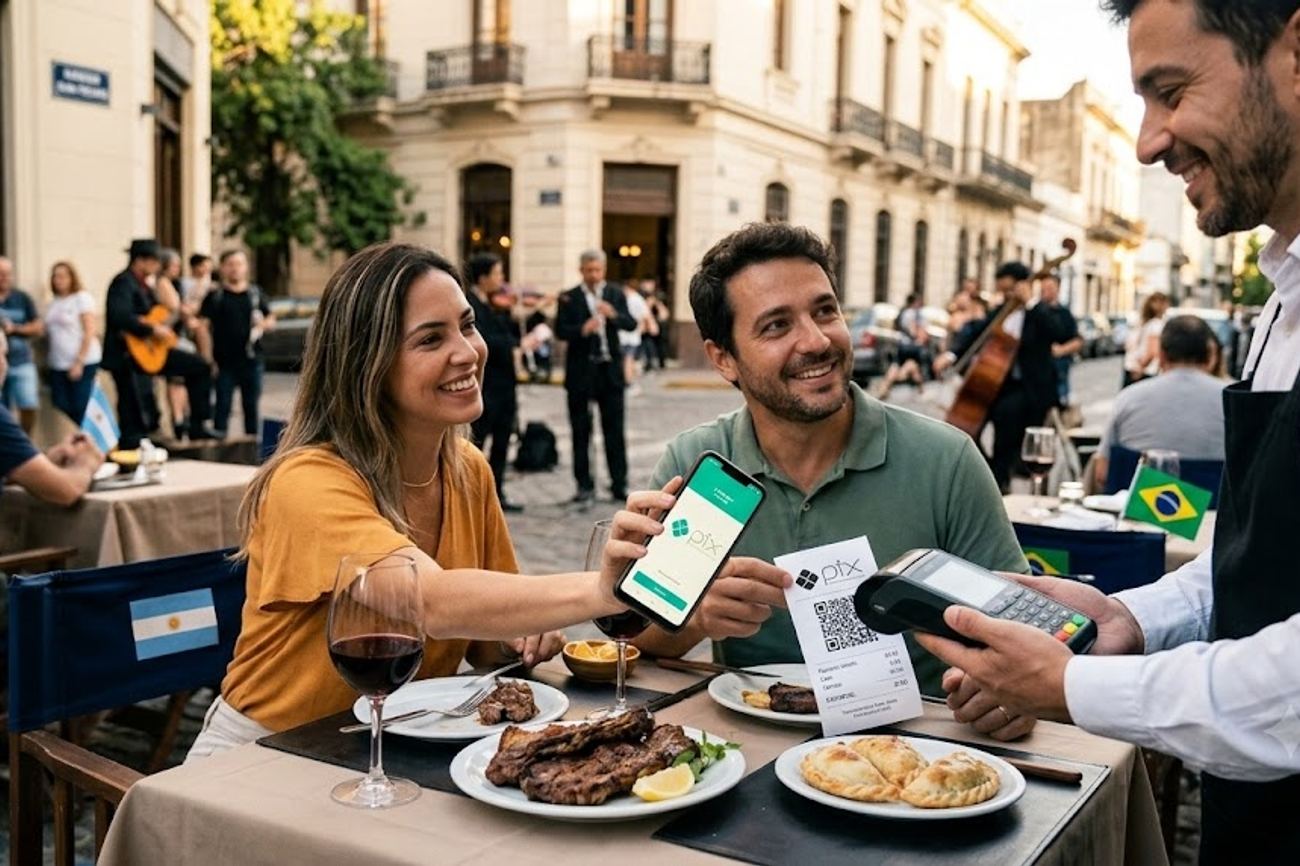
Image generated by AI
168,300 Brazilian nationals entered Argentina in July 2026, cementing Brazil's position as the primary engine of the country's inbound tourism growth. This surge represents a 22.1% increase compared to July 2025, meaning that 36.1% of all international arrivals during the month originated from Brazil. While Argentina saw a general uptick in international visitors, the velocity of Brazilian growth significantly outpaced the broader market trend.
The Shift in Southern Cone Tourism Dynamics
The July 2026 data reveals a widening gap between Brazil's dominance and the performance of other regional neighbors. While Argentina welcomed a total of 466,200 international tourists—a 9.1% rise over the previous year—the composition of these arrivals has shifted. Uruguay, traditionally a powerhouse in the inbound market, plummeted by 18%, supplying only 74,700 tourists and holding a diminished 16% share. In contrast, Chile showed resilience with 49,800 travelers (a 22.5% increase), and European markets contributed 34,600 visitors, reflecting a 14.3% growth rate.
When expanding the lens to all non-resident visitors, the figure climbs to 830,200. This total includes the 466,200 overnight tourists and 363,900 same-day excursionists who crossed the border for short-term visits. The broader trajectory for 2026 remains positive; from January through July, Argentina recorded 3.364 million international tourists, compared to 3.127 million during the same period in 2025, marking an overall growth of approximately 7.6%.
Logistics and Entry Infrastructure
The method of arrival provides a clear indicator of how the tourism market is evolving. Aviation has become the dominant gateway, with 252,500 tourists entering by air—a 21.2% annual increase. This represents 54.1% of all inbound traffic. Conversely, land borders, which historically served as the primary artery for regional travel, saw a 3.5% decline, handling 159,700 tourists (34.2% of the total). River and maritime routes remained relatively stagnant, contributing 54,100 arrivals (11.6%), a marginal 1% increase.
The concentration of this traffic is most evident in the capital. The two primary airports serving Buenos Aires processed 194,500 inbound tourists, which accounts for 77.1% of all air arrivals and 41.7% of the total international tourist volume. Within this specific airport segment, approximately 73,700 were Brazilians, who averaged a stay of 6.6 nights.
| Metric | July 2026 Verified Figure | Strategic Significance |
|---|---|---|
| Total International Tourists | 466,200 | Baseline for inbound market health |
| Brazilian Arrivals | 168,300 | Primary source market dominance |
| Brazilian Market Share | 36.1% | High dependency on a single nationality |
| Brazilian Annual Growth | 22.1% | Outperforming general market growth (9.1%) |
| Air Arrivals | 252,500 | Shift toward high-yield aviation travel |
| Land Arrivals | 159,700 | Decline in traditional surface transit |
| Jan-July 2026 Total | 3.364 Million | Sustained mid-year growth trend |
| Avg. Stay (BA Airport Segment) | 6.6 Nights | Baseline for per-visitor spending potential |
Expert Analysis: The Digital Payment Paradox
The surge in Brazilian arrivals has triggered an intense industry focus on "Tourism Payments," specifically the integration of Pix—Brazil's instant payment system regulated by the Central Bank of Brazil. However, there is a critical distinction between payment convenience and market causation that most travel reports overlook.
For travelers booking routes into Argentina, the direct consequence of this trend is a proliferation of merchants—from boutique hotels in Mendoza to retail shops in Buenos Aires—who are adopting digital interfaces to accommodate Brazilian spending habits. The ability to see a transaction in Brazilian Reais before confirming a payment reduces the "sticker shock" often associated with Argentina's volatile currency environment.
However, from a regulatory and data perspective, we are seeing a "data gap." While official statistics from the International Air Transport Association (IATA) and national tourism boards can track who is arriving and how they got there, they cannot track how they pay once they arrive. There is currently no official government methodology to quantify the total volume of Pix expenditure within Argentina.
The pricing pressure this creates means that merchants who do not offer flexible, digital, cross-border payment options may lose a significant share of the most rapidly growing tourist segment. Yet, it is a fallacy to suggest that the availability of Pix caused the 22.1% increase in arrivals. Travel decisions are driven by exchange rates, flight availability, and geopolitical stability; payment methods simply facilitate the spending once the traveler has already landed.
Argentina is actively integrating digital payment systems to streamline tourist spending and reduce reliance on cash for international visitors. Travelers can find updated entry requirements and official travel guidelines through the Argentina Ministry of Foreign Affairs, ensuring a seamless transition from port to city.
Key Takeaways
- Brazilian Dominance: Brazil now accounts for over one-third (36.1%) of Argentina's international arrivals, growing at more than double the rate of the overall market.
- Aviation Pivot: Air travel is now the primary entry mode (54.1%), while land border crossings are experiencing a slight decline (-3.5%).
- Spending Friction: While digital payment options like Pix are becoming more prevalent to serve Brazilian tourists, they do not replace official identity documents or alter immigration laws.
- Market Divergence: There is a stark contrast in regional performance, with Brazil and Chile growing while Uruguay's contribution fell by 18%.
- Duration of Stay: Brazilian visitors entering via Buenos Aires airports average 6.6 nights, indicating a preference for longer-term urban tourism over short-term excursions.
FAQ: Argentina-Brazil Travel 2026
Do I need a visa to enter Argentina if I am a Brazilian citizen? No. Brazilian nationals continue to be covered by regional travel-document arrangements. You can enter using a valid passport or an accepted national identity document. Payment app registrations do not grant entry or replace legal travel documents.
Can I use Pix to pay for hotels and restaurants in Argentina? Many Argentine merchants now support digital payment systems that interface with Brazilian accounts. However, availability varies by provider. Always verify the final conversion rate in Reais before confirming the transaction to avoid unexpected fees.
Is air travel more common than land travel for tourists visiting Argentina? Yes. As of July 2026, 54.1% of international tourists arrived by air, compared to 34.2% by land. The majority of these air arrivals (77.1%) are concentrated in the two main Buenos Aires airports.
How long do Brazilian tourists typically stay in Argentina? Based on data from the primary Buenos Aires gateways, the average stay for Brazilian visitors is 6.6 nights, though this may vary for those entering via regional airports or land borders.
The intersection of fintech and tourism is rewriting the Southern Cone's economic map, but the passport still holds more power than the payment app.
Tags: Argentina-Tourism-2026, Brazil-Argentina-Travel, Pix-Payments, Buenos-Aires-Airport, Southern-Cone-Economics
Related Travel Guides
- Netherlands Is Now a Gateway for Riverside Cruises and More River Tourism Across Other European Countries
- Paraguay Catalyses Alongside Brazil and More South American Countries as Strong Passports Rewrite Travel Rules Worldwide
- Bahamas Joins Panama and Others as Croatia Cruise Tourism Sector Posts 13.8% Passenger Growth in 2026
Disclaimer
This article is for informational and educational purposes only. It does not constitute legal, financial, or professional advice. While we strive to provide accurate and up-to-date information, travel policies, regulations, and conditions change rapidly. Always verify information with official sources before making travel decisions. Nomad Lawyer makes no representations about the accuracy, reliability, completeness, or suitability of the information provided. Readers should consult qualified professionals for advice specific to their circumstances. The views expressed in this article are those of the author and do not necessarily reflect the views of Nomad Lawyer.
Raushan Kumar
Founder & Lead Developer
Full-stack developer with 11+ years of experience and a passionate traveller. Raushan built Nomad Lawyer from the ground up with a vision to create the best travel and law experience on the web.
Learn more about our team →