
Skyways Across the Zagros: What the Mashhad–Kermanshah Precautionary Landing Reveals About Travel in Iran
When a Sepehran Airlines Boeing 737 safely returned to Mashhad following a tyre tread separation on departure to Kermanshah, it demonstrated the meticulous aviation discipline that keeps Iran’s vast pilgrimage and heritage corridors connected.

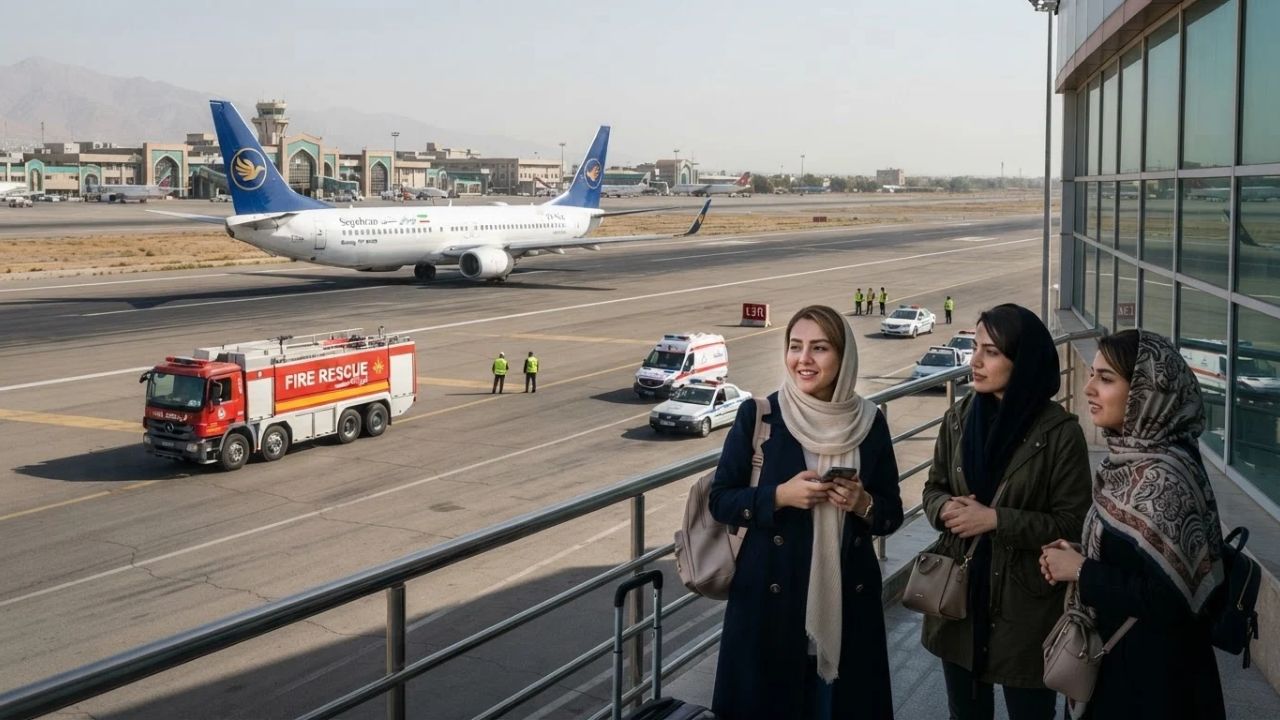
Domestic flight corridors connecting Mashhad's sacred courtyards with Kermanshah's Zagros mountain heritage rely on rigorous aviation oversight across Iran
Spanning more than fourteen hundred kilometers of scorched desert basins and rugged mountain ridges, the aerial corridor linking eastern Iran’s spiritual capital of Mashhad with the ancient Kurdish trading hub of Kermanshah compresses an arduous twenty-hour overland expedition into a swift two-hour hop across the skies. When a scheduled domestic flight operated by Sepehran Airlines experienced a separation of the outer rubber tread on one of its Boeing 737 landing gear tyres during takeoff from Mashhad Shahid Hasheminejad International Airport, the event underscored the disciplined operational readiness governing the nation’s domestic aviation network. Executing standard emergency checklists, the flight crew promptly coordinated with air traffic control, leveled off, and returned to base, touching down safely with zero injuries among passengers or crew before travelers were accommodated on a replacement aircraft to complete their journey.
While viral video clips circulating online revealed intense airframe vibrations and loosened interior ceiling panels, the incident highlighted how commercial aviation safety architecture functions under real-world pressure. Across a vast country where domestic air travel forms an indispensable artery linking millions of pilgrims, heritage travelers, and regional traders, disciplined emergency preparedness ensures that mechanical anomalies are resolved swiftly on the ground rather than risking passenger safety aloft.
Precision Over Pressure: The Mechanics of Precautionary Aviation in Iran
The safe return of the Sepehran Airlines Boeing 737 to Mashhad Shahid Hasheminejad International Airport serves as a compelling case study in modern aviation risk mitigation. Aircraft tyres endure tremendous thermal loads, high rotational velocities, and immense physical compression during takeoff and landing transitions. When the outer casing tread separated during the departure roll toward Kermanshah, the resulting wheel imbalance caused intense harmonic vibrations that shook the cabin interior and dislodged overhead bin latches. Rather than pressing forward across the vast, arid expanse of the Dasht-e Kavir desert, the captain made the textbook decision to circle back and land at the departure airfield where full emergency vehicle escorts and maintenance support stood ready.
Under the regulatory oversight of the Civil Aviation Organization of Iran (CAO.IRI), which aligns its technical supervisory frameworks with standards established by the International Civil Aviation Organization (ICAO), a structured investigation was immediately launched. Specialists are conducting comprehensive metallurgical analyses of landing gear components, reviewing the airframe’s preventative maintenance logs, and evaluating cockpit voice and flight data records to identify any contributing factors.
This thorough investigative process underscores the reality of domestic flying in Iran. Despite decades of external trade restrictions that complicate fleet modernization, Iranian aeronautical engineers, licensed mechanics, and commercial pilots have built an internationally recognized culture of self-reliance and technical discipline. Scheduled air services connecting major provincial capitals—including Tehran, Shiraz, Isfahan, Tabriz, Mashhad, and Kermanshah—maintain strict airworthiness verification regimens that prioritize flight safety above timetable expediency.
What Makes the Mashhad–Kermanshah Corridor Culturally Unique
To appreciate why this specific flight route carries such profound importance, one must look at the cultural poles it connects. Traversing from Razavi Khorasan province in the far northeast to Kermanshah province in the western Zagros Mountains is a journey between two entirely different civilizations sharing a single national border.
Mashhad is one of the Islamic world’s most magnetic pilgrimage centers. The city revolves around the magnificent Imam Reza Shrine, an immense religious sanctuary covering more than one million square meters of marble courtyards, soaring turquoise minarets, and mirror-work chambers adorned with intricate Persian tile mosaics. Millions of devotees and cultural voyagers visit each year to walk through the historic Goharshad Mosque, browse the saffron and barberry trading alleys of the historic bazaar, and pay homage at the nearby tomb of the epic poet Ferdowsi in ancient Tus.
By contrast, landing in Kermanshah transports travelers into the heartland of Kurdish traditions and monumental Persian antiquity along the western slopes of the Zagros range. Here, mountain cliffs serve as an open-air historical archive. Just outside the city stands Bisotun, a towering limestone cliff inscribed with monumental multilingual cuneiform texts and relief carvings commissioned by Darius the Great in 521 BCE, recognized by the UNESCO World Heritage Centre. A few kilometers away lie the royal rock reliefs of Taq-e Bostan, where master stonecutters carved elaborate Sassanid investiture scenes and royal wild boar hunting excursions directly into a living rock grotto beside natural freshwater springs.
Culturally, Kermanshah is famous for its vibrant Kurdish street culture, colorful traditional textiles, and distinct gastronomy. Visitors gather in mountain teahouses to feast on Dande Kebab—succulent lamb ribs seasoned with saffron, crushed onions, and wild mountain sumac—accompanied by fresh flatbreads and Nan-e Berenji, delicate rice flour cookies perfumed with cardamom and rosewater. Flying directly between these two cities allows travelers to transition seamlessly from Khorasan’s spiritual sanctuaries into the dramatic mountain heritage of western Iran without losing days to grueling highway transit.
Visitor Insider Tips
Navigating Iran’s domestic air travel and regional heritage circuits requires practical, localized knowledge:
- Navigating Shahid Hasheminejad Airport: Located just eight kilometers southeast of central Mashhad, the airport is directly connected to the city’s rapid transit network via Line 1 of the Mashhad Urban Railway. If you have a morning flight, the metro avoids the heavy vehicular congestion that routinely circles the Imam Reza Shrine ring roads.
- Shrine Courtyard Etiquette: When visiting the Imam Reza Shrine in Mashhad, non-Muslim international travelers are warmly welcomed through designated pilgrim guidance centers, where complimentary guided cultural tours are provided. Women must wear a traditional chador (available on loan at the entrance gates), and photography inside the innermost burial chamber is strictly prohibited.
- Kermanshah Rock Art Timing: Visit Taq-e Bostan in the late afternoon. The low-angled golden sunlight illuminates the intricate stone-carved patterns of Sassanid armor and royal garments, while the surrounding lake reflects the illuminated cliff faces after dusk. Enjoy a hot glass of black tea flavored with dried lime at the adjacent open-air lakeside cafes.
- Domestic Flight Booking Mechanics: Because international payment gateways do not interface with the domestic Iranian banking system, foreign travelers cannot book domestic flights online using standard foreign credit cards. Book your regional flights through reputable local travel agencies upon arrival in Tehran or Mashhad, or utilize specialized authorized travel concierges like Iran National Tourism Organization partner agencies.
- Carry-On Baggage Caution: Given the strict weight checks on domestic Boeing 737 and MD-80 flights, keep your heavy camera gear and fragile souvenirs, such as Khorasan turquoise or hand-painted enameled copper plates, in a secure personal daypack that fits under the forward seat rather than relying on overhead bins.
Cultural and Environmental Context
The reliance on domestic aviation across Iran highlights the immense geographic scale of the Iranian plateau. Traversing the country by road requires crossing expansive salt deserts, high-altitude mountain passes, and arid steppes that experience extreme seasonal temperatures. Maintaining efficient air links between secondary cultural capitals not only eases transit burdens on travelers, but also significantly reduces long-distance vehicular traffic along fragile desert highway corridors, cutting fuel consumption and mitigating roadside environmental degradation.
In Kermanshah, sustainable tourism plays a vital role in preserving the region’s indigenous Kurdish heritage and safeguarding ancient rock monuments from weathering and urban encroachment. Local conservation bodies work closely with UNESCO specialists to monitor atmospheric humidity and stone stability at Bisotun and Taq-e Bostan, ensuring that rising visitor interest translates into direct funding for archaeological preservation.
Meanwhile, in Mashhad, pilgrimage tourism supports hundreds of thousands of local families, artisan craftsmen, and culinary purveyors. The income generated by domestic and international visitors sustains traditional crafts—from saffron drying and silver smithing to the restoration of historic tilework—that have been passed down through generations. By prioritizing aviation safety and maintaining operational excellence, Iran protects the physical bridges that allow these rich cultural exchanges to thrive.
FAQ: Traveling Between Mashhad and Kermanshah 2026
How long is the flight between Mashhad and Kermanshah? The non-stop domestic flight takes approximately one hour and forty-five minutes to two hours, compared to an eighteen-to-twenty-hour overland journey by rail or private vehicle.
What major historic landmarks should I visit in Kermanshah? Prioritize the UNESCO-listed Achaemenid inscriptions at Bisotun, the Sassanid stone carvings at Taq-e Bostan, and the colorful nineteenth-century tiled courtyards of the Moaven al-Molk Tekyeh.
Do international tourists need a special permit to visit Mashhad or Kermanshah? No special regional permits are required beyond a standard tourist visa for Iran. Both cities are fully open to foreign visitors, with standard hotel registration handled upon check-in.
What is the best time of year to explore this trans-plateau route? Spring (April to May) and autumn (September to October) offer ideal weather, featuring mild daytime temperatures across the Khorasan plains and pleasant alpine breezes throughout the Zagros Mountains.
When flight paths span across ancient desert plateaus, the true spirit of travel is found in the care that brings every voyager safely back to earth.
Related Travel Guides
- Gateway to the Zulu Coast: How Ethiopian Airlines’ Daily Durban–Addis Ababa Route Unlocks KwaZulu-Natal
- The Sovereign Runway: How British Airways’ Heathrow Route Unlocks Guernsey’s Secret Maritime Heart
- Crossroads Above the South China Sea: What AirAsia’s Domestic Realignment Means for Exploring Malaysia
Disclaimer
This article is for informational and educational purposes only. It does not constitute legal, financial, or professional advice. While we strive to provide accurate and up-to-date information, travel policies, regulations, and conditions change rapidly. Always verify information with official sources before making travel decisions. Nomad Lawyer makes no representations about the accuracy, reliability, completeness, or suitability of the information provided. Readers should consult qualified professionals for advice specific to their circumstances. The views expressed in this article are those of the author and do not necessarily reflect the views of Nomad Lawyer.
Raushan Kumar
Founder & Lead Developer
Full-stack developer with 11+ years of experience and a passionate traveller. Raushan built Nomad Lawyer from the ground up with a vision to create the best travel and law experience on the web.
Learn more about our team →