
American Airlines Crew Threatens Police Intervention Over Missing Phone on Memphis to Dallas Flight
A flight attendant's threat to summon law enforcement for an entire cabin after a lost phone highlights the volatile intersection of crew authority and passenger rights.

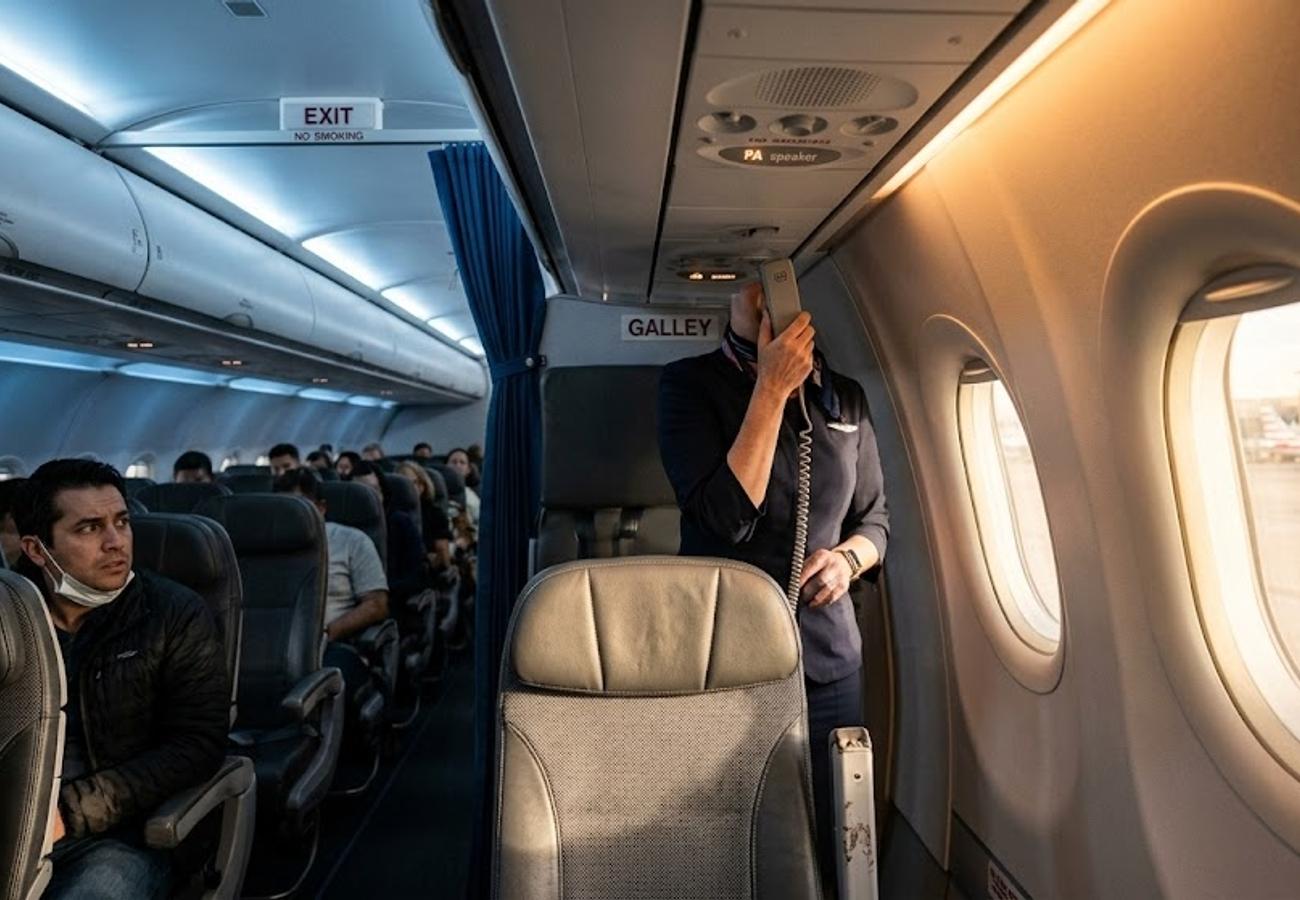
Image generated by AI
One missing mobile device triggered a threat of mass law enforcement intervention for passengers traveling from Memphis International Airport (MEM) to Dallas Fort Worth International Airport (DFW). The incident, which unfolded aboard an American Airlines flight, saw a crew member utilize the aircraft's public address (PA) system to warn an entire cabin that police would be waiting at the gate unless a lost phone was returned.
The Anatomy of a Cabin Confrontation
The conflict began mid-flight when a flight attendant realized her personal phone had disappeared. Rather than conducting a discreet search or filing a lost-and-found report, the crew member escalated the situation to the entire passenger manifest. According to reports shared by a traveler on Reddit, the flight attendant issued a directive over the PA system, offering a "no harm, no foul" amnesty if the device were passed toward the rear of the aircraft immediately.
The ultimatum was explicit: if the phone remained missing upon landing, law enforcement officers (LEOs) would meet the aircraft at the gate. This tactic, designed to induce panic and prompt the return of the device, created a high-tension environment for passengers who were largely unaware of how the device had gone missing.
The resolution of the incident was as abrupt as its escalation. Before the aircraft reached the gate, the phone was discovered on the floor of the cabin. However, the recovery did not result in an apology. As the aircraft taxied toward the terminal at Dallas Fort Worth International Airport (DFW), the flight attendant returned to the PA system to thank "whoever dropped my phone on the floor" and explicitly labeled the individual a "thief."
Regulatory Framework and Onboard Conduct
This incident sits at the intersection of airline "Conditions of Carriage" and the practical limits of crew authority. Most major carriers, including American Airlines, maintain strict policies regarding onboard misconduct. Under these guidelines, crew members are empowered to manage passengers who are abusive, harassing, or pose a safety risk.
However, the legal threshold for detaining an entire aircraft based on a missing personal item is significantly higher than the threshold for managing a disruptive passenger. While airlines can deny transportation to those who violate conduct codes, the threat of police detention for a collective group without individual probable cause is a complex legal area.
| Incident Detail | Specification |
|---|---|
| Departure Point | Memphis International Airport (MEM) |
| Arrival Point | Dallas Fort Worth International Airport (DFW) |
| Trigger Event | Missing flight attendant smartphone |
| Crew Action | PA system warning of law enforcement intervention |
| Outcome | Device found on floor during descent |
| Final Action | Public accusation of theft during taxiing |
Expert Analysis: The Psychology of Power and Passenger Rights
For travelers booking flights with major US carriers, this incident reveals a critical gap between corporate policy and frontline execution. The direct consequence of such "blanket threats" is a degradation of the passenger-crew relationship, which is foundational to aviation safety.
The pricing pressure and operational stress currently facing the aviation industry often lead to crew burnout, which can manifest as erratic emotional responses. In this case, the flight attendant's reaction suggests a failure in conflict resolution training. By accusing the entire cabin of theft, the crew member shifted the burden of proof onto the passengers, creating a hostile environment that could have easily escalated into a security event.
From a legal standpoint, the threat that police would "meet the flight" is often used as a psychological deterrent rather than a viable operational plan. It is highly improbable that law enforcement would detain an entire aircraft—potentially delaying hundreds of connecting passengers—without a specific suspect or evidence of a felony. The risk of "missed connections" mentioned by the passenger highlights the systemic fragility of hub-and-spoke networks; a 20-minute police delay at a gate like A20 in Terminal A at DFW can trigger a cascading failure of flight schedules.
Furthermore, the flight attendant's final comment—labeling the "finder" a thief—could potentially open the airline to claims of defamation or unprofessional conduct. When a crew member uses the PA system to insult passengers, they are no longer acting in the interest of safety, but are instead utilizing company equipment for personal grievances.
Key Takeaways
- Limited Detention Power: Law enforcement cannot legally detain an entire aircraft's passenger manifest based solely on a missing personal item without evidence linking specific individuals to a crime.
- Reporting Channels: Passengers subjected to unprofessional or accusatory behavior by crew can file formal complaints through the airline's customer support portal or at the arrival gate.
- Liability Risks: While passengers are liable for costs associated with diversions caused by their misconduct, crew members are expected to adhere to professional standards of conduct.
- The "Amnesty" Tactic: The use of "no harm, no foul" warnings is a common, albeit aggressive, recovery tactic used by staff when items go missing in high-traffic transit zones.
FAQ: American Airlines Conduct 2026
Can a flight attendant actually have police wait for me at the gate? Yes, if there is a documented security threat or a specific report of a crime. However, they cannot legally hold an entire plane of passengers hostage over a lost personal item without probable cause for each individual.
What should I do if a crew member is being unprofessional? Note the employee's name or badge number and the flight number. Report the incident immediately to a gate agent upon landing or via the official airline website to create a paper trail.
Am I liable for flight delays caused by crew disputes? No. Passengers are liable for costs if their own disruptive behavior causes a diversion. You are not financially responsible for delays caused by crew mismanagement or personal disputes.
Is it a federal crime to take a crew member's phone? Theft on an aircraft can be treated as a federal offense depending on the jurisdiction and the nature of the item, but simply finding a lost item and failing to return it immediately is typically a civil or local matter.
The line between cabin management and personal vendetta is thin, and when it breaks, the passenger always pays the price in stress.
Related Travel Guides
Disclaimer
This article is for informational and educational purposes only. It does not constitute legal, financial, or professional advice. While we strive to provide accurate and up-to-date information, travel policies, regulations, and conditions change rapidly. Always verify information with official sources before making travel decisions. Nomad Lawyer makes no representations about the accuracy, reliability, completeness, or suitability of the information provided. Readers should consult qualified professionals for advice specific to their circumstances. The views expressed in this article are those of the author and do not necessarily reflect the views of Nomad Lawyer.
Preeti Gunjan
Contributor & Community Manager
A passionate traveller and community builder. Preeti helps grow the Nomad Lawyer community, fostering engagement and bringing the reader experience to life.
Learn more about our team →