
American Airlines Flight AA2062 Airbus A320 Diverts to Charlotte Douglas International Airport from Orlando on July 18
American Airlines Flight AA2062 diverted to Charlotte Douglas International Airport on July 18 after an unexpected disruption during its journey from Orlando to Washington.

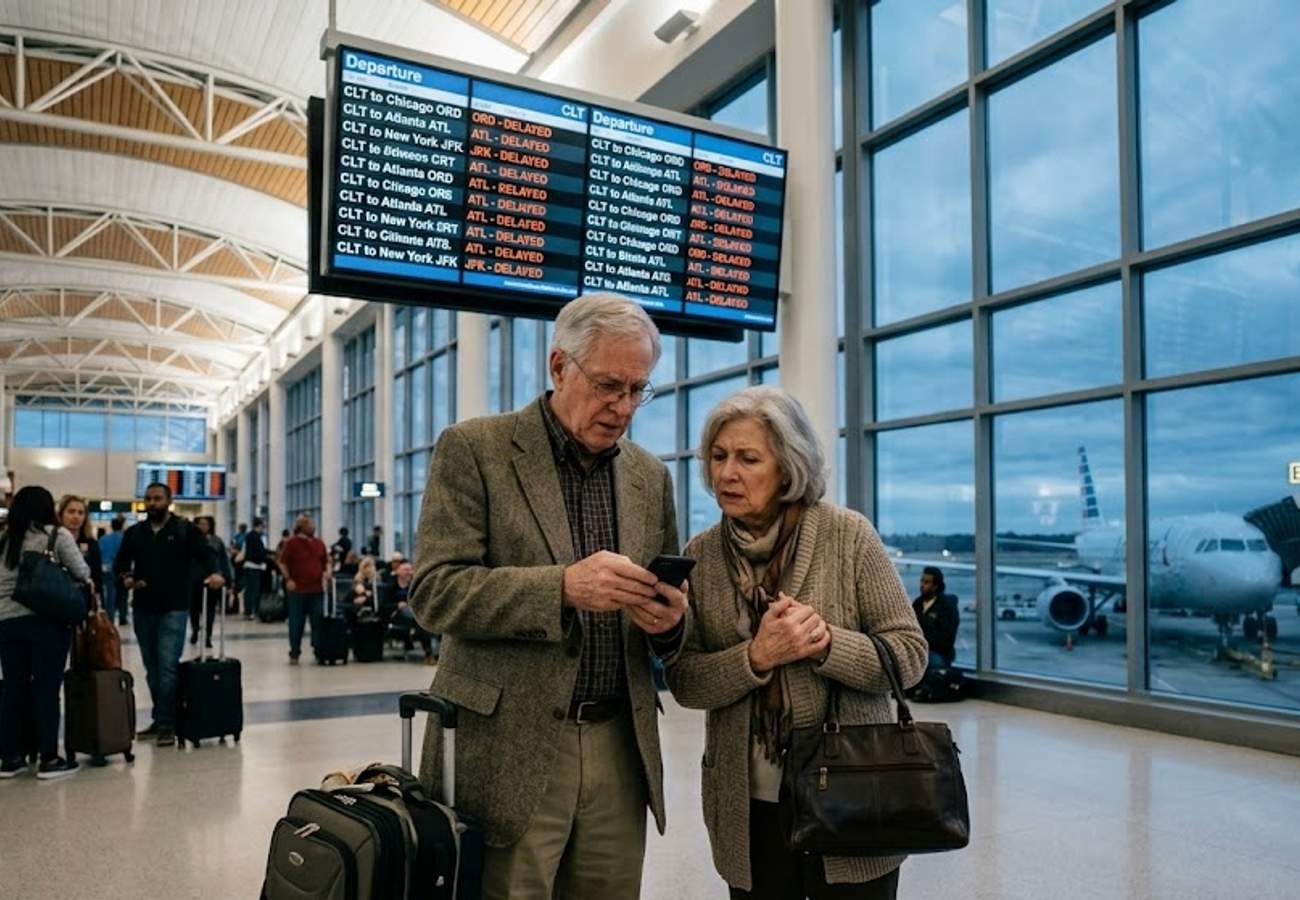
Image generated by AI
[Charlotte, NC] — An American Airlines domestic service was forced to alter its flight path on July 18, 2026, resulting in a diversion to North Carolina. Flight AA2062, operated by an Airbus A320, was originally bound for Washington Ronald Reagan National Airport from Orlando International Airport but instead touched down at Charlotte Douglas International Airport.
The redirection occurred during the afternoon transit, leading to a significant arrival delay for passengers traveling between Florida and the U.S. capital. While the aircraft landed safely, the deviation from the original flight plan disrupted the scheduled arrival time by several hours.
Flight AA2062 Operational Timeline and Route Deviation
The flight was scheduled to depart from Orlando International Airport (MCO) at 2:37 PM EDT, with an expected arrival at Washington Ronald Reagan National Airport (DCA) at 4:59 PM EDT. According to flight tracking data and operational reports, the aircraft actually pushed back from Gate 58 in Orlando at approximately 2:27 PM EDT, departing 10 minutes ahead of its scheduled time.
However, the journey did not proceed to the intended destination in Washington. During the flight, the crew initiated a diversion to Charlotte Douglas International Airport (CLT). The Airbus A320 eventually arrived at Gate D41 in Charlotte at 8:31 PM EDT. This resulted in a total delay of three hours and 32 minutes relative to the original scheduled arrival time in Washington.
Factors Contributing to the Diversion to Charlotte
Industry sources indicate that the specific cause for the redirection of Flight AA2062 has not been officially disclosed by the carrier. In standard aviation practice, diversions are typically triggered by a variety of operational necessities to ensure the safety of the passengers and crew.
Common reasons for such maneuvers include:
- Technical Assessments: Unexpected mechanical readings that require immediate inspection upon landing.
- Weather Disruptions: Severe atmospheric conditions at the destination airport that make landing unsafe.
- Medical Emergencies: Onboard health crises requiring urgent professional medical intervention.
- Air Traffic Control (ATC) Mandates: Directives from controllers due to airport congestion or airspace restrictions.
Flight crews and ground operations teams maintain constant communication to identify the most suitable alternate airport based on current fuel levels, weather at the alternate site, and available support infrastructure.
Passenger Impact and Logistics at Charlotte Douglas International Airport
The diversion created immediate logistical challenges for travelers who were destined for the Washington D.C. region. Because Charlotte is a distinct geographical destination from Washington, passengers facing onward connections or time-sensitive commitments in the capital experienced substantial disruption.
Upon landing at Gate D41, passengers were subject to the airline's diversion protocols. According to standard industry procedures, American Airlines typically provides updated itinerary information and explores rebooking options to transport diverted passengers to their final destination. Depending on the availability of subsequent flights or ground transportation, travelers may have faced additional wait times in Charlotte before continuing their journey to Washington.
Strategic Role of Charlotte Douglas International Airport as a Hub
The selection of Charlotte Douglas International Airport as the diversion point is strategic. As one of the primary aviation hubs in the United States, CLT possesses the infrastructure necessary to handle unplanned arrivals on a large scale.
The airport provides:
- Extensive Runway Capacity: Multiple runways to accommodate various aircraft sizes and arrival flows.
- Maintenance Facilities: Comprehensive technical support and engineering teams capable of servicing Airbus A320 aircraft.
- Passenger Support: Large-scale terminal facilities and airline staff to manage rebooking and passenger welfare.
Utilizing a hub airport allows airlines to maintain a higher level of operational control, as they have more personnel and resources stationed at these locations compared to smaller regional airports.
Flight Data Summary: AA2062 Diversion
| Detail | Flight Information |
|---|---|
| Flight Number | AA2062 |
| Aircraft Type | Airbus A320 |
| Origin | Orlando International Airport (MCO) |
| Intended Destination | Washington Ronald Reagan National Airport (DCA) |
| Diversion Airport | Charlotte Douglas International Airport (CLT) |
| Scheduled Departure | 2:37 PM EDT |
| Actual Departure | 2:27 PM EDT (Gate 58) |
| Scheduled Arrival | 4:59 PM EDT |
| Actual Arrival (CLT) | 8:31 PM EDT (Gate D41) |
| Total Delay | 3 Hours 32 Minutes |
| Date of Occurrence | July 18, 2026 |
Why This Matters: The Broader Impact on Aviation Reliability
The diversion of Flight AA2062 serves as a practical example of the "fail-safe" mechanisms integrated into the U.S. national airspace system. From a journalistic and industry perspective, this incident highlights the critical interdependence between hub airports and route flexibility.
When a narrow-body aircraft like the Airbus A320 encounters an issue, the ability to pivot to a major hub like Charlotte minimizes the risk of a total operational collapse. For the passenger, a three-hour delay is frustrating; however, for the aviation system, a controlled diversion to a resource-rich hub is a successful outcome of safety-first protocols.
This event also underscores the necessity for passengers to rely on real-time digital notifications. As airlines integrate more sophisticated tracking and communication tools, the gap between a diversion occurring and the passenger receiving a rebooking option is narrowing, though the physical disruption of landing in a different city remains a significant pain point in the traveler experience.
Safety protocols ensure that even when flight plans change, the priority remains a secure landing.
Related Travel Guides
Disclaimer
This article is for informational and educational purposes only. It does not constitute legal, financial, or professional advice. While we strive to provide accurate and up-to-date information, travel policies, regulations, and conditions change rapidly. Always verify information with official sources before making travel decisions. Nomad Lawyer makes no representations about the accuracy, reliability, completeness, or suitability of the information provided. Readers should consult qualified professionals for advice specific to their circumstances. The views expressed in this article are those of the author and do not necessarily reflect the views of Nomad Lawyer.
Kunal K Choudhary
Co-Founder & Contributor
A passionate traveller and tech enthusiast. Kunal contributes to the vision and growth of Nomad Lawyer, bringing fresh perspectives and driving the community forward.
Learn more about our team →