
Mid-Air Turbulence Crisis Triggers Travel Chaos: American Airlines Flight AAL2815 Executes Terrifying U-Turn Emergency Landing Back to Charlotte
As severe convective weather and violent wind shear violently blockade Texas airspace, an American Airlines Airbus A321 executes a highly stressful U-turn, plunging Dallas-bound passengers into sudden travel chaos.

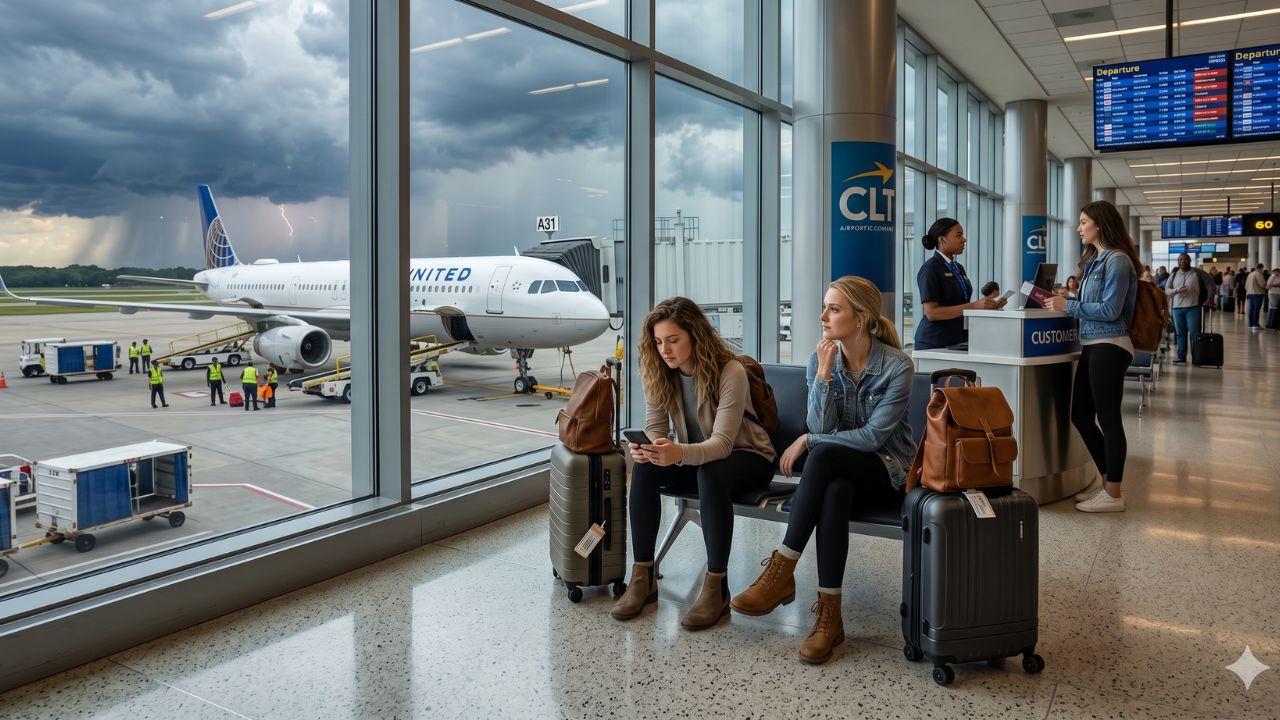
Image generated by AI
A Sudden In-Flight Weather Crisis Triggers Severe Passenger Panic
While massive sectors of the global passenger network frequently battle synchronized logistical bottlenecks and horrific commercial fleet constraints, the sudden, unmanageable eruption of severe in-flight atmospheric threats remains the absolute most terrifying catalyst for cascading airport disruptions. Delivering highly urgent, breaking airline news, verified North American aviation trackers confirm that a massive operational scare has actively detonated, completely exposing vulnerable domestic commuters to severe travel chaos across the highly congested Southern aviation network. Today, June 4, 2026, highly alarming operational news forcefully emerged confirming that a routine domestic route was violently transformed into a highly stressful ordeal when American Airlines flight AAL2815 was forced to execute a sudden, unscheduled emergency U-turn back to North Carolina.
While desperate travelers usually attempt to navigate terrifying terminal gridlock caused by isolated regional failures, these exclusive aviation updates reveal a highly systemic, incredibly dangerous meteorological meltdown actively destroying flight schedules bound for the massive Dallas mega-hub. The aircraft, a narrow-body Airbus A321-231, departed Charlotte for Texas as scheduled, but the journey took a highly unexpected and alarming turn before reaching its destination. As the aircraft soared westbound, a severe convective thunderstorm front and terrifying turbulence completely blocked the primary arrival corridors into North Texas. Consequently, the highly trained flight crew was forced to violently abort the primary flight path, plunging hundreds of passengers into sudden fear and totally ruining vital domestic itineraries as the jet executed an emergency return to Charlotte Douglas International Airport.
Expanded Overview: The Scale of the Domestic Flight Disruption
The sudden, highly publicized execution of this massive airborne diversion serves as an undeniable example of how rapidly complex continental logistics can collapse into extreme transit pressure. American Airlines Flight AAL2815 was operating a highly critical feeder service designed to funnel travelers from the East Coast directly into the massive Dallas international gateway. When a sudden weather disruption strikes a feeder route of this magnitude, it completely shatters the entire passenger pipeline. For a massive corporate and leisure corridor heavily reliant on incredibly robust, high-frequency flight schedules, this unexpected U-turn heavily exposes the entire network to terrifying bottlenecks, severe travel safety concerns, and massive economic damage to the region’s vital summer cycle.
The terrifying reality of the current transit crisis is found in the sheer volume of high-capacity aircraft abruptly dumping passengers back into their origin hubs, where sudden weather ground stops instantly trigger massive terminal overcrowding. The Airbus A321-231 involved in the operation is a heavily utilized asset in the carrier’s domestic fleet. Flight tracking data confirms the jet remained airborne before ultimately abandoning the Texas trajectory and aggressively reversing course over the mountain range. When an aircraft fails to process its routine passenger traffic into a mega-hub like Dallas due to hostile atmospheric conditions, airlines are forced to heavily delay or execute mass flight cancellations, creating a highly destructive ripple effect that completely ruins connecting flights across the United States.
Section-Wise Breakdown of the Emergency U-Turn
The Mid-Air Convective Crisis
Summer weather patterns across the southern plains often bring sudden thunderstorm cells that violently block primary arrival corridors. As AAL2815 approached the danger zone, air traffic controllers and the flight deck identified a massive, impenetrable wall of severe convective weather and extreme wind shear directly over the target hub. Recognizing that continuing along the original flight path would plunge the aircraft into extremely dangerous, highly destabilizing turbulence, the captain made the definitive call to prioritize passenger welfare over the schedule and abort the Dallas arrival entirely.
The Charlotte U-Turn Strategy
Executing a safe mid-air diversion back to an origin airport requires immense logistical coordination. Once the decision was finalized, the first officer quickly coordinated with regional air traffic control to secure an amended flight clearance, initiating a rapid, unscheduled return. Charlotte Douglas International Airport represents a premier diversionary choice because it is a massive American Airlines fortress hub, offering extensive infrastructure that easily accommodates large commercial aircraft during irregular operations. While landing safely in North Carolina neutralized the immediate airborne threat, it instantly stranded the passengers, completely resetting their travel progress back to zero.
Operational Resolution and Asset Swap
After the unscheduled touchdown occurred, the immediate priority shifted to aircraft inspection and safely transporting travelers to their final destinations. Fortunately, the mainline passenger jetliner touched down without any injuries in North Carolina. Following a brief ground delay in Charlotte, ground coordinators provided passenger recovery options and organized massive asset swaps. Because the aircraft had safely returned to a major hub, the airline systematically rebooked the travelers onto alternative flights or awaited fresh clearance, validating the resilience of modern commercial aviation security while simultaneously subjecting passengers to grueling terminal delays.
Verified Aviation Disruption and Flight Data
To fully comprehend the massive operational scale and strategic deployment dictating this highly destructive capacity crisis, the following table explicitly details the exact flight metrics heavily impacting the American Airlines network today:
Flight AAL2815 Operational Tracking Metrics
| Flight Component | Verified Operational Data | Impact Assessment |
|---|---|---|
| Airline & Flight Number | American Airlines Flight AAL2815 | Major domestic feeder route severely disrupted. |
| Aircraft Type | Airbus A321-231 | Narrow-body jet forced into an emergency U-turn. |
| Original Departure Route | Charlotte Douglas Int'l, NC | East Coast pipeline severed by severe storms. |
| Original Arrival Hub | Dallas, Texas | Arrival violently aborted due to extreme turbulence. |
| Emergency Diversion Point | U-Turn back to Charlotte Douglas | Passengers stranded at origin; zero injuries reported. |
| Final Resolution Strategy | Systematic Rebooking / Asset Swaps | Triggered massive onward travel chaos and missed connections. |
Passenger Impact: Navigating the Hub Gridlock
For the modern commuter attempting to navigate this highly volatile domestic network, the passenger impact of this massive operational meltdown is completely terrifying. Reliable, on-time feeder flights are the absolute backbone of seamless hub connectivity, and this mid-air emergency completely destroyed that promise.
- Endure Severe Terminal Reset: Because the flight executed a U-turn back to Charlotte, hundreds of passengers were subjected to intense fear and frustration, physically returning to their exact starting point with zero clarity on when they would eventually reach Texas.
- The Threat of Ruined Connections: Dallas serves as a critical gateway for domestic and international connections. By violently missing the original arrival time, nearly all passengers on AAL2815 suffered totally ruined onward itineraries.
- Survive the Rebooking Gridlock: Rather than celebrating a smooth journey, travelers are aggressively urged to demand immediate re-accommodation as they battle extreme customer service queues resulting from massive missed connections and asset swaps at the Charlotte hub.
Conclusion: A Highly Destructive Airborne Scare
The sudden, highly publicized U-turn diversion of American Airlines Flight AAL2815 represents a severe, incredibly dangerous wake-up call for the North American aviation sector. By actively demonstrating that routine domestic feeder flights can instantly collapse into extreme operational emergencies requiring sudden returns due to hostile weather, this incident completely shatters passenger confidence in standard logistical planning. As executive leadership at American Airlines frantically scrambles to process the massive wave of rebookings caused by the Charlotte return, domestic travelers are heavily urged to aggressively monitor their flight status via tracking platforms, actively prepare for sudden flight delays during the summer storm season, and fully expect this unprecedented airborne scare to trigger massive regional travel chaos.
Key Takeaways
- Massive Airborne U-Turn: American Airlines Flight AAL2815 violently aborted its scheduled arrival to Dallas due to severe convective thunderstorms and extreme wind shear.
- The Aircraft Involved: The disrupted flight was operated by a high-capacity Airbus A321-231.
- Stranded at Origin: The flight originated in Charlotte, NC, and executed an emergency U-turn back to Charlotte Douglas International Airport, completely resetting passenger itineraries.
- Safe Touchdown: The aircraft landed safely in North Carolina with zero passenger injuries reported.
- Passenger Survival Tactics: Travelers caught in mid-air weather diversions are aggressively urged to check airline apps immediately upon landing to secure rebooking before massive customer service bottlenecks completely paralyze the terminal.
Disclaimer: The specific flight diversion metrics, aircraft data, and injury reports presented in this report are based on verified aviation tracking data regarding operations for flight AAL2815. Official airline technical reports, exact meteorological triggers, and air traffic control clearances are highly volatile and subject to continuous, real-time update based on active operational shifts. Prospective passengers are urgently advised to fiercely monitor their specific booking status and verify active flight schedules directly via the airline's official portal prior to airport arrival.
Disclaimer
This article is for informational and educational purposes only. It does not constitute legal, financial, or professional advice. While we strive to provide accurate and up-to-date information, travel policies, regulations, and conditions change rapidly. Always verify information with official sources before making travel decisions. Nomad Lawyer makes no representations about the accuracy, reliability, completeness, or suitability of the information provided. Readers should consult qualified professionals for advice specific to their circumstances. The views expressed in this article are those of the author and do not necessarily reflect the views of Nomad Lawyer.
Kunal K Choudhary
Co-Founder & Contributor
A passionate traveller and tech enthusiast. Kunal contributes to the vision and growth of Nomad Lawyer, bringing fresh perspectives and driving the community forward.
Learn more about our team →