
American Airlines Flight AAL2081 Urgent Diversion: Airbus A321 Rerouted to Tampa Triggering Florida Travel Chaos and Airport Disruptions: Airline News
American Airlines Flight AAL2081, an Airbus A321 bound for Orlando from Dallas, executes an urgent mid-flight diversion to Tampa following a cockpit alert, causing regional travel chaos.

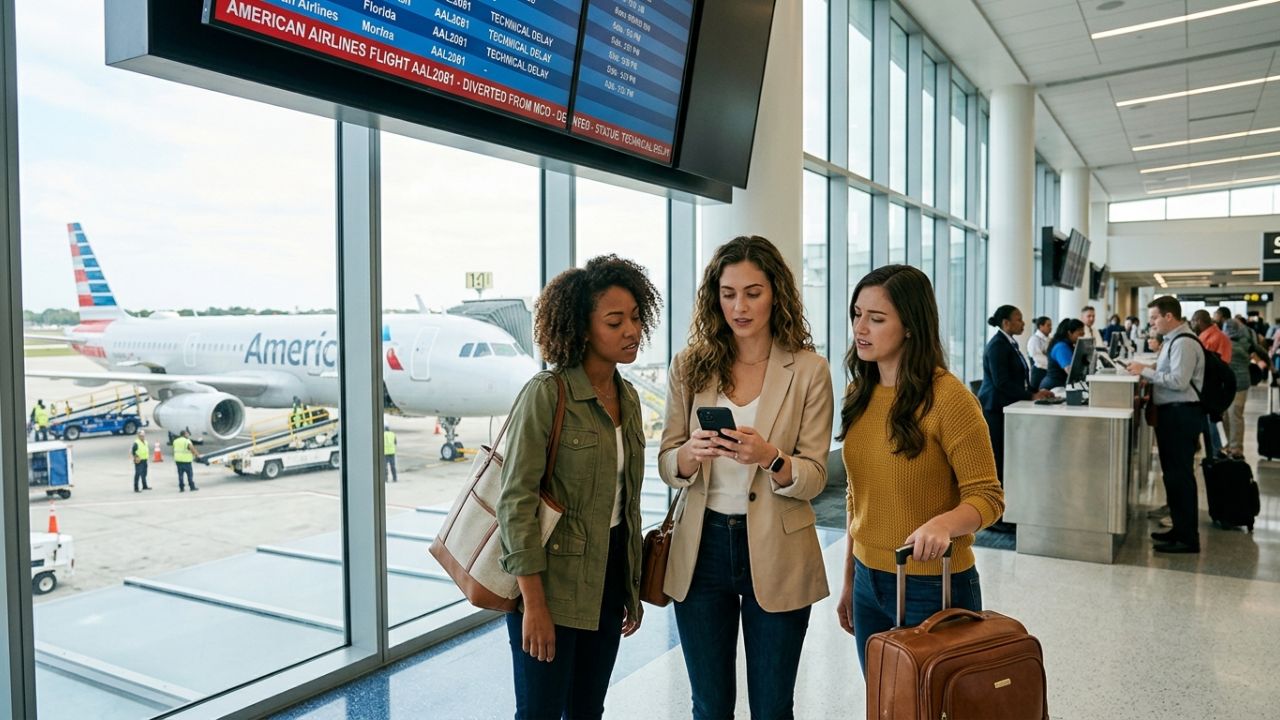
Image generated by AI
In yet another striking demonstration of the highly sensitive safety protocols regulating modern domestic airspace, an Orlando-bound commercial jet was forced into a sudden mid-flight reroute on June 21, 2026, igniting localized travel chaos across central Florida. As stranded vacationers frantically scan the latest airline news to determine the fate of their Disney-bound itineraries, American Airlines Flight AAL2081 executed an urgent precautionary diversion. The aircraft, a high-capacity Airbus A321 operating from Dallas Fort Worth International Airport, abruptly aborted its planned arrival vector into Orlando International Airport. Following the sudden activation of a cockpit precautionary alert, the flight crew immediately prioritized structural safety over schedule adherence, diverting the aircraft to Tampa International Airport. For passengers attempting to salvage their tightly-scheduled Florida vacations without succumbing to the threat of compounding flight cancellations and regional airport disruptions, dissecting the operational parameters of this specific diversion is the key to decoding today's breaking aviation updates.
By electing to land the aircraft early rather than risk pushing a technical anomaly into heavily congested Orlando airspace, American Airlines avoided a potential in-flight emergency but inadvertently triggered a logistical bottleneck on the ground. This sudden diversion proves that even minor technical warnings aboard modern jets instantly collapse the schedule integrity of major domestic routes.
Context: The Reality of Precautionary Diversions
For the thousands of tourists funneling through the massive aviation hubs connecting Texas and Florida, the assumption of uninterrupted transit is fundamental to their travel plans. The Dallas to Orlando corridor is one of the most heavily trafficked leisure and convention routes in the United States.
When operations run normally, the Airbus A321 acts as a reliable workhorse for American Airlines, executing high-frequency turnarounds. However, modern commercial aircraft are designed with extreme, layered redundancy. When a cockpit sensor detects a potential anomaly—even if it is later deemed a minor sensor fault—the flight crew is legally obligated to react aggressively. In the case of Flight AAL2081, continuing to the original destination was deemed an unacceptable risk. The decision to divert to Tampa International Airport was a calculated, tactical maneuver designed to put the aircraft on the ground as quickly and safely as possible. While this successfully averted any in-air escalation and ensured zero passenger injuries, it simultaneously plunged the aircraft's occupants into sudden travel chaos. The grounding forced American Airlines ground crews in Tampa to rapidly mobilize re-accommodation efforts, coordinate alternative ground transport, and juggle onward flight connections, resulting in a severe disruption to the day's regional travel flow.
To view live flight recovery schedules, verify the airworthiness of the replacement aircraft, or track potential rebooking options prior to facing physical customer service lines in Tampa, stranded travelers must bypass the terminal congestion and consult their respective airline applications directly. For direct updates regarding how this localized disruption might shield your onward itinerary from further flight cancellations, passengers should actively monitor the official FlightAware tracking service.
Section-Wise Breakdown: The Operational Route
Dallas Fort Worth International Airport (DFW)
The journey of American Airlines Flight AAL2081 began at Dallas Fort Worth International Airport, a massive operational fortress where American Airlines controls the vast majority of gate traffic. The departure was executed as a standard domestic high-frequency service. The aircraft launched without incident, fully integrated into the dense departure banks funneling traffic toward the eastern seaboard and Florida peninsula.
Mid-Flight Crisis and Tactical Reroute
While operating normally within cruising altitude, the cockpit systems aboard the Airbus A321 triggered a sudden precautionary alert. Aviation protocols dictate that flight crews cannot diagnose complex system warnings in the air while prioritizing passenger safety. The pilots immediately communicated with Air Traffic Control (ATC) and initiated a rapid safety assessment. Concluding that continuing into the heavily congested airspace surrounding Orlando was a liability, the crew requested an immediate vector to the nearest suitable alternative.
Tampa International Airport (TPA): The Safe Haven
Tampa International Airport was selected as the diversion point due to its immediate proximity, excellent operational readiness, and relatively lower congestion compared to Orlando. The Airbus A321 was seamlessly integrated into Tampa’s arrival pattern by ATC. The aircraft touched down safely and under completely controlled conditions. Ground crews immediately secured the aircraft, allowing passengers to disembark normally without the deployment of emergency slides or external rescue equipment.
Orlando International Airport (MCO): The Broken Schedule
Meanwhile, at the intended destination of Orlando International Airport, the failure of Flight AAL2081 to arrive immediately disrupted the downstream schedule. Inbound passengers waiting for relatives or ground transport were met with sudden arrival delays, while the aircraft's scheduled turnaround flight out of Orlando was inevitably impacted, contributing to the broader regional airport disruptions affecting central Florida.
Technical Roster: Official Flight Diversion Matrix
To ensure absolute factual accuracy regarding the specific parameters of this mid-air disruption, the impacted carrier, and the verified operational metrics defining this domestic event, the following matrix details the strictly verified data sourced from flight analytics:
Flight Details & Summary
- Operating Carrier: American Airlines
- Flight Designation: AAL2081
- Aircraft Model: Airbus A321
- Incident Classification: Precautionary Mid-Air Diversion
- Passenger Status: Safely landed; zero injuries reported
Official Flight Disruption Matrix
| Airline Carrier | Flight Number | Aircraft Type | Origin Airport | Original Destination | Diversion Airport | Reason for Disruption |
|---|---|---|---|---|---|---|
| American Airlines | AAL2081 | Airbus A321 | Dallas Fort Worth (DFW) | Orlando (MCO) | Tampa (TPA) | Precautionary Cockpit Alert |
Data accurately reflects the verified flight tracking telemetry and the explicit operational diversion executed by American Airlines on June 21, 2026.
Passenger Impact: The Logistical Fallout
The immediate survival of the flight without injury is the paramount success, but the resulting passenger impact is severe. Travelers bound for Orlando—many of whom were likely carrying strict itineraries for theme parks, cruises, or corporate conventions—found themselves suddenly grounded on the wrong side of the Florida peninsula.
The travel chaos generated by this diversion is multifaceted. Passengers faced immediate delays as American Airlines staff in Tampa scrambled to implement disruption recovery procedures. This typically involves organizing mass ground transport (buses) across the I-4 corridor to physically move passengers from Tampa to Orlando, or attempting to rebook them on the few available short-hop flights. For travelers with onward connections out of Orlando, this diversion resulted in guaranteed missed flights and blown schedules. Furthermore, the delay incurs unexpected costs for travelers, including potential lost deposits on non-refundable accommodations or missed time-sensitive events.
Industry Analysis: Safety Over Schedule
Aviation analysts reviewing the diversion of Flight AAL2081 emphasize that this event perfectly illustrates the uncompromising nature of modern aviation safety protocols.
Modern Airbus A321 aircraft utilize highly sophisticated, computerized monitoring systems featuring extensive layered redundancy. This means that a warning light in the cockpit might indicate a genuine mechanical failure, or it might simply be a malfunctioning sensor reading a perfectly healthy component. Because flight crews cannot definitively verify the difference while flying at 35,000 feet, the standard operating procedure is absolute caution. Choosing Tampa over Orlando allowed the pilots to mitigate risk by minimizing total flight time post-alert. Analysts agree that while these precautionary diversions inevitably cause intense airport disruptions and frustrate passengers, they are the exact mechanism that maintains the exceptional safety record of the US domestic airline industry. The aircraft will now face mandatory technical inspections by ground engineers before it is recertified for commercial service.
Actionable Advice for Domestic Travelers
Because sudden mid-air diversions fundamentally alter the logistics of domestic transit, all passengers must execute this strategic travel checklist immediately upon landing at a diversion airport like Tampa:
- Exploit Airline Recovery Logistics: Do not wait for ground staff to make general announcements. Immediately engage the American Airlines mobile application to track the status of your newly generated itinerary or to secure vouchers for ground transport to your final destination.
- Audit Onward Connections Aggressively: If your original flight into Orlando was part of a multi-leg journey, proactively demand that the airline reroutes your entire itinerary from your current location, rather than attempting to catch up to a broken schedule.
- Maintain Independent Transit Options: If airline-provided ground transport across Florida is delayed, consider utilizing independent rideshare apps or rental car services to reach Orlando, keeping all receipts for potential compensation claims regarding the disruption.
FAQ: American Airlines AAL2081 Diversion
Why was American Airlines Flight AAL2081 diverted?
Flight AAL2081 was diverted mid-flight due to a precautionary cockpit alert that required immediate evaluation on the ground to ensure passenger safety.
Where did Flight AAL2081 land after the diversion?
The Airbus A321, originally flying from Dallas to Orlando, was safely diverted to Tampa International Airport, where it landed without incident.
Were any passengers injured during the diversion?
No. The diversion was a controlled, precautionary measure, and the aircraft landed safely in Tampa with zero reported injuries or onboard escalations.
Conclusion: The Price of Absolute Safety
The sudden diversion of American Airlines Flight AAL2081 serves as a stark reminder that the US domestic aviation network prioritizes absolute safety over passenger convenience at every turn. While the resulting travel chaos across central Florida stranded passengers and disrupted meticulously planned itineraries, the successful reroute to Tampa International Airport prevented any potential in-flight escalation. As travelers continue to navigate the highly regulated airspace spanning from Dallas to Orlando, they must accept that surviving modern airport disruptions requires an extreme level of flexibility and the tactical utilization of digital tools to overcome the logistical fallout of mandatory safety protocols.
Key Takeaways
- Urgent Diversion: American Airlines Flight AAL2081 diverted from its Dallas-Orlando route to Tampa International Airport on June 21, 2026.
- Safety Protocol: The diversion was triggered by a precautionary cockpit alert, forcing the Airbus A321 to land immediately for technical inspection.
- Zero Injuries: The flight crew executed a controlled landing in Tampa, prioritizing safety and resulting in no injuries to passengers or crew.
- Severe Disruption: The reroute caused immediate travel chaos for Orlando-bound passengers, requiring complex ground transport and rebooking logistics.
- Proactive Defense: Stranded passengers must utilize the American Airlines app to secure alternative transit to Orlando and manage broken onward connections.
Related Travel Guides
Massive Travel Chaos Paralyzes Chicago O'Hare with 1,425 Disruptions
United Express SKW5090 Urgent Diversion Triggers Rocky Mountain Travel Chaos
American Airlines Flight AAL2081 Diversion Live Updates on Reddit
Disclaimer
This article is for informational and educational purposes only. It does not constitute legal, financial, or professional advice. While we strive to provide accurate and up-to-date information, travel policies, regulations, and conditions change rapidly. Always verify information with official sources before making travel decisions. Nomad Lawyer makes no representations about the accuracy, reliability, completeness, or suitability of the information provided. Readers should consult qualified professionals for advice specific to their circumstances. The views expressed in this article are those of the author and do not necessarily reflect the views of Nomad Lawyer.
Kunal K Choudhary
Co-Founder & Contributor
A passionate traveller and tech enthusiast. Kunal contributes to the vision and growth of Nomad Lawyer, bringing fresh perspectives and driving the community forward.
Learn more about our team →