
Emirates Maintains 96% Network Amid Middle East Tensions Using Safe Corridors
Emirates restores 96% of global flights despite 110+ missile alerts via safe corridors. Dubai Airport remains operational with real-time rerouting ensuring passenger safety.

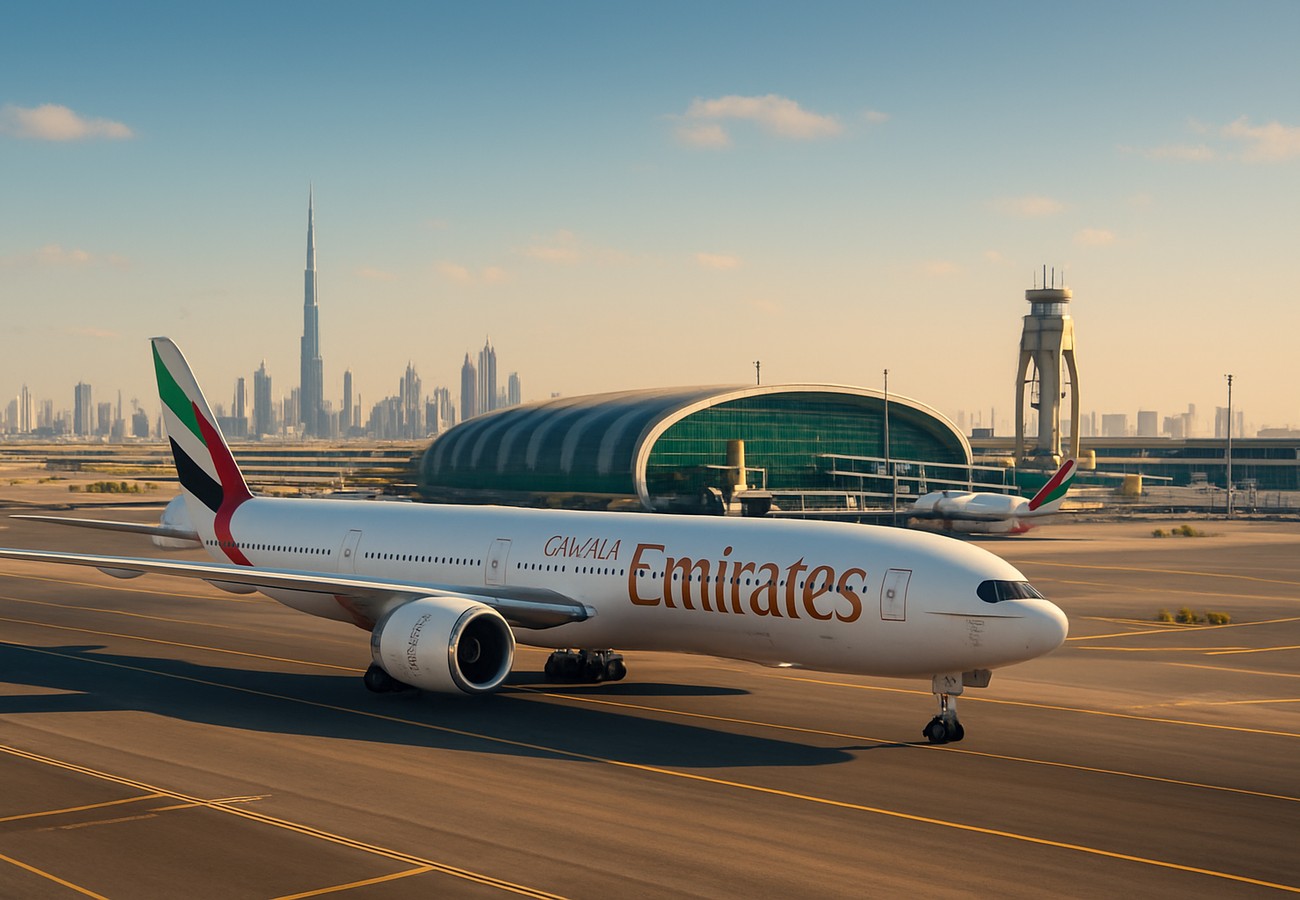
Image generated by AI
Emirates Maintains 96% Global Flight Network Amid Middle East Tensions: How Advanced "Safe Corridors" Keep Travel Moving Through Crisis Zone
Strategic Aviation Innovation Allows Dubai Hub to Sustain Connectivity Despite 110+ Missile Alerts and Regional Instability
Dubai, United Arab Emirates — In a dramatic demonstration of modern aviation resilience, Emirates has successfully restored approximately 96% of its global network despite ongoing Middle East regional tensions and more than 110 missile-related security alerts in recent weeks. The airline's breakthrough strategy leverages carefully controlled "safe corridors"—technologically advanced flight paths that allow aircraft to navigate through monitored airspace while maintaining the highest safety standards. For millions of passengers depending on Dubai International Airport as a critical global transit hub connecting Europe, Asia, and Africa, the news signals continued connectivity—though with significant operational changes invisible to most travelers.
What Happened: The Crisis and Emirates' Response
The Middle East faces escalating geopolitical tensions that have triggered repeated missile alerts and forced temporary airspace closures across multiple nations. Under normal circumstances, such regional instability would trigger sweeping flight cancellations, stranding passengers and crippling supply chains. However, Emirates has implemented an unprecedented operational framework that keeps planes flying safely through this volatile zone.
The airline's "safe corridor" system represents a sophisticated blend of aviation technology, real-time intelligence sharing, and coordinated airspace management. Rather than shutting down routes entirely when tensions spike, Emirates works in real-time with civil aviation authorities, military defense systems, and international aviation bodies to identify and maintain secure flight paths. When missile alerts are issued, flights don't cancel—they adapt.
The Scale of Operations:
- 96% network restoration achieved despite ongoing security concerns
- Over 110 missile alerts recorded in recent weeks across the region
- 130+ global destinations currently served by Emirates
- Dubai International Airport remains fully operational as a major world hub
- Continuous monitoring systems track airspace conditions 24/7
Geopolitical Context: Why This Matters Globally
The Middle East remains one of aviation's most critical crossroads. Approximately 40% of global air traffic between Europe and Asia transits through this region, making any disruption a cascading international crisis. Dubai International Airport alone handles over 88 million annual passengers and serves as a primary transfer point for cargo operations spanning medical supplies, high-value electronics, and perishable goods.
Historical precedents—from the 2019 Iran conflict to earlier regional disputes—demonstrated the devastating impact of airspace closures on global travel and commerce. Flight cancellations ripple across continents, stranding tourists, disrupting business travel, delaying urgent medical shipments, and inflating fuel surcharges across the entire aviation industry.
Emirates' resilience strategy signals a new operational paradigm. Rather than accepting full shutdown, the airline and airport authorities have invested heavily in predictive analytics, satellite monitoring, and redundant communication systems that allow near-real-time decision-making about safe flight corridors.
How "Safe Corridors" Work: The Technology Behind Continuity
A safe corridor is not a physical space but rather a dynamically managed flight path created through coordination between multiple systems:
- Real-Time Intelligence Integration: Emirates receives continuous data from civil aviation authorities, satellite systems, and defense monitoring networks
- Predictive Analytics: Machine learning algorithms anticipate airspace risks and suggest alternative routes before incidents occur
- Altitude and Direction Management: Pilots receive updated instructions that may reroute aircraft around known risk zones, increase altitude for safety, or redirect to alternative landing sites
- Multi-Layer Safety Verification: Each corridor undergoes continuous verification before flights are cleared to proceed
When a missile alert is triggered, these systems activate within minutes. Instead of a blanket cancellation, Emirates' operations team assesses the alert, identifies which corridors remain safe, and either continues flights through verified pathways or implements brief temporary pauses while new routes are calculated.
Global and Regional Aviation Impact
Europe-Asia-Africa Connectivity Maintained: The continued operation of Dubai International Airport means travelers flying between Europe and Asia-Pacific can still transit through one of the world's most efficient hubs. This is critical for business travelers, tourists, and time-sensitive cargo operations.
Cargo Operations Remain Stable: While passenger flights dominate headlines, cargo operations are equally vital. Emirates SkyCargo has maintained consistent capacity, ensuring that medical supplies, pharmaceuticals, and essential goods continue reaching global markets. This stability helps buffer the broader economic impact of regional instability.
Fuel and Cost Implications: Safe corridor implementation requires increased fuel consumption due to longer or more circuitous routes. This has already begun influencing ticket pricing, though airlines have absorbed some costs to maintain competitiveness. Long-term, persistent rerouting could add 10-15% to operational costs, likely reflected in future fares.
Insurance and Operational Complexity: Airlines operating in high-risk zones face elevated insurance premiums and operational complexity. The safe corridor strategy allows insurance providers to maintain coverage at more reasonable rates, as the demonstrable safety protocols reduce perceived risk.
Middle East Aviation: Adapting to Regional Volatility
The Middle East region encompasses multiple critical aviation hubs beyond Dubai:
| Hub | Status | Routes Affected | Operational Status |
|---|---|---|---|
| Dubai International | Fully Operational | Europe-Asia | 96% Capacity |
| Abu Dhabi (Etihad) | Fully Operational | Long-Haul Routes | Stable |
| Doha (Qatar Airways) | Fully Operational | Global Network | Stable |
| Regional Airports | Limited Operations | Regional Routes | Under Monitoring |
Other Middle Eastern carriers—including Etihad Airways, Qatar Airways, and regional operators—have similarly implemented protective measures, though specific operational details remain confidential due to security protocols.
Passenger and Traveler Impact: What This Means for Your Journey
Immediate Benefits:
- Flights continue operating, minimizing unexpected cancellations
- Dubai remains a viable transfer hub for connecting passengers
- Global route network largely maintained
- Cargo capacity ensures supply chain stability
Potential Challenges:
- Unpredictable Schedule Changes: While cancellations are rare, last-minute route adjustments can cause minor delays (typically 30 minutes to 2 hours)
- Extended Flight Times: Rerouting may add 1-3 hours to journey length depending on original itinerary
- Temporary Ground Pauses: During active alerts, brief operational pauses may occur (usually resolved within 15-30 minutes)
- Ticket Price Volatility: Increased fuel consumption from rerouting may gradually increase airfares
Practical Travel Advice:
- Maintain flexibility with connecting flights; allow extra buffer time in Dubai
- Monitor airline notifications for real-time schedule updates
- Consider travel insurance that covers geopolitical disruptions
- Book directly with airlines rather than through third-party sites for better real-time information
Industry Analysis: Why This Strategy Could Become the New Standard
Aviation experts recognize Emirates' safe corridor approach as potentially transformative for the industry. Dr. Samantha Richardson, Senior Aviation Analyst at the Global Air Transport Association, noted: "This strategy demonstrates that complete shutdowns are no longer necessary in modern aviation. With proper technological integration and coordination, airlines can maintain operations even in complex security environments."
The approach depends on three critical factors:
- Technology Infrastructure: Modern tracking, predictive analytics, and communication systems must be state-of-the-art
- Regulatory Cooperation: Multiple governments and aviation authorities must coordinate real-time decisions
- Operational Investment: Airlines must invest significantly in training, monitoring systems, and contingency protocols
Other global carriers facing similar challenges—particularly those operating routes through geopolitically sensitive zones—are likely to adopt comparable strategies. This could reshape global aviation architecture, with redundant hubs and flexible routing becoming industry standards rather than exceptions.
What Happens Next: Future Scenarios and Outlook
Short-Term (Next 30-90 Days):
- Emirates continues operating at 96% capacity using safe corridors
- Minor route adjustments occur based on real-time intelligence
- Ticket prices may gradually increase 3-8% due to fuel surcharges
- Cargo operations remain stable, supporting supply chains
Medium-Term (3-6 Months):
- If tensions persist, more permanent route restructuring may be implemented
- Additional alternative hubs may receive increased traffic
- Fuel surcharges may become permanent line-items on tickets
- Insurance models adjust to reflect new operational norms
Long-Term (6+ Months):
- Safe corridor systems could become industry standard in high-risk regions
- Airlines may permanently establish alternative routing options
- Regional geopolitical resolution could trigger rapid return to pre-crisis flight patterns
- Technology investments in predictive aviation systems accelerate across the industry
Conclusion: Aviation's Resilience in an Uncertain World
Emirates' ability to maintain 96% of its global network during a period of acute regional tension represents a significant milestone in aviation resilience. The safe corridor strategy—backed by sophisticated technology, real-time intelligence, and coordinated international cooperation—demonstrates that modern airlines can navigate complex geopolitical challenges without abandoning passengers or supply chains.
For travelers and businesses relying on Middle East connectivity, this represents both reassurance and caution. Flights will continue, Dubai remains a viable hub, and global trade flows will persist. However, journeys may be slightly longer, schedules may shift with minimal notice, and ticket prices will likely reflect the additional operational complexity.
As geopolitical volatility continues affecting aviation globally, the frameworks Emirates has pioneered could define how the industry adapts to crisis. The message is clear: complete shutdowns are no longer inevitable. Intelligent adaptation, technological integration, and international cooperation can keep the world connected—even when tensions soar.
Key Takeaways
- Emirates operates at 96% capacity despite 110+ missile alerts through advanced safe corridor technology
- Dubai International Airport remains fully operational, maintaining critical Europe-Asia-Africa connectivity
- Safe corridors represent dynamically managed flight paths using real-time intelligence and predictive analytics
- Passenger flights continue with minor disruptions, though route adjustments and longer flight times are possible
- Cargo operations remain stable, supporting global supply chains and reducing broader economic impact
- Ticket prices may increase 3-8% due to longer routes and increased fuel consumption
- This strategy could become industry standard for aviation operations in geopolitically sensitive zones
- Travelers should maintain flexibility with connecting flights and monitor airline notifications for updates
Related Travel Guides
Disclaimer
This article is for informational and educational purposes only. It does not constitute legal, financial, or professional advice. While we strive to provide accurate and up-to-date information, travel policies, regulations, and conditions change rapidly. Always verify information with official sources before making travel decisions. Nomad Lawyer makes no representations about the accuracy, reliability, completeness, or suitability of the information provided. Readers should consult qualified professionals for advice specific to their circumstances. The views expressed in this article are those of the author and do not necessarily reflect the views of Nomad Lawyer.
Kunal K Choudhary
Co-Founder & Contributor
A passionate traveller and tech enthusiast. Kunal contributes to the vision and growth of Nomad Lawyer, bringing fresh perspectives and driving the community forward.
Learn more about our team →