
Mid-Air Emergency Triggers Travel Chaos: American Airlines Flight AA1475 Abruptly Diverts to Memphis Following Sudden Cockpit Warning
As unexpected technical anomalies threaten domestic flight safety, an American Airlines Airbus A321neo executes a highly stressful emergency landing in Memphis, plunging Nashville-to-Dallas passengers into sudden travel chaos.

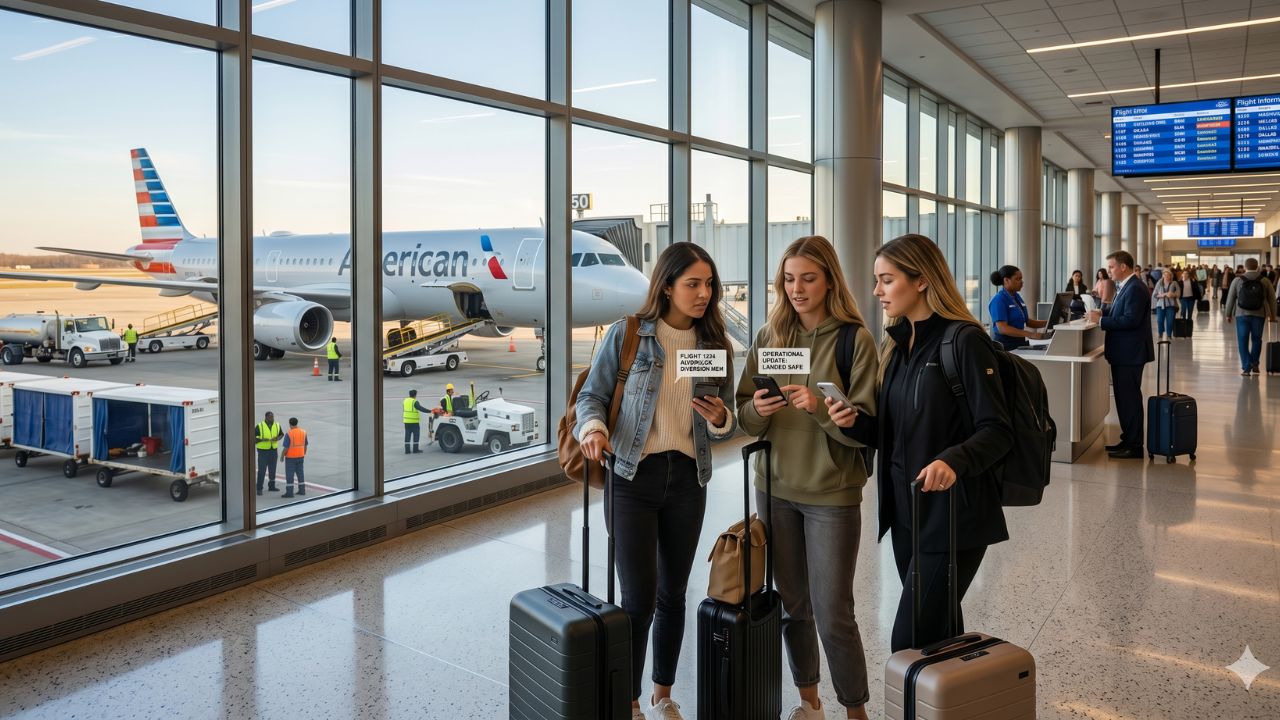
Image generated by AI
A Sudden Technical Crisis Triggers Severe Passenger Panic
While massive sectors of the global passenger network frequently battle synchronized logistical bottlenecks and horrific commercial fleet constraints, the sudden, unmanageable eruption of severe technical warnings in the cockpit remains the absolute most terrifying catalyst for cascading airport disruptions. Delivering highly urgent, breaking airline news, verified North American aviation trackers confirm that a massive operational scare has actively detonated, completely exposing vulnerable domestic commuters to severe travel chaos across the highly congested Southern aviation network. Today, June 4, 2026, highly alarming operational news forcefully emerged confirming that a routine domestic route was violently transformed into a highly stressful ordeal on June 2 when American Airlines flight AA1475 was forced to execute a sudden, unscheduled emergency diversion.
While desperate travelers usually attempt to navigate terrifying terminal gridlock caused by absolute flight cancellations before they even board, the passengers on this flight faced immediate mid-air drama. Originally scheduled to fly from Nashville International Airport to the massive Dallas Fort Worth International Airport hub, the Airbus A321neo aircraft encountered an unexpected, highly critical cockpit warning. Consequently, the vigilant flight crew was forced to trigger a rapid operational response. As air traffic controllers frantically scrambled to clear a path for the unscheduled arrival, the passenger jetliner was violently rerouted, ultimately touching down at Memphis International Airport to escape the terrifying threat of catastrophic airborne mechanical failure.
Expanded Overview: The Scale of the Domestic Flight Gridlock
The sudden, highly publicized execution of this massive mid-air operational diversion serves as an undeniable example of how rapidly complex continental logistics can collapse into extreme transit pressure. The Nashville-to-Dallas corridor serves as an absolutely critical, high-capacity feeder route connecting Tennessee to one of the largest global transportation hubs in Texas. When a sudden mechanical warning derails this vital pipeline, it completely shatters the entire domestic and international passenger network. For a massive corporate and leisure corridor heavily reliant on incredibly robust flight schedules, this sudden diversion heavily exposed the entire passenger manifest to terrifying delays and severe travel safety concerns.
The terrifying reality of the current transit crisis is found in the sheer speed at which technical conditions can deteriorate. Aviation procedures require flight crews to prioritize safety and operational stability whenever unexpected circumstances arise. When a cockpit instrument displays an erratic reading, continuing along the original flight path toward a heavily congested airspace like Dallas Fort Worth becomes an unnecessary and highly dangerous hazard. By electing to immediately divert to an alternative airfield, the American Airlines flight crew actively mitigated potential risks before they could violently escalate into urgent airborne emergencies. While the Memphis diversion successfully prevented a catastrophic encounter, it immediately plunged the shocked travelers onboard into agonizing delays and widespread logistical travel chaos.
Section-Wise Breakdown of the AA1475 Diversion
Nashville Departure Delays
The chaotic nature of flight AA1475 actually began before the aircraft even left the ground in Tennessee. Operational records show the aircraft, officially registered as N952XV, had originally been scheduled to depart Nashville International Airport at 3:21 PM on June 2, 2026. However, actual departure did not occur until 3:49 PM, reflecting a highly frustrating ground delay of nearly half an hour before the aircraft eventually became airborne and commenced its westbound journey towards North Texas. This initial friction set the stage for a severely disrupted travel itinerary.
The Sudden Memphis Emergency Landing
Executing a safe mid-air diversion requires immense logistical coordination between the flight deck, air traffic controllers, and airline operational bases. Following the unexpected cockpit warning, the flight crew immediately abandoned the planned two-hour and seventeen-minute journey to Texas. Memphis International Airport represents a premier diversionary choice because its extensive infrastructure easily accommodates large commercial aircraft during irregular operations. However, this sudden arrival required ground crews in Memphis to rapidly scramble customer service and maintenance personnel to manage the unexpected drop-in, severely taxing local airport resources.
The Operational Response and Aftermath
For airlines, diversions create a highly complex operational challenge because schedules, aircraft rotations, and crew assignments must be violently adjusted within a short timeframe. Instead of arriving in Dallas at the expected 5:38 PM, passengers found themselves stranded in Memphis. Ground handling teams and operational control centers were forced to quickly assess the technical integrity of the Airbus A321neo while simultaneously attempting to manage furious passengers who were aggressively missing their critical connecting flights out of the Dallas mega-hub.
Verified Aviation Disruption and Flight Tracking Data
To fully comprehend the massive operational scale and strategic deployment dictating this highly stressful mid-air capacity crisis, the following tables explicitly detail the exact flight metrics and the resulting passenger disruptions heavily impacting American Airlines:
Flight AA1475 Operational Metrics
| Flight Identification | Aircraft Equipment | Origin Departure Hub | Intended Destination |
|---|---|---|---|
| American Airlines Flight AA1475 | Airbus A321neo (Reg: N952XV) | Nashville (BNA) | Dallas Fort Worth (DFW) |
Emergency Diversion and Disruption Timeline
| Operational Phase | Scheduled Timing vs. Actual Execution | Disruption Impact |
|---|---|---|
| Nashville Departure | Scheduled: 3:21 PM / Actual: 3:49 PM | Initial 28-minute ground delay heavily frustrated passengers. |
| Mid-Air Rerouting | Unexpected Cockpit Warning | Forced the crew to abandon the 2-hour 17-minute flight path. |
| Emergency Diversion | Landed at Memphis International (MEM) | Unscheduled arrival to guarantee passenger safety and mechanical inspection. |
| Dallas Arrival Failure | Expected DFW Arrival: 5:38 PM | Flight failed to reach Dallas, completely ruining onward connections. |
Passenger Impact: Navigating the Airborne Gridlock
For the modern commuter attempting to navigate this highly volatile American network, the passenger impact of this sudden mid-air operational meltdown is completely terrifying. Reliable, on-time flights are the absolute backbone of seamless travel, and this technically-induced collapse completely destroyed that promise.
- Endure Severe Mid-Air Anxiety: Because the diversion was initiated suddenly during the flight, shocked passengers were subjected to intense fear and confusion, trapped inside the cabin with immediate uncertainty regarding a potential mechanical failure.
- The Threat of Ruined Itineraries: Corporate executives and transferring tourists bound for Dallas are now violently delayed, facing the highly stressful reality of missed hotel reservations and destroyed international connecting itineraries due to the failure to reach DFW at 5:38 PM.
- Survive the Terminal Stranding: Rather than celebrating a smooth journey, travelers were forced to endure a frustrating stranding in Memphis while the airline scrambled to arrange replacement aircraft, reposition crews, and violently adjust schedules within a highly compressed timeframe.
Conclusion: A Highly Disruptive Technical Event
The massive, highly publicized mid-air diversion of American Airlines flight AA1475 represents a severe, incredibly dangerous wake-up call for the North American aviation sector. By actively demonstrating that even routine domestic routes on highly advanced Airbus A321neo aircraft can instantly collapse into extreme operational emergencies due to sudden cockpit warnings, this incident completely shatters passenger confidence in strict timetables. As executive leadership across American Airlines successfully managed to safely ground the aircraft and appease the shocked passengers, domestic and international tourists are heavily urged to aggressively monitor airline apps, actively prepare for sudden flight diversions, and fully expect these unprecedented technical disruptions to trigger massive regional travel chaos.
Key Takeaways
- Sudden Mid-Air Diversion: American Airlines flight AA1475 (Nashville to Dallas) executed a sudden emergency diversion to Memphis International Airport on June 2, 2026.
- Aircraft Equipment: The highly stressful ordeal occurred aboard a modern, fuel-efficient Airbus A321neo (Registration N952XV).
- Causes of Chaos: The mid-air rerouting was violently triggered by an unexpected cockpit warning that forced an immediate operational response and a deviation from the original flight plan.
- Schedule Destruction: The flight originally departed late at 3:49 PM and entirely failed to meet its expected 5:38 PM arrival in Dallas Fort Worth, destroying passenger connections.
- Passenger Survival Tactics: Travelers caught in mid-air disruptions are aggressively urged to remain calm, demand immediate rebooking from customer service agents upon landing, and understand that flight crews will always prioritize human safety over strict arrival schedules.
Disclaimer: The specific flight diversion metrics, aircraft tracking data, and operational arrival times presented in this report are based on verified aviation tracking data from Flightradar24 and FlightAware regarding American Airlines flight AA1475. Official airline technical reports, terminal congestion levels, and mechanical diagnoses are highly volatile and subject to continuous, real-time update based on active maintenance shifts. Prospective passengers are urgently advised to fiercely monitor their specific booking status and verify active flight schedules directly via the airline's official portal prior to airport arrival.
Disclaimer
This article is for informational and educational purposes only. It does not constitute legal, financial, or professional advice. While we strive to provide accurate and up-to-date information, travel policies, regulations, and conditions change rapidly. Always verify information with official sources before making travel decisions. Nomad Lawyer makes no representations about the accuracy, reliability, completeness, or suitability of the information provided. Readers should consult qualified professionals for advice specific to their circumstances. The views expressed in this article are those of the author and do not necessarily reflect the views of Nomad Lawyer.
Kunal K Choudhary
Co-Founder & Contributor
A passionate traveller and tech enthusiast. Kunal contributes to the vision and growth of Nomad Lawyer, bringing fresh perspectives and driving the community forward.
Learn more about our team →