
Breaking Airline News: Akasa Air Launches Massive SkyCadet Defense Grid to Prevent Future Travel Chaos and Flight Cancellations
Breaking airline news: Amidst a severe looming pilot shortage that threatens to trigger catastrophic travel chaos, Akasa Air aggressively launches the massive SkyCadet defense programme to completely insulate its operations from devastating flight cancellations.

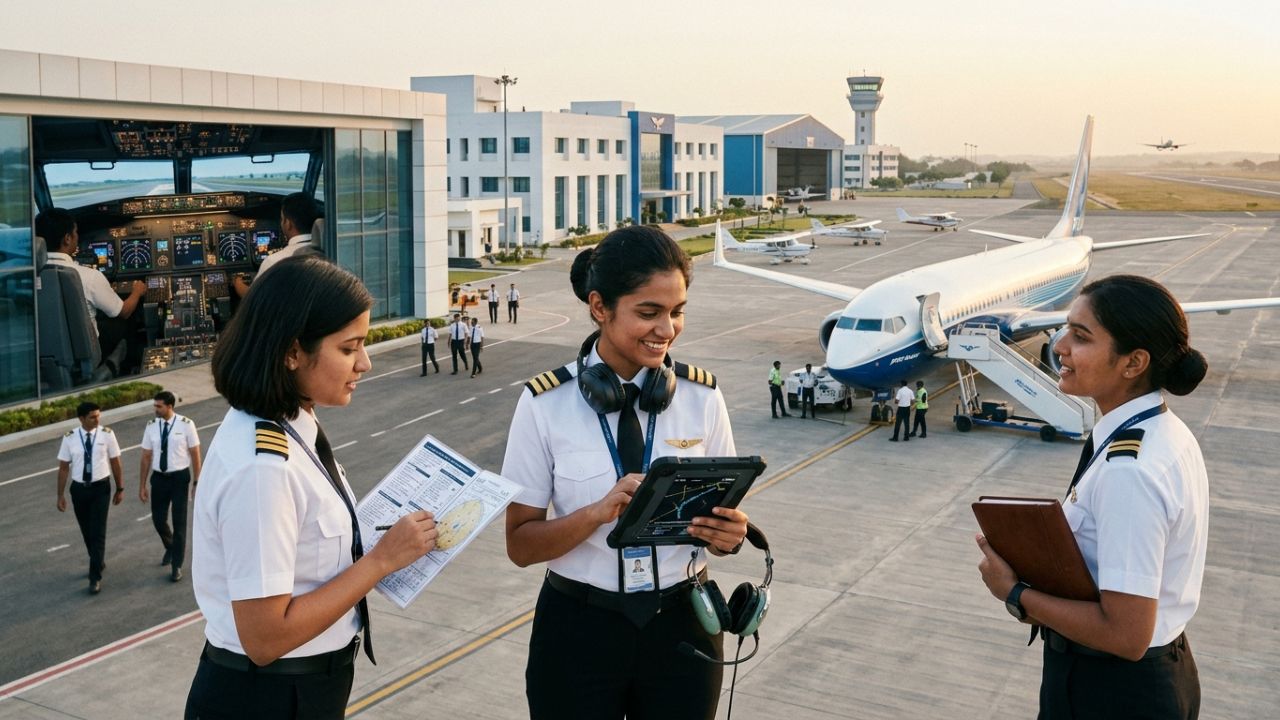
Image representing the intense strategic operational defense initiated by Akasa Air as a severe global pilot shortage threatens to paralyze international aviation. By launching the highly structured SkyCadet programme, the airline is aggressively building an indestructible workforce pipeline to entirely bypass future travel chaos.
Breaking Airline News: Akasa Air Launches Massive SkyCadet Defense Grid to Prevent Future Travel Chaos and Flight Cancellations
As sudden flight cancellations and catastrophic operational fragility brutally expose the extreme vulnerability of airlines operating without massive crew reserves, a severe global pilot shortage is threatening to completely paralyze the future travel grid. In an unprecedented move designed to completely eliminate the terrifying uncertainty of crew-related airport disruptions, Akasa Air has officially launched a massive workforce defense mechanism. Reacting to the explosive threat of future operational gridlock driven by an acute lack of trained aviators, the rapidly expanding Indian carrier has deployed the Akasa SkyCadet programme. By forging highly integrated, regulation-compliant alliances with approved Flight Training Organisations, including Skynex Aero and Dunes Aviation Academy, Akasa Air guarantees the creation of an indestructible pipeline of DGCA-trained commercial aviators. This aggressive pivot completely insulates the airline's massive fleet expansion, entirely bypassing the terrifying reliance on a highly volatile, external pilot market that threatens to plunge the wider industry into severe travel chaos.
In a brutal demonstration of how highly vulnerable independent commercial flight operations remain to sudden human capital shocks, airlines attempting to expand their fleets without a dedicated, internal pilot pipeline historically face massive logistical ruin. When airlines lack the personnel to operate their assets, massive cascading flight cancellations are instantly triggered, stranding thousands of passengers across congested transit hubs. Akasa Air’s aggressive deployment of the SkyCadet initiative acts as an absolute defense mechanism against this catastrophic threat. By aggressively shifting recruitment strategies toward a highly structured, internal training matrix, the airline has created a massive virtual shield. This ensures that the airline's explosive capacity growth is protected by intense, regulation-compliant logistics, proving that surviving global travel chaos now requires deploying deeply fortified, in-house aviation academies to eliminate the threat of grounded aircraft.
Expanded Overview: The Anatomy of a Workforce Shield
The terrifying reality of overwhelming passenger stress currently testing major international gateways brutally exposes the extreme consequences of crew scheduling constraints. Because modern airline networks run on razor-thin personnel margins, the sudden loss of pilot availability forces the broader infrastructure to instantly collapse. To combat this, massive grassroots training deployment serves as the ultimate countermeasure, locking down highly lucrative operational flows beneath a unified, fail-proof corporate personnel shield.
Section-Wise Breakdown: Decoding the SkyCadet Expansion Strategy
To fully comprehend the massive logistical defenses being erected to secure India's aviation future, corporate travel planners and industry analysts must rigorously review exactly how this explosive workforce expansion secures the travel grid.
The Looming Crew Crisis: A Guaranteed Catalyst for Chaos To understand the absolute severity of this strategic victory, one must look at the exact operational telemetry. India’s aviation landscape is expanding at an explosive, uncontrollable rate. Indian carriers collectively hold massive orders for nearly 1,700 jets. However, the personnel required to operate this massive hardware surge represents a critical breaking point. Currently, the nation relies on a highly constrained pool of approximately 12,000 to 15,000 active commercial pilots. Forecasting models reveal a terrifying reality: by 2035, India alone will require approximately 35,000 pilots, while the broader South Asian aviation market will demand nearly 45,000 new pilots. Without an aggressive, immediate intervention, this massive talent deficit guarantees catastrophic future travel chaos, forcing airlines to ground perfectly functional aircraft due to a severe lack of qualified aviators.
The Three-Stage Tactical Defense Program To violently counter this threat, Akasa SkyCadet executes a highly structured, three-stage tactical defense designed to forge airline-grade professionals.
- Ground School Defense: Cadets first endure an intense academic lockdown, mastering DGCA-aligned theory, aircraft navigation, meteorology, and technical systems.
- CPL Flight Training: Cadets are then deployed into rigorous dual and independent flight operations under ICAO regulatory frameworks, focusing heavily on visual and instrument navigation.
- The Boeing 737 MAX Transition: Finally, cadets enter the most critical phase—simulator-intensive Type Rating explicitly on the Boeing 737 MAX. This advanced module forcibly bridges the gap between basic training and aggressive commercial airline readiness, guaranteeing that cadets can instantly transition into the cockpit to prevent operational disruptions.
Leadership Intelligence: Securing the Corporate Fortress This massive defense strategy is heavily endorsed by the highest levels of corporate leadership. Belson Coutinho, Co-Founder and Chief Operating Officer, Akasa Air, stated: “India’s aviation industry is entering a phase of sustained long-term growth, and building a future-ready workforce will be critical to supporting this expansion responsibly. At Akasa Air, we have always believed that our people will be the cornerstone of our success. The Akasa SkyCadet Programme reflects our commitment to investing in talent from the grassroots level and creating structured pathways for aspiring pilots to build meaningful careers in aviation. Beyond technical capability, the programme is designed to instil a strong culture of safety, operational excellence, discipline, and service orientation – the values that define Akasa Air. As we continue to scale our operations, we are focused on nurturing skilled professionals who can grow with us and contribute to the future of Indian aviation.”
Strategic Aviation Workforce Defense Matrix
To guarantee that travelers can aggressively track the specific intelligence regarding this massive operational shift, the following matrix details the exact, verified data confirming Akasa Air's strategic defense against crew-driven travel chaos.
| Strategic Operational Metric | Verified Industry Data |
|---|---|
| Defensive Programme Initiator | Akasa Air |
| Programme Designation | Akasa SkyCadet |
| Approved Training Partners | Skynex Aero, Dunes Aviation Academy |
| Current Active Indian Pilots | 12,000 to 15,000 personnel |
| Projected 2035 Indian Demand | Approx. 35,000 pilots |
| Projected 2035 South Asian Demand | Approx. 45,000 new pilots |
| Current Indian Carrier Jet Orders | Nearly 1,700 aircraft |
| Target Aircraft Type Rating | Boeing 737 MAX |
Data reflects the massive strategic aviation shift designed to eliminate operational threats and future passenger disruption.
Immediate Tactical Recruitment
While the SkyCadet programme guarantees long-term absolute operational security, Akasa Air is concurrently executing an aggressive immediate defense strategy. To ensure that sudden fleet expansions do not trigger short-term flight cancellations, the airline is heavily recruiting experienced Commercial Pilot Licence (CPL) holders and active Boeing 737 type-rated pilots. This dual-pronged attack ensures that the airline maintains a massive, impenetrable personnel buffer, allowing operations to scale violently without exposing passengers to the devastating reality of airport delays caused by unstaffed cockpits.
Conclusion: Surviving the Chaos
As the extremely critical global transit network braces for further instability driven by an explosive lack of qualified personnel, this massive Akasa Air workforce integration represents a highly strategic victory for travelers. Passengers desperate to avoid sudden flight cancellations and the severe logistical nightmare of being stranded mid-journey must immediately execute aggressive booking strategies. Travelers must fiercely prioritize booking highly integrated airlines that possess dedicated, internal pilot academies to bypass the massive terminal gridlock plaguing vulnerable, under-staffed networks. This intelligence proves that surviving the modern era of commercial aviation relies entirely on anticipating corporate personnel failures and flying exclusively with heavily fortified airlines immune to the global pilot shortage.
Key Takeaways
- Massive Network Defense: Akasa Air is aggressively launching the SkyCadet programme to build a dedicated pipeline of DGCA-trained commercial aviators, heavily defending against future travel chaos.
- The Looming Threat: With nearly 1,700 jets on order across India, the current pool of 12,000 to 15,000 pilots is critically insufficient. Forecasting models predict a massive demand for 45,000 new pilots across South Asia by 2035.
- Structured Operational Shield: Partnering with Skynex Aero and Dunes Aviation Academy, the 3-stage program rapidly trains cadets from Ground School directly to a Boeing 737 MAX Type Rating.
- Immediate Tactical Fortification: Akasa Air continues to aggressively hire experienced CPL and Boeing 737 type-rated pilots to entirely avoid short-term crew scheduling disruptions.
- Passenger Survival: Stranded travelers must utilize airlines with heavily fortified, internal personnel pipelines to guarantee mobility, entirely avoiding the catastrophic flight cancellations associated with carriers exposed to the global pilot shortage.
Related Travel Guides
Disclaimer
This article is for informational and educational purposes only. It does not constitute legal, financial, or professional advice. While we strive to provide accurate and up-to-date information, travel policies, regulations, and conditions change rapidly. Always verify information with official sources before making travel decisions. Nomad Lawyer makes no representations about the accuracy, reliability, completeness, or suitability of the information provided. Readers should consult qualified professionals for advice specific to their circumstances. The views expressed in this article are those of the author and do not necessarily reflect the views of Nomad Lawyer.
Kunal K Choudhary
Co-Founder & Contributor
A passionate traveller and tech enthusiast. Kunal contributes to the vision and growth of Nomad Lawyer, bringing fresh perspectives and driving the community forward.
Learn more about our team →