
Airports World Largest: Physical Size vs. Passenger Volume in 2026
Physical airport size matters more than passenger volume for understanding global aviation infrastructure in 2026. The world's largest airports by land area reveal hidden operational realities affecting capacity and expansion potential.

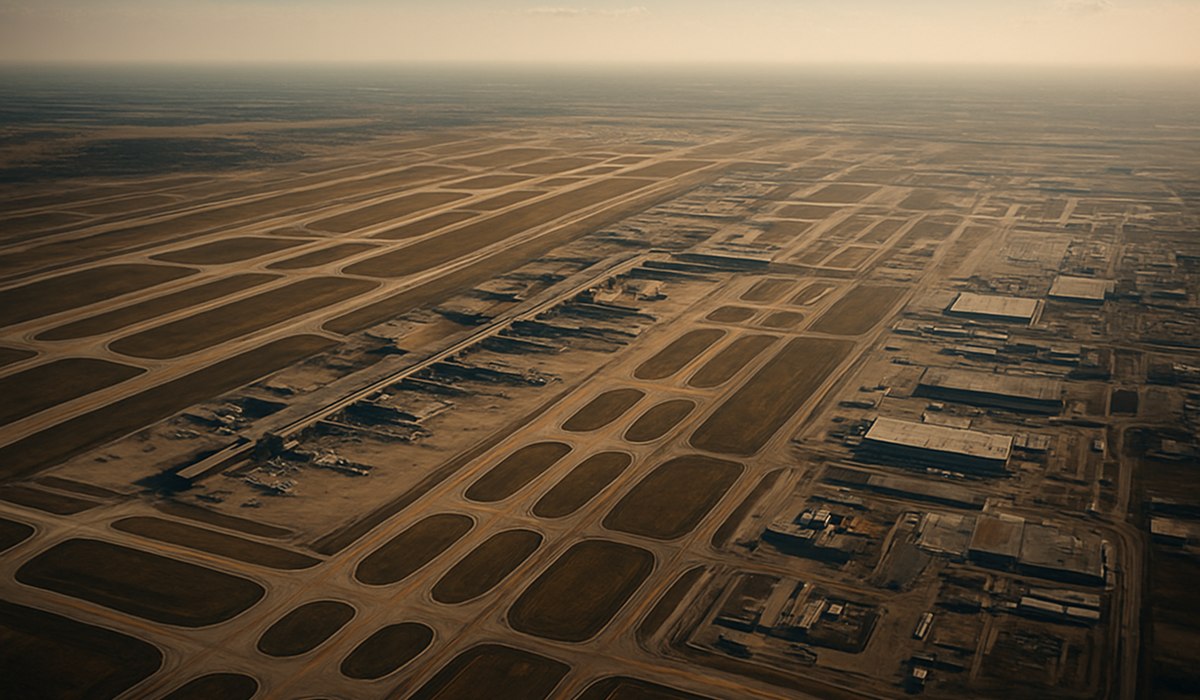
Image generated by AI
Global Aviation Infrastructure: Beyond Passenger Count
The world's largest airports by physical land area paint a dramatically different picture than traditional passenger volume rankings. While major hubs like Atlanta and Dallas dominate traveler statistics, the sprawling geography of certain facilities reveals critical infrastructure truths that shape operational efficiency, cargo capacity, and long-term expansion capabilities. Understanding airports world largest by acreage provides crucial insight into how nations invest in aviation infrastructure and prepare for future demand. This 2026 analysis examines why physical footprint matters more than many travelers realize when evaluating global airport significance and capacity constraints.
Why Airport Size Matters Beyond Passenger Volume
Physical dimensions directly impact how efficiently an airport operates under pressure. A facility with substantial land area can accommodate multiple runways, extensive taxiway networks, spacious cargo terminals, and dedicated maintenance hangars without creating operational bottlenecks. Airports constrained by limited acreage struggle during peak travel periods, facing flight delays and safety concerns when infrastructure reaches capacity limits.
The largest airports world largest by area support parallel runway operations, enabling simultaneous takeoffs and landings that smaller facilities cannot manage. This parallel capability increases hourly throughput significantly. Additionally, expansive airports offer flexibility for future terminal construction, allowing operators to add capacity incrementally as demand grows. Cargo operations particularly benefit from sprawling airport footprints, with dedicated loading zones, climate-controlled storage, and specialized equipment areas positioned far from passenger terminals. Ground transportation infrastructure—parking lots, rental car facilities, transit hubs—requires considerable space that constrained airports simply cannot provide adequately.
The Top 10 Largest Airports by Land Area
The global hierarchy of airports world largest reveals unexpected patterns across continents. Denver International Airport leads North American facilities with approximately 33,531 acres of operational land. This massive footprint enabled construction of five parallel runways and positions the airport for decades of growth without significant land acquisition. Dallas/Fort Worth International follows with 27,207 acres, supporting simultaneous operations across nine runways and extensive cargo facilities.
International players occupy considerable positions. Beijing Capital International and Shanghai Pudong reflect China's massive infrastructure investments, while Istanbul's Atatürk facility ranks among Europe's largest. Abu Dhabi International and Doha's Hamad International serve as critical Middle Eastern aviation hubs with sprawling modern designs. These facilities prioritize future expansion, incorporating empty zones specifically reserved for terminal and runway additions planned through 2050.
Saudi Arabia's King Fahd International Airport and Australia's Sydney Kingsford Smith represent regional significance. King Fahd's 330 square kilometers demonstrates the scale required for supporting major international aviation hubs across less densely populated regions. This geographic generosity allows operators to maintain spacing between operational zones, enhancing safety and reducing congestion during simultaneous departure and arrival waves.
How Physical Size Impacts Operations and Expansion
Large-footprint airports enable operational strategies unavailable to space-constrained facilities. Runway configurations improve dramatically with ample acreage. A 33,000-acre airport like Denver can position runways to optimize wind patterns, reduce noise impact on surrounding communities, and minimize crossing runway traffic—a critical safety consideration. Smaller airports force compromises, accepting inefficient configurations because expanding simply isn't feasible.
Terminal expansion demonstrates the practical value of substantial land reserves. When passenger demand surges unexpectedly—as occurred post-pandemic—sprawling airports absorb growth through phased construction without operational disruption. Constrained airports face years-long construction programs that conflict with daily operations, forcing gate closures, reduced service frequencies, and traveler frustration.
Ground support infrastructure scales directly with facility size. Large airports dedicate entire zones to aircraft maintenance, creating specialized facilities for different aircraft types. Cargo operations occupy segregated areas with dedicated equipment and security protocols. Fuel farms, utility stations, and employee facilities spread across separate zones, reducing congestion and improving safety protocols. These operational advantages accumulate, making massive airports increasingly efficient as traffic grows, while smaller facilities face mounting pressure from expanding demand constrained by limited geography.
The United States' Dominance in Airport Infrastructure
American airports dominate the global airports world largest category, reflecting both nation size and infrastructure investment philosophy. The United States recognized early that aviation capacity determines economic competitiveness. Federal investments in airport expansion accelerated through the 20th century, resulting in a network of truly massive facilities.
Four of the world's ten largest airports by land area operate within the United States. Beyond Denver and Dallas, Chicago's O'Hare and Atlanta Hartsfield-Jackson maintain substantial acreage supporting complex operations. This redundancy ensures that capacity constraints rarely force international carriers to reroute traffic through congested secondary hubs.
Other nations adopted different approaches. European airports, constrained by dense urban development and existing cities, optimized vertical expansion rather than horizontal growth. Asian hubs invested heavily in modern construction, building newer facilities with efficient designs that maximize operational throughput within available space. The American model prioritizes generous geographic footprints, accepting larger environmental impacts to ensure operational flexibility decades into the future.
Traveler Action Checklist
Understand how airport size affects your travel experience with these practical steps:
-
Check destination airport size before booking long layovers—massive airports have better dining, shopping, and rest facilities spread across larger facilities.
-
Monitor weather patterns at your departure airport using FlightAware, as larger airports with multiple runways handle weather disruptions better than smaller hubs.
-
Verify runway status through the FAA website during planned maintenance, as major construction at sprawling airports indicates future capacity improvements.
-
Allocate extra time for ground transportation at massive airports, as walking distances from gates to baggage claim or transportation hubs exceed typical expectations.
-
Review passenger rights on US DOT before departure, ensuring you understand compensation policies if your flight experiences delays related to airport congestion.
-
Contact your airline 72 hours before travel to confirm gate assignments, as large airports sometimes reassign gates for operational efficiency, requiring updated information.
Key Data Table: World's Largest Airports by Land Area
| Airport Name | Location | Land Area (Acres) | Primary Function | Runways |
|---|---|---|---|---|
| Denver International | United States | 33,531 | Major International Hub | 5 |
| Dallas/Fort Worth International | United States | 27,207 | Major International Hub | 9 |
| Beijing Capital International | China | 18,000 | Major International Hub | 3 |
| Istanbul Atatürk | Turkey | 24,750 | Major International Hub | 3 |
| Shanghai Pudong | China | 12,700 | Major International Hub | 4 |
| Abu Dhabi International | United Arab Emirates | 11,270 | Regional Hub | 3 |
| King Fahd International | Saudi Arabia | 330 sq km | Regional Hub | 4 |
| Sydney Kingsford Smith | Australia | 8,400 | Major International Hub | 3 |
| Frankfurt am Main | Germany | 8,656 | European Hub | 4 |
| London Heathrow | United Kingdom | 4,903 | European Hub | 3 |
What This Means for Travelers
Airport size directly impacts your travel experience in measurable ways. Massive facilities like Denver and Dallas offer operational redundancy, meaning delays from single-runway failures rarely cascade into day-long disruptions. Weather events trigger simultaneous departures across multiple runways, keeping flights moving even during storms that would paralyze smaller airports.
Conversely, smaller constrained airports sometimes justify premium connections to larger hubs, even when direct flights exist. A two-hour connection through a massive airport often requires less total travel time than a direct flight on a constrained facility experiencing congestion.
Understanding airports world largest helps explain why your favorite airline may reroute flights through unexpected hubs. Strategic operators position capacity where geography permits, using massive airports as consolid
Disclaimer
This article is for informational and educational purposes only. It does not constitute legal, financial, or professional advice. While we strive to provide accurate and up-to-date information, travel policies, regulations, and conditions change rapidly. Always verify information with official sources before making travel decisions. Nomad Lawyer makes no representations about the accuracy, reliability, completeness, or suitability of the information provided. Readers should consult qualified professionals for advice specific to their circumstances. The views expressed in this article are those of the author and do not necessarily reflect the views of Nomad Lawyer.
Raushan Kumar
Founder & Lead Developer
Full-stack developer with 11+ years of experience and a passionate traveller. Raushan built Nomad Lawyer from the ground up with a vision to create the best travel and law experience on the web.
Learn more about our team →