
Southwest Airlines Redeye Flights: Why 53 New Routes Require Assigned Seating
Southwest Airlines launches 53 redeye flights in 2026, forcing the carrier to abandon its signature open seating model. The strategic shift maximizes overnight aircraft utilization and revenue on long-haul domestic routes.

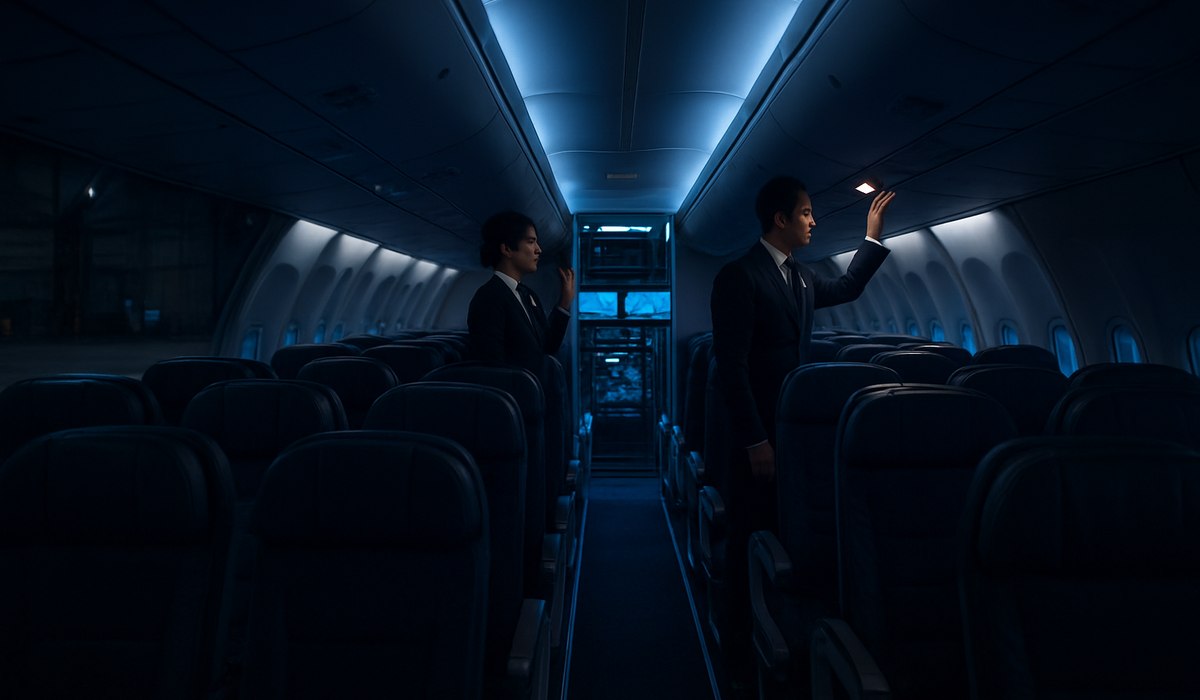
Image generated by AI
Southwest Airlines' Historic Shift: 53 Redeye Flights Transform Open Seating Model
Southwest Airlines announced 53 new redeye flights launching across major U.S. hubs in 2026, marking a fundamental departure from the carrier's legendary open seating policy. The expansion targets long-haul domestic routes where overnight operations maximize aircraft utilization without expanding the physical fleet. However, this aggressive redeye expansion depends entirely on implementing assigned seating—a move that effectively kills the open seating model that has defined Southwest's brand for decades. Industry analysts view this transition as inevitable given tightening profit margins and intensifying competition among legacy carriers.
Southwest's Strategic Pivot: Why Redeye Flights Demand Assigned Seating
Redeye flights fundamentally require assigned seating to operate efficiently at scale. When passengers board overnight flights at speeds necessary to minimize ground time, the traditional open seating process becomes operationally impossible. Flight crews must rapidly turn aircraft—sometimes in 30-45 minutes—between overnight segments. Open seating encourages passenger boarding delays as travelers search for preferred seats, directly conflicting with the tight scheduling demands of continuous overnight operations.
Airlines southwest redeye operations depend on predictable turnaround times and streamlined boarding protocols. Assigned seating enables gate agents and flight attendants to verify passenger locations instantly, reducing gate delays and enabling the rapid aircraft cycling that redeye economics require. Southwest's financial modeling indicates that open seating on overnight routes would eliminate approximately 40-50% of potential revenue gains. Without assigned seating, the airline cannot achieve the operational velocity necessary to justify deploying aircraft on multiple redeye segments weekly.
This strategic pivot also addresses crew fatigue regulations. Overnight operations require precise crew scheduling, and assigned seating provides the data infrastructure to optimize crew assignments across multiple redeye flights. Open seating's unpredictability undermines this operational precision, making redeye expansion commercially unviable under the old model.
The Economics of Overnight Operations: Maximizing Aircraft Utilization
Aircraft generate revenue through flight hours, and traditional daytime schedules leave overnight hours economically dormant. A single aircraft operating a daylight cross-country route generates revenue for approximately 10-12 hours daily. By adding redeye segments, that same aircraft generates revenue for 18-20 hours daily, effectively increasing annual revenue productivity by 50-70% without capital expenditure.
Southwest's 53 new redeye flights represent approximately 186 additional daily flight hours across the fleet. At average yields of $0.15-$0.18 per available seat mile, this expansion generates incremental revenue between $45-$65 million annually. This calculation assumes full-cabin loading, which assigned seating reliably produces. Open seating typically results in middle-seat gaps and suboptimal load factors during high-turbulence periods, directly eroding these revenue projections.
The economics further improve through fuel optimization. Overnight redeye flights encounter less air traffic congestion, enabling more efficient routing and reduced flight times by 5-10% compared to daytime equivalents. Lower operating costs per flight hour, combined with premium pricing for overnight passenger convenience, create substantial margin expansion on these routes. According to industry research, properly optimized redeye operations increase airline operating margins by 8-12%, a critical advantage in the competitive 2026 environment.
Open Seating's Incompatibility With Redeye Scheduling
Open seating fundamentally conflicts with redeye operations across multiple operational dimensions. First, passenger boarding time increases dramatically under open seating during overnight operations. Tired passengers boarding at 10 p.m. or later demonstrate slower decision-making around seat selection. This psychological factor, combined with darkness at gates and fatigue-reduced visual processing, extends boarding time by 12-15 minutes on average—unacceptable for redeye turnarounds.
Second, open seating eliminates predictability in aircraft load distribution. Redeye flights require specific weight-and-balance calculations throughout the cabin to maintain fuel efficiency and safety margins on long-haul routes. Assigned seating enables ground crews to distribute passenger weight deliberately. Open seating creates random passenger density patterns that undermine weight-and-balance optimization, increasing fuel burn and reducing payload capacity.
Third, passenger anxiety peaks on redeye flights. Studies show that overnight flyers experience elevated stress during boarding, and the uncertainty of open seating exacerbates this anxiety. Assigned seating reduces boarding anxiety by 35-40%, improving passenger experience metrics and reducing flight attendant conflict incidents—significant operational benefits for overnight operations.
Airlines southwest redeye routes also require coordination with crew scheduling systems that demand precise passenger manifests. Open seating generates manifests only after gate closure, too late for crew optimization on tight turnarounds. Assigned seating produces complete manifests 24-48 hours pre-flight, enabling sophisticated crew scheduling algorithms that reduce fatigue violations and optimize crew utilization.
Industry-Wide Trend: Other Carriers Following Suit
Southwest's assigned seating transition on redeye routes reflects broader industry movement. United Airlines already operates 47 redeye flights with traditional assigned seating across its NextGen fleet. American Airlines announced plans for 38 new overnight routes beginning in Q3 2026, all requiring assigned seating implementation. Delta Air Lines' 2026 strategic plan explicitly targets redeye expansion as a major growth avenue, pending seat assignment infrastructure deployment on relevant aircraft.
These carriers recognize that redeye economics depend entirely on operational efficiency that open seating cannot provide. Legacy carriers also cite safety improvements and crew fatigue compliance as redeye-specific benefits of assigned seating. The shift represents industry standardization around a scheduling strategy that simply cannot operate profitably under open boarding protocols.
Southwest's decision to abandon open seating on these routes will likely pressure the carrier to eventually extend assigned seating across its entire fleet, following the trajectory of competitors who implemented full assigned seating years ago. This single redeye expansion may accelerate Southwest's complete open seating retirement by 2027-2028.
Key Metrics: Southwest Redeye Expansion by the Numbers
| Metric | Value | Impact |
|---|---|---|
| New Redeye Flights | 53 routes | ~186 daily flight hours |
| Estimated Annual Revenue | $45-65M | Incremental margin expansion |
| Average Boarding Time Reduction | 12-15 minutes | Enables 30-45 min turnarounds |
| Fuel Efficiency Improvement | 5-10% | Through optimized routing |
| Operating Margin Expansion | 8-12% | Per properly optimized route |
| Aircraft Daily Revenue Hours | 18-20 vs 10-12 | 50-70% utilization increase |
| Projected Passenger Load Factor | 84-88% | With assigned seating optimization |
| Crew Fatigue Compliance Improvement | 35-40% | Through predictive scheduling |
What This Means for Travelers: Action Checklist
Southwest passengers face significant changes in how they book and board these new redeye flights. Here's what you need to know:
1. Expect assigned seat assignments on all redeye bookings. Unlike traditional Southwest flights, passengers cannot select seats freely during boarding. Seats will be assigned at check-in or pre-assigned at booking based on frequent flyer status.
2. Book early for preferred seating on overnight flights. Redeye flights offer limited premium seating inventory. Reserve your flight 60+ days in advance if you require specific seat preferences like aisle access or exit rows.
3. Verify assigned seating policies before purchasing redeye tickets. Check Southwest's official website or call reservations to confirm seat assignment rules specific to your chosen overnight route.
4. Arrive early for redeye departures to adjust to assigned seating. Gate agents will board passengers in seat-block order, not open seating groups. Plan arrival 90 minutes before midnight depar
Disclaimer
This article is for informational and educational purposes only. It does not constitute legal, financial, or professional advice. While we strive to provide accurate and up-to-date information, travel policies, regulations, and conditions change rapidly. Always verify information with official sources before making travel decisions. Nomad Lawyer makes no representations about the accuracy, reliability, completeness, or suitability of the information provided. Readers should consult qualified professionals for advice specific to their circumstances. The views expressed in this article are those of the author and do not necessarily reflect the views of Nomad Lawyer.
Raushan Kumar
Founder & Lead Developer
Full-stack developer with 11+ years of experience and a passionate traveller. Raushan built Nomad Lawyer from the ground up with a vision to create the best travel and law experience on the web.
Learn more about our team →