
Dassault Rafale F4 vs F-16, Gripen & Typhoon: 2026 Fighter Jet Showdown
The Dassault Rafale F4 emerges as a premier 4.5-generation fighter jet in 2026, rivaling the F-16, Gripen, and Typhoon. Explore combat capabilities and market positioning of these advanced aircraft.

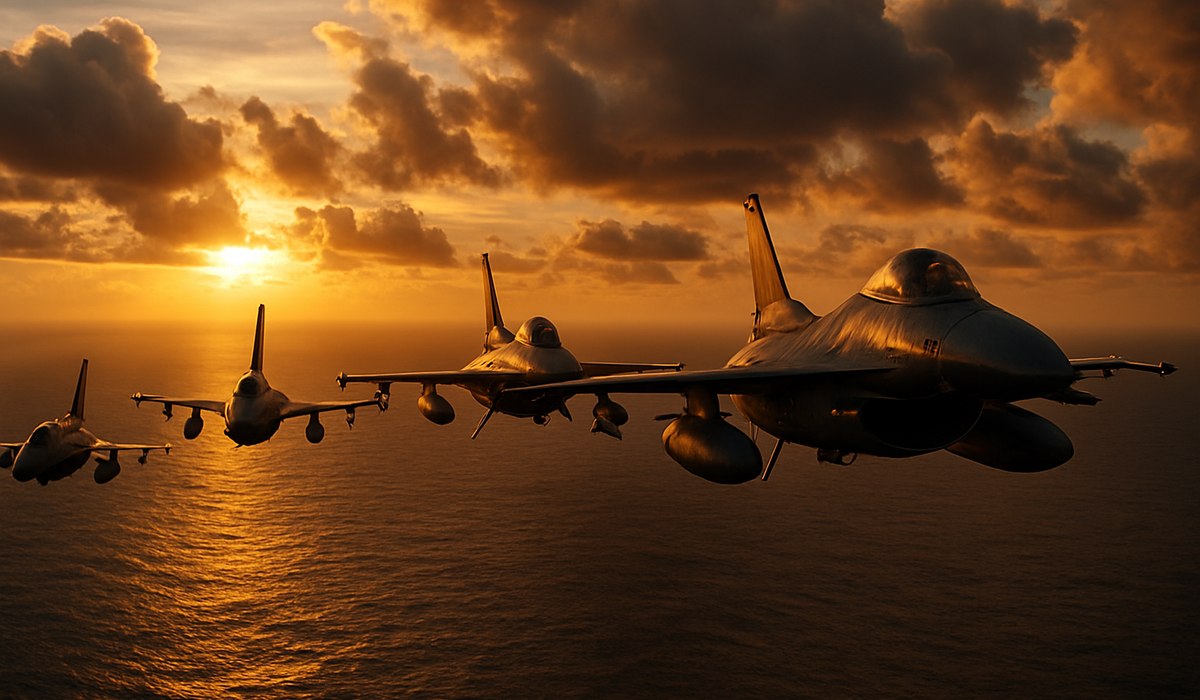
Image generated by AI
The Dassault Rafale F4: Combat-Proven Capability at the Top Tier
The Dassault Rafale F4 stands as one of the world's most formidable non-stealth fighter jets available on the global defense market today. This 4.5-generation aircraft represents a quantum leap in tactical superiority, positioning itself just below fifth-generation stealth platforms in operational effectiveness. The F4 variant delivers unmatched multi-role versatility, having proven itself extensively in real-world combat operations across multiple continents. Its reputation for reliability, advanced avionics integration, and adaptability makes it a strategic choice for modern air forces seeking cutting-edge capabilities without stealth technology trade-offs.
The Dassault Rafale continues to evolve with each iteration, and the F4 configuration maximizes sensor fusion, weapons integration, and pilot ergonomics. European and international air forces have validated its performance through decades of operational experience, establishing a trusted platform for diverse mission profiles.
Head-to-Head: Dassault Rafale F4 Versus the F-16 Fighting Falcon
The General Dynamics F-16 remains the world's most widely deployed fourth-generation fighter, with over 3,000 aircraft across 25 nations. When comparing the Dassault Rafale to the F-16, several critical differences emerge. The Rafale delivers superior avionics sophistication, notably through its integrated Spectra suite and advanced targeting systems that exceed F-16 Block 70 capabilities in sensor fusion architecture.
The F-16's primary advantage lies in operational cost-effectiveness and extensive logistical support infrastructure. However, the Dassault Rafale's canard-delta wing design provides superior agility in instantaneous turn rates and sustained maneuverability. Fuel capacity comparisons show the Rafale holding an 18% advantage in internal fuel, extending operational range considerably. Combat radius, payload flexibility, and single-pilot operation efficiency favor the Rafale in modern air warfare scenarios. For air forces prioritizing cutting-edge capability over legacy platform costs, the Dassault Rafale F4 represents the superior technological investment for 2026 operations.
Learn more about modern fighter jet specifications at the FAA's aircraft certification database.
Dassault Rafale vs Gripen & Typhoon Analysis
The Swedish Gripen JF-39 and Eurofighter Typhoon represent formidable competitors in the 4.5-generation segment. The Dassault Rafale Gripen comparison reveals distinct philosophical approaches to modern air combat design. The Gripen emphasizes smaller airframe efficiency and operational flexibility, while the Dassault Rafale prioritizes sensor dominance and sustained combat endurance.
The Typhoon, developed collaboratively by Eurofighter nations, excels in air-superiority missions with unmatched supersonic acceleration and climb rates. However, the Dassault Rafale integrates superior multi-role adaptability, with identical platform excellence across air-to-air, air-to-ground, and maritime operations. Typhoon pilots acknowledge the Rafale's advanced targeting pod integration and electronic warfare systems. The Gripen offers logistical advantages through simplified maintenance protocols, yet cannot match the Dassault Rafale's sustained performance envelope during extended combat operations.
Radar cross-section comparisons, while not strictly stealth-class, show the Dassault Rafale's optimized design producing favorable defensive characteristics. All three platforms command respect globally, yet the Rafale's balanced capability matrix addresses modern asymmetric warfare requirements most comprehensively.
2026 Market Positioning & Strategic Implications
The defense procurement landscape in 2026 heavily favors advanced 4.5-generation platforms over legacy systems. The Dassault Rafale F4 captures significant market share among nations seeking non-stealth alternatives that avoid fifth-generation program costs exceeding $100+ billion in development. Recent procurement announcements from Indo-Pacific and European nations consistently cite the Rafale's advanced integration, export-friendly technology package, and operational independence as decisive factors.
The Dassault Rafale's pricing structure, positioned between budget-conscious F-16 upgrades and premium Typhoon commitments, appeals to middle-tier defense budgets. France's continued enhancement investments signal long-term platform viability through 2035. Gripen competition remains vigorous in cost-sensitive markets, while Typhoon dominates collaborative NATO procurement channels. Strategic implications suggest the Dassault Rafale will cement its position as the premier non-aligned nation fighter jet choice, particularly among nations seeking technology access without excessive political obligations or costs.
Key Performance Comparison Table
| Specification | Dassault Rafale F4 | F-16 Block 70 | Gripen JF-39 | Typhoon DA |
|---|---|---|---|---|
| Combat Radius | 1,852 km | 1,660 km | 1,600 km | 1,750 km |
| Max Speed | Mach 2.01 | Mach 2.05 | Mach 2.0 | Mach 2.35 |
| Internal Fuel Capacity | 4,710 liters | 3,105 liters | 2,700 liters | 5,900 liters |
| Thrust-to-Weight Ratio | 1.02 (reheat) | 1.14 (reheat) | 1.07 (reheat) | 1.10 (reheat) |
| Weapon Hardpoints | 14 | 11 | 13 | 13 |
| First Flight (Variant) | 2000 (F2) | 1978 (original) | 1988 (original) | 1994 (original) |
| Operational Nations | 9 countries | 25+ countries | 5 countries | 7 countries |
What This Means for Travelers
Understanding modern fighter jet capabilities extends beyond military enthusiasts—it influences global stability, defense partnerships, and international travel security considerations. Here's your actionable guide:
-
Monitor defense procurement news through official government channels to understand how nations strengthen regional security.
-
Research military infrastructure near your travel destinations; countries investing in advanced aircraft like the Dassault Rafale typically maintain robust border security.
-
Review bilateral defense relationships between your home nation and destinations—allied nations operating comparable aircraft systems typically maintain enhanced intelligence-sharing and security protocols.
-
Check airport facilities at major hubs where military aviation coexists with commercial operations; these typically feature highest security standards.
-
Understand geopolitical implications of fighter jet distribution; nations with advanced platforms tend toward stable governance and transparent regulatory frameworks.
-
Follow official aviation authority updates through the FAA and U.S. Department of Transportation for security protocols affecting international travel.
-
Verify flight paths using FlightAware when traveling near military-active regions to understand potential aviation coordination zones.
Frequently Asked Questions
What exactly is a 4.5-generation fighter jet? Fourth-generation fighters emerged in the 1980s with advanced avionics and agility. The 4.5-generation classification (like the Dassault Rafale F4
Disclaimer
This article is for informational and educational purposes only. It does not constitute legal, financial, or professional advice. While we strive to provide accurate and up-to-date information, travel policies, regulations, and conditions change rapidly. Always verify information with official sources before making travel decisions. Nomad Lawyer makes no representations about the accuracy, reliability, completeness, or suitability of the information provided. Readers should consult qualified professionals for advice specific to their circumstances. The views expressed in this article are those of the author and do not necessarily reflect the views of Nomad Lawyer.
Preeti Gunjan
Contributor & Community Manager
A passionate traveller and community builder. Preeti helps grow the Nomad Lawyer community, fostering engagement and bringing the reader experience to life.
Learn more about our team →