
Bypassing Global Travel Chaos: Airbus A350-1000ULR Completes Historic Maiden Flight to Shield Qantas Passengers from Severe Airport Disruptions
As cascading flight cancellations and severe transit disruptions paralyze international layover hubs, Airbus successfully launches the ultimate ultra-long-range weapon to completely bypass global travel chaos.

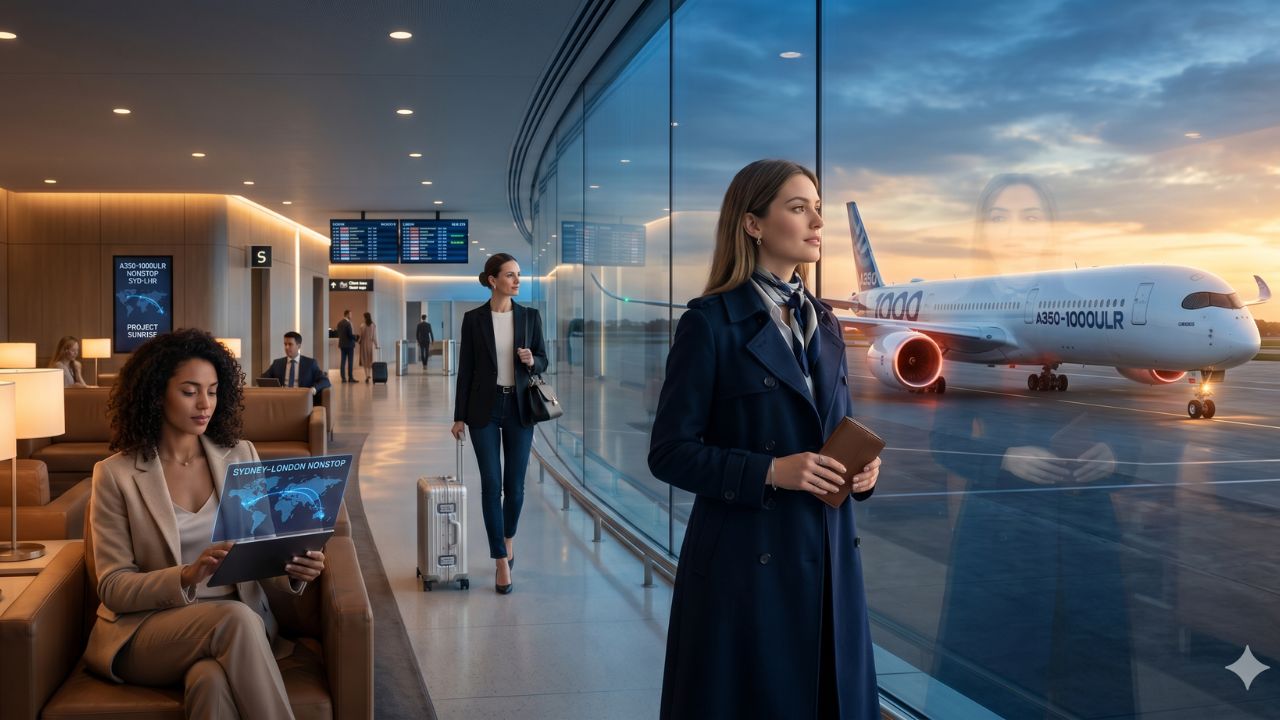
Image generated by AI
A Massive Strategic Upgrade to Defeat Intercontinental Gridlock
While massive sectors of the global passenger network frequently battle highly unpredictable labor shortages, synchronized logistical bottlenecks, and horrific commercial fleet constraints, agonizing international layovers remain the absolute most terrifying catalyst for sudden, cascading airport disruptions. Delivering highly urgent, breaking airline news, verified European aerospace trackers confirm that a massive strategic operational milestone has actively been achieved to completely shield vulnerable international tourists from severe travel chaos across the highly volatile global aviation network. Today, June 3, 2026, highly positive operational news forcefully emerged as Airbus officially launched the first tailored A350-1000ULR into the skies over France, initiating the final phase of the highly anticipated Project Sunrise.
While desperate travelers usually attempt to navigate sudden, terrifying flight cancellations caused by overcapacity at intermediate transit hubs in the Middle East and Asia, these exclusive aviation updates reveal a highly systemic, incredibly protective capacity upgrade designed to entirely bypass the decaying global transit grid. Verified aerospace data confirms that this monumental maiden voyage is a direct response to the grueling transit conditions international tourists currently face when desperately attempting to travel between Australia and the United Kingdom. This highly lucrative logistical upgrade actively promises to rescue the travel itineraries of thousands of incredibly vulnerable passengers, violently slashing unpredictable layovers in favor of a highly streamlined, non-stop 22-hour arrival that completely eradicates the traditional necessity for intermediate refueling stops.
Expanded Overview: The Scale of the Ultra-Long-Range Expansion
The sudden, highly publicized execution of this massive aerospace testing phase serves as an undeniable example of how rapidly a manufacturer can completely insulate a premium passenger base from extreme transit pressure. The massive maiden flight has explicitly drawn international attention to the incredibly complex, highly fragile operational ecosystem that links Sydney to London. For a massive corporate corridor heavily reliant on incredibly robust flight schedules, forcing highly exhausted international travelers to endure grueling transfers in congested mega-hubs heavily exposes them to terrifying delays and severe baggage loss.
The terrifying reality of the current transit crisis is found in the sheer volume of connecting aircraft abruptly knocked out of alignment during peak vacation seasons. By actively developing an airframe capable of sustaining 10,000 nautical miles, Airbus and Qantas intend to permanently rescue thousands of vulnerable passengers from a terrifying logistical puzzle. This massive strategic maneuver instantly bypasses the paralyzed inbound and outbound traffic of secondary transit hubs, actively preserving hundreds of incredibly valuable itineraries. When intermediate airports simultaneously fail to process traffic due to weather or ATC strikes, Project Sunrise passengers will be completely insulated from the localized ripple effects that violently spiral into massive, unmanageable waves of terminal congestion worldwide.
Section-Wise Breakdown of the Connectivity Solution
The Maiden Voyage from Toulouse (F-WULR)
On June 2, a highly rigorous test flight was executed to verify the extreme capabilities of the new twinjet platform. The inaugural sortie of the MSN707 twinjet departed from the Airbus production facility located in Toulouse, France, officially logging a flight duration of 3 hours and 43 minutes. Operating under the temporary registration F-WULR, the widebody aircraft aggressively climbed to an altitude slightly above 41,000 feet, executing a prolonged cruise segment over the turbulent waters of the Bay of Biscay to strictly verify aerodynamic stability. This flawless execution officially opened a grueling two-month certification campaign required to legally carry passengers for 22 unbroken hours.
The Dedicated Airbus Flight Test Crew
Because this aircraft is pushing modern airframes to their absolute limits, specialized flight-test instrumentation was carried throughout the entirety of the mission to gather critical structural data. The operation was aggressively commanded by a dedicated Airbus Flight Test crew consisting of six specialized members. The highly sensitive controls were manned by Experimental Test Pilots Thomas Wilhelm and Anthony Flynn. Structural monitoring was strictly managed by Test Flight Engineer Laurent Rossignol, with highly valuable technical support provided by Lead Flight Test Engineers Tuan Do and Alexia Plumet, alongside Ground Test Engineer Vincent Frayssinet.
Architectural Upgrades Defeating Travel Chaos
The ultimate fulfillment of Project Sunrise is driven by a massive Qantas acquisition of twelve modified A350-1000ULR models (alongside a separate order for twelve standard A350-1000 variants). To physically achieve the 10,000 nautical mile range required to bypass global travel chaos, an additional rear centre fuel tank was seamlessly integrated into the primary structure of the aircraft. This fundamental modification injects an absolute increase in range by 1,000 nautical miles. Furthermore, the rigorous test campaign is explicitly certifying a newly developed galley air cooling system optimized for extreme durations. By utilizing lighter and more efficient refrigeration units, Airbus guarantees that cabin ventilation and temperature control mechanisms will sustain a habitable environment from the initial departure in Sydney to the final arrival in London.
Verified A350-1000ULR Test and Manufacturing Data
To fully comprehend the massive operational scale and strategic deployment dictating this highly protective intercontinental solution, the following tables explicitly detail the exact test flight metrics and production timelines driving Project Sunrise:
F-WULR Maiden Flight Profile (June 2)
| Flight Test Metric | Verified Aircraft Data | Operational Significance |
|---|---|---|
| Aircraft Registration | F-WULR (MSN707) | Initial test frame for Project Sunrise. |
| Flight Duration | 3 Hours 43 Minutes | Cruised over the Bay of Biscay. |
| Maximum Altitude | 41,000+ Feet | Verified aerodynamic stability at cruise. |
| Experimental Pilots | Thomas Wilhelm & Anthony Flynn | Executed aggressive general performance checks. |
| Test Flight Engineers | Laurent Rossignol, Tuan Do, Alexia Plumet | Monitored advanced fuel system architecture. |
Project Sunrise Manufacturing Timeline
| Milestone Target | Operational Execution Phase | Fleet Deployment |
|---|---|---|
| June 2026 | Two-Month Certification Campaign Opens | F-WULR undergoes rigorous structural validation. |
| April 2027 | First Operational Delivery to Qantas | Second airframe (currently in final assembly) delivered first. |
| Post-Certification | MSN707 Commercial Retrofit | Test frame converted to a premium four-class layout. |
| Qantas Total Order | 12 ULR Variants & 12 Standard Variants | Massive fleet overhaul to eliminate layover chaos. |
The A350 Global Ecosystem (As of April 2026)
| A350 Market Metric | Verified Airbus Statistics |
|---|---|
| Total Global Orders | 1,579 Orders from 68 distinct global customers. |
| Active Global Fleet | 700+ aircraft operated by 41 international carriers. |
| A350 Family Variants | A350-900, A350-900ULR, A350-1000, A350-1000ULR (New). |
| Future Development | A350F Freighter projected for first flight later this year. |
Passenger Impact: Navigating the Non-Stop Solution
For the modern commuter attempting to navigate this highly volatile global network, the passenger impact of this massive aerospace upgrade is completely liberating. Reliable, non-stop scheduling is the absolute backbone of intercontinental business travel.
- Eradicate Terminal Congestion: Because massive amounts of international layovers will be violently deleted from the passenger's itinerary, travelers are no longer dumped into chaotic intermediary departure halls in Dubai or Singapore. The severe risk of missing a connecting flight due to cascading global delays is completely eliminated.
- Secure Baggage Logistics: Passengers utilizing multi-stop global itineraries must aggressively prepare for lost luggage. By utilizing the direct 22-hour flight to London, the terrifying risk of baggage handlers losing equipment during fragmented transfers drops to absolute zero.
- Prepare for Extreme Endurance: While avoiding travel chaos is a massive relief, passengers must physically prepare for flights exceeding 20 hours. Airbus has heavily upgraded the cabin ventilation, but travelers are urged to strictly monitor their hydration and circulation during the unprecedented journey.
Conclusion: A Highly Protective Transit Upgrade
The massive, highly publicized maiden flight of the A350-1000ULR represents a severe, incredibly vital upgrade for the global travel sector. By actively allowing passengers to completely bypass critical flight disruptions across fragmented regional networks, this direct international link guarantees an incredibly smooth, highly protective travel experience between Australia and the United Kingdom. As operational teams at intermediate transit hubs frantically battle sudden aircraft shortages and severe congestion, international tourists are heavily urged to aggressively monitor Qantas's upcoming Project Sunrise route announcements, prepare for the physical demands of 22-hour flights, and fully expect this aircraft to revolutionize global access while eradicating unprecedented regional travel chaos.
Key Takeaways
- Massive Aerospace Milestone: Airbus has successfully executed the 3-hour and 43-minute maiden flight of the A350-1000ULR (F-WULR) from Toulouse, France.
- Bypassing Global Gridlock: The aircraft is explicitly designed to execute Project Sunrise, carrying passengers 10,000 nautical miles non-stop to completely avoid international layover chaos.
- Advanced Fuel Architecture: An additional rear centre tank seamlessly integrates into the structure, extending the aircraft's range by a massive 1,000 nautical miles.
- Qantas Fleet Expansion: Qantas has ordered 12 of these specialized ULR models, with the first operational delivery scheduled for April 2027.
- Passenger Survival Tactics: Travelers are aggressively urged to completely abandon highly vulnerable, multi-stop global itineraries in favor of this direct route to permanently avoid lost luggage and severe international terminal chaos.
Disclaimer: The specific flight test durations, manufacturing timelines, and airline operational expansions presented in this report are based on verified aerospace data regarding the Airbus A350 program in June 2026. Official aircraft certification, delivery schedules, and local civil aviation policies are highly volatile and subject to continuous, real-time update based on active regulatory directives, fluctuating manufacturing capacity, and sudden aerodynamic testing results. Prospective passengers are urgently advised to fiercely monitor their specific booking status and verify active flight schedules directly via the airline's official portal prior to booking ultra-long-range travel.
Disclaimer
This article is for informational and educational purposes only. It does not constitute legal, financial, or professional advice. While we strive to provide accurate and up-to-date information, travel policies, regulations, and conditions change rapidly. Always verify information with official sources before making travel decisions. Nomad Lawyer makes no representations about the accuracy, reliability, completeness, or suitability of the information provided. Readers should consult qualified professionals for advice specific to their circumstances. The views expressed in this article are those of the author and do not necessarily reflect the views of Nomad Lawyer.
Kunal K Choudhary
Co-Founder & Contributor
A passionate traveller and tech enthusiast. Kunal contributes to the vision and growth of Nomad Lawyer, bringing fresh perspectives and driving the community forward.
Learn more about our team →