
Air Traffic Resilience Costs: Why Flight Fares are Rising as Airlines Fight Systemic Disruptions in 2026
As airlines and regulators invest billions into air traffic resilience and staffing to prevent mass cancellations, passengers are facing higher ticket prices and tighter schedules to fund these systemic upgrades.

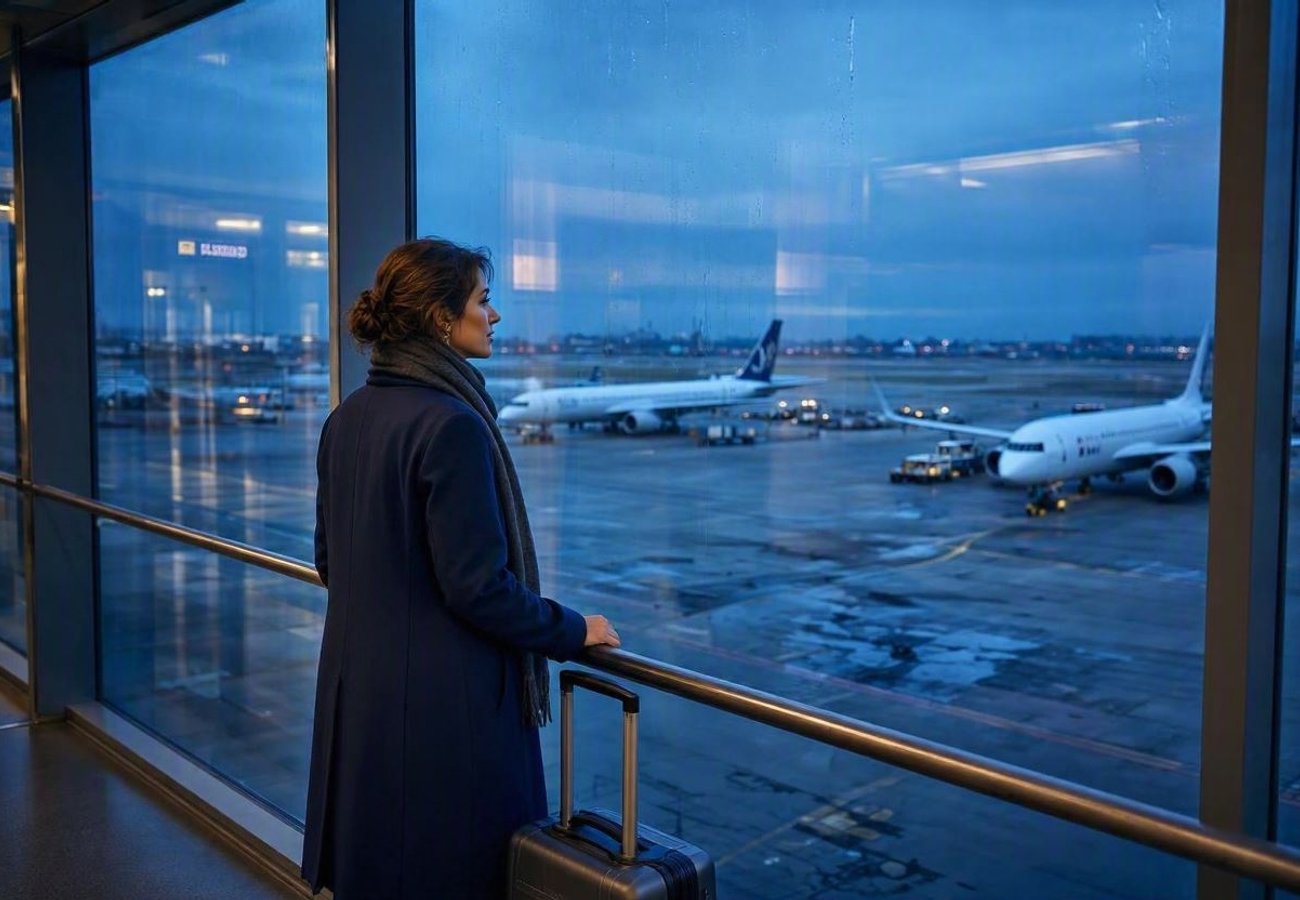
Image generated by AI
A traveler booking a summer getaway in 2026 notices that while flights are arriving more consistently than in previous years, the ticket price has surged by 15% despite no change in the destination or class of service. This is the tangible result of a global shift in aviation: the industry is no longer treating "resilience" as a corporate buzzword, but as a costly operational requirement that is being passed directly to the consumer.
The Cost of Stability: Why Air Traffic Resilience is Rising
The aviation industry is currently undergoing a fundamental shift in how it handles disruptions. After several years of systemic collapses—where a single technical glitch or weather event could paralyze an entire continent's airspace—regulators and airlines are building "buffers" into the system. In simple terms, resilience means creating spare capacity. Whether it is hiring more air traffic controllers, upgrading legacy software, or leaving more gaps between flights to allow for recovery, these safeguards are expensive.
The financial weight of previous failures is staggering. According to a February 2026 analysis by the International Air Transport Association (IATA), air traffic flow management delays have cost passengers and airlines approximately EUR 17.5 billion since 2015 (calculated in 2025 prices). The report reveals that over 70% of these costs were tied to staffing shortages and capacity constraints. Between 2015 and 2025, an estimated 7.3 million flights were delayed due to the underperformance of air navigation service providers, impacting roughly 1.1 billion passengers.
To prevent a repeat of this chaos, the industry is investing in "operational slack." While this leads to fewer "catastrophic days" where the entire network seizes up, it removes the lean efficiency that previously kept fares lower.
Regional Breakdown of Resilience Efforts
Europe: Managing Complexity and Geopolitical Shifts
EUROCONTROL has reported that 2025 saw a marked improvement in performance compared to 2023 and 2024. This was driven by better coordination and a more stable operating environment. Data from the Annual Network Operations Report for 2025 (published May 5, 2026) shows that air traffic in the Network Manager area grew by 4.3% in 2025, with an average of over 30,000 flights per day. During the peak summer window from May to August, this average climbed to 35,122 flights per day.
However, resilience in Europe is complicated by external factors. The continued closure of Ukrainian airspace and volatility in the Middle East since mid-June have forced airlines to take longer, more expensive routes. To counter this, EUROCONTROL is implementing "Capacity and Weather-Based Operations" to mitigate bottlenecks. Furthermore, the iNM Wave 2.3 modernization delivery in 2026 aims to allow system maintenance without triggering the cascading cancellations that previously plagued European hubs. You can monitor real-time network performance via EUROCONTROL.
United States: The NextGen Price Tag
In the U.S., the push for resilience is centered on the NextGen modernization program. A September 2026 report from the U.S. Government Accountability Office (GAO) highlights the massive scale of this investment. The Federal Aviation Administration (FAA) spent over $14 billion on NextGen between fiscal years 2007 and 2022. Projections suggest that the combined cost to the federal government and the private industry will reach at least $35 billion by 2030.
The most immediate bottleneck remains human capital. On May 15, 2026, the FAA announced a workforce plan to combat chronic controller shortages. The target is to reach 12,563 Certified Professional Controllers. As of April 2026, there were approximately 11,000 controllers deployed across 300+ facilities, with 4,000 more in training. The FAA intends to hire 2,200 in FY2026, 2,300 in FY2027, and 2,400 in FY2028. For the passenger, this means that while the system is becoming more robust, the transition period may still involve tactical capacity limits and "conservative" scheduling.
Your Rights as a Passenger
While airlines invest in resilience to avoid delays, disruptions still happen. When they do, your legal protections depend on the jurisdiction and the cause of the delay.
1. EU and UK Regulations (EU261/2004 & UK261) If your flight departs from an EU/UK airport or is operated by an EU/UK carrier arriving in the bloc, you are protected by some of the world's strongest passenger laws.
- Compensation: If a flight is cancelled with less than 14 days' notice, or delayed by more than 3 hours, you may be entitled to up to €600 (£520) depending on the distance of the flight.
- Duty of Care: Regardless of the reason for the delay (even "extraordinary circumstances" like weather), the airline must provide meals, refreshments, and hotel accommodation if an overnight stay is required.
- Refunds: You have the right to a full refund if the airline cancels your flight and the offered re-routing does not suit your needs.
2. United States DOT Rules The U.S. lacks a statutory compensation framework like EU261, but the U.S. Department of Transportation (DOT) has tightened rules regarding refunds.
- Automatic Refunds: Passengers are entitled to a prompt refund if a flight is significantly changed or cancelled and the passenger chooses not to travel.
- Tarmac Delays: Strict rules prevent airlines from holding passengers on the tarmac for extended periods without providing food, water, and restroom access.
3. India (DGCA Guidelines) For flights within or departing from India, the DGCA provides guidelines on compensation and amenities based on the length of the delay, though these are often less stringent than European laws.
Rebooking Strategy and Alternatives
When resilience measures fail and you find yourself stranded, your goal should be to move from "passive passenger" to "active traveler."
- The "Competitor Pivot": If your airline is experiencing a systemic failure, do not wait in a four-hour queue at the service desk. Check FlightAware or Flightradar24 to see which other carriers are currently operating on your route. If a competitor has seats, request a "re-accommodation on another carrier" from your airline.
- Refund vs. Rebooking: In 2026, with yields increasing and profitability halving (per IATA's June 2026 outlook), airlines are more likely to offer vouchers than cash. Always insist on a cash refund if the disruption is significant, as this gives you the liquidity to book a different airline or mode of transport.
- The Buffer Strategy: Given the current "operational conservatism" in schedules, avoid tight connections (under 2 hours) at major hubs like London Heathrow (LHR) or Atlanta (ATL). The industry is building in buffers, but your individual itinerary may still be vulnerable.
FAQ: Air Traffic Resilience 2026
Am I entitled to compensation if my flight is delayed due to "system resilience" upgrades? Yes, if the delay is within the airline's or the air navigation provider's control. Under EU261, technical failures or staffing shortages are generally not considered "extraordinary circumstances," making you eligible for compensation.
Why are my ticket prices increasing if flights are more reliable? Airlines are recouping the costs of modernization and increased staffing. IATA reports that revenue growth is lagging behind expense growth, leading airlines to increase yields to maintain profitability.
What should I do if the airline offers me a voucher instead of a cash refund? You are legally entitled to a cash refund for cancelled flights under both EU and US DOT rules. You can decline the voucher and insist on the original form of payment.
How can I tell if a delay is caused by a staffing shortage? Check the airline's official status page or the CAA guidelines. While airlines rarely admit "staffing shortages" publicly, a pattern of cancellations across a specific hub often points to this issue.
Reliability is no longer a free byproduct of travel; it is a premium service you are now paying for at checkout.
Related Travel Guides
Disclaimer
This article is for informational and educational purposes only. It does not constitute legal, financial, or professional advice. While we strive to provide accurate and up-to-date information, travel policies, regulations, and conditions change rapidly. Always verify information with official sources before making travel decisions. Nomad Lawyer makes no representations about the accuracy, reliability, completeness, or suitability of the information provided. Readers should consult qualified professionals for advice specific to their circumstances. The views expressed in this article are those of the author and do not necessarily reflect the views of Nomad Lawyer.
Preeti Gunjan
Contributor & Community Manager
A passionate traveller and community builder. Preeti helps grow the Nomad Lawyer community, fostering engagement and bringing the reader experience to life.
Learn more about our team →