
German Tourist Wins Landmark €986.70 Lawsuit Over 6 AM Sunbed Race in Greece Amid Global Energy Crisis: How Rising Travel Costs and Strait of Hormuz Tensions are Driving Travelers to Sue for 'Defective' Vacations
A German tourist has successfully sued a tour operator for €986.70 after a 'defective' Greek holiday in Kos was ruined by early-morning sunbed reserving, marking a pivotal shift in consumer rights during the global energy crisis.

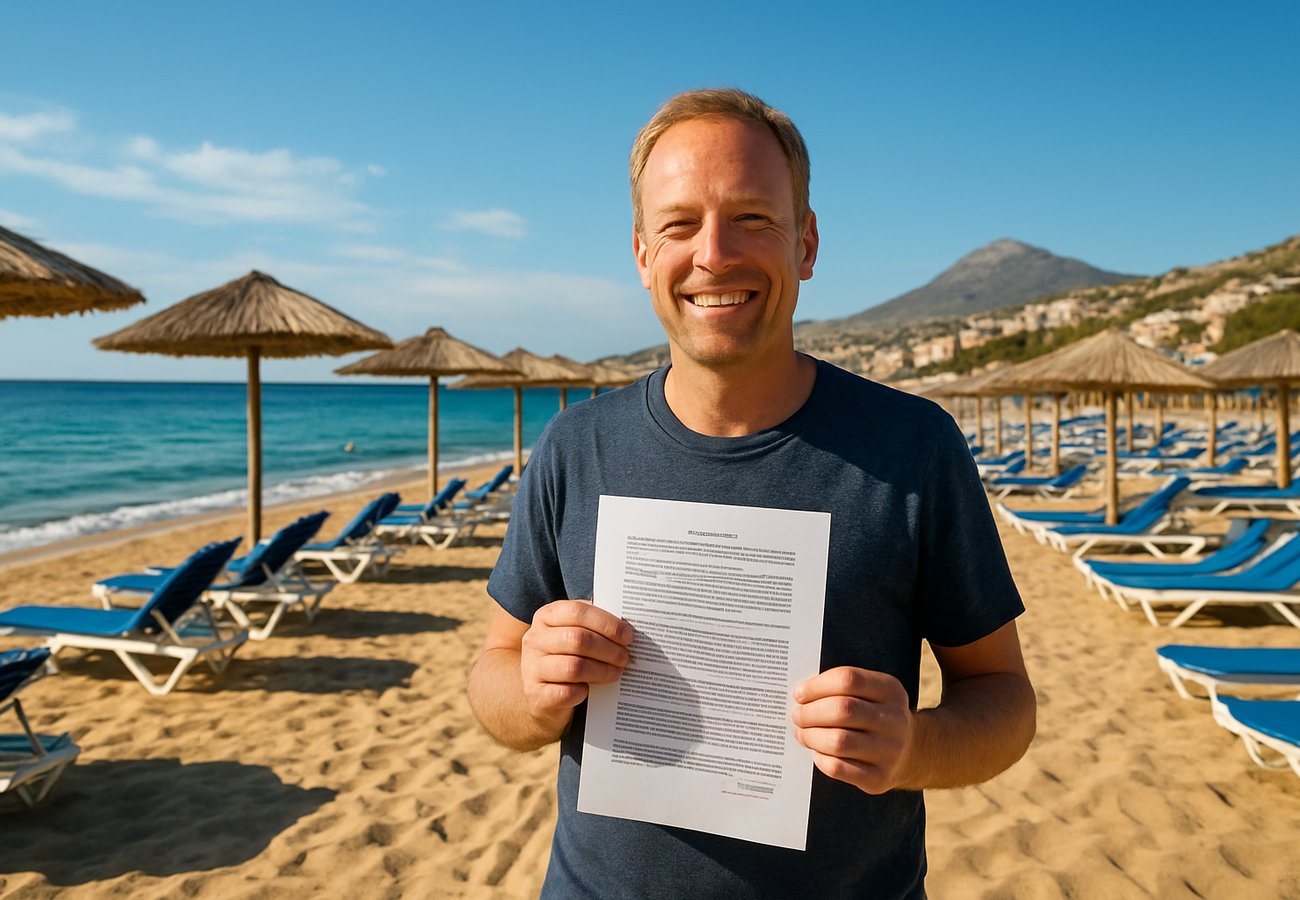
Image generated by AI
Quick Summary
- Legal Victory: A Hanover court has ordered a tour operator to pay a €986.70 refund to a tourist after the family could not secure sunbeds at a resort in Kos, Greece.
- Premium Loss: The traveler had paid €7,186 for a luxury family package but found all loungers "reserved" by towels as early as 6 AM, despite an 8 AM hotel policy.
- Inflationary Friction: The ruling comes as the global energy crisis and US-Iran conflict drive travel costs to record highs, increasing passenger expectations for "flawless" execution.
- Industry Precedent: The court ruled that the hotel's failure to enforce its own rules rendered the holiday "defective," sending shockwaves through the tour operator sector.
- Energy Overhead: Rising oil prices and shipping disruptions have inflated resort operational costs, leading to under-enforcement of guest policies.
- Geopolitical Shadow: Tensions in the Strait of Hormuz have created a "high-stakes" travel environment where every service failure is now litigated.
- Source: Hanover Regional Court Ruling / Travel and Tour World Industry Analysis, May 7, 2026.
HANOVER — In a landmark ruling that is set to redefine the legal relationship between travelers and tour operators, a German court has awarded compensation to a holidaymaker over the infamous "6 AM sunbed race." According to breaking legal reports released on May 7, 2026, a traveler who paid over €7,000 for a luxury Greek getaway has successfully argued that the hotel’s failure to stop guests from "reserving" loungers with towels constituted a "defective" service. This development is being analyzed by senior global affairs journalists as a symptom of a wider travel chaos era, occurring precisely as Strait of Hormuz tensions and a severe global energy crisis send the cost of vacations to unprecedented heights.
Expanded Overview: The High Price of a "Defective" Getaway
The dispute centered on a luxury family package to Kos, Greece, priced at €7,186. For the German tourist and his family, the promise of a relaxing sanctuary quickly dissolved into a daily battle for amenities. Despite the resort's official policy prohibiting sunbed reservations before 8 AM, guests were routinely placing towels as early as 6 AM. When the hotel staff failed to intervene after repeated complaints, the family was left without poolside seating, forced to lie on the floor or find alternative spaces. The court in Hanover ruled that the tour operator must now pay €986.70—nearly triple the initial settlement offer of €350.
Geopolitical Context: Navigating the Strait of Hormuz and the "Litigious Traveler"
The broader geopolitical landscape in 2026 has been dominated by the standoff in the Strait of Hormuz. As Saudi Arabia, the UAE, and Qatar work to stabilize global energy flows, the resulting volatility has created a "high-cost" travel environment. With oil prices inflating every aspect of a trip—from flight cancellations to hotel surcharges—passengers are no longer willing to overlook "minor" service failures. The US-Iran conflict has created a psychological shift: when travelers pay thousands for a "safe-haven" vacation in the Mediterranean, they expect the contract to be honored to the letter.
Global Energy Impact: Why Every Sunbed Now Carries a Premium
Rising oil prices have fundamentally changed the economics of holidaying in 2026.
- The Cost of Inaction: Tour operators, struggling with higher aviation fuel surcharges and logistical overheads, are now facing a new financial risk: "service defect" lawsuits.
- Inflationary Pressure: As the global energy crisis squeezes household budgets, the €7,186 price tag on a Greek holiday represents a significant portion of a family's annual savings, leading to a "zero-tolerance" policy toward hotel mismanagement.
Shipping and Trade Impact: The Under-Enforcement Crisis
The ongoing shipping disruption in global trade routes has made the procurement of hotel supplies and the hiring of adequate security staff more difficult.
- Staffing Shortages: Many resorts in Greece and Spain are struggling with the high cost of operations, leading to fewer staff on the ground to enforce rules like the 8 AM sunbed ban.
- Supply Chain Resilience: The inability to manage "shared amenities" is being viewed by courts as a failure of the tour operator to vet the operational resilience of their partner hotels.
Regional Impact: The Gulf and Mediterranean Connection
Interestingly, travelers from the Gulf States—including Saudi Arabia, the UAE, and Qatar—are increasingly viewing the Mediterranean as a stable alternative to other volatile regions. However, this influx has created over-demand in "safe" hubs like Kos.
- Overbooking Stress: As more travelers converge on fewer "secure" destinations, the competition for amenities becomes "toxic," as noted in the German tourist's lawsuit.
- Consumer Rights Surge: The ruling is expected to trigger a wave of similar claims across the EU, as travelers realize they have a right to seek compensation for "ruined atmosphere" and "unequal access."
Industry / Expert Analysis: Why This Matters for Global Aviation and Tourism
Legal and aviation analysts suggest that the "Sunbed Ruling" is a wake-up call for an industry that has grown complacent. In an era of airport disruptions and high-fuel costs, the "experience" is the only thing operators have left to sell. If the hotel fails to deliver a fair and relaxing environment, the entire value chain—from the airline to the tour operator—is at risk of legal exposure. The court’s decision to award nearly €1,000 proves that "distress and ruined vacation experience" is now a quantifiable legal liability.
What Happens Next: The Future of Resort Reservations
Following the May 7 ruling, several industry changes are anticipated:
- Digital Sunbed Booking: Resorts may pivot toward app-based reservation systems to ensure equitable access and remove the "towel race" entirely.
- Operator Contracts: Tour operators will likely tighten contracts with hotels, mandating rule enforcement as a condition of partnership to avoid compensation payouts.
- Consumer Awareness: Travelers are encouraged to document all service failures, especially as the global energy crisis makes their holiday "investment" more valuable.
Conclusion: Reinforcing the Global Risk and Traveler Rights
The German tourist's victory in Hanover is a testament to the power of the consumer in a world of shipping disruptions and oil price volatility. By surmounting the challenges of the US-Iran conflict and the geopolitical shadow of the Strait of Hormuz, travelers are proving that they will not pay a "geopolitical premium" for a defective experience. As the industry watches this case, the message is clear: deliver the promised sanctuary, or prepare for the legal fallout.
Key Takeaways: The Sunbed Lawsuit 2026
- Case Outcome: Tourist awarded €986.70 refund.
- Original Cost: €7,186 for a family holiday in Kos, Greece.
- Core Complaint: Failure to enforce the 8 AM "no reservation" rule.
- Global Context: High travel costs driven by the global energy crisis.
- Legal Precedent: Hotel policy failure makes a holiday "defective."
- Industry Impact: Tour operators must ensure resorts deliver the contracted "peace and relaxation."
Related Travel Alerts
- Travel Chaos 2026: Why Mediterranean Resorts are Reaching Breaking Point
- Consumer Rights: A Guide to Claiming Compensation for Defective Holidays
- Greece 2026: Navigating Crowded Hubs Amid Global Volatility
Disclaimer: All legal data, refund amounts, and case specifics are manually obtained from the Hanover Regional Court official ruling as of May 7, 2026.
Kunal K Choudhary
Co-Founder & Contributor
A passionate traveller and tech enthusiast. Kunal contributes to the vision and growth of Nomad Lawyer, bringing fresh perspectives and driving the community forward.
Learn more about our team →