
Air India Express Crew Suspension Hits 8 After Dubai-Amritsar Flight Testing Breach in India
Air India Express suspends eight crew members for three months following a 35-minute delay in mandatory post-flight breathalyser testing after a Dubai-Amritsar flight.

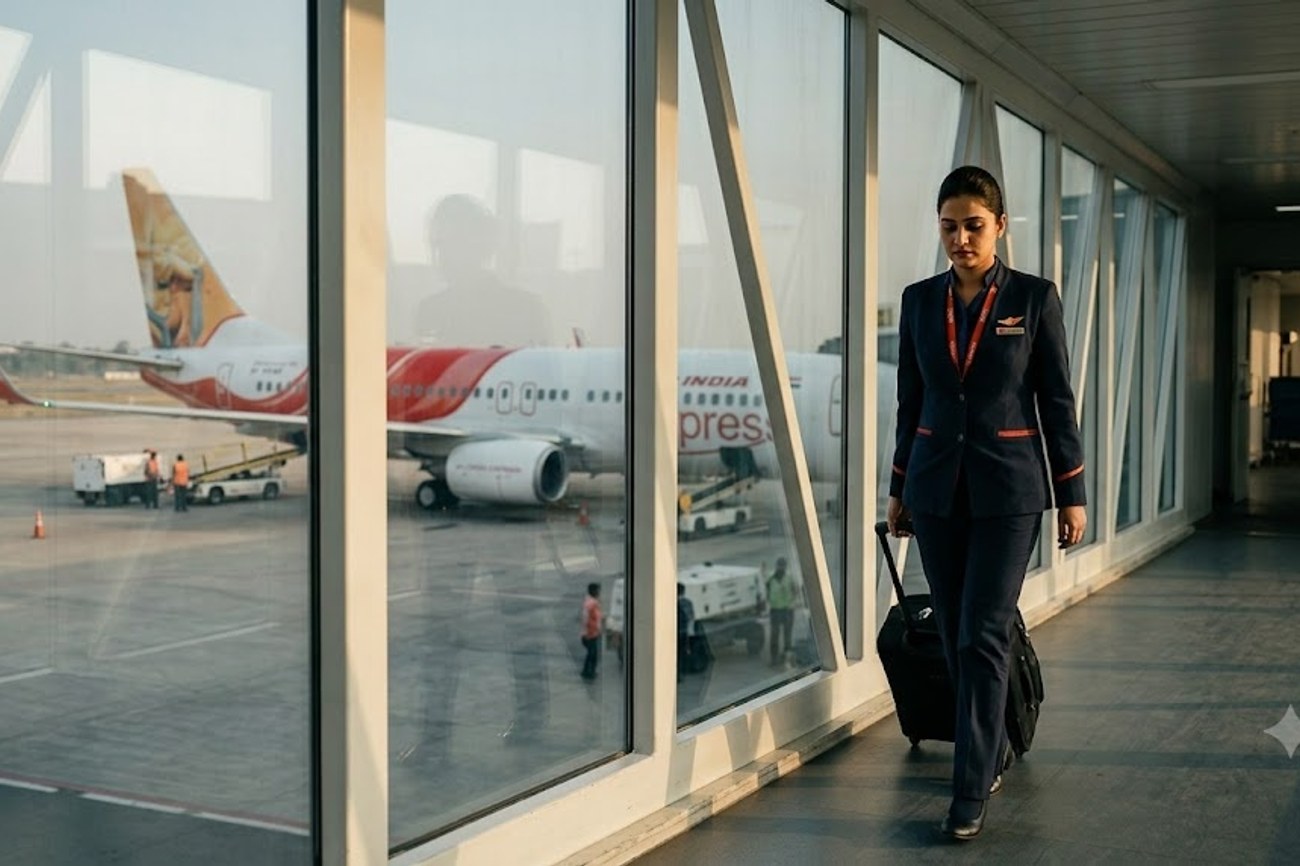
Image generated by AI
Exceeding India's statutory two-hour post-flight breathalyser window by exactly 35 minutes, eight Air India Express crew members—comprising four cockpit pilots and four cabin attendants—have been handed mandatory three-month operational suspensions following an international arrival from Dubai to Amritsar. While all eight aviation professionals returned clean, negative test results when screened two hours and 35 minutes after touchdown, Air India Express and the Directorate General of Civil Aviation (DGCA) treated the timing lapse as a serious regulatory breach. The immediate removal of the entire operating crew underscores an unyielding regulatory principle in modern aviation: procedural compliance is treated as a non-negotiable safety control, where a negative medical outcome cannot retrospectively cure an unapproved procedural delay.
The disciplinary action centers on flight AX192, which landed at Amritsar's Sri Guru Ram Das Jee International Airport at approximately 9:50 am on August 2, 2026. Under strict civil aviation mandates governing international operations by Indian carriers, arriving crews must submit to post-flight alcohol breathalyser testing within 120 minutes of wheels-down. By reporting the lapse to the DGCA and grounding the employees, the low-cost subsidiary of the Tata-owned Air India Group demonstrated zero tolerance for procedural drift during a period of heightened federal scrutiny across India’s rapidly expanding aviation market.
Procedural Discipline vs. Physical Impairment: The Mechanics of Route AX192
The critical distinction separating this incident from criminal impairment cases is the complete absence of detected alcohol. Official medical records confirm that every pilot and flight attendant passed the breathalyser examination once it was administered. However, in aviation safety governance, testing windows are structured around strict metabolic chemistry. Alcohol metabolizes continuously in the human body; allowing flight crews to defer examinations beyond a standardized time window degrades the forensic validity of the test, creating regulatory blind spots that aviation authorities refuse to tolerate.
Reports indicate that several competing post-flight demands contributed to the delay. Following arrival from the United Arab Emirates, the crew had to clear immigration, customs inspections, and mandatory flight documentation. One account noted that a crew member felt unwell, prompting the team to proceed toward their layover hotel before returning to the airport medical testing center 35 minutes after the statutory window expired. While heavy administrative workloads and acute health issues represent genuine operational friction, civil aviation regulations offer no informal dispensations. The DGCA framework mandates that any missed, delayed, or positive breathalyser event must be reported within 24 hours, with scheduled airlines required to record examinations on camera and retain the raw video footage for six months to maintain an immutable audit trail.
Comprehensive Audit Metrics: Testing Timelines, Mandates, and Regulatory Penalties
The regulatory mechanics applied to flight AX192 demonstrate the multi-tiered structure of India's flight crew fitness enforcement. The following parameters contrast the incident timeline against statutory safety benchmarks:
| Operational Parameter | Flight AX192 Recorded Timeline | DGCA Statutory Requirement | Compliance Assessment |
|---|---|---|---|
| Commercial Flight Number | AX192 | Scheduled International Flight | Subject to mandatory post-flight screening |
| Operating Sector | Dubai (DXB) to Amritsar (ATQ) | International Arrival into India | Strict two-hour post-touchdown testing window |
| Wheels-Down Touchdown | Approximately 9:50 AM (2 August 2026) | Certified ATC Arrival Time | Initiates statutory 120-minute countdown |
| Mandatory Testing Cutoff | 11:50 AM | Exactly 2 hours post-landing | Maximum permissible examination window |
| Actual Testing Completed | 12:25 PM (2 hours 35 minutes) | Within 2 hours of arrival | Procedural deadline exceeded by 35 minutes |
| Breathalyser Test Result | 100% Negative (All 8 Crew Members) | Zero blood alcohol concentration | Confirmed negative reading for all personnel |
| Immediate Action | Formal notification filed with DGCA | Reporting within 24 hours | Regulatory reporting timeline satisfied |
| Disciplinary Sanction | 3-month operational suspension | Discretionary grounding under CAR | Applied equally across all 4 pilots and 4 attendants |
This strict enforcement coincides with a systemic overhaul of crew fitness surveillance across Indian aviation. The regulatory framework operates multiple distinct screening layers to guarantee operational integrity across commercial flight decks:
| Testing Mechanism | Operational Stage | Regulatory Coverage Target | Regulatory Catalyst & Governing Authority |
|---|---|---|---|
| Pre-Flight Alcohol Screening | Prior to aircraft departure | 100% of departing flight crews | Mandatory DGCA zero-tolerance safety protocol |
| Post-Flight Breathalyser | Within 2 hours of international landing | Selected international arrivals | Evaluates sobriety across long-haul flight sectors |
| Random Psychoactive Testing | Unannounced operational checks | Minimum 10% of commercial pilots annually | Statutory national screening for controlled substances |
| Air India Group Enhanced Screening | Training sessions, bases & post-flight | Internal expansion beyond statutory 10% | Instituted 13 August 2026 across group airlines |
| Proposed Universal Screening | Annual medical recertification | 100% of licensed commercial pilots | Proposed by Civil Aviation Minister K Rammohan Naidu |
The broader context of these enforcement actions reflects acute regulatory vigilance following an unrelated incident on August 4, 2026, when an Air India Airbus A320 operating from Phuket to Delhi suffered a sudden altitude drop of approximately 300 feet in cruise, causing injuries to passengers and cabin crew. Subsequent investigations by the Aircraft Accident Investigation Bureau (AAIB) and medical screenings resulted in the pilot-in-command testing positive for marijuana on a confirmatory test, leading the DGCA to de-roster both pilots. While the AX192 case in Amritsar involved zero substance use, the heightened environment ensured that even a 35-minute administrative delay was met with decisive punitive sanctions.
Expert Analysis: The Zero-Tolerance Safety Chain and Group-Wide Scrutiny
From an airline operational management and human resources perspective, the suspension of eight qualified crew members from a single international rotation delivers a potent shock to low-cost fleet economics. Low-cost carriers operate with lean crew-to-aircraft ratios, depending on high aircraft utilization and tightly calibrated pilot rosters to sustain point-to-point networks connecting secondary Indian gateways with Middle Eastern employment hubs.
For travelers booking this route, the direct consequence is an absolute guarantee of regulatory oversight, offset by subtle operational vulnerabilities in crew scheduling. On vital diaspora and pilgrimage corridors such as Dubai to Amritsar, passenger confidence relies on the knowledge that flight decks adhere to world-class safety standards without exception. However, suddenly removing four type-rated pilots and four senior cabin attendants from active rosters for a quarter of a year forces airline scheduling desks to scramble reserve crews. In high-frequency operational environments, a sudden shortage of standby personnel increases the systemic risk of flight delays or tactical cancellations if reserve rosters are depleted by unforeseen duty-time expirations.
The pricing pressure this creates means that airlines operating in competitive international corridors must maintain larger pools of standby crews, invest in dedicated on-site airport medical facilities, and establish continuous digital monitoring to prevent administrative lapses. In a high-volume market where the Ministry of Civil Aviation recorded 5,568 daily aircraft movements and almost 798,000 domestic passengers on September 18, 2026 alone, compliance overheads represent a substantial operational expenditure. Airlines pass these fixed compliance expenses into international fare yields rather than absorbing structural losses. Under global safety standards established by the International Air Transport Association (IATA), rigid procedural compliance protects airlines from existential regulatory liabilities, proving that a three-month operational suspension is a necessary price to protect systemic safety credibility.
Key Takeaways
- Eight Air India Express crew members (four pilots and four cabin attendants) have been suspended for three months following a 35-minute delay in post-flight breathalyser testing.
- All eight crew members returned negative test results for alcohol, confirming that the disciplinary action was triggered solely by procedural non-compliance.
- The incident occurred after flight AX192 arrived in Amritsar from Dubai at approximately 9:50 am on August 2, 2026.
- DGCA regulations mandate that post-flight alcohol tests for international arrivals must occur within two hours of touchdown, with CCTV records preserved for six months.
- The enforcement highlights intensified safety oversight across the Air India Group following expanded psychoactive screening initiatives launched on August 13.
FAQ: DGCA Crew Testing Regulations and Air India Express 2026
Were the crew members of flight AX192 impaired by alcohol? No. All eight crew members tested completely negative for alcohol. The three-month suspension was imposed strictly because the examination occurred 35 minutes after the statutory two-hour post-flight window expired.
Why does Indian aviation law mandate testing within two hours of landing? Alcohol metabolizes continuously in the human body over time. Enforcing a strict two-hour window ensures that testing remains forensically reliable and eliminates any possibility of metabolic dilution before screening.
Does this crew suspension cause cancellations on the Dubai-Amritsar route? No. Air India Express deployed standby flight and cabin crews to maintain scheduled flights on the Dubai-Amritsar corridor, preventing direct route cancellations for booked passengers.
What wider testing changes is the Indian government considering for airline pilots? Civil Aviation Minister K Rammohan Naidu announced that the government is evaluating universal annual psychoactive substance testing for 100% of commercial pilots, expanding beyond the current 10% random annual testing requirement.
In the unforgiving arena of commercial aviation, a negative test cannot excuse a missed procedural deadline where passenger safety is on the line.
Related Travel Guides
Disclaimer
This article is for informational and educational purposes only. It does not constitute legal, financial, or professional advice. While we strive to provide accurate and up-to-date information, travel policies, regulations, and conditions change rapidly. Always verify information with official sources before making travel decisions. Nomad Lawyer makes no representations about the accuracy, reliability, completeness, or suitability of the information provided. Readers should consult qualified professionals for advice specific to their circumstances. The views expressed in this article are those of the author and do not necessarily reflect the views of Nomad Lawyer.
Raushan Kumar
Founder & Lead Developer
Full-stack developer with 11+ years of experience and a passionate traveller. Raushan built Nomad Lawyer from the ground up with a vision to create the best travel and law experience on the web.
Learn more about our team →