
Air India Delhi Kathmandu Flight Returns Safely After Suspected Technical Issue, Passengers Continue Journey on Alternative Aircraft
Air India flight AI219 from Delhi to Kathmandu executed a precautionary air turnback on September 19, 2026, landing safely before passengers completed their journey on a replacement aircraft.

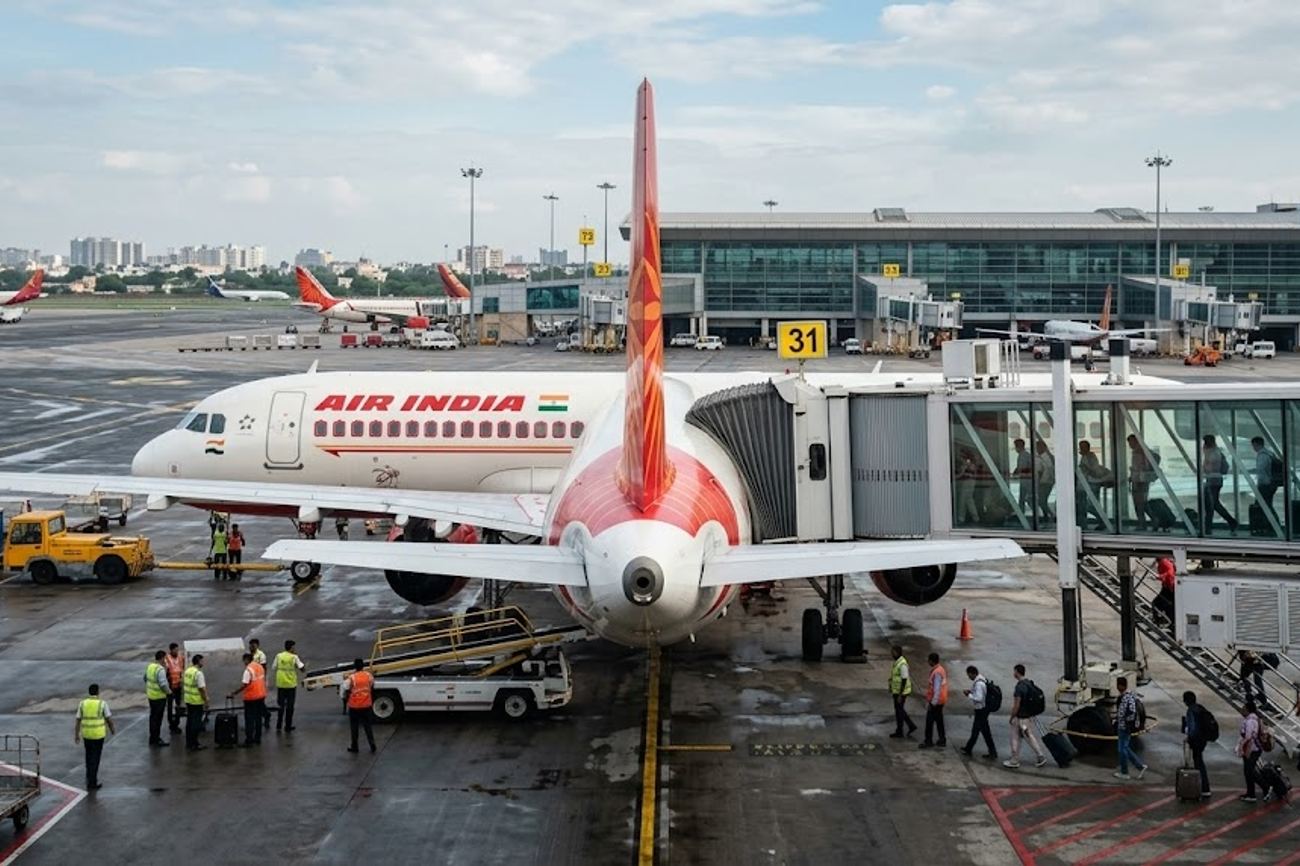
Image generated by AI
Carrying international passengers bound for the high-altitude Himalayan gateway of Kathmandu on September 19, 2026, Air India flight AI219 executed an immediate precautionary air turnback to New Delhi after cockpit instruments alerted flight crews to an unresolved technical irregularity aboard its Airbus A320 aircraft. The sudden airborne diversion back to Indira Gandhi International Airport demonstrates the rigid operational risk protocols governing cross-border Himalayan aviation corridors. While Air India did not publicly disclose the precise system fault or passenger count, all travelers and flight crew members disembarked normally following a safe landing in Delhi, where the carrier mobilized a replacement aircraft to transport passengers onward to Tribhuvan International Airport without prolonged multi-day cancellations.
The incident highlights the complex decision-making calculus required of modern flight crews when technical anomalies emerge on flights departing toward demanding mountain airports. Under regulatory mandates administered by the Directorate General of Civil Aviation (DGCA), airline pilots must prioritize precautionary diversions whenever inflight telemetry indicates an unverified malfunction. Rather than proceeding into an international air corridor with compromised or questionable redundancies, the crew opted for an immediate return to their primary maintenance fortress in New Delhi, averting potential downstream operational emergencies.
Himalayan Operating Dynamics: Why Air Turnbacks Preempt Mountain Hazards
The strategic logic behind returning to New Delhi is directly tied to the unique operational challenges of flying into Nepal's capital. Tribhuvan International Airport (KTM) in Kathmandu is widely recognized by aviation regulators as one of the most operationally demanding destinations in South Asia. Situated in an elevated mountain bowl encircled by high peaks, the airfield features a single runway with steep descent profiles, no Category III instrument landing systems, and notoriously rapid weather deteriorations that produce severe wind shear and sudden visibility drops.
Operating into this terrain requires an aircraft functioning with 100% mechanical integrity across its avionics, hydraulic pressure systems, and engine bleed configurations. In accordance with safety advisories coordinated by the Civil Aviation Authority of Nepal (CAAN), commercial airliners entering Nepalese airspace cannot afford degraded control surfaces or incomplete telemetry while executing complex visual or RNP approaches. Had flight AI219 continued toward Kathmandu with a lingering technical defect, the flight deck would have risked being denied landing clearance, forcing an expensive holding pattern over the Himalayas or an emergency diversion to an ill-equipped secondary regional airfield.
Incident Breakdown and Fleet Recovery Operations
The execution of the air turnback on September 19 followed textbook standard operating procedures for irregular operations (IROPS). The following parameters detail the timeline and recovery logistics deployed by the carrier:
| Incident Parameter | Flight AI219 Event Log | Standard Scheduled Parameter | Operational Significance |
|---|---|---|---|
| Commercial Flight Number | AI219 | AI219 Scheduled Flight | International cross-border rotation |
| Operating Airframe | Airbus A320 Narrow-Body | Airbus A320 Family | Mainline twin-engine short-haul aircraft |
| Origin Hub | Indira Gandhi International Airport (DEL) | Indira Gandhi International Airport (DEL) | Super-hub with comprehensive maintenance hangars |
| Scheduled Destination | Tribhuvan International Airport (KTM) | Tribhuvan International Airport (KTM) | High-altitude destination with limited parts inventory |
| Date of Occurrence | 19 September 2026 | Daily Year-Round Service | Rapid response to airborne telemetry alert |
| Primary Cockpit Action | Precautionary Air Turnback (ATB) | Direct Flight Path Execution | Aborted crossing to protect aircraft airworthiness |
| Touchdown & Deboarding | Safe landing at Delhi; normal deplaning | Scheduled transit arrival | Zero passenger or crew injuries sustained |
| Fleet Recovery Action | Immediate deployment of spare aircraft | Standard turn-around transit | Minimized overall passenger itinerary delay |
| Engineering Assessment | Ground diagnostic inspection initiated | Standard pre-flight check | Root-cause analysis underway at base facility |
By returning to its primary operating base, Air India retained complete logistical control over the recovery process. Indira Gandhi International Airport houses the airline's central engineering hangars, heavy maintenance tooling, and certified avionics technicians. Had the aircraft completed its flight to Kathmandu and then experienced an unserviceable grounding, the airframe would have been stranded overseas, requiring specialized parts and engineers to be flown in from India while leaving return passengers stranded at Tribhuvan.
Expert Analysis: Fleet Modernization, Spare Capacity, and IROPS Resilience
From a commercial airline operations perspective, this air turnback serves as a real-time case study in how fleet scale and hub redundancy insulate passengers from catastrophic travel disruptions. In the legacy era of state-run aviation, a mechanical failure on a regional international route often produced cascading multi-day cancellations due to the lack of ready reserve aircraft. Under Tata Group's comprehensive modernization program, Air India has established dedicated operational reserves at its Delhi and Mumbai hubs specifically to mitigate irregular operations.
For travelers booking this route, the direct consequence is that an airborne technical diversion translates into a localized four-to-six-hour delay rather than an indefinite cancellation. When an airline possesses ready backup aircraft and standby flight crews, passengers are deplaned into the terminal, re-credentialed through security, and boarded onto a fresh airframe within hours. However, for passengers connecting onward from Kathmandu on domestic Nepalese mountain flights—such as short-takeoff-and-landing hops to Lukla, Pokhara, or Bharatpur—the direct delay frequently causes missed afternoon departures, forcing travelers to renegotiate regional ground transport or reschedule domestic flights.
The pricing pressure this creates means that airlines operating capital-intensive cross-border routes must absorb substantial unbudgeted operational overhead, including extra fuel burn, additional airport landing fees, and passenger ground assistance. To absorb these expenses while maintaining strict airworthiness compliance governed by the International Air Transport Association (IATA), network carriers factor operational contingencies into their core route pricing. Full-service carriers maintain higher base fares than ultra-low-cost competitors largely because they maintain the fleet depth, engineering infrastructure, and spare aircraft capacity necessary to rescue an interrupted journey on the same day.
Key Takeaways
- Air India flight AI219 from Delhi to Kathmandu safely returned to New Delhi on September 19, 2026, following an airborne technical warning.
- The flight crew operated in strict accordance with standard safety protocols, touching down safely at Indira Gandhi International Airport with zero injuries.
- Operating an Airbus A320 into Kathmandu’s demanding mountain terrain requires complete system integrity, making precautionary turnbacks the standard safety protocol.
- Air India avoided a total flight cancellation by deploying a replacement aircraft from its New Delhi base, allowing passengers to complete their journey to Nepal.
- The incident highlights the value of airline hub redundancy, where spare aircraft capacity prevents multi-day passenger stranding during irregular operations.
FAQ: Air India AI219 Air Turnback 2026
Why did Air India flight AI219 turn back to New Delhi instead of continuing to Kathmandu? The flight crew detected a suspected technical issue shortly after takeoff. Because Kathmandu’s Tribhuvan Airport is a challenging mountain airfield with limited maintenance facilities, returning to Delhi's engineering base was the safest decision.
Were any passengers or crew injured during the emergency return? No. The Airbus A320 touched down safely in New Delhi, and all passengers and crew members disembarked the aircraft normally without any injuries reported.
How did Air India get passengers to Nepal after the diversion? Air India mobilized a replacement aircraft at Indira Gandhi International Airport. Passengers boarded the alternative flight and successfully completed their international journey to Kathmandu later that day.
What should travelers do if their international flight executes an air turnback? Stay calm, follow all crew instructions, and proceed to the airline transit desk upon landing. Inquire about the departure gate for the replacement aircraft and request assistance if onward regional connections are impacted.
When flight decks confront unverified technical warnings, a disciplined air turnback represents the gold standard of modern aviation safety.
Related Travel Guides
Disclaimer
This article is for informational and educational purposes only. It does not constitute legal, financial, or professional advice. While we strive to provide accurate and up-to-date information, travel policies, regulations, and conditions change rapidly. Always verify information with official sources before making travel decisions. Nomad Lawyer makes no representations about the accuracy, reliability, completeness, or suitability of the information provided. Readers should consult qualified professionals for advice specific to their circumstances. The views expressed in this article are those of the author and do not necessarily reflect the views of Nomad Lawyer.
Preeti Gunjan
Contributor & Community Manager
A passionate traveller and community builder. Preeti helps grow the Nomad Lawyer community, fostering engagement and bringing the reader experience to life.
Learn more about our team →