Rising Costs Reshape European Tourism Revenue Growth and Visitor Spending Trends

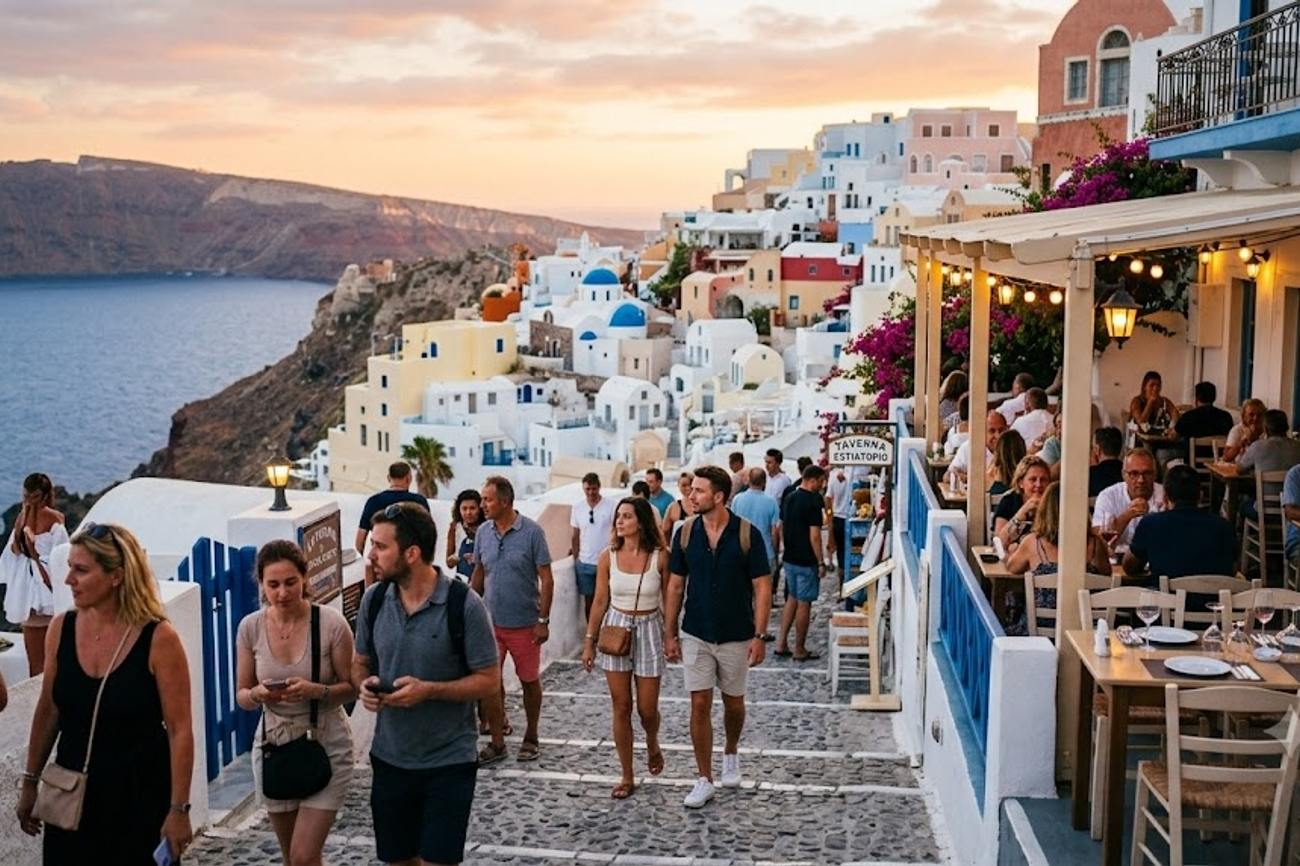
Image generated by AI
In June, Greece saw a 6.9% surge in international arrivals, yet the actual money flowing into the economy from these visitors grew by a meager 1.2%. This stark disconnect reveals a troubling trend: more people are visiting the Hellenic Republic, but they are spending 6.2% less per trip, leaving local businesses to struggle with rising operational costs despite the crowds.
The Value Pivot in Mediterranean Travel
The era of measuring a destination's success by the sheer volume of passport stamps is ending. Across Europe, a new economic reality has set in where high visitor numbers no longer guarantee financial prosperity. This shift is driven by a tightening squeeze on profit margins; while international arrivals across the continent rose by 5% and overnight stays climbed by 4.8% since the start of the year, the cost of doing business has spiked.
For the boutique hotelier in Santorini or the ferry operator in the Cyclades, the "growth" reported in headlines is often a mirage. Energy prices have climbed, labor costs have been adjusted upward to meet inflation, and supply chain expenses have increased the cost of every meal served and every room cleaned. This has created a paradoxical environment: destinations are more popular than ever, but the businesses serving those guests are facing a tougher financial landscape.
The traditional strategy of using competitive pricing to lure mass crowds is failing. When a destination competes on price, it often attracts a demographic with lower spending power, which, when coupled with rising overheads, leads to a decline in the overall value generated per visitor. This is exactly what is playing out in Greece, where the gap between arrival growth and revenue growth is widening.
The Spanish Contrast in Revenue Generation
While Greece struggles with the "volume trap," Spain provides a blueprint for a different approach. In July, Spain saw a more modest 4.6% increase in arrivals, but the financial return was disproportionately higher, with total travel spending jumping by 10.9%.
The difference lies in the composition of the visitor. Spain has successfully leaned into a model that prioritizes higher-value tourism. By attracting travelers who stay longer, utilize premium services, and spend more per day, Spain is generating greater economic utility from fewer people. This approach mitigates the pressure on infrastructure and reduces the environmental strain while simultaneously boosting the bottom line for local operators.
This divergence highlights a critical crossroads for European tourism. The goal is shifting from mass tourism toward a sustainable, financially balanced model. The focus is no longer "How do we get more people here?" but rather "How do we attract the right kind of visitor who supports the local economy without overwhelming it?" For those planning a trip, this means a shift toward more curated, high-end experiences and a move away from the budget-driven mass-market circuits.
Visitor Insider Tips
To navigate these regions like a local and contribute meaningfully to the communities you visit, avoid the "checklist" style of tourism.
Timing and Crowds Avoid the peak July and August window. In Greece, the "shoulder seasons" of May-June and September-October offer the best balance of weather and accessibility. In Spain, venturing beyond the coast into the interior regions like Castile-La Mancha during the spring allows you to avoid the suffocating crowds of Barcelona and Madrid.
Regional Specialties and Spending Instead of eating at restaurants with English menus on the main squares, seek out the tavernas in Greece that serve only two or three dishes—usually the specialty of the house. In Spain, embrace the menu del día (menu of the day), which provides a three-course meal at a fixed price and is the gold standard for authentic, local dining.
Transport Hacks In Greece, skip the overpriced private transfers and utilize the extensive ferry network managed by Hellenic Seaways to explore the smaller islands where spending supports family-run guesthouses rather than international chains. In Spain, the high-speed AVE train network is the most efficient way to move between major hubs, but for a local experience, rent a car to explore the "White Villages" (Pueblos Blancos) of Andalusia.
Local Etiquette In both cultures, the pace of life is slower. In Greece, the concept of siga-siga (slowly-slowly) governs daily interactions. Do not rush your server or expect instant service in a village cafe. In Spain, remember that dinner rarely starts before 9:00 PM; attempting to eat at 6:00 PM will often land you in a tourist trap.
Cultural and Environmental Context
The tension between visitor volume and revenue is not just a financial issue—it is a social one. When a destination experiences a 6.9% increase in visitors but a decline in per-person spending, the local infrastructure (waste management, water, electricity) is strained far more than the economy is rewarded. This is the core of the "overtourism" debate currently echoing through the streets of Athens and the beaches of the Balearic Islands.
The shift toward "value-based growth" is a necessary evolution for heritage preservation. Many of the sites visitors flock to are UNESCO World Heritage sites, and the physical degradation caused by millions of footsteps is an invisible cost not captured in revenue statistics. By encouraging longer stays and higher spending, destinations can afford to implement better conservation strategies and pay local workers fair wages that reflect the actual cost of living.
Furthermore, the move away from competitive pricing helps protect the cultural integrity of these regions. When tourism is based on the "cheapest price," local artisans and traditional craftsmen are often pushed out by mass-produced souvenirs designed for budget travelers. A shift toward premium, authentic experiences ensures that traditional skills—from Greek pottery to Spanish leatherwork—remain viable professions for the next generation.
FAQ: Visiting Greece and Spain 2025
What is the best time to visit to avoid crowds? The ideal windows are May to early June and September to October. You will find milder temperatures, lower accommodation prices, and a more authentic atmosphere as the mass-market summer crowds have either not yet arrived or have already departed.
Do I need a visa for these destinations? Most non-EU citizens (including US and Canadian citizens) can enter Greece and Spain for up to 90 days without a visa for tourism. However, check the official Visit Spain or Visit Greece portals for the most current ETIAS requirements.
How do I get between the major islands in Greece? The most reliable method is the ferry system. For speed, choose high-speed catamarans; for a more traditional and affordable experience, use the larger conventional ferries. Booking in advance during the summer is essential.
Is it safe for solo travelers? Yes, both Greece and Spain are generally very safe for solo travelers. Use standard urban caution in large cities like Madrid or Athens to avoid petty theft (pickpocketing) in crowded tourist zones.
Stop counting the days and start valuing the moments—the Mediterranean is evolving, and the best way to see it is slowly.
Related Travel Guides
- Korean Air Maps a 92-Destination Global Network Through Seoul, Linking Asia, Europe and the Americas
- China Tightens Beijing Airspace With Massive 280000 Sq Km Restricted Zone Covering Dozens of Airfields
- Korean Air Flight Delays Explained: How Weather and Airport Congestion Disrupt South Korea Travel
This article is for informational purposes. Flight routes, passenger regulations, visa rules, and transit advisories are subject to change by airlines and aviation authorities. Readers are advised to verify schedules and travel documentation with relevant carriers and border agencies before departure.
Related Stories
Jet Airways vs. Boeing NCLAT Battle: Why Manufacturer Litigation Offers No Quick Ticket Refunds for Indian Travel Agents
easyJet Launches Direct Liverpool to Reykjavik Flights: Inside the North West's New Winter Gateway to Iceland