China Tightens Beijing Airspace With Massive 280000 Sq Km Restricted Zone Covering Dozens of Airfields

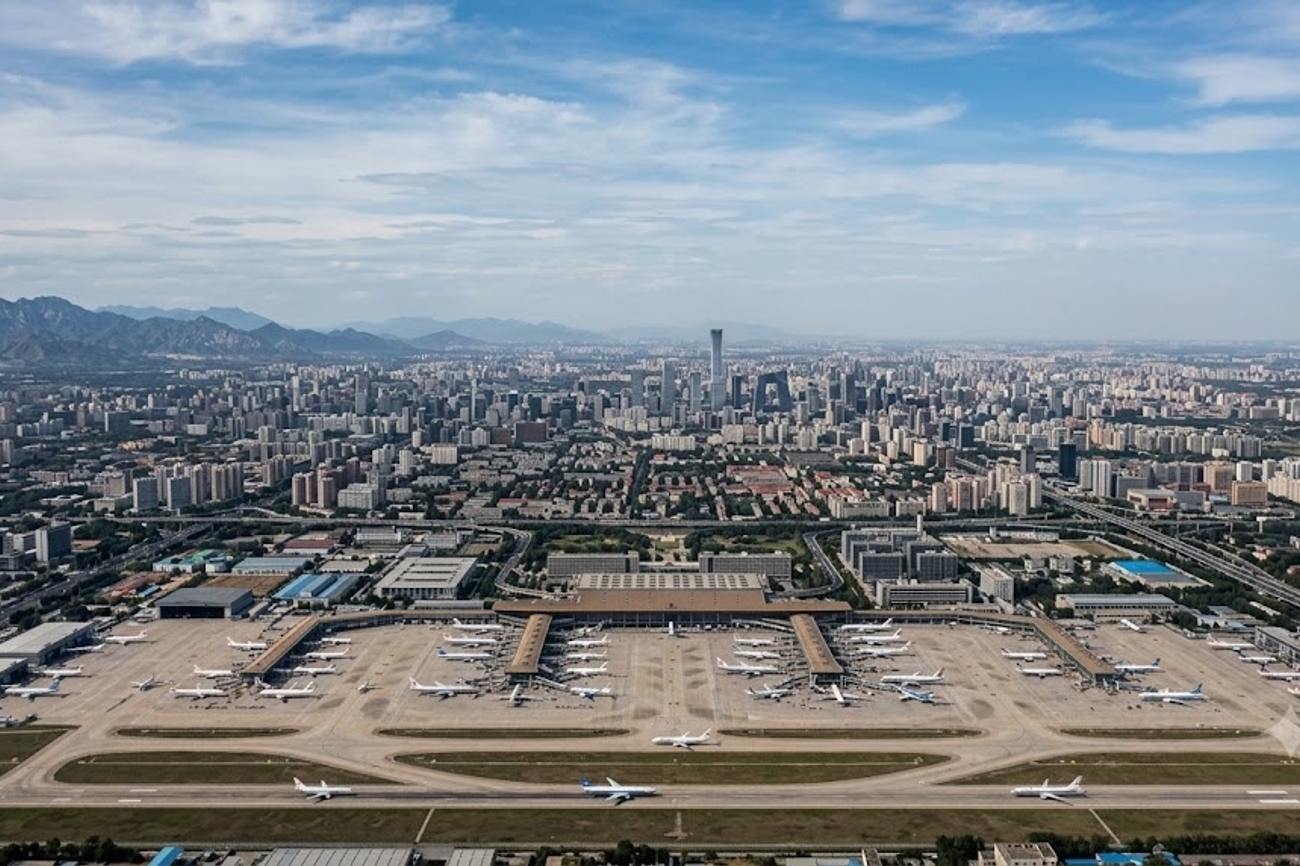
Image generated by AI
280,000 square kilometers of airspace surrounding Beijing will be subject to stringent new restrictions starting September 20, 2026. This massive Special Restricted Area, defined as a 600-kilometre-wide circle centered on the Chinese capital, represents a significant escalation in the state's control over its low-altitude and regional skies, extending the reach of Beijing's aviation authorities into neighboring provinces.
The Architecture of the Special Restricted Area
The new regulatory zone is not a localized airport perimeter but a regional blanket. According to notices filed through the Federal Aviation Administration (FAA) public NOTAM system, the restriction begins at the surface and extends upward, encompassing not only the municipality of Beijing and the city of Tianjin but also substantial portions of Hebei, Inner Mongolia, Shanxi, Shandong, and Liaoning. The zone even stretches over the Bohai Sea, creating a comprehensive shield of controlled airspace.
This move follows a pattern of tightening controls that began in August 2025, when the Beijing Municipal Government declared the city's entire administrative territory as controlled airspace for unmanned aircraft. By early 2026, authorities issued explicit warnings that no "unrestricted" outdoor areas exist within the city, regardless of how remote or open a location may appear to a visitor. This regulatory trajectory culminated in the revised Civil Aviation Law, which took effect on July 1, 2026. Specifically, Article 82 of this law mandates that civil aircraft cannot enter prohibited airspace without special authorization and must adhere to strict conditions when operating within restricted zones.
Passenger Volume and Infrastructure Resilience
Despite the scale of the restriction, the Chinese government has explicitly carved out exemptions for commercial airline services, approved business flights, and emergency operations including police, fire-rescue, and customs. This distinction is vital because Beijing serves as one of the world's most dense aviation hubs.
In 2025, the city's two primary gateways—Beijing Capital International Airport and Beijing Daxing International Airport—facilitated 124 million passenger movements, representing a 6.5% year-on-year increase. The growth is particularly evident at Daxing, which is rapidly ascending as a primary international node.
Beijing Aviation Throughput (2025 Data)
| Metric | 2025 Result | Annual Change |
|---|---|---|
| Combined Passenger Volume | 124 Million | +6.5% |
| Beijing Capital Airport | 70.76 Million | +5.0% |
| Beijing Daxing Airport | 53.61 Million | +8.4% |
The expansion of Daxing is a key driver of regional connectivity. In 2025, the airport handled 345,800 flights, with international and regional traffic reaching 5.89 million passengers—a surge of 24.56%. This momentum continued into the 2026 Spring Festival, where Daxing processed 6.52 million passengers in just 40 days, including 656,700 international travelers.
Expert Analysis: The Bifurcation of Air Rights
For the average traveler booking a ticket through the Civil Aviation Administration of China (CAAC), the immediate impact of the September 20 deadline is negligible. However, for the broader aviation ecosystem, this move signals a "bifurcation" of air rights: the state is decoupling scheduled commercial transit from all other forms of aviation.
The direct consequence for private pilots, charter operators, and general aviation enthusiasts is a near-total loss of flexibility. By designating 280,000 square kilometers as restricted, China is effectively eliminating "informal" or low-level flight paths that do not align with state-approved corridors. This is not merely a security measure but a logistical consolidation. By forcing all non-commercial traffic through a rigorous approval process, the government minimizes the risk of unauthorized incursions into sensitive airspace while maintaining the economic engine of its commercial hubs.
The pricing pressure created by this shift will likely be felt in the private charter and business aviation sectors. As the "Special Restricted Area" increases the administrative burden for non-scheduled flights, the cost of securing permits and the time required for flight planning will rise. For travelers using private aviation to access Beijing, the "friction" of entry has just increased significantly.
The expansion of restricted airspace around Beijing may lead to increased flight delays and rerouting for international arrivals and departures. Passengers are advised to monitor real-time flight status updates via the Capital Airport official portal to manage their transit logistics effectively.
Furthermore, the timing of these restrictions coincides with a massive surge in inbound tourism. In 2025, Beijing saw 5.48 million inbound visitors (up 39%) and inbound spending of US$7.08 billion (up 44.3%). Between January and July 2026, inbound arrivals rose another 32.4% to 3.86 million. The government is essentially building a high-security "ceiling" over the city precisely as the number of foreign nationals on the ground reaches a post-pandemic peak.
Key Takeaways
- Commercial Exemption: Scheduled passenger flights to and from Beijing Capital and Beijing Daxing are exempt from the new restrictions; flights will continue to operate normally.
- General Aviation Ban: Private, recreational, and non-approved business flights are prohibited within the 280,000 sq km zone without special authorization.
- Drone Zero-Tolerance: There are no longer any "unrestricted" areas for drones in Beijing; all unmanned aircraft require explicit air traffic management approval.
- Regional Reach: The restriction extends far beyond the city limits, affecting the Bohai Sea and five neighboring provinces.
- Legal Mandate: The restrictions are backed by the revised Civil Aviation Law (effective July 1, 2026), making unauthorized entry a legal violation under Article 82.
FAQ: Beijing Airspace Restrictions 2026
Will my flight to Beijing be canceled after September 20, 2026? No. Commercial airline services are specifically exempt from these restrictions. Your scheduled flights to Beijing Capital or Beijing Daxing airports will continue to operate as planned.
Can I bring my drone to Beijing for vacation photos? You can bring it, but you cannot fly it without official approval. The Beijing government has stated there are no unrestricted outdoor areas for drones, including parks and mountains.
Does this restriction affect private charter flights? Yes. Unlike scheduled commercial airlines, private and general aviation flights must obtain special approval to enter the Special Restricted Area.
Which provinces are included in the restricted zone? The 600-kilometre-wide circle encompasses Beijing, Tianjin, Hebei, and parts of Inner Mongolia, Shanxi, Shandong, and Liaoning, as well as the Bohai Sea.
The sky over Beijing is no longer a public utility, but a strictly curated corridor.
Tags: Beijing-Airspace-2026, CAAC, Beijing-Daxing-Airport, China-Civil-Aviation-Law, Beijing-Drone-Regulations
Related Travel Guides
This article is for informational purposes. Flight routes, passenger regulations, visa rules, and transit advisories are subject to change by airlines and aviation authorities. Readers are advised to verify schedules and travel documentation with relevant carriers and border agencies before departure.
Related Stories
Central Asia–China Aviation Skyrockets 303.7% as Uzbekistan and Regional Hubs Expand Silk Road Air Corridors and Cargo Fleets