
Global Aviation Crisis: Air Canada, Lufthansa, and British Airways Slash Routes as Extreme Fuel Shortages and Surging Costs Trigger Massive Flight Cancellations
Canada joins Switzerland, Germany, France, the UK, Australia, and Denmark in cutting flight schedules as soaring fuel prices force airlines to cancel routes worldwide.

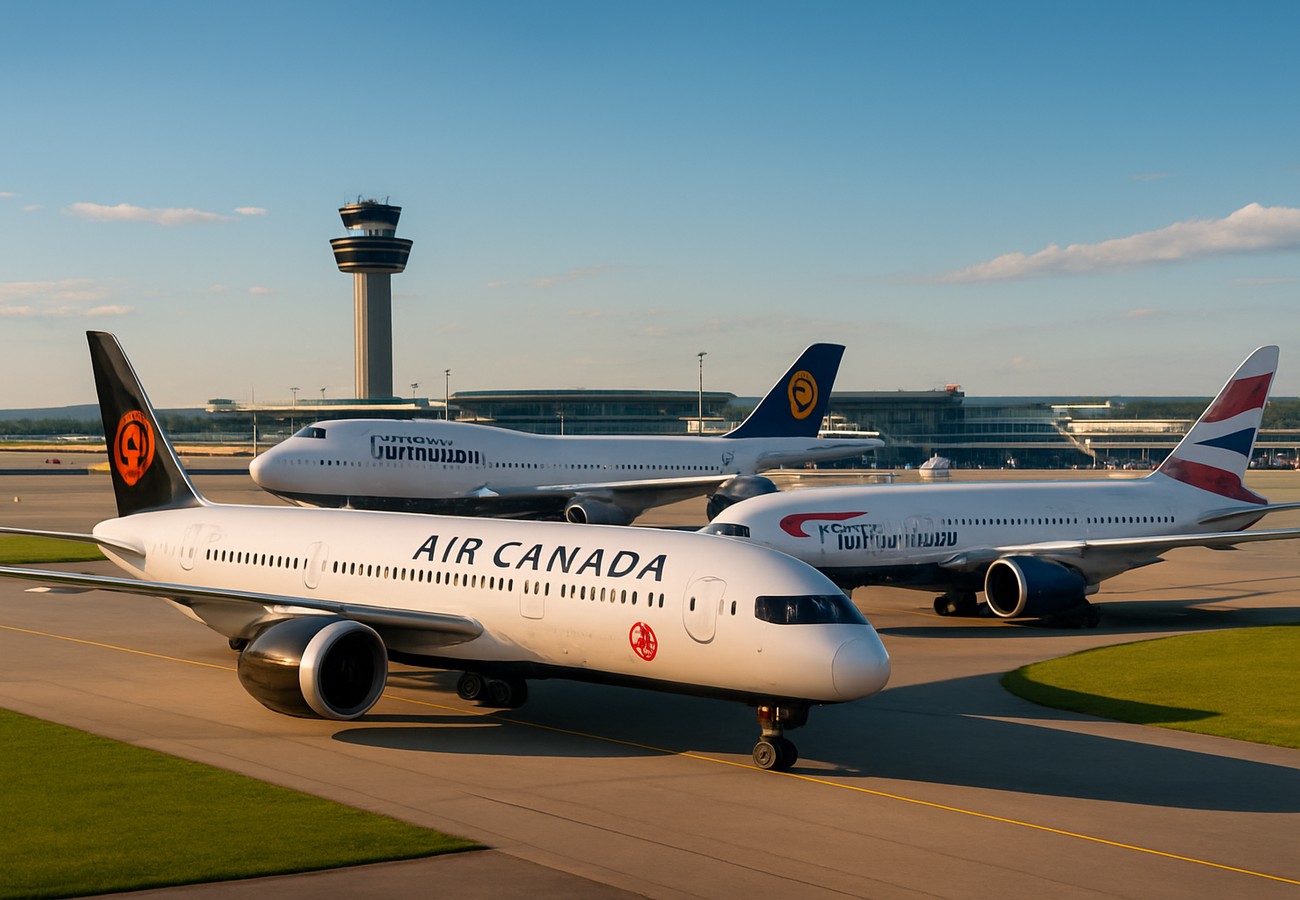
Image generated by AI
A sweeping and devastating travel chaos is actively spreading through the global aviation sector. In a sharp domino effect triggered by extreme energy shortages and soaring operational costs, Canada has urgently joined Switzerland, Germany, France, the UK, Australia, and Denmark in heavily revising commercial flight schedules. Confronted by historically tight jet fuel supplies, the world's most dominant carriers—including Air Canada, Delta, Air France, Lufthansa, British Airways, and SAS—are being brutally forced to radically cut routes, permanently abandon destinations, and dramatically restructure their fleets.
Geopolitical Tension Ignites Widespread Airline Disruptions
This sudden evaporation of global flight capacity is squarely driven by the skyrocketing price of aviation fuel. Unprecedented geopolitical instability across the Middle East, punctuated by severe attacks on critical crude oil facilities and the outright closure of the vital Strait of Hormuz shipping lane, has effectively fractured standard energy supply chains. Consequently, these explosive fuel costs have rendered entire regional hubs and dozens of previously highly profitable routes entirely unfeasible for passenger airlines. As carriers battle to maintain baseline profitability amidst the energy strain, these rolling flight cancellations are sparking immediate and intense airport disruptions that threaten to permanently sever essential economic links between continents.
Section-Wise Breakdown: The Global Operational Retraction
The fuel supply crisis respects no borders. The following represents a comprehensive, nation-by-nation analysis detailing exactly how major global carriers are forcibly adapting to the new reality of sky-high operational expenses.
Canada: Air Canada’s Drastic Financial Retreat
Air Canada, firmly established as one of the nation's premier aviation giants, has taken aggressive and bold steps to mitigate financial bleeding. Flatly citing global jet fuel prices that have effectively doubled since the onset of the latest Middle Eastern conflicts, the airline has declared massive, permanent cuts across its domestic and international network. This unprecedented structural retreat is isolating regional Canadian hubs and severely complicating international transit out of key urban centers.
Switzerland: SWISS Sacrifices the Regional Market
Switzerland relies immensely on flawlessly executed international travel to feed its lucrative luxury tourism and sprawling business sectors. However, the surging cost of jet fuel has deeply crippled the profitability of Swiss International Air Lines (SWISS). Confronted by shrinking demand on high-expense routes, the flag carrier has completely halted flight services bridging Zurich and several key regional destinations across Europe. To navigate the squeeze, SWISS is heavily revising its active fleet usage, decisively grounding older, heavy-burning aircraft and exclusively shifting its remaining fuel-efficient variants onto high-density, guaranteed-profit tracks.
Germany: Lufthansa Trims the Heavy Long-Haul
The German aviation landscape is enduring absolutely brutal operational shifts. Lufthansa—serving as the massive central pillar of European connectivity—has instituted deeply severe cuts across its master flight schedule. Bleeding cash on fuel expenses, the carrier has firmly suspended both vital long-haul connections tracking deep into Asia, as well as multiple intra-European short-hauls that instantly became unsustainable. Furthermore, Lufthansa’s budget subsidiary, Eurowings, has been heavily impacted. Forced to scale back its reliance on secondary, regional EU cities where passenger load simply cannot cover exploding fuel surcharges, Eurowings intends to continuously trim its active flight network through 2026.
France: Air France Bets on Long-Haul Margins
Although avoiding outright catastrophic route abandoning on the scale of neighboring Germany, Air France is still wrestling aggressively with the energy crisis. The flagship carrier has decisively reduced the overall frequency of vulnerable domestic and localized European routes. Shifting gears, Air France is dedicating its most efficient, modern airframes to secure long-haul luxury routes while scaling out of low-yield territories. Meanwhile, the overarching Air France-KLM Group is desperately accelerating its transition toward Sustainable Aviation Fuel (SAF) implementations in an aggressive bid to establish long-term fuel cost stability.
The United Kingdom: British Airways Abandons the Continent's Edges
In the United Kingdom, reliant upon intense tourism and sprawling global finance operations, British Airways (BA) has been visibly bruised by this fuel crunch. As operational costs continue to skyrocket, BA has proactively cancelled dozens of routes extending from London Heathrow to smaller, tertiary European transit cities, deliberately cutting flights that operated strictly at a financial loss. Parent corporation IAG is currently heavily optimizing standard flight algorithms and domestic airspace routing approaches in an emergency effort to shave every possible fraction of fuel consumption from active flights.
Australia: Qantas and Virgin Australia Trim the Outback
Operating within a massive geographic perimeter, Australia’s aviation leaders are crumbling under extreme fuel expenditure. Qantas has aggressively cancelled flights bridging major coastal hubs—such as Sydney, Melbourne, and Brisbane—with smaller, regional airports where demand is too volatile to offset fuel costs. By firmly grounding its oldest jets, Qantas is attempting to weather the economic storm purely on the backs of fresh, efficient metal. Similarly, Virgin Australia has notably slashed capacity schedules across domestic routes while concurrently warning passengers of impending and substantial ticket fare hikes required to keep its operations solvent.
Denmark: SAS Restructures Ticket Pricing
Scandinavian Airlines (SAS) is heavily feeling the localized pressure of European energy shortfalls. The flagship Danish carrier has initiated a dual-pronged defensive strategy: decisively severing numerous European and domestic flights, while simultaneously executing sharp increases in base ticket pricing across the board. Attempting to maximize load distribution, SAS is even offering discounted incentives for travelers willing to fly during off-peak hours, allowing the airline to optimize its fuel-burn ratios.
Flight Details: The Air Canada Route Cancellations
As geopolitical tensions throttle international energy supply chains, Air Canada has confirmed the following explicit, non-negotiable flight cancellations across its master roster:
| Departure Hub | Destination Hub | Aircraft Route Status | Effective Date |
|---|---|---|---|
| Fort McMurray (YMM) | Vancouver (YVR) | Permanently Discontinued | May 28, 2026 |
| Yellowknife (YZF) | Toronto (YYZ) | Permanently Discontinued | August 30, 2026 |
| New York (JFK) | Toronto (YYZ) & Montreal (YUL) | Paused / Suspended | June 1, 2026 (Restarting Oct 25) |
| Salt Lake City (SLC) | Toronto (YYZ) | Temporarily Suspended | June 30, 2026 (Projected return 2027) |
| Guadalajara (GDL) | Montreal (YUL) | Target Launch Cancelled | Indefinitely |
The Passenger Impact: Ballooning Fares and Shorter Horizons
These rapid aviation updates spell absolute disaster for standard commuters and corporate travel budgeting alike. As airlines radically tighten their schedules and sever "unprofitable" regional links, passengers in secondary cities are suffering a total loss of essential connectivity, forcing them into extended driving routes or complex multi-layover nightmares. The cancellation of direct flights causes massive bottleneck delays in primary mega-hubs. Furthermore, carriers such as Virgin Australia and SAS are bluntly passing these explosive operational costs directly onto the consumer, leading to ballooning ticket fares that will effectively price massive segments of the population out of air travel entirely this season.
Industry Analysis: A Vulnerable Reliance on Crude
The root element of this current industry-wide implosion is commercial aviation's absolute, inescapable reliance upon traditional jet fuel. The total closure of the Strait of Hormuz instantly paralyzed the flow of crude, directly sending market prices into hyperspeed. For low-margin operators, a doubled fuel overhead simply eradicates their entire profit model overnight. While regional weather and local ATC congestion intermittently cause delays, a foundational energy drought forces structural, permanent route cancellations. Moving forward, this acute economic pain highlights the absolute desperate necessity for the immediate, heavily funded development of synthetic alternatives and Sustainable Aviation Fuels (SAF) if the industry wishes to definitively insulate itself from localized, Middle Eastern geopolitical volatility.
Conclusion: Restructuring for Survival
Canada’s reluctant entry alongside Switzerland, Germany, France, the UK, Australia, and Denmark into this brutal period of aggressive flight scheduling reduction marks a significant turning point in global transit. As legendary carriers such as Lufthansa, Air France, and British Airways slash vulnerable routes simply to maintain financial solvency, the golden era of cheap, boundless international flight is stalling. Reeling from the geopolitical shocks of 2026, the modern passenger must absolutely prepare for an immediate future defined by significantly higher fares, severely reduced availability, and intense regional travel chaos.
Key Takeaways
- Widespread Fuel Crisis: A drastic surge in jet fuel pricing triggered by Middle East instability is wrecking airline profitability globally.
- Massive Network Reductions: Dominant carriers—Lufthansa, SWISS, British Airways, SAS, and Qantas—are aggressively cancelling regional and select long-haul flights.
- Air Canada Deficits: Air Canada has permanently axed domestic bridges like Fort McMurray to Vancouver, while pausing vital US links from JFK and Salt Lake City.
- Soaring Fares Expected: Travelers worldwide must immediately expect higher base ticket prices and deeply restricted flight availability moving forward.
Related Travel Guides
- Alaska Airlines Battles Severe Travel Chaos and Flight Cancellations by Launching $135M Strategic Maintenance Hub at Portland International Airport: Latest Airline News
- Vietnam-China Aviation Summit: Airports Corporation Forges Strategic Tourism and Connectivity Partnerships in Shanghai 2026
- Severe Travel Chaos Paralyzes Buenos Aires as Aerolineas Argentinas and Flybondi Suffer 41 Delays and 8 Flight Cancellations, Trapping Passengers in Massive Airport Disruptions: Latest Airline News
Disclaimer
This article is for informational and educational purposes only. It does not constitute legal, financial, or professional advice. While we strive to provide accurate and up-to-date information, travel policies, regulations, and conditions change rapidly. Always verify information with official sources before making travel decisions. Nomad Lawyer makes no representations about the accuracy, reliability, completeness, or suitability of the information provided. Readers should consult qualified professionals for advice specific to their circumstances. The views expressed in this article are those of the author and do not necessarily reflect the views of Nomad Lawyer.
Raushan Kumar
Founder & Lead Developer
Full-stack developer with 11+ years of experience and a passionate traveller. Raushan built Nomad Lawyer from the ground up with a vision to create the best travel and law experience on the web.
Learn more about our team →