
Air Canada's A321XLR Strategy Bucks Industry Trend: Minimal Business Class, No Premium Economy on Long-Haul Narrowbody
Breaking airline news and aviation industry updates for 2026.

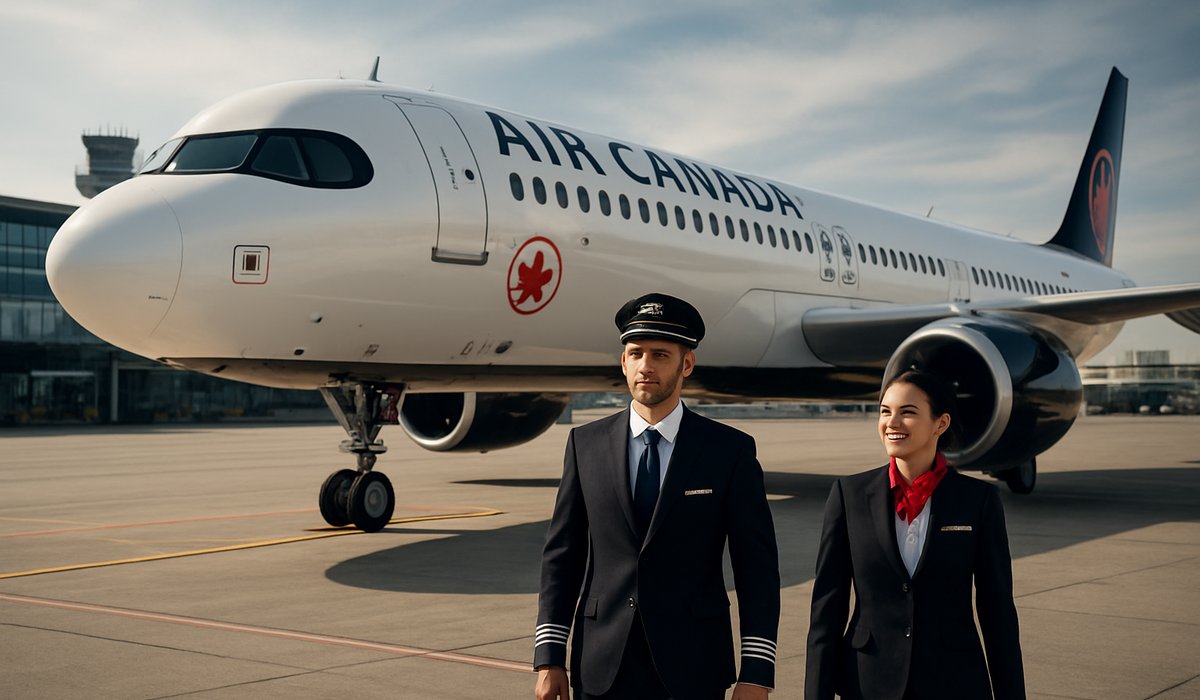
Image generated by AI
Air Canada's A321XLR Strategy Bucks Industry Trend: Minimal Business Class, No Premium Economy on Long-Haul Narrowbody
The carrier prioritizes volume over luxury as new aircraft reshapes transatlantic connectivity
Air Canada has unveiled an unconventional cabin configuration for its newly arrived Airbus A321XLR, signaling a deliberate departure from industry competitors who have aggressively pursued premium-focused seating strategies on long-haul narrowbody aircraft. The aircraft, which touched down in April 2026, contains just 14 business class seats and conspicuously omits a premium economy section—a configuration that underscores the airline's commitment to maximizing passenger volume and accessibility over revenue-per-seat optimization.
A Stripped-Down Approach to Long-Haul Travel
The decision stands in stark contrast to how rival carriers have configured their A321XLR fleets. Most international airlines deploying the extended-range narrowbody have embraced premium-heavy layouts, betting that higher-yielding cabin classes would drive profitability. Air Canada's approach—featuring a modest business section paired with an expansive economy cabin—reflects a fundamentally different commercial calculation.
The 14 business suites represent one of the most conservative premium allocations among A321XLR operators globally. The absence of an intermediate premium economy tier, increasingly popular on transatlantic routes, further distinguishes Air Canada's strategy from competitors like LATAM, Iberia, and other carriers experimenting with three-cabin configurations on the aircraft type.
Strategic Implications for Transatlantic Expansion
The cabin layout decision carries significant implications for Air Canada's transatlantic strategy. The A321XLR's unprecedented range—approximately 4,700 nautical miles—enables the carrier to establish point-to-point routes between secondary cities across the Atlantic, bypassing traditional hub-and-spoke models that dominate the long-haul market. Air Canada's high-capacity economy configuration optimizes this opportunity, allowing the airline to capture price-sensitive leisure traffic and underserved regional markets.
This approach prioritizes market penetration and load factors over premium revenue concentration. By minimizing business class seats, Air Canada positions itself as a volume player in emerging transatlantic corridors, where premium demand may remain limited compared to established trunk routes.
Industry Context: A Contrarian Play
The aviation industry has witnessed aggressive capacity additions across premium cabins as fuel price volatility and labor cost pressures squeeze narrow-body economics on intercontinental routes. Airlines have countered margin compression by elevating average fares through premium seating expansion. Air Canada's decision suggests confidence in economy-class demand and competitive positioning on price-sensitive transatlantic markets.
The configuration reflects broader industry segmentation: while full-service carriers traditionally rely on premium passengers to subsidize long-haul economics, Air Canada's strategy acknowledges that secondary-city transatlantic routes operate under different demand dynamics than flagship routes connecting major metropolitan hubs.
FAQ: Understanding Air Canada's A321XLR Strategy
Why did Air Canada choose only 14 business seats on its A321XLR? Air Canada's configuration prioritizes high passenger volume over premium revenue concentration, reflecting confidence in economy-class demand on secondary-city transatlantic routes where the A321XLR operates.
What is premium economy, and why are other airlines adding it? Premium economy bridges business and economy, offering enhanced comfort at moderate pricing. Competitors use it to capture mid-tier passengers and improve per-seat revenue on long-haul routes.
How does the A321XLR's range impact Air Canada's strategy? The aircraft's 4,700-nautical-mile range enables direct service between secondary European and North American cities, markets where economy demand typically exceeds business-class volume.
Does Air Canada's approach hurt profitability on long-haul routes? The strategy bets on higher load factors and seat utilization offsetting lower average fares, a viable model for routes with established leisure demand.
Will Air Canada add premium economy later? Industry trends suggest potential reconfiguration as the carrier evaluates market response, though current data reflects deliberate economy-focused positioning.
Related Travel Guides
External Resources
Disclaimer
This article is for informational and educational purposes only. It does not constitute legal, financial, or professional advice. While we strive to provide accurate and up-to-date information, travel policies, regulations, and conditions change rapidly. Always verify information with official sources before making travel decisions. Nomad Lawyer makes no representations about the accuracy, reliability, completeness, or suitability of the information provided. Readers should consult qualified professionals for advice specific to their circumstances. The views expressed in this article are those of the author and do not necessarily reflect the views of Nomad Lawyer.
Kunal K Choudhary
Co-Founder & Contributor
A passionate traveller and tech enthusiast. Kunal contributes to the vision and growth of Nomad Lawyer, bringing fresh perspectives and driving the community forward.
Learn more about our team →