
Hidden Sanctuaries at 35,000 Feet: How Boeing 747-8 Crew Rest Areas Transform Ultra-Long-Haul Aviation
Breaking airline news and aviation industry updates for 2026.

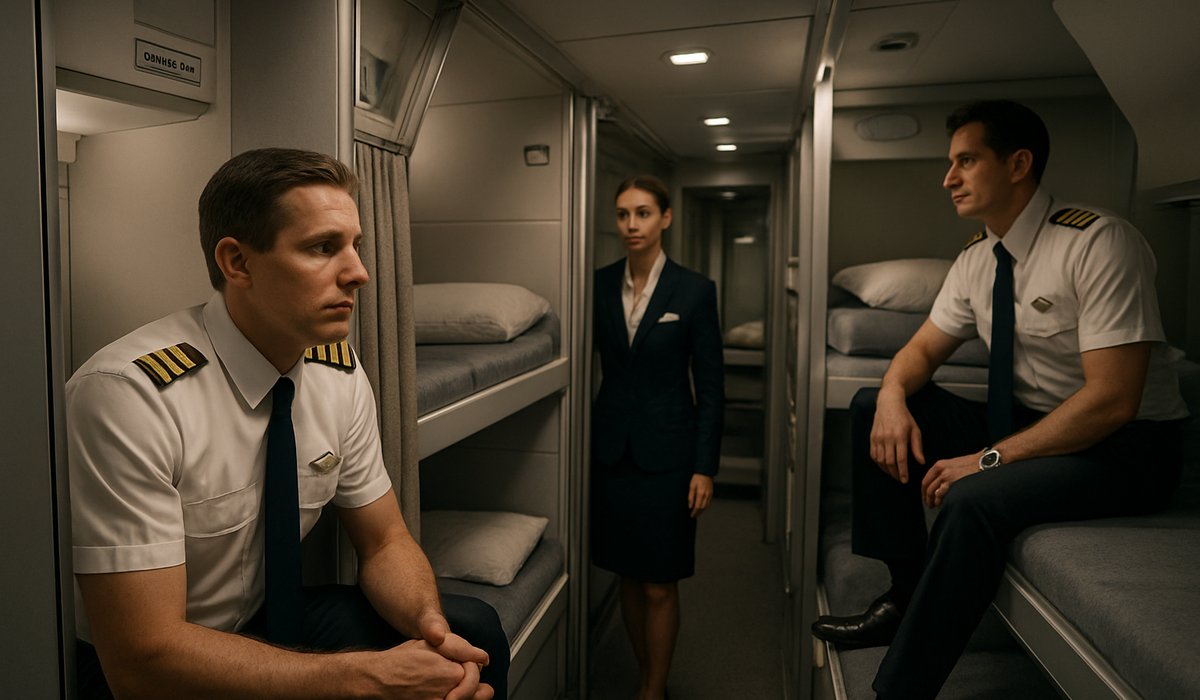
Image generated by AI
Hidden Sanctuaries at 35,000 Feet: How Boeing 747-8 Crew Rest Areas Transform Ultra-Long-Haul Aviation
As airlines push boundaries with record-breaking flight times, specialized rest facilities aboard the world's largest passenger jets have become essential to crew safety and operational viability
The Critical Challenge of Extended Flight Operations
The modern aviation industry faces an unprecedented operational puzzle: how to maintain crew safety and regulatory compliance on flights exceeding 20 hours. As carriers including Qantas expand their ultra-long-haul networks, the demand for sophisticated crew rest solutions has become paramount to flight operations worldwide.
Unlike conventional short and medium-haul services where crew fatigue remains manageable within standard duty-time windows, extended-range flights demand architectural innovations that few travelers ever witness. The Boeing 747-8, Boeing's flagship wide-body aircraft, has emerged as a critical asset in solving this challenge through purpose-built crew rest compartments located above and below the main deck.
Engineering Rest Into the Skies
The 747-8's integrated rest areas represent a significant departure from earlier wide-body designs. These hidden sanctuaries—accessed via discrete stairways and hidden from passenger view—provide flight crews with dedicated sleeping quarters equipped with bunks, lighting controls, temperature regulation, and minimal soundproofing to ensure genuine recuperation during flight.
Aviation regulators worldwide mandate specific rest periods for crew members to mitigate the risk of fatigue-related operational errors. On flights approaching or exceeding 20 hours, airlines cannot rely on brief crew changes or overnight layovers alone. Instead, they must implement structured rest rotation systems that keep fresh pilots and cabin attendants available throughout extended operations.
Operational Necessity Meets Regulatory Requirement
The 747-8's crew rest infrastructure addresses dual imperatives: safety compliance and operational efficiency. By rotating crews through designated rest periods during cruise phases, operators can maintain alert, well-rested personnel in the cockpit during critical takeoff, landing, and approach phases—when pilot fatigue poses the greatest safety risk.
Airlines operating these aircraft have reported that proper crew rest facilities directly improve operational reliability and crew morale on grueling long-distance routes. The compartments accommodate multiple crew members simultaneously, allowing airlines to deploy augmented crew configurations on ultra-long-haul services without compromising individual rest requirements.
Industry-Wide Implications
As competition intensifies among carriers offering record-distance services, crew rest capability has become a competitive differentiator. Airlines investing in aircraft equipped with sophisticated rest facilities can operate more ambitious route networks while maintaining safety standards and crew welfare—two non-negotiable factors in modern aviation.
The 747-8's engineering approach offers lessons for next-generation wide-body aircraft development, as manufacturers recognize that sustainable ultra-long-haul operations require integrated crew wellness solutions rather than operational workarounds.
Frequently Asked Questions
What are Boeing 747-8 crew rest areas? Specialized compartments located above and below the main passenger deck, featuring bunks, climate control, and soundproofing designed for flight crew recuperation during extended operations.
Why are crew rest facilities essential for ultra-long-haul flights? Regulatory requirements mandate specific rest periods for crew on flights exceeding operational duty limits. Without dedicated rest areas, flights lasting 20+ hours would be operationally impossible.
How do airlines schedule crew rotation on 20-hour flights? Carriers deploy augmented crew configurations, rotating pilots and flight attendants through scheduled rest periods during cruise phases to ensure alert personnel during critical flight phases.
Are crew rest areas available on all wide-body aircraft? No. While many modern wide-bodies include crew rest facilities, their sophistication and capacity vary significantly. The 747-8 features particularly comprehensive rest infrastructure.
How does crew fatigue impact flight safety? Fatigue impairs judgment, reaction time, and situational awareness—particularly dangerous during takeoff, landing, and approach phases. Proper rest facilities directly enhance operational safety.
Related Travel Guides
Disclaimer
This article is for informational and educational purposes only. It does not constitute legal, financial, or professional advice. While we strive to provide accurate and up-to-date information, travel policies, regulations, and conditions change rapidly. Always verify information with official sources before making travel decisions. Nomad Lawyer makes no representations about the accuracy, reliability, completeness, or suitability of the information provided. Readers should consult qualified professionals for advice specific to their circumstances. The views expressed in this article are those of the author and do not necessarily reflect the views of Nomad Lawyer.
Kunal K Choudhary
Co-Founder & Contributor
A passionate traveller and tech enthusiast. Kunal contributes to the vision and growth of Nomad Lawyer, bringing fresh perspectives and driving the community forward.
Learn more about our team →