
Cairo International Airport Crisis: EgyptAir, Saudia and Gulf Air Cancel 19 Flights and Report 100+ Delays Across Dammam, Riyadh, Medina, Bahrain and Beyond
Cairo International Airport faces severe disruption as EgyptAir, Saudia, and Gulf Air ground 19 flights and report over 100 delays, affecting major routes across Dammam, Luxor, Riyadh, Medina, Bahrain, and dozens of international destinations.

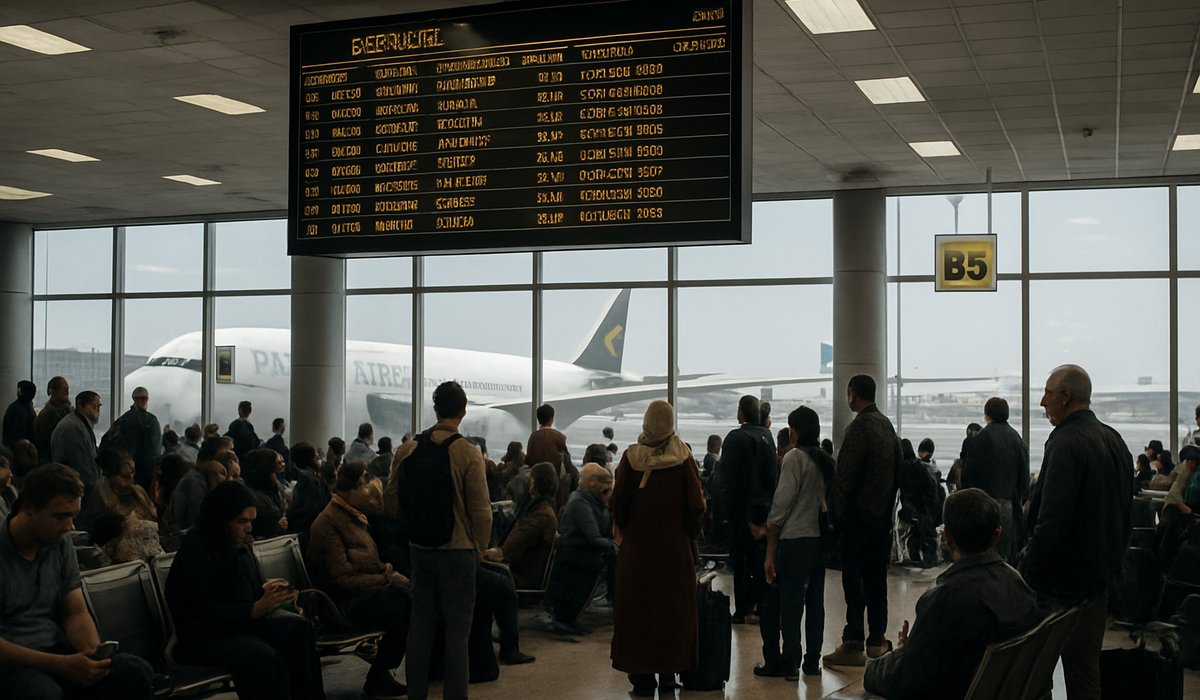
Image generated by AI
Cairo International Airport Crisis: EgyptAir, Saudia and Gulf Air Cancel 19 Flights and Report 100+ Delays Across Dammam, Riyadh, Medina, Bahrain and Beyond
Major Disruption Hits Cairo as Three Airlines Ground Nearly 20 Flights
Travelers at Cairo International Airport (CAI) are facing significant operational chaos as EgyptAir, Saudia, and Gulf Air collectively cancel 19 flights while reporting over 100 delays, sending ripple effects across a vast network of Middle East, European, African, and intercontinental routes.
Routes connecting Dammam, Luxor, Riyadh, Medina, Bahrain, Abu Dhabi, London, Frankfurt, New York, and dozens of other destinations have been directly disrupted, leaving thousands of passengers stranded or facing prolonged waiting periods at one of Africa's busiest airports.
Flight Cancellations and Delays by Airline
| Airline | Cancellations | Delays |
|---|---|---|
| EgyptAir | 15 | 90 |
| Saudia | 2 | 22 |
| Gulf Air | 2 | 0 |
| Total | 19 | 112+ |
EgyptAir bears the heaviest operational burden, accounting for 15 of the 19 cancellations and 90 of the reported delays, reflecting the scale of pressure on Egypt's national carrier. Saudia and Gulf Air contribute modestly to the cancellation count but face their own schedule recovery challenges.
Airports Most Affected by Cancellations
| Airport | Code | Cancellations | Proportional Impact |
|---|---|---|---|
| Cairo International Airport | CAI | 10 | 2% of total traffic — primary hub |
| King Fahd International Airport | DMM | 3 | 23% |
| Bahrain International Airport | BAH | 1 | 50% |
| Abu Dhabi International Airport | AUH | 1 | 14% |
| Luxor International Airport | LXR | 1 | Minor |
| Aswan International Airport | ASW | 1 | Minor |
| King Khalid International Airport | RUH | 1 | Minor |
| Prince Mohammad bin Abdulaziz Intl | MED | 1 | Minor |
Cairo registers the highest absolute count at 10 cancellations, clearly cementing its role as the primary disruption hub. While other airports see lower volumes, the proportional impact at Bahrain (50%) and Abu Dhabi (14%) reveals severe localized strain despite modest absolute numbers.
Affected Destinations Across Regions
The disruption extends across a sprawling international network:
Middle East & Gulf: Dammam, Riyadh, Medina, Bahrain, Abu Dhabi, Dubai, Al Maktoum, Sharjah, Muscat, Doha, Jeddah, Gizan, Qassim, Ha'il, Qaisumah, Tabuk, Ta'if, Yanbu, Amman, Beirut, Sayun
Europe: Berlin, Frankfurt, Cologne, Düsseldorf, Munich, London, Amsterdam, Dublin, Copenhagen, Barcelona, Paris, Athens, Milan, Rome, Prague, Vienna, Brussels, Ostend
Africa: Nairobi, N'Djamena, Hurghada, Marsa Alam, Sharm El Sheikh, Algiers, Abuja, Lagos, Tunis, Casablanca, Benghazi, Misrata, Kano
Asia & Intercontinental: Mumbai, Shanghai, Beijing, Hangzhou, Chengdu, Moscow, Toronto, New York, Larnaca, Istanbul, Antalya
Network-Wide Cascade: How One Hub Disrupts the Globe
Flight disruptions at Cairo do not exist in isolation. As a critical transit hub connecting Africa, the Middle East, and Europe, operational failures at CAI produce cascade effects across the entire network. Connecting flights — particularly one-stop itineraries through regional Gulf hubs — face knock-on delays as arriving aircraft from Cairo arrive late or not at all, triggering downstream schedule compression.
Airport handling capacity at Cairo remains stretched during peak travel windows, further compounding recovery timelines. Airlines are attempting schedule corrections, but the volume of affected routes means passengers should anticipate continued volatility over the short term.
What to Do If Your Flight Is Cancelled or Delayed
Step 1: Stay Calm and Monitor Your Alerts
Check your airline's app, SMS notifications, and email immediately. Most airlines push status updates proactively when disruptions are declared. Visit the airline's website for real-time departure information.
Step 2: Contact Your Airline Directly
Head to the airline's service desk at the airport or use phone/chat support. Online channels often have shorter wait times than physical queues during high-disruption periods.
Step 3: Know Your Passenger Rights
Compensation entitlements vary by region:
- EU travelers: Protected under EC 261/2004 — eligible for compensation when disruption is within airline control
- US travelers: Governed by DOT regulations — airlines must offer refunds for cancelled flights
- Middle East travelers: Check airline-specific policies and local aviation authority guidelines
Step 4: Explore Rebooking Options
Ask about:
- Next available flights on the same airline
- Interline rebooking onto partner carriers
- Full refund eligibility if no suitable alternative is offered
Step 5: Secure Accommodation if Stranded Overnight
Airlines causing significant delays are typically obligated to provide:
- Meal vouchers for extended ground delays
- Hotel accommodation for overnight disruptions
- Ground transportation to/from hotel
Traveler Action Checklist
- ✓ Check real-time flight status on FlightAware before departing for the airport
- ✓ Enable push notifications from your airline app immediately
- ✓ Contact EgyptAir, Saudia, or Gulf Air customer service directly for rebooking
- ✓ Document all expenses incurred due to the disruption (receipts for meals, hotel, transport)
- ✓ Know your rights through the IATA Passenger Rights guide
- ✓ Consider travel insurance claims if your policy covers trip interruption
- ✓ Monitor FAA and regional aviation authority updates for broader network status
- ✓ Allow significant buffer time for any onward connections through Cairo or regional Gulf hubs
Looking Ahead: Continued Volatility on Middle East Routes
Flight cancellations remain heavily concentrated at Cairo International Airport, reinforcing its role as the primary disruption hub, while regional airports in Saudi Arabia and the Gulf continue to absorb selective pressure — particularly on key transit corridors.
If current conditions persist, travelers routing through the Middle East should anticipate continued schedule instability in the near term. Proactive monitoring, flexible bookings, and early check-in are the most effective tools for navigating the disruption window.
Source: FlightAware
Helpful Resources
Disclaimer
This article is for informational and educational purposes only. It does not constitute legal, financial, or professional advice. While we strive to provide accurate and up-to-date information, travel policies, regulations, and conditions change rapidly. Always verify information with official sources before making travel decisions. Nomad Lawyer makes no representations about the accuracy, reliability, completeness, or suitability of the information provided. Readers should consult qualified professionals for advice specific to their circumstances. The views expressed in this article are those of the author and do not necessarily reflect the views of Nomad Lawyer.
Raushan Kumar
Founder & Lead Developer
Full-stack developer with 11+ years of experience and a passionate traveller. Raushan built Nomad Lawyer from the ground up with a vision to create the best travel and law experience on the web.
Learn more about our team →