
Qantas Pushes Boeing 737 to Its Limits With Ambitious 9-Hour Ultra-Long-Range Service
Breaking airline news and aviation industry updates for 2026.

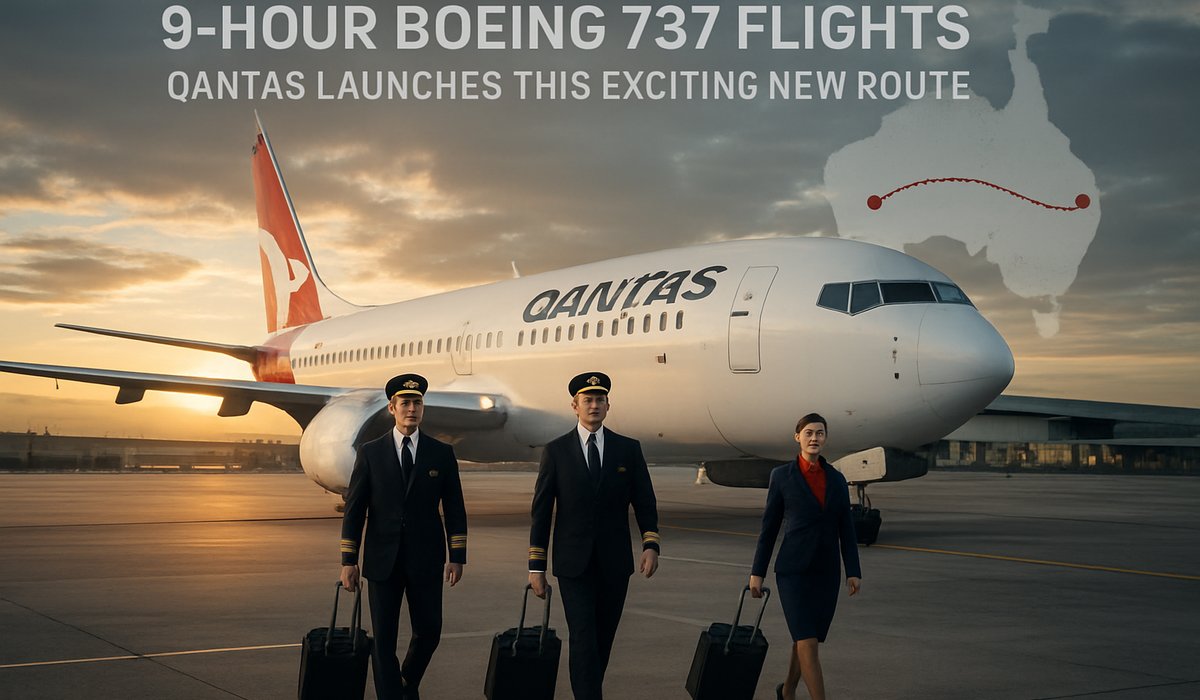
Image generated by AI
Qantas Pushes Boeing 737 to Its Limits With Ambitious 9-Hour Ultra-Long-Range Service
Australian carrier bets on single-aisle efficiency to capture untapped regional market as aviation industry embraces extended narrowbody operations
Breaking New Ground in Regional Aviation
Qantas has announced a bold expansion of its operational capabilities, deploying Boeing 737 aircraft on an unprecedented nine-hour service route—marking a significant shift in how Asia-Pacific carriers are approaching mid-range international travel. The move challenges conventional aviation wisdom that reserves such extended missions for larger widebody jets, instead leveraging modern single-aisle efficiency to unlock new market opportunities.
The decision reflects a broader industry trend reshaping regional and transcontinental aviation. Airlines worldwide are increasingly configuring narrowbody aircraft for extended operations, maximizing fuel efficiency and reducing per-seat operating costs while connecting city pairs traditionally underserved by premium long-haul networks.
The Strategic Rationale Behind Extended Narrowbody Operations
Qantas's venture into nine-hour Boeing 737 deployments underscores evolving economics in the post-pandemic aviation landscape. Operators are discovering that modern single-aisle jets—equipped with improved engines, advanced avionics, and optimized cabin configurations—can sustain longer journeys more cost-effectively than deploying larger aircraft on thinner routes.
This operational strategy allows carriers to address several pressing industry challenges simultaneously: volatile jet fuel prices that have reshaped airline profitability, competitive pressure from low-cost carriers, and growing consumer demand for direct connections on secondary city routes. By extending 737 operations into this space, Qantas avoids the capital intensity and operational overhead of widebody aircraft while maintaining competitive frequency and reliability.
Broader Aviation Industry Implications
The trend extends well beyond Qantas. Competitors across the globe are similarly stretching single-aisle fleets, with airlines deploying 737s, Airbus A320 variants, and other narrowbody platforms on routes spanning 4,000+ nautical miles. This paradigm shift has profound consequences for aircraft procurement strategies, crew scheduling, passenger comfort standards, and regional connectivity patterns.
Industry observers note that extended narrowbody operations help mitigate supply chain pressures affecting widebody deliveries while maximizing returns on existing single-aisle fleets. For passengers, the development promises expanded direct-route options, though airline fees for baggage, seat selection, and onboard services may reflect the economics of longer single-aisle missions.
What This Means for Travelers
For Qantas customers, the new service creates convenient connectivity options previously requiring connections through major hubs. However, the nine-hour duration on narrowbody aircraft raises questions about seat comfort and onboard amenities—factors critical for passenger satisfaction on extended flights.
FAQ: Understanding Extended Narrowbody Aviation
Why are airlines flying Boeing 737s on 9-hour routes instead of larger aircraft? Modern 737s offer superior fuel efficiency and lower per-seat operating costs, particularly on thinner routes where deploying large widebody aircraft would prove economically inefficient.
How does this trend affect airline fees and baggage policies? Extended narrowbody operations may influence baggage allowances and ancillary service pricing, as carriers balance profitability on longer missions with competitive pressures.
What impact do jet fuel prices have on these long-range 737 deployments? Volatile fuel costs drive airlines toward more efficient single-aisle platforms, making extended 737 operations economically attractive compared to widebody alternatives.
Is this trend sustainable across the aviation industry? Yes, as aircraft manufacturers continue improving narrowbody range and efficiency, more carriers are expected to adopt extended single-aisle operations on regional and transcontinental routes.
How does this affect passenger comfort on 9-hour flights? Narrowbody cabins offer less space than widebody aircraft, potentially impacting legroom and overall comfort during extended nine-hour journeys.
Related Travel Guides
External Resources
Disclaimer
This article is for informational and educational purposes only. It does not constitute legal, financial, or professional advice. While we strive to provide accurate and up-to-date information, travel policies, regulations, and conditions change rapidly. Always verify information with official sources before making travel decisions. Nomad Lawyer makes no representations about the accuracy, reliability, completeness, or suitability of the information provided. Readers should consult qualified professionals for advice specific to their circumstances. The views expressed in this article are those of the author and do not necessarily reflect the views of Nomad Lawyer.
Kunal K Choudhary
Co-Founder & Contributor
A passionate traveller and tech enthusiast. Kunal contributes to the vision and growth of Nomad Lawyer, bringing fresh perspectives and driving the community forward.
Learn more about our team →