
Air Canada and Jazz Ground Three Flights at Winnipeg Airport as Delays Ripple Across Canadian and U.S. Route Networks
Operational delays and three suspended services at Winnipeg International Airport are triggering network-wide scheduling

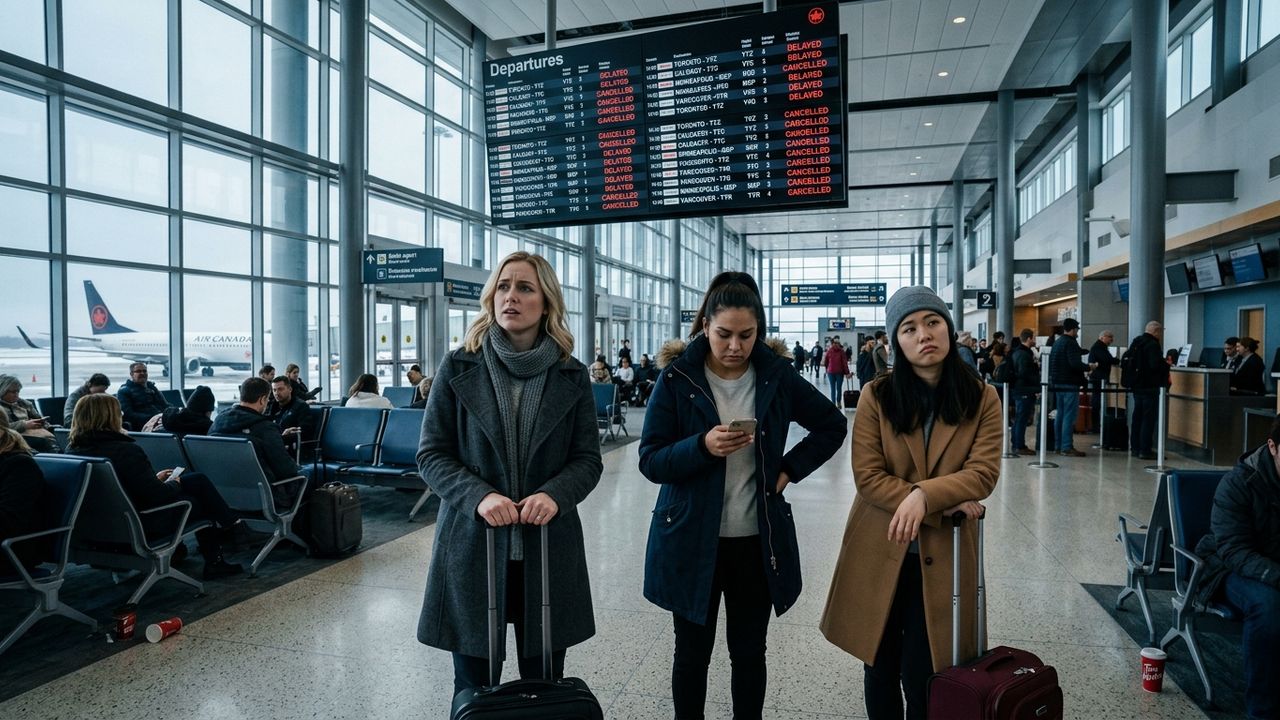
Image generated by AI
Travelers connecting through Winnipeg International Airport faced significant scheduling disruptions on June 22, 2026, after Air Canada and its regional partner Jazz suspended three flights and reported ten additional delays. The operational setbacks have triggered a chain reaction across interconnected Canadian and U.S. networks, with knock-on effects observed in Montreal, Vancouver, Toronto, Ottawa, and Minneapolis. As aircraft rotations fall out of sync, passengers are advised to verify real-time status updates before departing for terminals or booking alternate transport.
Network Disruptions and Route Connectivity Winnipeg serves as a critical pivot point for regional traffic, and the grounding of flights has immediately strained connecting services. Air Canada’s core network absorbed the brunt of the cancellations, while Jazz, operating as Air Canada Express, contributed to the shortfall. The ripple effect extended beyond Manitoba’s capital: Montreal and Vancouver recorded both cancellations and delayed movements, Toronto experienced a backlog of delayed departures and arrivals, and Ottawa faced limited but notable schedule shifts. Cross-border traffic into Minneapolis also recorded operational friction. These disruptions highlight the vulnerability of hub-and-spoke scheduling models when ground operations at a mid-sized airport face compounding delays, particularly affecting time-sensitive business itineraries and leisure connections alike.
Flight Status Breakdown The suspension and delay figures reflect a concentrated operational hiccup rather than a systemic shutdown, though the timing coincides with active travel windows. Airlines typically adjust aircraft positioning and crew schedules to mitigate downstream impacts, but the immediate result is reduced seat availability on affected legs. Real-time tracking data from FlightAware confirms the distribution of cancellations and delays across the two carriers.
Navigating Schedule Changes and Rebooking When flights are grounded or pushed back, travelers should prioritize direct communication channels over third-party aggregators. The airline’s official mobile application and airport service desks usually hold the most accurate rebooking data. Passengers should review their carrier’s contract of carriage, which outlines entitlements for reaccommodation, meal vouchers, or accommodation if a cancellation falls within the airline’s operational control. For time-sensitive itineraries, requesting standby status on the next available routing or exploring alternative ground transport can prevent extended layovers.
Restoration Timeline and Traveler Expectations Airlines typically stabilize disrupted networks within 24 to 48 hours as crews are repositioned and aircraft loops are reset. During this window, travelers should expect fluctuating gate assignments, consolidated boarding groups, and potential secondary delays as the system absorbs the backlog. Monitoring flight status through official channels remains the most reliable method to adjust plans without incurring unnecessary costs or missing connections.
| Airline | Cancelled | Delayed |
|---|---|---|
| Air Canada | 2 | 8 |
| Jazz (ACA) | 1 | 2 |
Data sourced from FlightAware real-time tracking.
Key Takeaways
- Air Canada and Jazz suspended three flights at Winnipeg International Airport on June 22, 2026, while reporting ten additional delays.
- Disruptions created knock-on scheduling challenges across major Canadian and U.S. hubs, including Montreal, Vancouver, Toronto, Ottawa, and Minneapolis.
- Airlines typically restore normal operations within 24–48 hours, but passengers should monitor official channels and review rebooking policies to minimize travel friction.
FAQ
How should I check if my flight was affected by the Winnipeg disruptions? Verify your flight status directly through the airline’s official mobile app, website, or airport departure boards. Third-party tracking tools may experience a delay in syncing with live network updates.
What rebooking options are available if my flight was cancelled? Carriers typically offer automatic rebooking on the next available routing at no additional cost. Passengers can also request standby status on alternative flights or explore refunds if no suitable alternatives are offered within a reasonable timeframe.
Why do delays at Winnipeg affect cities like Vancouver, Minneapolis, and Toronto? Winnipeg functions as a connecting node in a hub-and-spoke network. When aircraft rotations are delayed or cancelled at a mid-point hub, downstream flights, crew schedules, and connecting passengers across multiple cities experience compounding delays until the routing loop is reset.
Are passengers entitled to compensation for these cancellations? Entitlements depend on the airline’s contract of carriage and the cause of the disruption. Cancellations within the airline’s control typically trigger rebooking or accommodation provisions, while weather or air traffic control delays may fall under force majeure clauses. Always review your ticket’s terms or contact the carrier’s customer service desk for specifics.
Related Travel Guides
Disclaimer
This article is for informational and educational purposes only. It does not constitute legal, financial, or professional advice. While we strive to provide accurate and up-to-date information, travel policies, regulations, and conditions change rapidly. Always verify information with official sources before making travel decisions. Nomad Lawyer makes no representations about the accuracy, reliability, completeness, or suitability of the information provided. Readers should consult qualified professionals for advice specific to their circumstances. The views expressed in this article are those of the author and do not necessarily reflect the views of Nomad Lawyer.
Preeti Gunjan
Contributor & Community Manager
A passionate traveller and community builder. Preeti helps grow the Nomad Lawyer community, fostering engagement and bringing the reader experience to life.
Learn more about our team →