
Air Canada and Global Carriers Extend Middle East Flight Suspensions Into 2027
Air Canada has extended flight cancellations to Dubai and Tel Aviv until January 2027, joining a growing list of global airlines restricting Middle East airspace access.

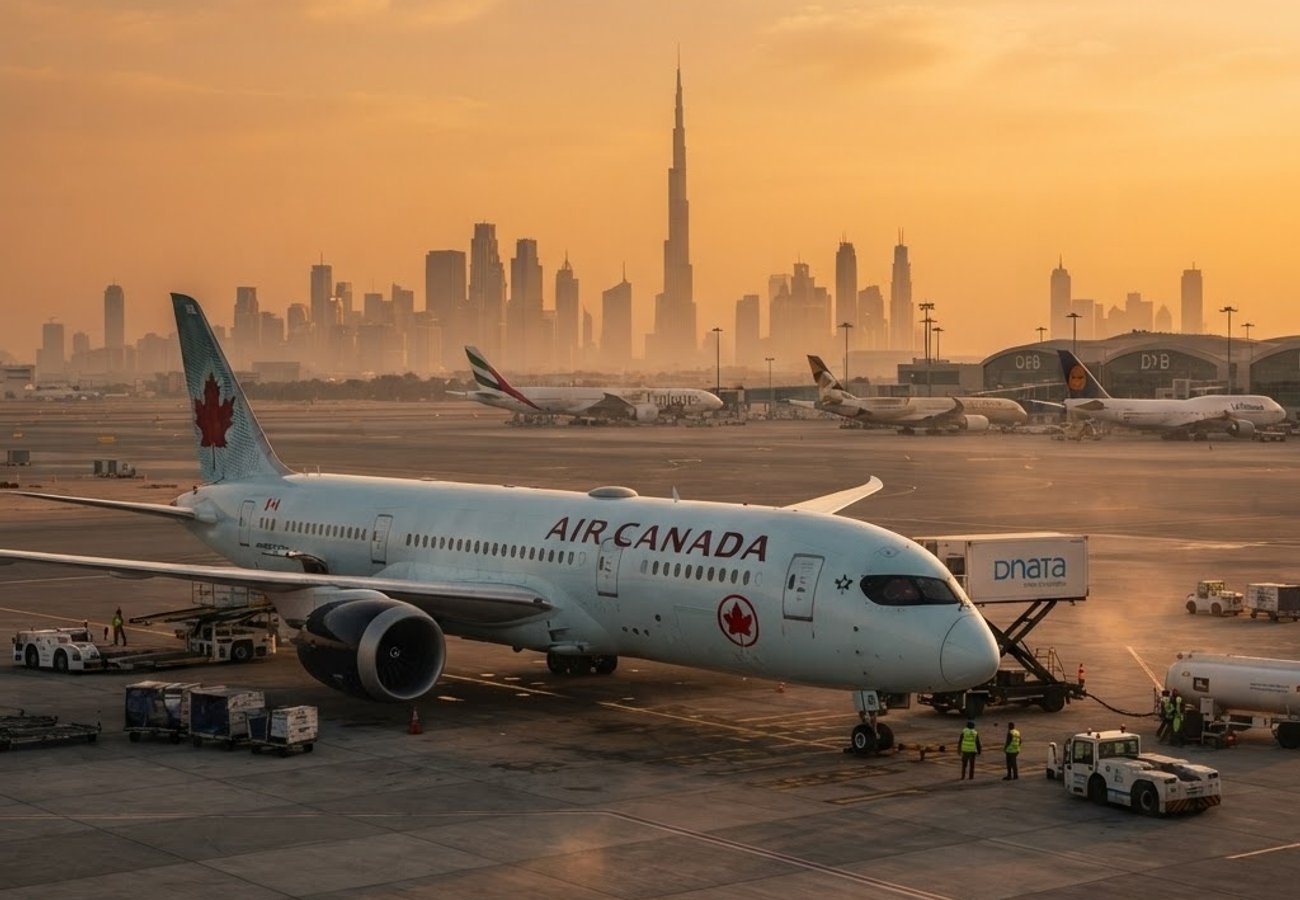
Image generated by AI
Air Canada has joined a growing coalition of international carriers in delaying the resumption of services to the Middle East, with some cancellations now extending into early 2027. This escalation follows similar restrictive measures by airlines in France, the UK, Singapore, and the United States due to persistent airspace volatility.
The current aviation landscape in the Middle East is characterized by a fragmented recovery. While some carriers are attempting phased returns, others are implementing long-term withdrawals. The most significant shift comes from Air Canada, which has formally announced that its services to Tel Aviv and Dubai will remain suspended until mid-January 2027. This represents a substantial extension from previous forecasts that suggested a return to service by late October 2026.
Airspace Restrictions and EASA Safety Mandates
The primary driver behind these systemic cancellations is not merely airport availability, but the safety of the corridors used to reach them. The European Union Aviation Safety Agency (EASA) has issued Conflict Zone Information Bulletin CZIB-2026-07R1, which specifically identifies high-risk airspace across Kuwait, Bahrain, Qatar, the UAE, and segments of the Gulf of Oman.
According to the EASA bulletin, which remains valid through 31 August 2026, operators are advised to avoid flying within these identified zones at any altitude. For airlines, this creates a logistical nightmare; without guaranteed safe routing, carriers cannot publish dependable schedules or secure the necessary crew and aircraft rotations required for long-haul operations.
Air Canada Shifts Cancellations into 2027
The decision by Air Canada to push its Dubai and Tel Aviv suspensions into mid-January 2027 marks a turning point in the crisis. By moving the disruption past the summer peak and deep into the winter holiday season, the airline is signaling a long-term lack of confidence in regional stability.
Passengers affected by these changes are being offered various remedies, including rebooking options, travel credits, and refunds. Industry observers note that Air Canada has explicitly warned passengers not to travel to the airport unless they have a confirmed alternative flight, highlighting the absolute nature of these suspensions.
European and Asian Carriers Adopt Divergent Strategies
While Canada has opted for long-term suspension, European and Asian carriers are employing a variety of tactical responses to the regional instability.
Air France has documented suspensions for its summer 2026 program affecting Tel Aviv, Beirut, Riyadh, and Dubai. In contrast, the Netherlands' KLM is maintaining a strict suspension of flights to Dammam, Riyadh, and Dubai through 6 September 2026.
In Asia, Singapore Airlines has cancelled its Dubai services until 24 October 2026, while Cathay Pacific has pushed its resumptions for Riyadh and Dubai into late October. These varying dates suggest that airlines are monitoring intelligence in real-time, adjusting their risk appetite on a week-by-week basis.
Middle East Flight Status by Airline (2026-27)
The following table outlines the current operational status of major global carriers serving the Middle East region.
| Airline | Key Middle East Market | Latest Verified Position |
|---|---|---|
| Air Canada | Dubai, Tel Aviv | Cancelled until mid-January 2027. |
| Air France | Dubai, Riyadh, Beirut, Tel Aviv | Summer programme suspensions; check live status. |
| KLM | Dubai, Riyadh, Dammam | Suspended through 6 September 2026. |
| Singapore Airlines | Dubai | SQ494/SQ495 cancelled through 24 October 2026. |
| Scoot | Jeddah | Cancellations covered through 8 August; check live status. |
| Cathay Pacific | Dubai | Resumption postponed to 25 October 2026. |
| Cathay Pacific | Riyadh | Resumption postponed to 26 October 2026. |
| ITA Airways | Dubai | Suspended through 24 October 2026. |
| ITA Airways | Riyadh | Resumption planned from 15 September 2026. |
| SWISS | Dubai | Suspended through 24 October 2026. |
| British Airways | Bahrain | Heathrow service restart delayed to 28 March 2027. |
| British Airways | Abu Dhabi | Heathrow service restart delayed to 10 January 2027. |
| British Airways | Dubai, Doha, Riyadh | Winter frequencies reduced. |
| British Airways | Tel Aviv, Amman | Reduced winter frequencies from late October. |
| Lufthansa Group | Multiple Markets | Phased restoration for Riyadh, Amman, Beirut, and Erbil. |
| Finnair | Doha | No operations from 3 October 2026 to 27 March 2027 (Commercial reasons). |
| Philippine Airlines | Doha | Manila-Doha resumed 1 July 2026. |
| Philippine Airlines | Dubai | Manila-Dubai return planned for 2 October 2026. |
| Air Astana | Gulf network | Dubai travel showing from September. |
| Turkish Airlines | Iran & Region | Some flights cancelled; check live status. |
| United Airlines | Dubai, Tel Aviv | Active travel alerts; flexible rebooking available. |
| American Airlines | Tel Aviv, Doha | Extended travel waivers in force. |
| IndiGo | Gulf network | Doha services resumed 1 May. |
| Emirates | Gulf network | No blanket regional suspension; check live status. |
Capacity Management and the Winter Transition
British Airways is currently providing a blueprint for how airlines are transitioning from "emergency mode" to "capacity management." Rather than total withdrawals, the carrier is reducing the frequency of its flights to Doha, Riyadh, Dubai, Tel Aviv, and Amman for the winter season.
This approach allows the airline to maintain a presence in the market without committing the full resources that would be required for a complete schedule. Notably, the delay of Bahrain services until March 2027 and Abu Dhabi until January 2027 suggests that certain hubs are viewed as higher risk than others.
Furthermore, the case of Finnair's Doha route highlights a critical distinction for travelers: not every cancellation is security-related. Finnair has explicitly stated that its absence from the Doha market between October and March is a commercial decision, illustrating that economic viability is now intersecting with geopolitical risk.
Why This Matters: The Impact on the Global Traveler
For the modern traveler, these developments mean that a destination's "open" status is no longer a guarantee of accessibility. We are entering an era of "network fragmentation," where the airline you choose is as critical as the destination you visit.
From a logistical standpoint, this creates a high-risk environment for multi-city itineraries. A traveler might find that their flight into a region is operational, but their connecting flight out—operated by a different carrier—has been pushed into 2027. This puts the onus of due diligence entirely on the passenger.
For those planning winter travel, the "flexible travel policies" mentioned by United and American Airlines are not the same as confirmed flights. A waiver allows you to change a date, but it does not guarantee that a flight will actually exist on that new date.
Travelers are urged to verify the operating carrier directly rather than relying on third-party booking agents during this period of volatility.
Related Travel Guides
Disclaimer
This article is for informational and educational purposes only. It does not constitute legal, financial, or professional advice. While we strive to provide accurate and up-to-date information, travel policies, regulations, and conditions change rapidly. Always verify information with official sources before making travel decisions. Nomad Lawyer makes no representations about the accuracy, reliability, completeness, or suitability of the information provided. Readers should consult qualified professionals for advice specific to their circumstances. The views expressed in this article are those of the author and do not necessarily reflect the views of Nomad Lawyer.
Preeti Gunjan
Contributor & Community Manager
A passionate traveller and community builder. Preeti helps grow the Nomad Lawyer community, fostering engagement and bringing the reader experience to life.
Learn more about our team →