
Air Canada Extends Flight Suspensions to Dubai and Tel Aviv Into 2027 Amid Regional Volatility
Air Canada has extended the halt of non-stop services to Dubai and Tel Aviv through early 2027, citing prolonged airspace instability and security risks in the Middle East.

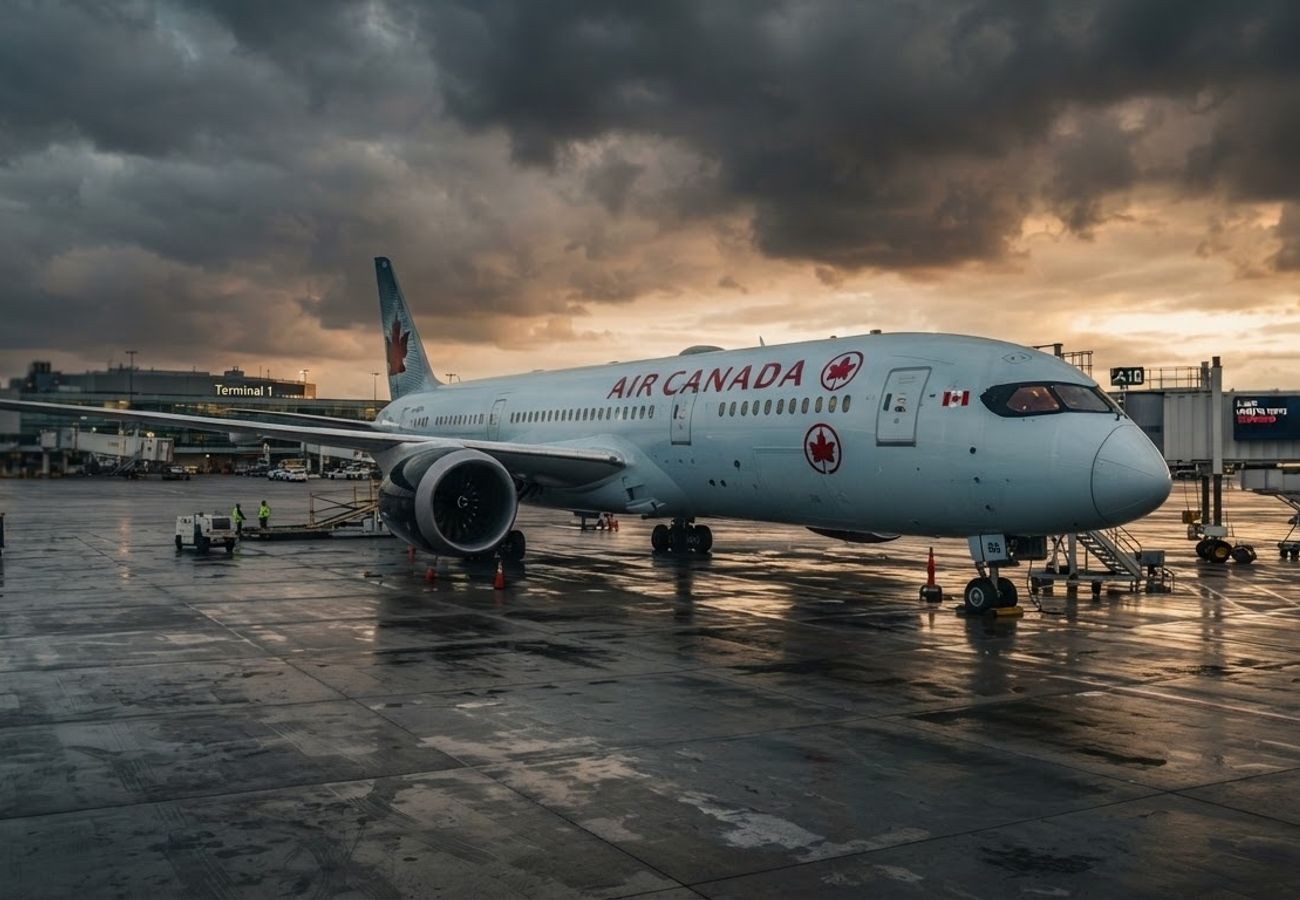
Image generated by AI
Air Canada has shifted its Middle East strategy from temporary safety pauses to a long-term withdrawal, with non-stop flights to Dubai and Tel Aviv now suspended through at least early January 2027.
The decision comes as the flag carrier navigates a volatile operational environment characterized by intermittent airspace closures and escalating regional conflict. What began as a precautionary measure in mid-2025 has evolved into a strategic suspension as the airline prioritizes crew safety and operational viability over high-risk long-haul routes.
Operational Shift From Temporary Pause to Strategic Withdrawal
The suspension of the Toronto–Dubai non-stop service originally occurred in mid-2025. While initially framed as a short-term response to escalating tensions, the disruption persisted through the first half of 2026.
Throughout 2026, the aviation landscape in the Middle East remained unstable. Major hubs, specifically Dubai International and Tel Aviv’s Ben Gurion Airport, faced partial shutdowns and damage following strikes and counterstrikes involving Iran, Israel, and allied forces.
Current booking data from August 2026 confirms that flights operated by Air Canada to these destinations are unavailable for departure until at least early January 2027. This timeline suggests the airline is no longer treating these disruptions as anomalies but as a sustained operational reality.
Airspace Risks and the Economics of Detours
The decision to keep these routes offline is driven by a combination of security imperatives and financial pressures. The 2026 regional crisis has fundamentally altered traffic flows across the Middle East.
- Airspace Restrictions: Intermittent closures of Iraqi, Iranian, Syrian, and Israeli airspace have complicated flight planning between North America and Asia.
- Increased Costs: Avoiding conflict zones requires longer flight paths, which directly increases fuel burn and flight duration.
- Operational Complexity: The need for constant diversion planning and adherence to shifting government travel advisories has made these routes marginally viable.
For Air Canada, facing rising jet fuel costs and network capacity constraints, the risk-to-reward ratio for non-stop service to the Levant and Gulf regions has become unfavorable.
Passenger Impact and Rerouting Logistics
The absence of direct links to Dubai and Tel Aviv removes two critical gateways. Dubai serves as a primary connection point for travelers heading to Africa and South Asia, while Tel Aviv is a vital link for Canada’s Israeli and Jewish diaspora.
Passengers holding tickets for the remainder of 2026 are experiencing various rerouting scenarios:
- European Hub Transfers: Many travelers are being rebooked via partners in cities like Frankfurt, combining an Air Canada transatlantic leg with a regional carrier.
- Digital Discrepancies: Some users report that mobile apps still show flights as "scheduled" while public booking channels list them as suspended, leading to customer service bottlenecks.
- Flexibility Policies: Affected passengers are generally being offered options to rebook for later dates, reroute through alternate regions (India, Africa, or Europe), or request refunds based on fare rules.
Competitive Dynamics in the Middle East Market
Air Canada is not alone in this cautious approach. Throughout 2026, various European and Asian carriers have implemented similar schedule adjustments, redeploying aircraft to more stable transatlantic or intra-Asia routes.
This vacuum creates a competitive advantage for foreign carriers that maintain operations in the region. Travelers from Canada and the northern United States must now rely on Gulf-based airlines or European carriers to reach their destinations. However, industry analysts warn that these alternatives remain fragile and subject to the same geopolitical triggers that prompted Air Canada's withdrawal.
Summary of Route Status (2025–2027)
| Route | Initial Suspension | Status (August 2026) | Expected Resumption | Primary Alternative |
|---|---|---|---|---|
| Toronto $\rightarrow$ Dubai | Mid-2025 | Suspended | Post-January 2027 | European Hubs (e.g., Frankfurt) |
| Canada $\rightarrow$ Tel Aviv | Late 2023/2024 | Suspended | Post-January 2027 | European Hubs (e.g., Frankfurt) |
Key Takeaways
- Extended Timeline: Non-stop services to Dubai and Tel Aviv are now halted through at least early January 2027.
- Safety First: Suspensions are driven by airstrikes, airspace closures, and volatile security conditions in the Middle East.
- Financial Strain: Longer detours around conflict zones have increased fuel costs and diminished the economics of these routes.
- Rerouting: Passengers are being shifted to partner airlines, primarily via European gateways.
FAQ
When will Air Canada flights to Dubai and Tel Aviv resume? There is currently no firm date for resumption, but booking channels indicate services are suspended through at least early January 2027.
What happens to my existing booking for late 2026? Passengers are typically being offered rerouting via European hubs, the option to change their destination, or rebooking for later dates.
Why are these flights suspended instead of just rerouted? The combination of security risks, extreme fuel cost increases due to longer flight paths, and unstable airspace makes non-stop operations currently unfeasible.
The aviation industry remains in a state of flux as geopolitical tensions redraw the global flight map.
Related Travel Guides
Disclaimer
This article is for informational and educational purposes only. It does not constitute legal, financial, or professional advice. While we strive to provide accurate and up-to-date information, travel policies, regulations, and conditions change rapidly. Always verify information with official sources before making travel decisions. Nomad Lawyer makes no representations about the accuracy, reliability, completeness, or suitability of the information provided. Readers should consult qualified professionals for advice specific to their circumstances. The views expressed in this article are those of the author and do not necessarily reflect the views of Nomad Lawyer.
Preeti Gunjan
Contributor & Community Manager
A passionate traveller and community builder. Preeti helps grow the Nomad Lawyer community, fostering engagement and bringing the reader experience to life.
Learn more about our team →