
African Airlines Face a New Crisis as 137 Million Passengers Fuel Growth but Profits Collapse to Just 0.2%
African Airlines Face a New Crisis as 137 Million Passengers Fuel Growth but Profits Collapse to Just 0.2%

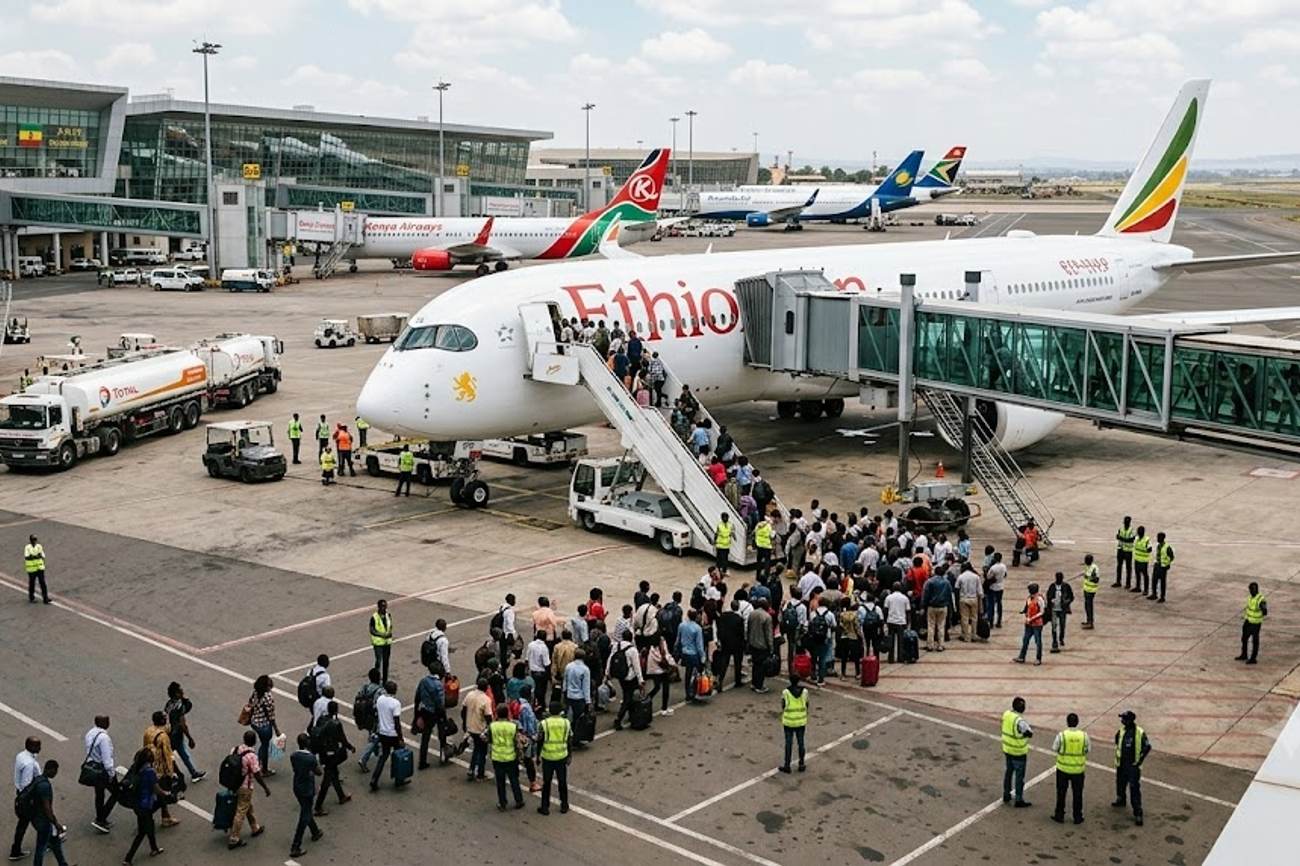
Image generated by AI
Only 7% of the African population currently uses air travel, a figure that reveals a massive, untapped frontier for mobility on a continent where the median age is just 19. While the world looks at Africa as a developing market, the reality is a stark contradiction: passenger demand is skyrocketing, yet the airlines serving this growth are operating on some of the thinnest margins on the planet.
The 2026 Aviation Paradox
The trajectory of African skies is currently defined by a jarring disconnect between volume and value. By 2026, the sector is projected to move 137.3 million passengers, marking a sharp 21.5 per cent increase from the previous year. On paper, this suggests a booming industry. In reality, the financial health of these carriers is precarious, with forecast profit margins sitting at a razor-thin 0.2 per cent.
This is not a failure of demand, but a failure of structure. The continent's demographic engine is firing on all cylinders—with a population expected to hit 1.58 billion by 2026 and steady economic growth averaging 4.3 per cent—yet the aviation industry is unable to convert this momentum into sustainable capital. When you are moving millions of people but barely breaking even, the ability to invest in safety, newer fleets, and expanded networks becomes a gamble rather than a strategy.
What Makes African Aviation Different
Flying within Africa is fundamentally different from the experience in Europe or North America, primarily because the cost of "doing business" is artificially inflated. One of the most oppressive burdens is the tax regime; taxes and fees currently swallow between 35 per cent and 40 per cent of a ticket's price. To put that in perspective, the global average is roughly 20 per cent. For the traveler, this means higher fares; for the airline, it means a crippled ability to compete on price in a market that is extremely sensitive to cost.
Beyond taxes, there is the issue of "trapped" capital. As of March 2026, African governments are withholding roughly $774 million in blocked airline funds. This is the highest regional share of trapped funds globally and is part of a wider $1 billion crisis spanning Africa and the Middle East. This happens when foreign-exchange shortages or bureaucratic hurdles prevent an airline from repatriating the money it earned from ticket sales.
The scale of this is evident even for the giants. Ethiopian Airlines, the continent's dominant carrier, has approximately $90 million trapped in overseas markets. If a powerhouse like Ethiopian struggles with liquidity due to blocked funds, smaller regional carriers are often pushed to the brink of insolvency.
The hardware gap is equally wide. Africa receives only about 2 per cent of all global aircraft deliveries. While the Asia-Pacific region claims 35.6 per cent and Europe takes 24 per cent, African carriers are often left with aging fleets. This lack of modernization leads to higher fuel consumption and lower reliability, further eating into those 0.2 per cent margins.
Visitor Insider Tips
Navigating the African aviation landscape requires a different playbook than booking a flight in the Global North. Because the industry is in such a volatile state of transition, flexibility is your greatest asset.
Booking and Timing Avoid booking the absolute cheapest "no-frills" regional carriers for tight connections. Given the fleet age and infrastructure challenges, delays are more common. Always build in a 6-hour buffer when switching airlines, especially in hubs like Addis Ababa or Nairobi. Use the African Union resources or official national tourism boards to check for current travel advisories, as airspace closures can happen overnight.
The Hub Strategy Base your travels around the major hubs that have managed to scale. Ethiopian Airlines has turned Addis Ababa into a gateway for the entire continent. If you are planning a multi-country trip, look for "hub-and-spoke" itineraries rather than trying to find direct flights between smaller secondary cities, which are often unreliable or overpriced due to the lack of competition.
Local Etiquette and Logistics When flying regionally, be prepared for varying levels of digitalization. While major airports are modern, smaller regional strips may still rely on paper manifests. Keep physical copies of your passport and vaccination records (such as Yellow Fever) as digital versions are not always accepted at remote checkpoints. For the most reliable transport updates and regional regulations, consult the International Civil Aviation Organization (ICAO).
Payment Hacks Due to the foreign exchange issues mentioned above, some regional airlines struggle with international credit card processing. If you are booking a small domestic carrier, try using a local payment gateway or a travel agent based in that country to avoid "payment failed" loops that occur during repatriation crises.
Cultural and Environmental Context
The struggle for aviation profitability is not just a corporate problem; it is a developmental one. In many parts of Africa, air travel is not a luxury but a necessity for bypassing fragmented road and rail networks. When airlines fail or routes are cut due to low margins, it isolates communities and slows economic integration.
There is also a significant geopolitical layer to the current crisis. In the Sahel region, conflict has forced the creation of a no-fly corridor stretching roughly 4,000 kilometres across Libya, Sudan, Mali, and Niger. This forces planes to take longer, more expensive routes, burning more fuel and increasing ticket prices for the people who can least afford them.
Furthermore, the infrastructure gap is staggering. The continent needs between $25 billion and $30 billion in airport and air navigation investments over the next decade just to keep up with the 137.3 million passengers expected by 2026. This investment is a double-edged sword; while necessary for growth, it must be balanced against the environmental impact of rapid expansion in ecologically sensitive regions. The push for new airports often clashes with local land rights and conservation efforts, making the "resilience" of African aviation as much about social license as it is about profit margins.
FAQ: Visiting Africa 2026
What is the best time to visit? Depending on the region, the "dry seasons" are best. For East Africa (Kenya, Tanzania), July to October is ideal. For Southern Africa, May to September offers the best weather and wildlife viewing. Always check specific regional climates before booking.
Do I need a visa? Visa requirements vary wildly. However, many countries are moving toward the "African Continental Free Trade Area" spirit. Some regions offer e-visas or visas-on-arrival. Check the official embassy website of your destination or the UNESCO site if visiting heritage landmarks.
How do I get there from major hubs? Most international travelers enter via Addis Ababa (Ethiopian Airlines), Nairobi (Kenya Airways), or Johannesburg (South African Airways). From these hubs, you can connect to smaller regional destinations.
Is it safe for solo travelers? Yes, provided you do your research. Stick to reputable airlines and registered transport providers. Use ride-sharing apps in major cities rather than hailing random taxis to ensure your journey is tracked and priced fairly.
The skies over Africa are crowded with potential, but the journey from passenger growth to actual profit remains a steep climb.
#AfricaTravel2026 #AfricanAviation #AddisAbabaHub #SahelTravel #AfricanEconomy #FlyAfrica
Related Travel Guides
- Air India Faces Aviation Ministry Notice After Three Italians Leave Delhi Without Immigration Clearance
- Korean Air Starlink WiFi Is Now Set to Unlock Better Global Travel With Free Access in the Sky
- Eastar Jet Expands In-Flight Meals and Onboard Shopping With New Korean Flavours for International Travellers
Disclaimer
This article is for informational and educational purposes only. It does not constitute legal, financial, or professional advice. While we strive to provide accurate and up-to-date information, travel policies, regulations, and conditions change rapidly. Always verify information with official sources before making travel decisions. Nomad Lawyer makes no representations about the accuracy, reliability, completeness, or suitability of the information provided. Readers should consult qualified professionals for advice specific to their circumstances. The views expressed in this article are those of the author and do not necessarily reflect the views of Nomad Lawyer.
Raushan Kumar
Founder & Lead Developer
Full-stack developer with 11+ years of experience and a passionate traveller. Raushan built Nomad Lawyer from the ground up with a vision to create the best travel and law experience on the web.
Learn more about our team →