
Gulf Airspace Flight Suspensions: How KLM, Cathay Pacific, and Global Carriers Are Navigating Middle East Travel in 2026
EASA conflict advisories force KLM, British Airways, and Cathay Pacific to suspend Gulf flights, adding hours to East-West routes while regional hubs stay open.

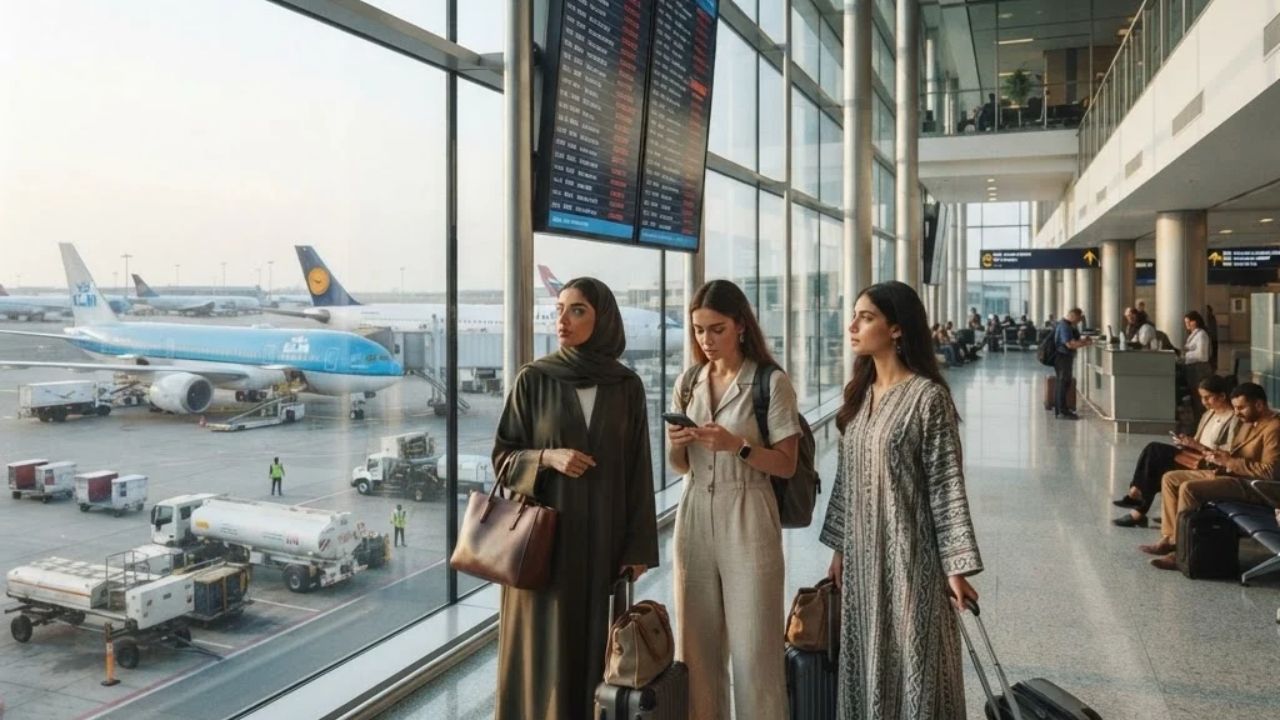
Image generated by AI
While intercontinental travelers routinely assume the skies above the Arabian Gulf represent an unshakeable bridge connecting continents, western and Asian legacy airlines have staged an unprecedented retreat—rerouting flights by up to two extra hours around regional waters, with carriers like Virgin Atlantic freezing Dubai services until October 2027. Following an updated security bulletin issued on 31 August 2026 by the European Union Aviation Safety Agency extending civil flight warnings across Gulf waters over Bahrain, Kuwait, Qatar, and the United Arab Emirates through 30 September 2026, global networks face profound disruption. Heavyweights including KLM Royal Dutch Airlines, British Airways, and Cathay Pacific have suspended direct passenger services into primary Gulf hubs, pushing aircraft onto circuitous corridors over the Caucasus and Africa. Yet on the ground in Dubai, Abu Dhabi, and Doha, luxury hotels, historic spice souks, and cultural landmarks remain fully open and peaceful. For international travelers navigating this stark contrast between skyward anxiety and ground-level stability, decoding the shifting aviation web is essential for moving through the Middle East with calm confidence.
Circuitous Skies: Mapping the Global Carrier Retreat Across Gulf Waters
The operational friction recorded across the Arabian Gulf reflects heightened military posturing and drone activity over international waters following a brief diplomatic thaw in July. Prompted by these regional risks, EASA updated its Conflict Zone Information Bulletin on 31 August 2026, extending civil flight warnings through 30 September 2026 across the airspace of Bahrain, Kuwait, Qatar, and the United Arab Emirates. While the European regulator stopped short of demanding a blanket avoidance of all territorial airspace, the explicit warnings regarding maritime corridors triggered an immediate wave of risk-averse route cancellations.
The commercial retreat among European legacy operators has been swift:
- British Airways: Direct services from London to Dubai and Abu Dhabi were suspended as of mid-September 2026, with the carrier cautiously projecting a return to Dubai on 25 October 2026 at significantly reduced frequencies.
- KLM Royal Dutch Airlines: The Dutch flag carrier officially suspended passenger flights to Riyadh, Dammam, and Dubai until 24 October 2026, deliberately circumventing airspace over Iran, Iraq, Israel, and substantial portions of the Arabian Gulf.
- Air France: Suspended Dubai-bound flights through 15 September and halted connections to Beirut through 24 September.
- Cathay Pacific: Hong Kong's flagship carrier took aggressive long-term precautions, cancelling all scheduled passenger flights to Dubai and Riyadh through 30 November 2026 while processing reroutings and ticket refunds.
- North American and British Long-Haul Shifts: Air Canada extended its suspension of Dubai services well into the winter schedule, pausing flights until mid-January 2027. Strikingly, UK-based Virgin Atlantic withdrew from the Dubai market entirely, indicating operations will remain suspended until October 2027.
In sharp contrast to this western retreat, regional Middle Eastern carriers have demonstrated exceptional operational resilience. Major transit crossroads in Dubai, Abu Dhabi, and Doha remain open and fully functional. Flagship carriers Emirates and Etihad Airways continue to operate scheduled flights to neighboring destinations like Bahrain and Kuwait, actively monitoring real-time flight corridors. Qatar Airways has maintained an expansive network spanning over 160 destinations—representing roughly 85 percent of its pre-conflict capacity—with multiple daily services operating successfully into Dubai. Among regional low-cost carriers, flydubai maintains high-frequency services while advising travelers to arrive at airports four hours prior to departure, whereas Air Arabia navigates intermittent schedules between Sharjah, Kuwait, and Bahrain.
What Makes Gulf Transit Hubs Different
Aviation terminals across the Gulf are unlike standard airport waystations in the West; they are designed as self-contained micro-cities built around round-the-clock international hospitality. Because intercontinental flight banks arrive in massive waves around midnight and dawn, airports like Dubai International (DXB) and Doha Hamad International (DOH) are engineered to absorb international travelers in luxurious comfort, offering indoor gardens, silent sleeping zones, and world-class culinary lounges.
The profound contradiction of the current moment is the disconnect between upper-altitude flight detours and ground-level reality. While aircraft detour around the northern Gulf, daily life in the United Arab Emirates and Qatar proceeds with serene normalcy. Travelers who take advantage of extended layovers can step out of Dubai's terminals directly onto the wooden deck of a traditional abra water taxi, crossing Dubai Creek between the historic coral-stone merchant houses of the Al Fahidi district and the aromatic alleys of the Deira Spice Souk, celebrated by Visit Dubai.
Just ninety minutes south in Abu Dhabi, visitors discover the cultural heart of the emirate at the Cultural Sites of Al Ain, recognized by the UNESCO World Heritage Centre. Here, six tranquil oases preserve ancient falaj water channels that have sustained date palm cultivation for over four millennia. Across the Gulf in Qatar, travelers can stroll the cobblestone walkways of Souq Waqif, where falconers, carpet merchants, and traditional sweet vendors welcome visitors with open arms. The region remains deeply safe and welcoming, even as flight dispatchers navigate complex geopolitics high above the clouds.
Visitor Insider Tips
Navigating international travel through the Middle East during active airspace warnings requires flexible booking strategies, sensible timing buffers, and local ground awareness.
- Book Home-Base Regional Carriers for Route Reliability: When planning journeys through the Middle East, purchase tickets directly with regional operators like Emirates, Qatar Airways, or Etihad rather than European or North American codeshare partners. While western airlines frequently cancel entire routes at the first sign of regulatory tension, home-base Gulf carriers possess deeper fleet reserves, local diplomatic clearance channels, and tactical routing corridors that keep flights moving.
- Expand Your Layover Buffer to at Least Four Hours: Forced airspace detours over Egypt, the Red Sea, or the Caucasus can easily add one to two hours of flight time, leading to gate arrival delays. If you are self-connecting or booking multi-segment itineraries through Dubai or Doha, never book a tight 90-minute layover. Maintain a four-hour buffer to comfortably absorb holding patterns or refueling stops without missing onward long-haul flights.
- Heed the Four-Hour Airport Arrival Guidance: If traveling on regional carriers like flydubai or Air Arabia, follow the official carrier guidance and arrive at the departure terminal a full four hours before scheduled takeoff. Schedule realignments, enhanced gate security screenings, and crowded bag drop queues mean airport processing moves slower than usual during regional disruption periods.
- The Al Fahidi Layover Respite: If your flight out of Dubai International Airport faces an extended daylight delay, store your baggage at the airport's Terminal 1 or Terminal 3 luggage hold facilities. Board the Dubai Metro Red Line to BurJuman, transfer to the Green Line for Sharaf DG, and spend a relaxing afternoon wandering through the shaded courtyard cafes of the Al Fahidi historical district, sipping saffron iced tea beneath traditional wind towers.
- Respect Local Customs and Photography Rules: Throughout the Gulf, cultural norms emphasize modest public attire and personal privacy. When exploring heritage souks, public corniche promenades, or shopping quarters, dress respectfully with clothing covering shoulders and knees. Never take photographs of military installations, airport security infrastructure, or local women and families without seeking explicit permission.
Cultural and Environmental Context
The necessity of rerouting long-haul flights around the Gulf introduces severe environmental consequences that complicate global aviation sustainability. Commercial wide-body airliners diverted away from traditional Arabian flight corridors must burn thousands of gallons of additional jet kerosene on every single long-haul journey between Europe, South Asia, and the Far East.
This circuitous flying releases thousands of extra tonnes of carbon dioxide and nitrogen oxides into upper atmospheric levels every week, directly threatening the airline industry's ambitious commitment to achieve net-zero carbon emissions by 2050. Furthermore, squeezing hundreds of rerouted commercial aircraft into narrow, congested northern and southern flight paths forces aircraft to fly at suboptimal altitudes and endure fuel-wasting holding patterns near transfer hubs.
Despite these environmental and operational pressures, the cultural resilience of Gulf hospitality (diyafah) shines through. Ground-level tourism authorities and local hotel operators continue to offer generous care to affected transit passengers, providing hotel vouchers, complimentary dining, and flexible date-change policies. By understanding the complex geopolitical dynamics that govern modern skies, travelers can navigate flight changes with patience, recognizing that behind the departure screens lies a warm, enduring culture dedicated to welcoming the world.
FAQ: Navigating Gulf Flight Disruptions 2026
Why have international airlines suspended flights to Dubai and the Gulf?
Carriers including British Airways, KLM, and Cathay Pacific suspended routes following EASA advisories that warned of military drone and missile activity over Arabian Gulf waters.
Are major Gulf airports in Dubai, Abu Dhabi, and Doha currently open?
Yes. International hubs in Dubai, Abu Dhabi, and Doha remain fully operational, with regional carriers Emirates, Etihad, and Qatar Airways maintaining extensive global networks.
When are European carriers expected to resume direct flights to the Gulf?
Air France resumes Dubai flights after 15 September 2026, KLM after 24 October 2026, and British Airways on 25 October 2026, while Air Canada has paused service until mid-January 2027 and Virgin Atlantic until October 2027.
Is it safe for tourists to visit cities like Dubai, Abu Dhabi, and Doha right now?
Yes. Everyday life, ground transportation, hotels, and tourist attractions across the UAE and Qatar are completely safe, peaceful, and unaffected by high-altitude airspace reroutings.
[High above contested waters where flight paths bend like bows, the timeless desert crossroads below remains steady, welcoming weary travelers with open doors and warm cups of spiced cardamom tea.]
Related Travel Guides
Disclaimer
This article is for informational and educational purposes only. It does not constitute legal, financial, or professional advice. While we strive to provide accurate and up-to-date information, travel policies, regulations, and conditions change rapidly. Always verify information with official sources before making travel decisions. Nomad Lawyer makes no representations about the accuracy, reliability, completeness, or suitability of the information provided. Readers should consult qualified professionals for advice specific to their circumstances. The views expressed in this article are those of the author and do not necessarily reflect the views of Nomad Lawyer.
Raushan Kumar
Founder & Lead Developer
Full-stack developer with 11+ years of experience and a passionate traveller. Raushan built Nomad Lawyer from the ground up with a vision to create the best travel and law experience on the web.
Learn more about our team →