
Africa Water Safaris Redefine Wildlife Travel Boom
Mozambique, Botswana, Malawi, Zambia, Tanzania, and Rwanda lead Africa’s water safari boom, offering mokoro trips, dhow sailing, and river safaris.

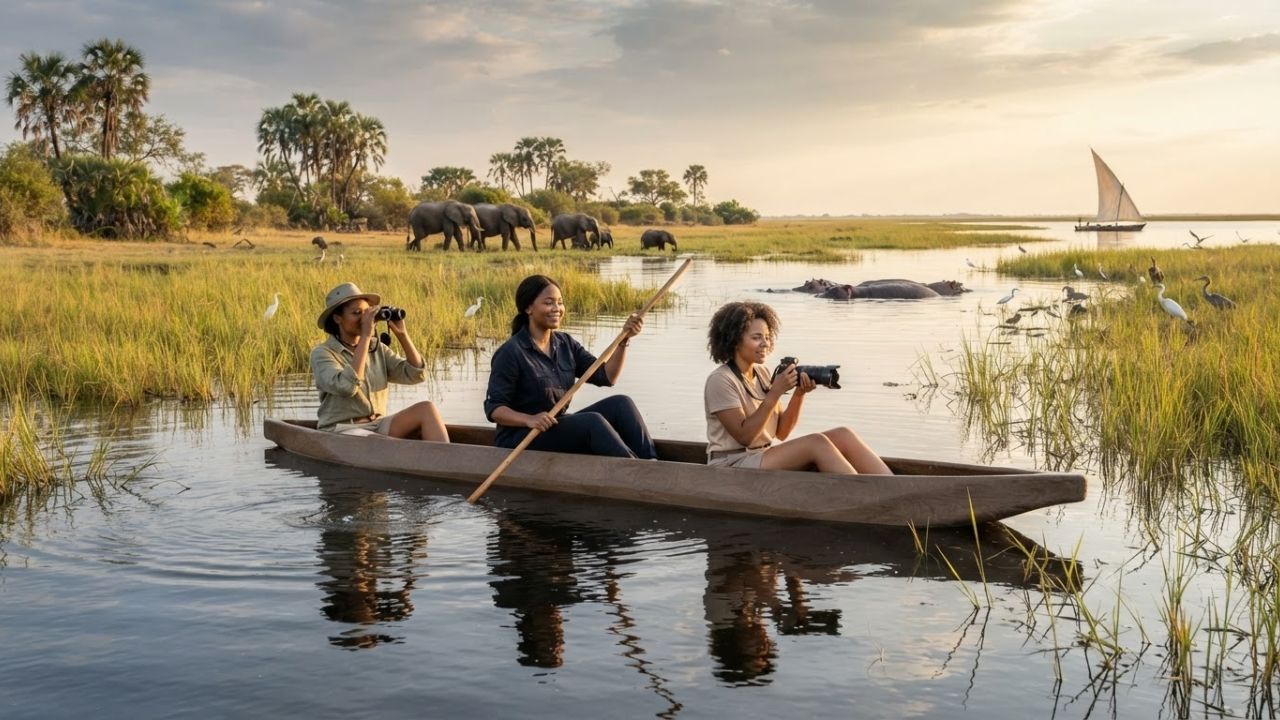
Image generated by AI
Water-based safaris are redefining wildlife travel across Africa, utilizing rivers, lakes, wetlands, and coastal archipelagos to offer low-impact alternatives to traditional vehicle routes. From the winding channels of Botswana’s Okavango Delta to the protected reefs of Mozambique’s Bazaruto Archipelago, these aquatic pathways bring travelers closer to pristine ecosystems.
The Local Trend Revealed
Travelers are seeking slower, more immersive wildlife journeys that bypass crowded terrestrial vehicle tracks. State conservation departments and regional boards are promoting water-focused transit networks that highlight five key areas:
- Botswana’s Okavango Delta: This UNESCO-listed wetland relies on mokoro (traditional shallow canoes) to navigate narrow, reed-filled channels where water levels dictate wildlife gatherings, including elephants, hippos, and crocodiles.
- Mozambique’s Bazaruto Archipelago: Traditional dhow sailing vessels connect protected islands, sandbanks, and coral reefs, offering marine safaris where visitors swim alongside diverse ocean species.
- Lake Malawi freshwater corridor: Large boat trips and working passenger ferries connect lakeside fishing communities and island reserves, creating an active aquatic network across southeastern Africa.
- Zambia’s Lower Zambezi River: Guided canoe journeys along the Zambezi River offer quiet, non-motorized wildlife viewing, allowing travelers to drift past shoreline herds and nesting birds.
- Tanzania’s Nyerere National Park: Boat safaris along the Rufiji River system provide access to floodplains and riverbanks, where large herds gather during dry seasons.
- Rwanda’s Lake Kivu: Kayaking and boat excursions connect green shoreline villages and bat-colony islands along the western border, focusing on local fishing culture and lake history.
Local Community & Environmental Value
For the visitor, the real impact of choosing water safaris is the direct support of community-led conservation trusts. Hiring community-trained mokoro polers from the Okavango Kopano Mokoro Community Trust or booking sailing trips operated by local fishers in Mozambique ensures that tourism spending stays within indigenous hands.
Environmental protection is advanced by choosing non-motorized water vessels. Traditional canoes and mokoros eliminate engine noise and carbon emissions, minimizing disturbance to nesting riverine birds and sensitive aquatic habitats. Using marine-safe sunscreen protects the delicate coral systems of the Indian Ocean, satisfying benchmarks monitored by the Botswana Department of Wildlife and National Parks (DWNP), the National Administration of Conservation Areas of Mozambique (ANAC), the Zambia Wildlife Authority (ZAWA), and the Tanzania National Parks Authority (TANAPA).
Visitor Insider Tips for African Water Safaris
Travel specialists recommend the following practices when planning water safaris:
- Select Certified Community Polers: In Botswana, book your mokoro safari through local trusts to ensure fair wages go directly to the guiding families.
- Use Licensed Dhow Operators: When visiting Vilankulo and the Bazaruto islands, avoid informal transport offers. Book sailing trips with licensed operators who maintain safety gear and practice low-impact marine travel.
- Ride the MV Ilala on Lake Malawi: For an authentic, community-based ferry ride, travel aboard the historic passenger vessel MV Ilala, but book your cabin online in advance rather than buying deck tickets at the dock.
- Observe the Off-Peak Window:
- In the Okavango Delta: Visit in May (when floodwaters rise and weather is cooler) or October (when wildlife concentrates around remaining pools).
- In Bazaruto: Visit during the dry winter shoulder months of May to September for calm seas, low humidity, and excellent snorkeling visibility.
- In Nyerere National Park: Travel during the dry season of June to October to see animals gather along the riverbanks.
- Sample Regional Culinary Specialties:
- In Mozambique: Try fresh grilled Piri-Piri Prawns or Matapa (cassava leaves cooked with ground peanuts and coconut milk) served with white rice.
- In Botswana: Taste Seswaa (slow-cooked pounded beef) served with maize meal pap.
- In Malawi: Eat fresh Chambo (lake tilapia) grilled with local spices.
- Observe Local Customs and Rules: When visiting riverside villages along the Zambezi or Lake Kivu, obtain permission from the village headman before entering or taking photos. In Rwanda, comply with the strict single-use plastic bag ban; all plastic bags will be confiscated at the border. Tipping of 10 to 15 USD per day is recommended for specialized guides, and 10 percent is standard in restaurants.
- Explore Under-the-Radar Retreats: Skip busy mainland beach centers and stay on the quiet shores of Benguerra Island in Mozambique to explore coastal lakes. In Rwanda, stay at the quiet lakeside town of Kibuye (Karongi) to explore the fruit bat colonies of Napoleon Island.
Tourism Outlook
The long-term impact of the water safari boom is the establishment of low-impact, sustainable tourism models that protect vital wetlands and coastal reefs. By restricting motorized boats in sensitive zones and prioritizing community-led operators, African conservation agencies aim to protect regional biodiversity while providing stable incomes for riverside and island communities.
FAQ: African Water Safaris
What is a mokoro and how is it used in Botswana? A mokoro is a traditional, shallow draft canoe pushed by a poler. It is used to navigate the narrow channels and shallow wetlands of the Okavango Delta.
How do water safaris protect the environment? Non-motorized safaris like canoeing and mokoro trips eliminate engine noise, protecting nesting birds and aquatic wildlife from disturbance while producing zero carbon emissions.
What is the best time to visit the Bazaruto Archipelago? The dry winter shoulder months of May to September offer the calmest seas, lowest humidity, and best underwater visibility for marine safaris.
Are there plastic restrictions when traveling in Rwanda? Yes. Rwanda enforces a strict ban on single-use plastic bags. Visitors must dispose of all plastic packaging before entering the country.
Related Travel Guides
- Waterbury United States Unveils a Hidden Brass City Escape of Art Flavours and Living History
- Spain and EU Join Luzon Economic Corridor: Infrastructure Leap to Transform Philippines Travel Across Subic, Clark, Manila, and Batangas
- Orlando Tourism Surge Drives Record Tax Revenues Across Central Florida
Disclaimer
This article is for informational and educational purposes only. It does not constitute legal, financial, or professional advice. While we strive to provide accurate and up-to-date information, travel policies, regulations, and conditions change rapidly. Always verify information with official sources before making travel decisions. Nomad Lawyer makes no representations about the accuracy, reliability, completeness, or suitability of the information provided. Readers should consult qualified professionals for advice specific to their circumstances. The views expressed in this article are those of the author and do not necessarily reflect the views of Nomad Lawyer.
Raushan Kumar
Founder & Lead Developer
Full-stack developer with 11+ years of experience and a passionate traveller. Raushan built Nomad Lawyer from the ground up with a vision to create the best travel and law experience on the web.
Learn more about our team →