
Orlando Tourism Surge Drives Record Tax Revenues Across Central Florida
Central Florida's tourism sector is fueling massive public investment, with Orange County projecting over $360 million in Tourist Development Tax for FY2026.

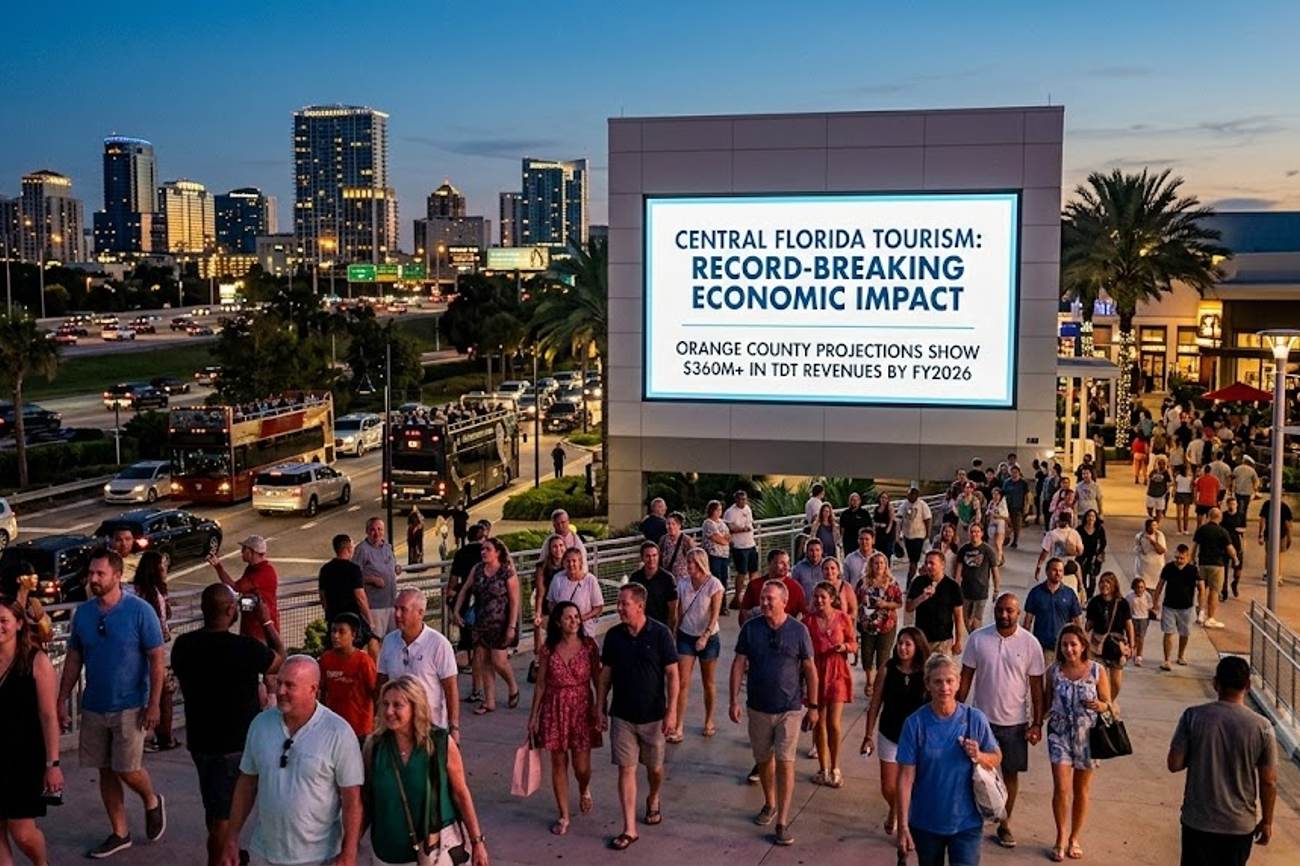
Image generated by AI
Tourism Demand Fuels Public Infrastructure Investment
The tourism economy in Central Florida has evolved into a primary financial engine for local governments. Through the Tourist Development Tax (TDT), visitor spending on short-term accommodations is directly funding the region's growth, infrastructure, and destination marketing.
While Orange County remains the primary hub, Osceola and Seminole counties are seeing similar benefits. This financial mechanism creates a critical feedback loop: high visitor volume generates tax revenue, which is then reinvested into the attractions and facilities that maintain Orlando's global competitiveness.
Orange County: The Region's Primary Revenue Engine
As the epicenter of the region's hotel districts and convention facilities, Orange County leverages the highest volume of transient stays. The county applies a 6% Tourist Development Tax on qualifying short-term lodging, including hotels and motels.
The scale of this revenue is substantial. For the 2026 fiscal year, Orange County’s adopted budget projected TDT collections to exceed $360 million. Unlike general taxes, these funds are earmarked for tourism-specific purposes, such as:
- Destination-wide promotional initiatives.
- Cultural programming and visitor infrastructure.
- Enhancements to the overall guest experience.
In July 2026, the Tourist Development Tax Citizen Advisory Task Force met on July 21 and July 28 to determine the allocation of unencumbered revenue. These meetings underscore the county's shift toward strategic reinvestment to sustain record-level collections.
Osceola County's Diversified Tourism Base
South of the main Orlando hub, Osceola County has built a robust tourism economy by blending major attractions with outdoor recreation and resorts. Like Orange County, Osceola imposes a 6% TDT on transient accommodations.
The tax base in Osceola is broad, covering a wide array of lodging types:
- Traditional hotels and motels.
- Holiday rentals and condominiums.
- Timeshare accommodations.
- Recreational vehicle (RV) parks.
Financial records from June and July 2026 confirm that visitor activity during the peak summer season remains a primary driver of the county's financial health, though specific monthly totals remain internal to government reporting.
Central Florida Tourism Tax Structure
| County | TDT Rate | FY2026 Projected Revenue (Orange) | Primary Taxable Sources |
|---|---|---|---|
| Orange | 6% | $360 Million+ | Hotels, Motels, Convention Lodging |
| Osceola | 6% | Not Specified | Hotels, RV Parks, Holiday Rentals, Timeshares |
| Seminole | Variable* | Not Specified | Qualifying Transient Accommodations |
*Specific rate not provided in source records.
Key Takeaways
- Direct Economic Link: The TDT creates a transparent connection between hotel occupancy and public funding for tourism infrastructure.
- Fiscal Milestone: Orange County's $360 million projection for FY2026 highlights the massive scale of Orlando's visitor economy.
- Strategic Reinvestment: July 2026 task force meetings indicate a focus on using "unencumbered" funds to improve destination competitiveness.
- Broad Tax Base: Osceola County has successfully expanded its revenue stream by taxing diverse lodging, including RV parks and timeshares.
FAQ
What is the Tourist Development Tax (TDT)? The TDT is a tax levied on qualifying short-term or transient accommodations. The revenue is typically used to promote tourism and fund visitor-related infrastructure rather than general government spending.
How much does Orange County expect to earn from tourism taxes in 2026? The adopted budget for fiscal year 2026 projected collections of more than $360 million.
Which types of accommodation are taxed in Osceola County? Taxable stays include hotels, motels, holiday rentals, condominiums, timeshares, and recreational vehicle parks.
Related Travel Guides
Disclaimer
This article is for informational and educational purposes only. It does not constitute legal, financial, or professional advice. While we strive to provide accurate and up-to-date information, travel policies, regulations, and conditions change rapidly. Always verify information with official sources before making travel decisions. Nomad Lawyer makes no representations about the accuracy, reliability, completeness, or suitability of the information provided. Readers should consult qualified professionals for advice specific to their circumstances. The views expressed in this article are those of the author and do not necessarily reflect the views of Nomad Lawyer.
Naina Thakur
Contributor & Travel Specialist
Travel enthusiast and legal writer covering visa regulations, responsible tourism, and cultural journeys across global destinations.
Learn more about our team →