
Pentagon Accelerates Development of Five Next-Generation Combat Aircraft to Counter China's Military Modernization
Breaking airline news and aviation industry updates for 2026.

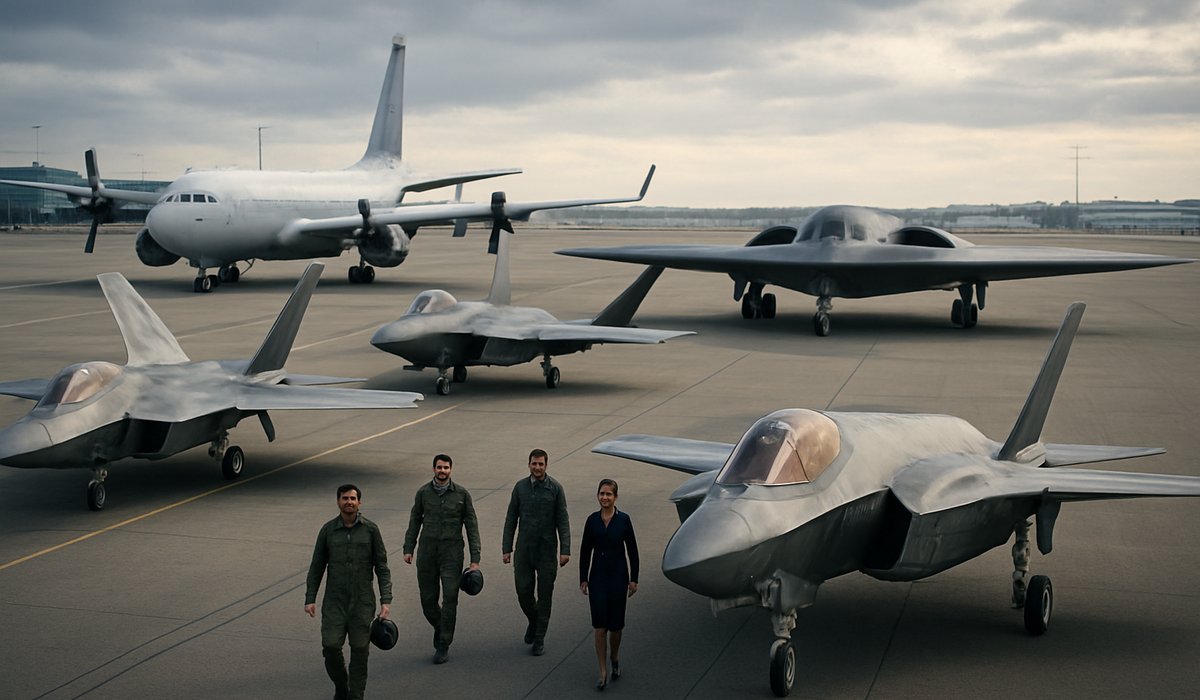
Image generated by AI
Pentagon Accelerates Development of Five Next-Generation Combat Aircraft to Counter China's Military Modernization
U.S. Defense Department shifts focus to cutting-edge fighter jets and surveillance platforms as geopolitical tensions reshape global air superiority strategy
United States Launches Ambitious Military Aviation Modernization Program
The United States Department of Defense is intensifying development of a new generation of advanced combat aircraft designed to maintain technological superiority amid escalating strategic competition with China. Military officials characterize the current geopolitical landscape as a period of intense peer-to-peer rivalry unprecedented since the Cold War era, prompting urgent investment in next-generation aviation platforms across all major service branches.
The U.S. Air Force, Marine Corps, and Navy are simultaneously developing multiple cutting-edge aircraft systems intended to replace aging platforms and establish dominance in contested airspace scenarios. This comprehensive modernization initiative represents a fundamental shift in American military aviation strategy, with implications extending across global defense partnerships and international security architecture.
Legacy Fleet Retirement Timeline Accelerates
The Pentagon's modernization schedule includes the systematic retirement of several iconic platforms that have defined American air combat capabilities for decades. The AV-8B Harrier II vertical-takeoff aircraft, B-1 Lancer supersonic bomber, legacy F/A-18 Hornet multirole fighter, Lockheed U-2 high-altitude reconnaissance platform, and F-15C/D variants are exiting operational service or approaching retirement deadlines.
The A-10 Warthog close-air-support aircraft faces phase-out by 2030, marking the end of an operational era spanning more than four decades. These retirements collectively reflect the Pentagon's assessment that existing platforms lack the performance characteristics necessary for contemporary conflict scenarios against technologically advanced adversaries.
Strategic Imperatives Drive Development Priorities
Defense analysts emphasize that acceleration of next-generation aircraft programs directly responds to documented advances in Chinese military aviation capabilities. The competitive pressure mirrors Cold War-era dynamics, when technological innovation cycles determined strategic advantage and global power projection capabilities.
Industry specialists note that simultaneous development across multiple platforms—rather than sequential programs—enables the Pentagon to distribute risk and maintain continuous technological advancement. This approach ensures that emerging threats do not outpace American defensive capabilities during transition periods between legacy and advanced systems.
Implications for Defense Industrial Base
The comprehensive modernization program creates substantial economic activity within the U.S. defense industrial base, supporting employment across aerospace manufacturing, systems integration, and advanced materials production. Leading defense contractors are positioned as primary beneficiaries of multi-billion-dollar development contracts extending across the coming decades.
FAQ: Next-Generation U.S. Combat Aircraft Programs
What aircraft are replacing the F-15C/D fighter? The U.S. military is developing next-generation platforms designed to exceed the performance capabilities of legacy F-15 variants, including enhanced stealth characteristics and advanced sensor integration.
When will the A-10 Warthog retire from service? The Pentagon has established 2030 as the target retirement date for the A-10 Warthog close-air-support aircraft, contingent on successful deployment of replacement platforms.
Why is the U.S. accelerating military aircraft development? Rising geopolitical tensions with China and the rapid modernization of peer-competitor military aviation forces have prompted the Pentagon to accelerate development timelines for advanced platforms.
Which service branches are receiving new combat aircraft? The U.S. Air Force, Marine Corps, and Navy are all developing or receiving next-generation aircraft platforms as part of the comprehensive modernization initiative.
What makes these new aircraft different from legacy platforms? Next-generation systems feature advanced stealth characteristics, enhanced sensor suites, improved situational awareness capabilities, and integrated networked warfare systems not present in earlier platforms.
Related Travel Guides
Flight Delay Compensation Guide 2026
Understanding Airline Route Changes
Airport Security Process Updated (2026)
External Resources
Disclaimer
This article is for informational and educational purposes only. It does not constitute legal, financial, or professional advice. While we strive to provide accurate and up-to-date information, travel policies, regulations, and conditions change rapidly. Always verify information with official sources before making travel decisions. Nomad Lawyer makes no representations about the accuracy, reliability, completeness, or suitability of the information provided. Readers should consult qualified professionals for advice specific to their circumstances. The views expressed in this article are those of the author and do not necessarily reflect the views of Nomad Lawyer.
Preeti Gunjan
Contributor & Community Manager
A passionate traveller and community builder. Preeti helps grow the Nomad Lawyer community, fostering engagement and bringing the reader experience to life.
Learn more about our team →