
Elite Football Icons Turn to Private Aviation: World Cup Legends Embrace Luxury Jet Travel
Breaking airline news and aviation industry updates for 2026.

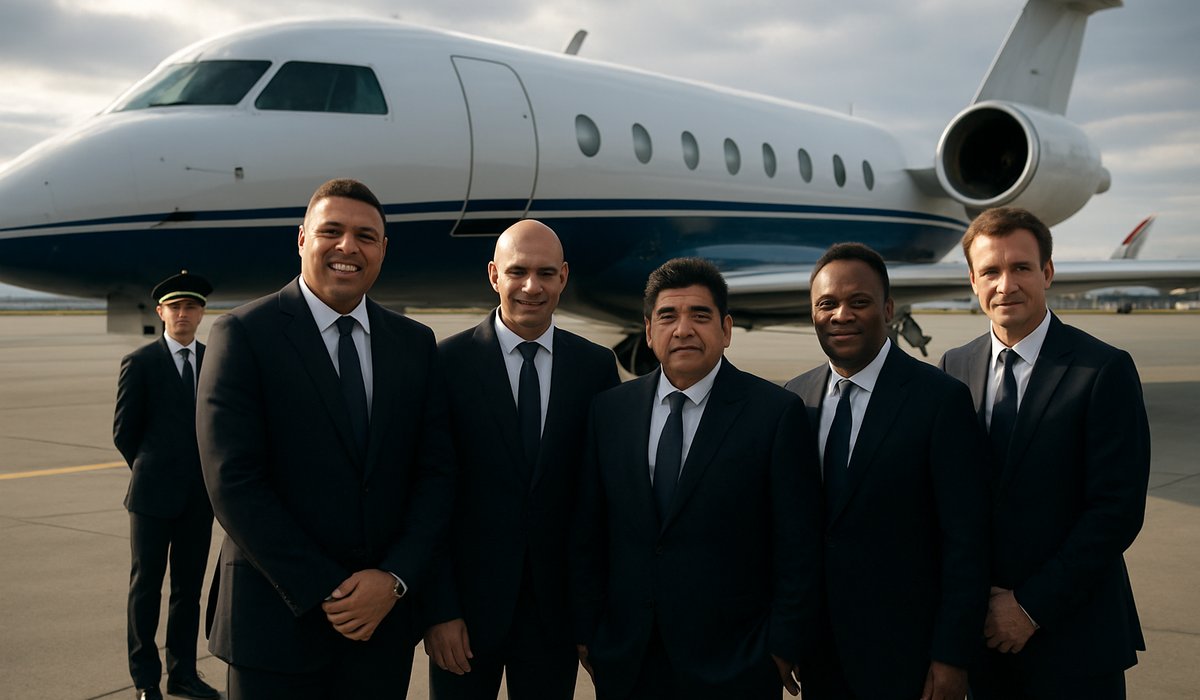
Image generated by AI
Elite Football Icons Turn to Private Aviation: World Cup Legends Embrace Luxury Jet Travel
As commercial aviation becomes increasingly complex, top-tier athletes invest millions in personal aircraft for control, privacy, and operational efficiency
The Private Jet Imperative for Global Sports Elite
Commercial air travel, despite technological advances over three decades, has become increasingly cumbersome for elite athletes managing demanding international schedules. World Cup legends and football's highest earners are increasingly turning to private aviation as a practical—and conspicuous—solution to the logistical complexities of modern professional sports.
The shift reflects a fundamental challenge facing globally mobile athletes: balancing tournament commitments, sponsorship appearances, medical treatments, and family obligations across multiple continents simultaneously. Traditional commercial routes, fixed departure schedules, and airport congestion create operational friction that private jets eliminate almost entirely.
Operational Efficiency Meets Luxury
Beyond status symbolism, private jet ownership addresses genuine aviation industry pain points that commercial carriers struggle to resolve. These aircraft bypass major hub airports, landing instead at smaller regional facilities with significantly faster turnaround times. Departure flexibility means athletes can optimize recovery protocols and training schedules without accommodation to airline timetables.
For high-profile figures, the cabin environment itself becomes a functional workspace. Aircraft interiors serve as recovery zones for post-match physiotherapy, mobile boardrooms for sponsorship negotiations, and secure spaces shielded from media scrutiny—considerations that commercial cabins simply cannot provide.
The Economics of Personal Aircraft
The financial commitment reflects the premium these athletes place on schedule autonomy and operational control. Acquisition costs and maintenance expenses are substantial, yet represent a calculated investment for individuals whose market value and injury management depend on maintaining peak physical and mental condition.
Industry analysts note that private aviation has experienced sustained growth among high-net-worth individuals in sports, particularly in football where international fixture calendars demand unprecedented mobility and scheduling flexibility.
Broader Industry Implications
The trend underscores growing frustrations with commercial aviation's infrastructure limitations. Airlines have responded to post-pandemic demand surges with elevated baggage charges, capacity constraints, and congested terminal operations—conditions that further incentivize wealthy travelers to pursue alternative options.
For the aviation sector, private jet usage among sports elite represents a sustained demand segment, even as commercial carriers face pressure on profitability and operational efficiency.
FAQ: Private Jets and High-Profile Athletes
Why do professional athletes choose private jets over commercial flights? Private aviation eliminates scheduling constraints, provides confidentiality, enables direct routing to smaller airports, and allows athletes to maintain rigorous training and recovery protocols without airline-imposed delays.
What are the typical costs associated with private jet ownership? Acquisition prices range from $20 million to over $100 million depending on aircraft specifications, with annual operating costs including crew, maintenance, and fuel ranging from $2-5 million for frequently-used jets.
How does private aviation impact the commercial airline industry? High-value clientele shifting to private alternatives reduces premium cabin revenue for major carriers, though represents a relatively small percentage of overall aviation demand.
Are there environmental concerns with private jet usage? Private aircraft produce significantly higher emissions per passenger than commercial flights, a growing criticism as sustainability becomes central to aviation industry discourse.
Which airports accommodate private jet operations? Fixed-base operators at regional and secondary airports worldwide provide private aviation services, offering faster processing, enhanced privacy, and direct access compared to major commercial hubs.
Related Travel Guides
-
Emirates Restores Full Operations: Resuming Flights to 130 Global Destinations
-
Boeing's Grounded 777X Fleet Faces Years of Rework as Delivery Crisis Deepens
External Resources
Disclaimer
This article is for informational and educational purposes only. It does not constitute legal, financial, or professional advice. While we strive to provide accurate and up-to-date information, travel policies, regulations, and conditions change rapidly. Always verify information with official sources before making travel decisions. Nomad Lawyer makes no representations about the accuracy, reliability, completeness, or suitability of the information provided. Readers should consult qualified professionals for advice specific to their circumstances. The views expressed in this article are those of the author and do not necessarily reflect the views of Nomad Lawyer.
Preeti Gunjan
Contributor & Community Manager
A passionate traveller and community builder. Preeti helps grow the Nomad Lawyer community, fostering engagement and bringing the reader experience to life.
Learn more about our team →