
Top 12 Paris Tourist Attractions for First-Time Visitors: Comprehensive 2026 Transit and Sightseeing Guide
Navigate Paris in 2026 with this expert guide to the top 12 landmarks, featuring precise architectural data, transit logistics, and essential visitor specifications for the French capital.

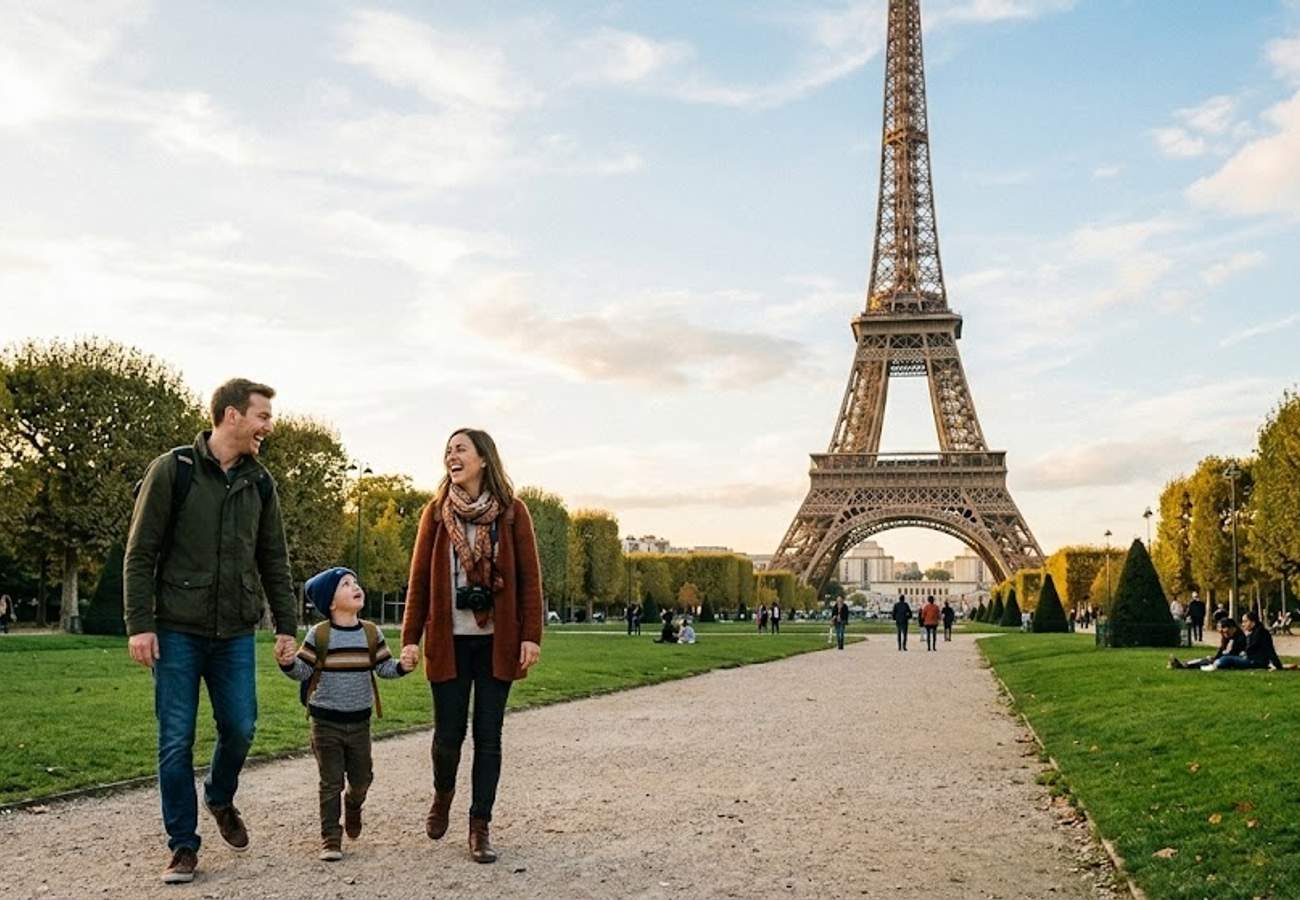
Image generated by AI
Paris remains the global benchmark for urban tourism, blending 19th-century imperial architecture with modern transit efficiency. For 2026 visitors, navigating the city requires a strategic approach to avoid overcrowding at its most iconic 324-meter and 210,000-square-meter landmarks.
The Core Paris Transit and Sightseeing Update
Paris has evolved into a highly regulated tourist zone where digital ticketing and timed entry are now mandatory for almost all major sites. The city's layout is centered around the Seine River, with attractions split between the historic center (the 1st through 8th arrondissements) and the artistic heights of Montmartre.
The primary focus for 2026 travelers is the balance between the "Big Three"—the Eiffel Tower, the Louvre, and Notre Dame—and the peripheral excursions like the Palace of Versailles and Disneyland Paris. With the Eiffel Tower welcoming over 7 million tourists annually, the pressure on local transit (RER and Metro) is significant, necessitating a shift toward pre-booked slots and off-peak travel.
Paris Landmark Specifications and Route Data
The following table provides precise technical data and location parameters for the city's primary attractions.
| Landmark | Key Statistic / Dimension | Primary Feature | Primary Access Point |
|---|---|---|---|
| Eiffel Tower | 324 Meters High | 1,665 Stairs to Top | Champ de Mars |
| Louvre Museum | 210,000 Square Meters | Mona Lisa / 12th C. Palace | Seine River Bank |
| Notre Dame | 387 Stairs to Towers | Gothic Architecture | Île de la Cité |
| Arc de Triomphe | 50 Meters High | 558 General Officers Inscribed | Champs-Élysées |
| Montmartre Hill | 130 Meters High | Sacré-Cœur Basilica | North Paris |
| Palace of Versailles | 1682–1789 Political Hub | Hall of Mirrors | Versailles (RER C) |
| Luxembourg Park | 106+ Statues | Orchards & Apiary | 6th Arrondissement |
| Moulin Rouge | Est. 1889 | Cabaret Entertainment | Montmartre Foot |
| Musée d’Orsay | 1848–1914 Art Era | Former Railway Station | Seine River Bank |
Traveler Logistics Guide: Navigating Paris 2026
From a ground-level perspective, the best way to navigate Paris is to decouple your itinerary by geography rather than popularity. Attempting to visit the Louvre and the Eiffel Tower on the same day often results in "museum fatigue" and transit delays.
Booking Connections and Timed Entry For the Eiffel Tower and the Louvre, "walk-in" tickets are virtually non-existent in 2026. You must secure timed entry slots via the official portals. If you are climbing the 1,665 stairs of the Eiffel Tower, schedule this for the earliest possible morning slot to avoid the mid-day heat and crowds.
Optimal Layover and Transit Times When traveling to the Palace of Versailles or Disneyland Paris, allow at least 60 to 90 minutes for one-way transit. Both are located outside the central city limits and require the RER (Regional Express Network). The RER C is the primary artery for Versailles, while the RER A serves Disneyland.
Customs and Digital Transit Policies Ensure your digital travel credentials are up to date. While France is part of the Schengen Area, keep a digital copy of your passport and visa on a cloud drive. For transit within the city, the "Navigo" pass is the most efficient method; avoid buying single paper tickets which are being phased out in favor of contactless and mobile-app integration.
Navigating Montmartre To reach the Sacré-Cœur, avoid the steep climb on foot if you have mobility concerns; instead, use the Funiculaire de Montmartre. Once at the Square du Tertre, be aware that this is a high-traffic zone for artists; keep your belongings secure in crowded areas.
Infrastructure Impact Assessment
The continued integration of the RER and Metro lines has significantly reduced the "last mile" struggle for tourists visiting the outskirts. The transition of the Musée d’Orsay from a railway station to a museum serves as a historical blueprint for how Paris repurposes industrial infrastructure for cultural gain.
The concentration of fashion and luxury on the Champs-Élysées continues to drive high-density pedestrian traffic, which has led the city to implement stricter vehicle restrictions. This makes the avenue more walkable but increases the reliance on the Metro Line 1 for rapid transit.
The expansion of Disneyland Paris into two distinct theme parks—the primary park with Sleeping Beauty’s castle and the Walt Disney Studios—has created a secondary economic hub outside the city, shifting a significant portion of the tourism load away from the city center.
Paris remains a city where historical grandeur meets modern logistical precision.
Related Travel Guides
Disclaimer
This article is for informational and educational purposes only. It does not constitute legal, financial, or professional advice. While we strive to provide accurate and up-to-date information, travel policies, regulations, and conditions change rapidly. Always verify information with official sources before making travel decisions. Nomad Lawyer makes no representations about the accuracy, reliability, completeness, or suitability of the information provided. Readers should consult qualified professionals for advice specific to their circumstances. The views expressed in this article are those of the author and do not necessarily reflect the views of Nomad Lawyer.
Raushan Kumar
Founder & Lead Developer
Full-stack developer with 11+ years of experience and a passionate traveller. Raushan built Nomad Lawyer from the ground up with a vision to create the best travel and law experience on the web.
Learn more about our team →