
Yellowstone National Park Warns Against Common Visitor Mistakes Leading to Fines and Injuries in 2026
Yellowstone National Park and the National Park Service are issuing urgent warnings as record visitation numbers lead to an increase in avoidable injuries, wildlife conflicts, and legal penalties for visitors.

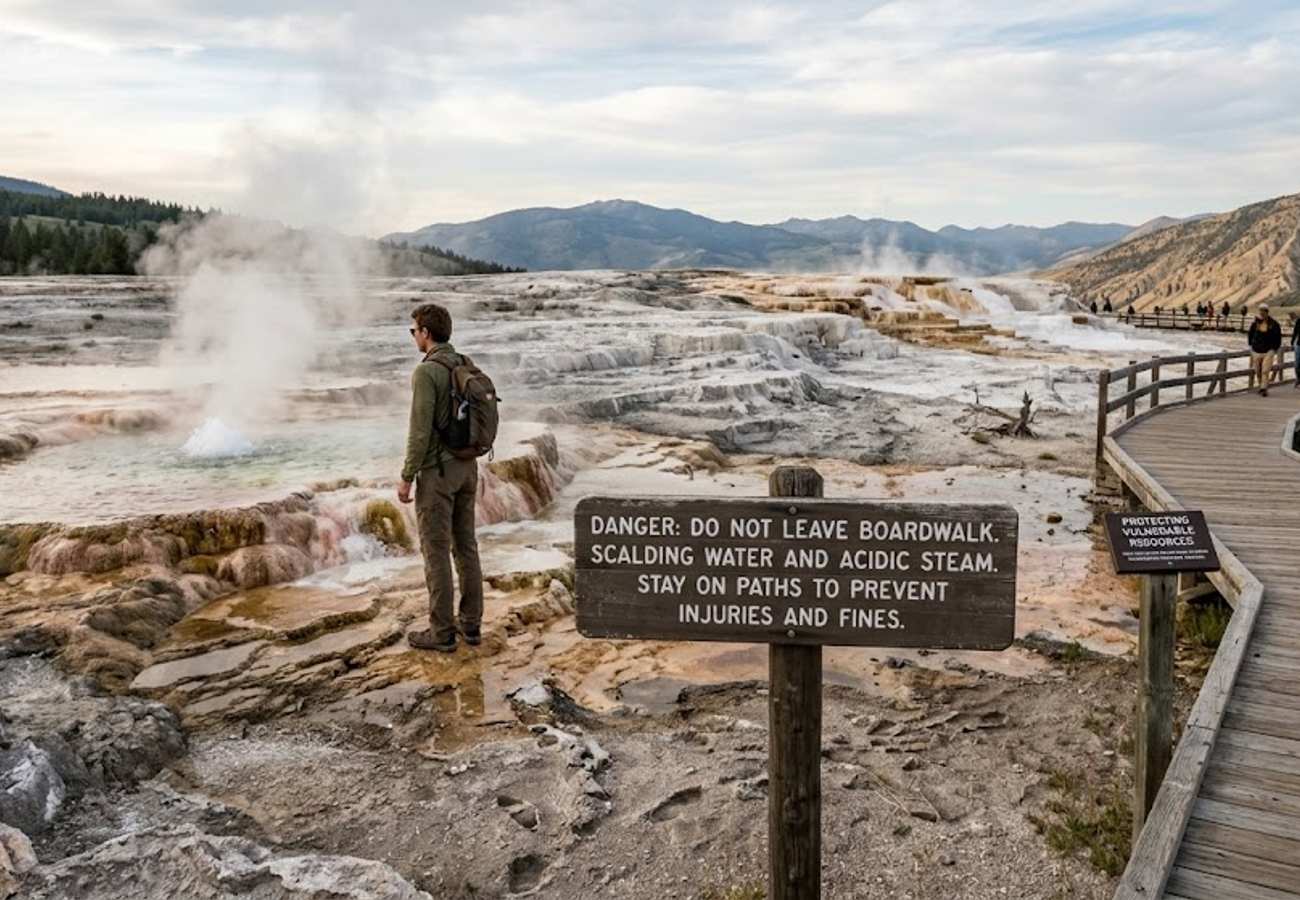
Image generated by AI
Record-breaking crowds are putting unprecedented pressure on U.S. protected lands, with over 323 million visits recorded last year across the national park system. As 26 of the most popular parks hit all-time visitation peaks, officials from Yellowstone National Park are highlighting critical visitor errors that frequently result in legal penalties, physical trauma, and dangerous wildlife encounters.
The surge in tourism has shifted responsible park behavior from a simple courtesy to a critical safety and legal necessity. With the National Park Service (NPS) overseeing more than 400 diverse sites—including monuments, historic landmarks, and seashores—the sheer volume of human activity is intensifying the degradation of fragile ecosystems and increasing the frequency of emergency rescues.
Surge in Visitation Pressures Park Infrastructure
The scale of modern national park tourism is staggering. According to official agency data, the system saw 323.9 million recreation visits in 2025, with overnight stays surpassing 13 million. While this influx provides a massive economic boost to gateway communities—benefiting local hotels, transport providers, and tour operators—it creates a compounding effect of environmental stress.
When thousands of visitors commit the same "small" mistakes, the cumulative impact on trails and wildlife habitats becomes catastrophic. Park authorities emphasize that the distinction between observing a landscape and interfering with it is the difference between a sustainable ecosystem and a collapsing one.
Critical Wildlife Distance Requirements in Yellowstone
Wildlife remains the primary draw for millions of tourists, yet these animals represent the most significant source of avoidable risk. Bison, bears, and elk often appear docile near roads, leading visitors to mistakenly believe the animals are approachable.
Yellowstone National Park maintains strict safety margins to prevent attacks:
- Bears and Wolves: Visitors must maintain a minimum distance of 100 yards.
- Bison, Elk, and Other Wildlife: A minimum distance of 25 yards is required.
The rise of social media has exacerbated this issue. "Selfie culture" often drives tourists to move closer to animals for a more dramatic shot. Park officials urge photographers to "zoom with your lens, not with your feet," noting that a decision to move a few feet closer for a photo can trigger a defensive animal attack in seconds.
The Legal and Ecological Dangers of Feeding Wildlife
Feeding wild animals is not a harmless gesture of kindness; it is a disruptive action that alters natural instincts. When animals associate humans with food, they become "habituated," leading them to frequent campsites and parking lots.
This behavioral shift creates a dangerous cycle. Habituated animals often become aggressive when food is not provided, eventually requiring park authorities to intervene, which frequently results in the animal being relocated or euthanized. To prevent this, the NPS mandates that all food and trash be secured in bear-resistant containers.
Hydrothermal Hazards and the Cost of Leaving Trails
Stepping off designated boardwalks or marked trails is one of the most dangerous mistakes a visitor can make, particularly in geothermal regions. In Yellowstone, the ground surrounding hydrothermal features can be a thin, fragile crust masking boiling water and acidic steam.
The legal consequences for these actions are becoming more severe. In a recent 2026 case, a visitor from Texas was sentenced to five days in jail after walking across fragile hydrothermal features at Mammoth Hot Springs. The U.S. Department of Justice noted that the individual left damaging footprints in a protected area, proving that safety barriers are legal boundaries, not suggestions.
Mandatory Compliance with Closures and Warning Signs
Many inexperienced travelers view park warning signs as overly cautious. However, these closures are based on real-time data regarding unstable cliffs, falling rocks, fast-moving currents, or shifting snowfields.
Ignoring these signs does more than risk the visitor's life; it puts rescue personnel in danger. When a traveler enters a restricted zone and becomes trapped, rangers must enter the same hazardous environment to perform a recovery. Official alerts and trailhead instructions must be treated as mandatory directives.
The High Price of "The Perfect Shot"
The pressure to capture unique content for digital platforms is leading to a rise in risky behavior. Visitors are increasingly climbing railings or entering restricted zones to find a better angle.
Park authorities warn that unstable ground or sudden weather shifts can turn a photo opportunity into a medical emergency instantly. The safest image is one captured from a designated viewpoint using proper optical equipment.
Preventing Emergency Callouts Through Preparation
Not all accidents are the result of rule-breaking; many stem from a lack of preparation. Digital maps often fail to convey the true physical demand of a trail, such as steep elevation gains or rapid temperature drops at high altitudes.
The "Plan Ahead and Prepare" pillar of the Leave No Trace framework is essential for survival. This includes:
- Carrying sufficient water and weather-appropriate clothing.
- Using reliable physical navigation tools, as cellular coverage is nonexistent in many remote sectors.
- Understanding personal physical limitations before attempting long treks.
Environmental Impact of Litter and "Natural Souvenirs"
The cumulative effect of "small" pieces of litter is a major crisis for park management. A single wrapper may seem insignificant, but multiplied by millions of visitors, it creates vast amounts of waste. Food scraps are particularly hazardous, as they attract wildlife to human-populated areas.
Furthermore, the removal of "natural souvenirs"—such as rocks, fossils, flowers, or shells—damages the landscape. These items are integral to the ecosystem; removing them strips the park of its natural heritage and disrupts the environment for future generations.
Responsible exploration ensures that these protected landscapes remain intact for the next century of travelers.
Related Travel Guides
Disclaimer
This article is for informational and educational purposes only. It does not constitute legal, financial, or professional advice. While we strive to provide accurate and up-to-date information, travel policies, regulations, and conditions change rapidly. Always verify information with official sources before making travel decisions. Nomad Lawyer makes no representations about the accuracy, reliability, completeness, or suitability of the information provided. Readers should consult qualified professionals for advice specific to their circumstances. The views expressed in this article are those of the author and do not necessarily reflect the views of Nomad Lawyer.
Kunal K Choudhary
Co-Founder & Contributor
A passionate traveller and tech enthusiast. Kunal contributes to the vision and growth of Nomad Lawyer, bringing fresh perspectives and driving the community forward.
Learn more about our team →