
WTTC Puts Travel at Record $98B: Airlines Capitalize on Premium Demand in 2026
The World Travel & Tourism Council projects $98 billion U.S. travel impact for 2026 as Delta and American Airlines profit from premium cabin demand and higher-yield business travelers.

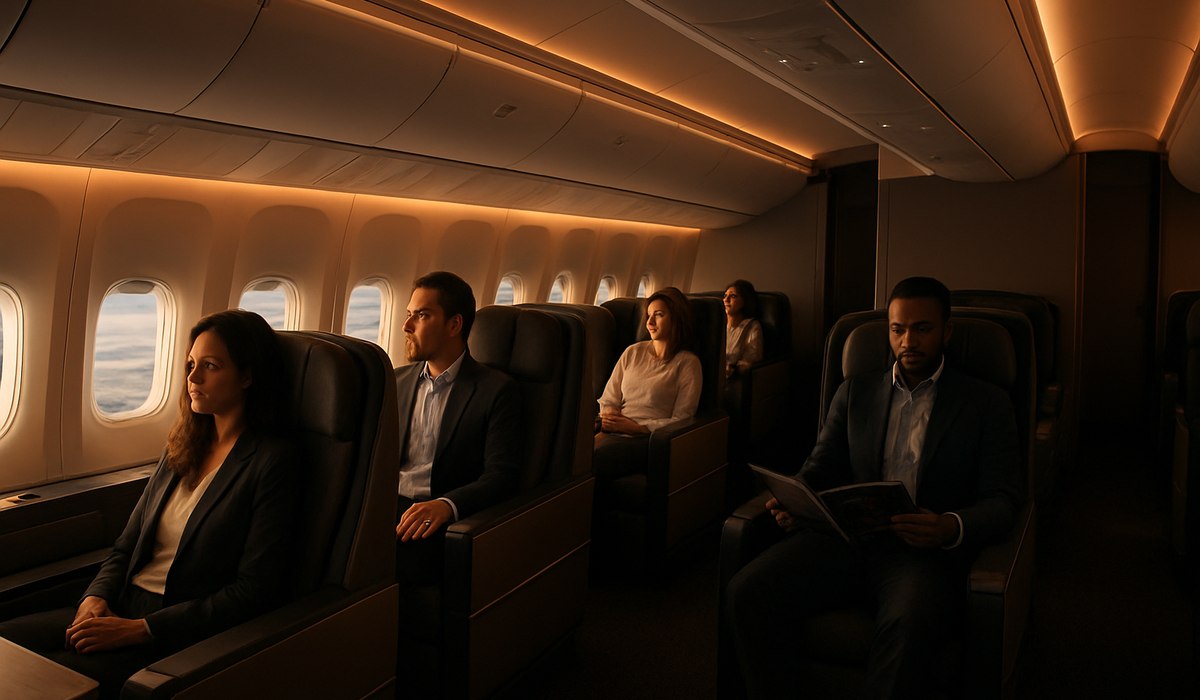
Image generated by AI
U.S. Travel Economy Reaches Historic $98 Billion Milestone
The World Travel & Tourism Council's latest analysis confirms the United States travel sector is hitting unprecedented records, with projections showing a $98 billion economic impact in 2026. Major carriers including Delta Air Lines and American Airlines are positioning themselves strategically to capitalize on this growth. The surge reflects not just increased passenger volumes, but a fundamental shift in how Americans spend on travel—with premium cabins, business-class upgrades, and loyalty programs driving substantially higher revenue per traveler. This expansion represents genuine structural economic gains beyond typical post-pandemic recovery patterns, signaling a durable shift in consumer behavior and corporate travel investment.
WTTC Data Underscores Surging U.S. Travel Economy
Recent research from the World Travel & Tourism Council reveals how deeply integrated travel and tourism have become within the broader American economy. The council's latest trends report positions the United States as the world's preeminent travel and tourism market, with the sector generating well over two trillion dollars annually in overall economic output.
Within this total, WTTC identifies approximately $98 billion in direct and indirect economic impact tied to travel and tourism activity, encompassing both domestic leisure travelers and international visitors spending within U.S. borders. This figure arrives amid sustained consumer demand for experiences, even as elevated interest rates and persistent inflation temper other discretionary spending categories.
Data from tourism offices and research institutions shows consistent growth in airline passenger counts, hotel occupancy rates, and visitor spending across major destinations—from Manhattan and Los Angeles to emerging secondary markets throughout the South and Mountain West regions. Travel analysts emphasize that this expansion has evolved beyond temporary post-pandemic recovery; it now represents lasting structural improvements in employment, tax revenue, and infrastructure development. For deeper insights on U.S. travel economics, visit the WTTC's official research portal.
Major Airlines Position to Seize Gains from Resilient Demand
Delta Air Lines Dominates Premium and Corporate Segments
Delta Air Lines has emerged as the most direct beneficiary of surging U.S. travel demand. Company financial filings and investor communications for 2025 highlight record-setting profitability across multiple metrics, with pre-tax income exceeding several billion dollars and earnings per share substantially exceeding prior guidance.
Revenue disclosures emphasize a balanced portfolio including robust domestic leisure demand, strong transatlantic business travel, and a notably improving corporate segment. Industry analysts covering Delta's quarterly performance note that corporate travel revenue accelerated at double-digit percentage rates year-over-year throughout late 2025, reversing the extended weakness following the pandemic downturn.
Delta's leadership has consistently emphasized premium cabins and co-branded loyalty partnerships as cornerstones of growth strategy, with an expanding percentage of total revenue derived from high-yield customers and credit card arrangements. The airline is simultaneously investing capital into aircraft featuring expanded premium seating configurations, expanded airport lounge facilities at major hubs, and digital infrastructure designed to customize customer offers and resolve operational disruptions efficiently.
Although operational challenges in 2025 created notable one-time expenses, subsequent periods demonstrated that underlying demand fundamentals remain exceptionally strong, fully aligning with WTTC's narrative about a travel sector operating at or above pre-pandemic performance levels.
American Airlines Navigates Strategic Recalibration
American Airlines is pursuing a measured but still growth-oriented strategy as the U.S. travel economy expands. Earnings reports and analyst commentary on 2026 outlook indicate persistent strength in leisure and business demand, enabling American to deliver positive adjusted earnings and raise full-year guidance.
Industry coverage highlights particular strength in premium cabin revenue and loyalty program contributions, mirroring broader trends across major network carriers. However, American spent much of 2025 adjusting strategies that initially underperformed relative to exceptional travel demand in 2024. Financial reporting described how modifications to sales and distribution—including increased emphasis on direct bookings—initially created headwinds and contributed to share price fluctuations.
The carrier has since moderated capacity expansion plans and refined its approach to revenue management, positioning itself more competitively within the booming travel landscape. The airline's ability to capture premium yield improvements alongside modest capacity growth positions it favorably as WTTC puts travel projections at record levels for 2026.
Spending Patterns Shift Toward Premium Cabins and Higher Yields
Travel industry research indicates meaningful shifts in how Americans allocate their travel budgets. Travelers are increasingly directing discretionary spending toward upgraded cabin configurations, flexible fare products, and bundled offerings including co-branded credit cards and airport lounge memberships.
This reallocation explains why headline passenger volume figures tell only part of the story. Higher revenue per traveler has become increasingly critical for translating sector growth into headline economic metrics like the $98 billion impact identified in WTTC analysis. Business travelers recovering from pandemic-era remote work habits are particularly driving premium cabin demand, with corporate travel expense policies showing renewed flexibility toward premium seating and service enhancements.
Airlines including Delta and American have structured their revenue management systems and product development strategies to maximize yield opportunities within this shifting demand landscape. The trend extends beyond traditional business travel to include affluent leisure travelers willing to pay premiums for enhanced comfort, dining, and customer service. This spending behavior transformation underpins the robust economic impact figures that WTTC puts travel at historically elevated levels.
Structural Economic Gains Beyond Post-Pandemic Recovery
Economists and travel industry analysts increasingly characterize current growth patterns as representing genuine structural improvements rather than temporary rebound effects. Employment gains within the travel sector continue expanding, with airlines, hospitality, ground transportation, and supporting services all adding positions.
Tax revenue contributions from travel spending benefit state and local governments across the nation, particularly in tourist-dependent communities. Infrastructure investment in airport capacity, hotel development, and ground transportation improvements reflects confidence that elevated travel volumes represent a durable new baseline rather than transitory demand.
This perspective differentiates 2026 travel market dynamics from typical post-crisis recovery scenarios. Airlines like Delta and American are making multi-year capital investments and strategic decisions predicated on the assumption that travel demand will remain structurally elevated. The $98 billion economic impact that WTTC projects incorporates these longer-term structural factors alongside near-term demand recovery. Visit the FAA's official resources for current airport operational information.
| Metric | 2026 Projection | Key Driver | Primary Beneficiary |
|---|---|---|---|
| Total U.S. Travel Economic Impact | $98 billion | Premium spending, business travel recovery | Delta, American, hotel chains |
| Premium Cabin Revenue Growth | Double-digit YoY | Corporate demand, affluent leisure travelers | Full-service network carriers |
| Domestic Air Passenger Growth | Mid-single-digit % | Leisure recovery, business travel rebound | All major carriers |
| International Visitor Spending | $2+ billion monthly | Strong dollar, business conferences | Airlines, hospitality sector |
| Corporate Travel Expense Recovery | +15% YoY | In-person meetings, client visits resuming | Business-focused airlines |
| Loyalty Program Revenue Contribution | 30-35% of total | Co-branded credit cards, premium memberships | Delta SkyMiles, AAdvantage |
What This Means for Travelers
Traveler Action Checklist
-
Monitor premium cabin pricing through airline websites and aggregators like FlightAware to identify optimal upgrade opportunities as capacity remains competitive.
-
Evaluate co-branded credit card benefits with Delta SkyMiles, American AAdvantage, or competitive programs to maximize lounge access and upgrade inventory during peak demand periods.
-
Book flights during shoulder seasons (late April, early June, September-October) when airlines offer better availability in premium configurations while maintaining
Disclaimer
This article is for informational and educational purposes only. It does not constitute legal, financial, or professional advice. While we strive to provide accurate and up-to-date information, travel policies, regulations, and conditions change rapidly. Always verify information with official sources before making travel decisions. Nomad Lawyer makes no representations about the accuracy, reliability, completeness, or suitability of the information provided. Readers should consult qualified professionals for advice specific to their circumstances. The views expressed in this article are those of the author and do not necessarily reflect the views of Nomad Lawyer.
Kunal K Choudhary
Co-Founder & Contributor
A passionate traveller and tech enthusiast. Kunal contributes to the vision and growth of Nomad Lawyer, bringing fresh perspectives and driving the community forward.
Learn more about our team →