
Travel Thailand Prepares Record Songkran Surge With Fleet Expansion
Thailand's airlines deploy emergency aircraft and slash fares up to 40% as Songkran 2026 threatens largest domestic aviation surge on record during April holiday period.

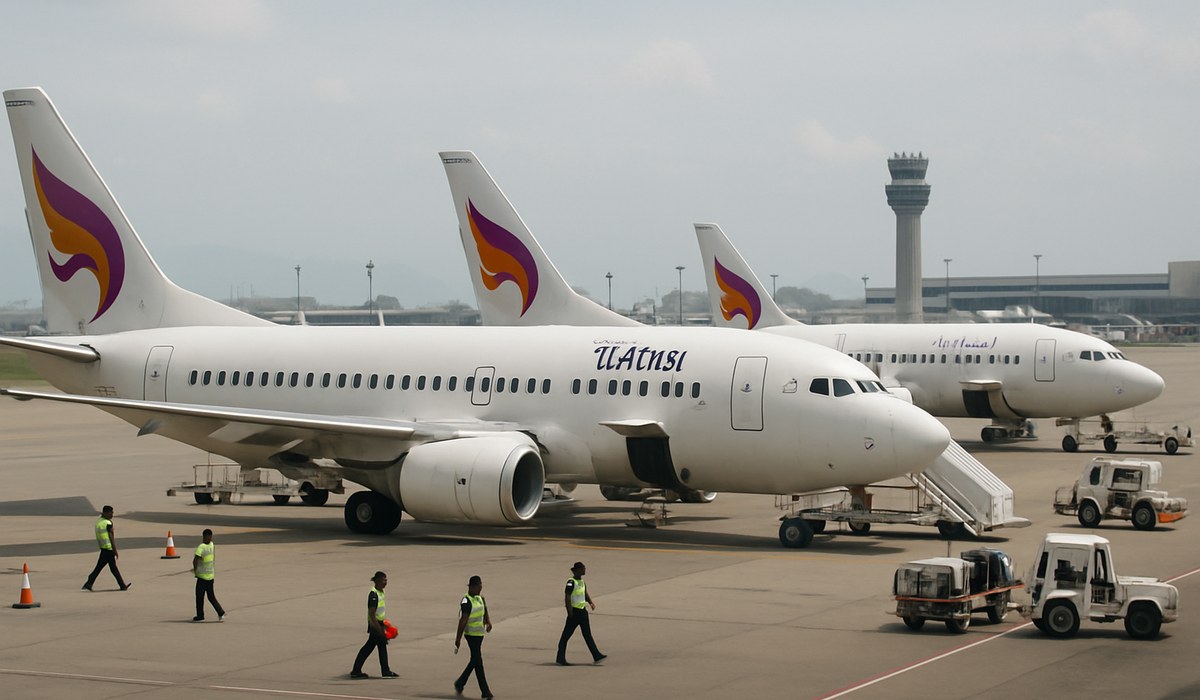
Image generated by AI
**> Quick Summary
• Thai carriers activate reserve fleet as April Songkran bookings exceed 2025 volumes by 31% • Promotional fares drop as low as 590 baht on Bangkok–Chiang Mai corridor amid capacity war • Don Mueang and Suvarnabhumi airports extend operating hours to accommodate 2.4 million extra movements • Industry analysts warn infrastructure bottlenecks could trigger delays despite expanded schedules**
As Thailand braces for what industry analysts predict will be the largest domestic passenger movement in its aviation history, airlines are slashing fares by up to 40% and deploying reserve aircraft to handle the Songkran holiday tsunami. Advance booking data compiled by the Civil Aviation Authority of Thailand shows April 2026 domestic reservations have already surpassed the entire 2025 Songkran period by nearly one-third, forcing carriers into an unprecedented logistical scramble.
Record-Breaking Songkran Travel Demand Reshapes Thailand's Domestic Aviation
Travel thailand prepares for a seismic shift in mobility patterns as the country's most culturally significant holiday collides with post-pandemic revenge travel dynamics. The International Air Transport Association projects Southeast Asian domestic capacity will grow 18% year-over-year in April 2026, with Thailand accounting for the steepest acceleration among member states.
Thai AirAsia has confirmed it will operate 127% of its normal daily schedule between April 10-17, adding 94 supplementary flights on trunk routes connecting Bangkok with Phuket, Hat Yai, and Chiang Mai. Nok Air announced similar expansion plans, bringing six mothballed aircraft back into service specifically for the festival week. Thai Lion Air revealed it secured wet-lease agreements for three narrow-body jets from Indonesian partner carriers to support overflow demand.
Bangkok Airways managing director Puttipong Prasarttong-Osoth told reporters the carrier expects to transport 340,000 passengers across its domestic network during the eight-day window—a 42% increase compared to 2025. The airline has suspended routine maintenance schedules for non-critical systems to maximize aircraft availability, a strategy mirrored across the sector.
Bangkok's dual-airport system will handle approximately 2.4 million passenger movements between April 8-18, according to Airports of Thailand PCL projections. Don Mueang International Airport extended daily operating windows by 90 minutes to accommodate early-morning departures and late-night arrivals, while Suvarnabhumi Airport activated four reserve gates in the satellite terminal to alleviate congestion.
Airlines Deploy Strategic Capacity and Aggressive Fare Cuts
Fierce competition has triggered the steepest promotional pricing seen in Thailand's domestic market since 2019. Thai Vietjet launched a flash sale offering one-way tickets from Bangkok to Udon Thani for just 590 baht ($16.70), undercutting competitors by 35%. Thai AirAsia countered with similar rates on secondary routes, bundling free checked baggage for bookings made before April 5.
Analysts attribute the fare war to overcapacity concerns and carriers' desire to capture market share during Thailand's single largest travel event. Revenue management systems employed by major carriers—similar to SriLankan Airlines' AI-powered revenue management system that optimizes pricing in real-time—are dynamically adjusting rates based on load factors updated every six hours. This technological arms race has compressed profit margins but maximized seat utilization, with average load factors hovering near 92% on popular routes.
Thai Smile Airways introduced a tiered pricing structure that rewards early bookers with discounts approaching 40%, while maintaining premium rates for last-minute travelers. The subsidiary of Thai Airways International deployed its entire fleet of Airbus A320 aircraft, canceling regional international services to prioritize domestic connectivity. This strategic reallocation mirrors broader industry tactics observed during peak demand cycles, though Thailand's concentration of travel into a single week intensifies operational complexity.
Charter operators have entered the fray, with regional carriers like Kan Air adding point-to-point services between secondary cities that typically lack direct connections. Mae Hong Son, a mountainous northern province, will receive five times its normal weekly flights, enabling residents working in Bangkok to return home without layovers. Similar expansions target northeastern provinces including Khon Kaen and Nakhon Ratchasima.
FlightAware's real-time tracking data indicates on-time performance typically deteriorates 14% during Songkran compared to baseline months, prompting carriers to build buffer time into schedules. Airlines have added 12-15 minutes to published block times on short-haul routes, anticipating ground delays caused by congested aprons and taxiways.
Operational Challenges and Infrastructure Readiness
Despite capacity additions, aviation experts warn Thailand's airport infrastructure may struggle to absorb the surge without service degradation. Air traffic control staffing at regional airports remains constrained, with Chiang Mai International Airport operating near its theoretical hourly movement limit of 32 operations during peak windows. The Civil Aviation Authority has temporarily waived slot coordination rules, allowing carriers to schedule flights outside normal allocation frameworks—a decision criticized by safety advocates concerned about controller workload.
Ground handling companies have mobilized contract labor to supplement permanent staff, hiring 1,200 temporary workers across the network. However, labor unions representing aviation workers flagged inadequate training for seasonal employees tasked with marshaling aircraft and loading baggage. A spokesperson for the Thai Aviation Workers Union noted that inexperienced staff historically correlate with higher rates of mishandled luggage and ramp incidents during holiday periods.
Fuel supply logistics present another vulnerability. Oil storage facilities at secondary airports maintain reserves sufficient for typical demand but lack capacity headroom for sustained high-tempo operations. PTT Oil and Retail Business, Thailand's dominant aviation fuel supplier, pre-positioned 2.6 million liters at Phuket International Airport and arranged emergency tanker deliveries to provincial airports should reserves dip below safety thresholds.
The meteorological outlook adds uncertainty. Thailand's meteorological department forecasts unseasonably heavy pre-monsoon rainfall across the Gulf coast between April 11-14, potentially disrupting operations at Surat Thani and Krabi airports that lack advanced instrument landing systems. Airlines have developed contingency plans to divert flights to Hat Yai or Phuket, though such rerouting would cascade into schedule disruptions affecting subsequent legs.
Passenger rights frameworks remain underdeveloped in Thailand compared to jurisdictions with mature passenger rights protections, leaving travelers with limited recourse for delays or cancellations. The Department of Civil Aviation recommends passengers secure travel insurance covering schedule changes, though industry observers note voluntary compensation policies vary widely among carriers.
What Travelers Need to Know Before Booking
Prospective travelers should prioritize flexibility when purchasing Songkran-period tickets. While promotional fares offer substantial savings, most come with restrictive change and cancellation policies. Premium cabin or full-fare economy tickets typically include complimentary rebooking options, providing valuable insurance against the elevated operational disruptions anticipated during the festival window.
Booking directly through airline websites or official mobile applications ensures access to real-time schedule updates and streamlined rebooking processes should flights be canceled or significantly delayed. Third-party booking platforms often create communication barriers that complicate irregular operations recovery, leaving passengers stranded at airports without clear resolution pathways.
Early airport arrival becomes non-negotiable during this period. Carriers recommend checking in at least three hours before domestic departures, particularly at Bangkok's airports where security queues can exceed 90 minutes during morning peak periods. Automated check-in kiosks and online check-in reduce time spent at airline counters, though baggage drop still requires physical queue engagement.
Travelers should monitor weather forecasts for both origin and destination cities. While Thai carriers generally maintain operations in moderate rain, convective storms can trigger ground stops that ripple across the network. Afternoon departures face higher cancellation risk due to thunderstorm activity, making morning flights statistically more reliable during the pre-monsoon transition.
Health considerations merit attention as well, particularly given recent CDC's dengue travel advisory affecting Southeast Asia. Songkran festivities involve extensive water-based activities that can increase exposure to mosquito-borne illnesses. The Ministry of Public Health advises travelers to pack insect repellent and wear protective clothing during outdoor celebrations, especially in northern provinces reporting elevated dengue transmission rates.
Comparisons to innovative travel partnerships like JetBlue and Royal Caribbean's partnership model highlight opportunities Thai carriers might explore to bundle air travel with ground transportation or accommodation packages. Currently, such integrated offerings remain rare in Thailand's domestic market, though several airlines have initiated discussions with hotel chains about co-branded Songkran travel bundles for the 2027 festival.
Frequently Asked Questions About Thailand Songkran Flight Travel
How early should I book flights for Songkran 2026?
Most airlines exhaust promotional inventory 4-6 weeks before departure. Booking by early March typically secures the lowest fares, though occasional flash sales emerge closer to travel dates. Waiting past March 25 risks both price escalation and sold-out flights on popular routes.
What are my rights if my Songkran flight gets canceled?
Thai regulations require airlines to offer rebooking on the next available flight or a full refund for cancellations within carrier control. Weather or air traffic control delays grant airlines discretion to offer vouchers rather than cash refunds. Travel insurance provides the most reliable protection.
Which routes have the best availability during the festival?
Southern beach destinations like Krabi and Koh Samui show better seat availability than northern cultural hubs. Bangkok–Chiang Mai and Bangkok–Chiang Rai typically sell out first, while routes to Hat Yai and Trang retain open inventory later into the booking cycle.
Are budget carriers reliable during high-demand periods?
Low-cost carriers maintain operational reliability comparable to full-service airlines during Songkran, though recovery from delays can be slower due to smaller reserve fleets. On-time performance differences narrow during peak periods when all carriers face identical infrastructure constraints.
Should I choose Don Mueang or Suvarnabhumi for connecting flights?
Suvarnabhumi offers more sophisticated passenger amenities and faster inter-terminal connections, critical during tight layovers. Don Mueang serves primarily low-cost carriers with simpler terminal layouts. Allow minimum 90-minute connections at Suvarnabhumi during Songkran, versus 60 minutes during normal periods.
Related Articles:
→ SriLankan Airlines' AI-Powered Revenue Management System Transforms Regional Pricing
→ JetBlue and Royal Caribbean Partnership Model Redefines Multi-Modal Travel
→ CDC's Dengue Travel Advisory: What Southeast Asia Travelers Must Know
Disclaimer
This article is for informational and educational purposes only. It does not constitute legal, financial, or professional advice. While we strive to provide accurate and up-to-date information, travel policies, regulations, and conditions change rapidly. Always verify information with official sources before making travel decisions. Nomad Lawyer makes no representations about the accuracy, reliability, completeness, or suitability of the information provided. Readers should consult qualified professionals for advice specific to their circumstances. The views expressed in this article are those of the author and do not necessarily reflect the views of Nomad Lawyer.
Preeti Gunjan
Contributor & Community Manager
A passionate traveller and community builder. Preeti helps grow the Nomad Lawyer community, fostering engagement and bringing the reader experience to life.
Learn more about our team →