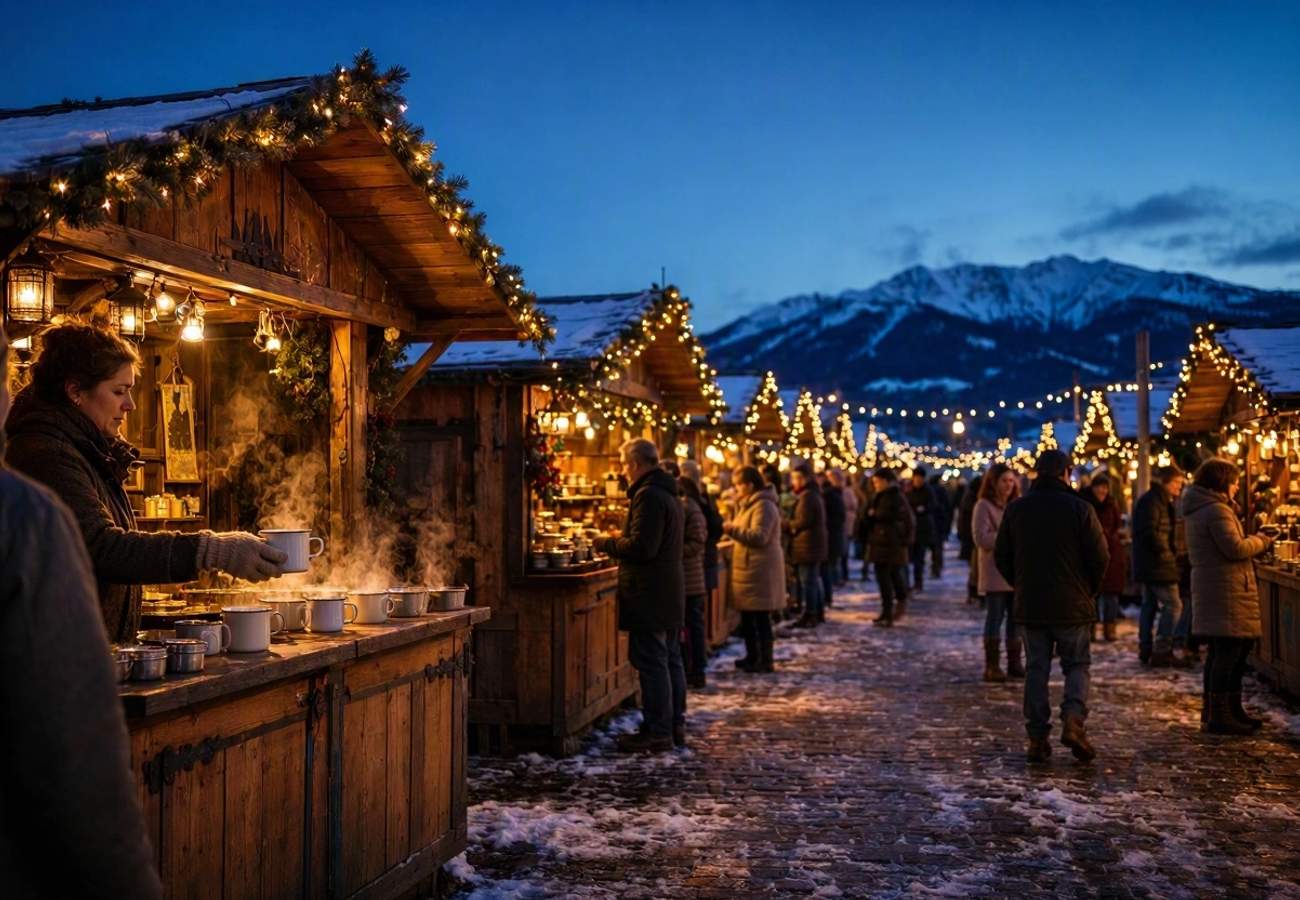
World's Most Thrilling Ropeway Journeys 2026: Glaciers, Mountains, and Urban Vistas


Image generated by AI
From soaring 3,883 meters above sea level to the icy summit of Klein Matterhorn to gliding across the tropical waters of Hong Kong and the dramatic granite monoliths of Rio de Janeiro, aerial ropeways have evolved from utilitarian mountain transit into premier experiential travel attractions. Blending cutting-edge alpine engineering with revolving glass-floor cabins, high-altitude glacier palaces, and zero-direct-emission transit, these ten iconic cable cars deliver breathtaking panoramic access to earth's most formidable alpine terrains without demanding grueling mountaineering expeditions.
The Local Trend Revealed: Aerial Transit as an Experiential Destination
Cable cars and gondola systems were initially engineered for survival: linking isolated mountain valleys, ferrying mine workers across precipitous gorges, and supplying remote alpine outposts. Over the past decade, however, the global ropeway sector has undergone a profound tourism revolution. Governed by technical safety guidelines from bodies like the International Organization for Transportation by Rope (OITAF), modern aerial ropeways are no longer merely a means of conveyance—they have become the primary centerpiece of the journey itself.
Today’s state-of-the-art ropeways incorporate 360-degree rotating cabins, transparent glass floors, heated leather seating, and architecturally acclaimed summit terminals featuring high-altitude ice palaces, Michelin-starred bistros, and cliffside cantilevered skywalks.
| Ropeway Experience | Country / Region | Key Engineering & Scenic Milestone | Prime Visiting Windows |
|---|---|---|---|
| Matterhorn Glacier Paradise | Zermatt, Switzerland | Klein Matterhorn summit at 3,883 meters, carved Glacier Palace | Summer skiing & winter snow seasons |
| Skyway Monte Bianco | Courmayeur, Italy | Rotating 360° spherical cabins, Punta Helbronner terrace | Clear weather spring to autumn |
| Aiguille du Midi Cable Car | Chamonix, France | Vertical ascent to 3,777 meters, "Step into the Void" glass box | June to September summer peak |
| Ngong Ping 360 | Lantau Island, Hong Kong | 5.7 km trans-island span, glass-bottom Crystal Cabins, Tian Tan Buddha | October to March dry season |
| Ba Na Hills Cable Car | Da Nang, Vietnam | 5.8 km non-stop single-track span, access to iconic Golden Bridge | March to May & September to October |
| Table Mountain Aerial Cableway | Cape Town, South Africa | Rotating cabin floor, 360° Atlantic Ocean and city skyline views | Year-round (weather dependent) |
| Gulmarg Gondola | Jammu & Kashmir, India | Apharwat Peak ascent to ~3,980 meters, premier Himalayan ski bowl | December–March (snow) / May–July |
| Sugarloaf Cable Car (Bondinho) | Rio de Janeiro, Brazil | Two-stage ascent over Guanabara Bay, Copacabana panoramas | Year-round (golden hour sunsets) |
| Singapore Cable Car | Singapore | Harbor-crossing urban ropeway linking Mount Faber to Sentosa Island | Year-round evening city lights |
| Medellín Metrocable | Medellín, Colombia | Pioneering social urbanism transit connecting hillside comunas | Year-round cultural exploration |
Europe's Alpine Triumphs: Matterhorn, Mont Blanc, and Chamonix
Switzerland: Matterhorn Glacier Paradise (3,883m)
Departing the car-free alpine village of Zermatt, the Matterhorn Glacier Paradise cable car carries passengers across steep pine forests and craggy moraines to the highest cable car-accessible mountain station in Europe at 3,883 meters (12,740 feet). The summit reveals a frozen 360-degree panorama encompassing 38 mountain peaks exceeding 4,000 meters across Switzerland, Italy, and France. Deep beneath the surface of the plateau lies the Glacier Palace, a crystalline labyrinth carved 15 meters directly inside the ancient glacier ice, featuring sculpted ice thrones, illuminated grottos, and natural glacial crevices.
Italy: Skyway Monte Bianco
On the southern flank of the Mont Blanc massif, Courmayeur’s Skyway Monte Bianco represents an engineering masterpiece. Its spherical glass cabins rotate a full 360 degrees during the ascent, ensuring every passenger experiences panoramic vistas of the surrounding granite needles, ancient seracs, and hanging glaciers without shifting seats. Reaching the Punta Helbronner station (3,466 meters), visitors step onto circular observation terraces framing the jagged tooth of the Dent du Géant and enjoy alpine wine tastings featuring high-altitude Blanc de Morgex et de La Salle.
France: Aiguille du Midi (3,777m)
On the opposite side of the massif in Chamonix, the Aiguille du Midi cable car executes one of the steepest vertical ascents on earth, vaulting nearly 2,800 vertical meters in just two stages without intermediate support pylons on the upper span. Reaching 3,777 meters, the terminal serves as the departure gateway for mountaineers traversing the legendary Vallée Blanche. Daring travelers step into the "Step into the Void"—a five-sided glass skywalk cantilevered over a sheer 1,000-meter precipice.
For those planning a trip to the Swiss Alps, you can find detailed travel requirements and regional guides on the official Switzerland Tourism website.
Cultural and Tropical Marvels: From Hong Kong to Vietnam and Rio
Beyond snow-crested alpine summits, aerial ropeways have redefined tropical and coastal tourism:
- Hong Kong’s Ngong Ping 360: Spanning 5.7 kilometers across Lantau Island, this bi-cable ropeway glides over the azure waters of Tung Chung Bay and lush subtropical rainforest slopes before revealing the colossal 34-meter bronze Tian Tan Buddha seated atop Mount Muk Yue. The "Crystal+" cabins feature all-glass floors, offering exhilarating vertical perspectives of rushing waterfalls and ancient hiking paths below.
- Vietnam’s Ba Na Hills: Holding the Guinness World Record for the longest non-stop single-track cable car at 5,801 meters, Ba Na Hills ascends into the mist-wreathed Truong Son Mountains near Da Nang. The gondola delivers visitors to the world-renowned Golden Bridge (Cầu Vàng), where two colossal, weathered stone-like hands appear to hoist a shimmering gilded walkway above emerald cloud forests.
- Rio’s Bondinho Pão de Açúcar: Operating since 1912, Rio de Janeiro’s Sugarloaf Mountain cable car is one of the world's most celebrated urban ropeways. Gliding from Praia Vermelha to Morro da Urca and onto the 396-meter granite summit of Sugarloaf, passengers admire sweeping vistas of Copacabana Beach, Guanabara Bay, and Christ the Redeemer silhouetted against twilight skies.
Community & Eco-Focus: Zero-Emission Transit and Social Urbanism
Aerial ropeways offer profound environmental and socio-economic advantages over traditional transport infrastructure:
- Minimal Ecological Footprint: Constructing a mountain ropeway requires only narrow pylon footprints, avoiding the massive deforestation, slope destabilization, and soil erosion caused by cutting paved switchback mountain roads through fragile ecosystems.
- Zero Direct Emissions: Modern gondolas run on centralized, high-efficiency electric drive motors powered increasingly by renewable alpine hydroelectricity and solar grids, eliminating direct tailpipe emissions in pristine national parks.
- Medellín’s Social Urbanism Model: In Colombia, the Medellín Metrocable fundamentally transformed public transport by connecting marginalized hillside neighborhoods (comunas) with the city's valley rail network. The system slashed commuter travel times from two hours to thirty minutes, catalyzed local street-art tourism, and brought civic libraries and schools directly to underserved mountain communities.
Visitor Insider Tips: Practical Guidance for High-Altitude Ascents
Ropeway travel involves unique meteorological, physiological, and logistical realities that savvy travelers must navigate:
- Beating Midday Thermal Weather: Mountain weather deteriorates rapidly in the afternoon as solar warming triggers thermal updrafts, afternoon clouds, and gusty ridge winds that can force safety closures. Always book the first morning cabin departure (between 8:00 AM and 8:30 AM) for pristine blue skies, crystal-clear photography, and glassy-smooth cable rides.
- High-Altitude Acclimatization: Ascending rapidly from sea level to over 3,700 meters within 20 minutes can induce acute mountain sickness (headaches, nausea, dizziness). Spend 20 to 30 minutes acclimatizing at intermediate transfer stations (such as Plan de l'Aiguille in Chamonix or Pavillon du Mont-Frety at Skyway), drink plenty of water, and avoid strenuous sprinting on summit viewing platforms.
- Essential Layering Strategy: Temperature plummets roughly 6.5°C for every 1,000 meters of elevation gain. Even on a balmy 28°C (82°F) summer day in Chamonix or Courmayeur, summit temperatures hover near freezing, amplified by biting windchill. Pack a windproof hardshell jacket, thermal mid-layer, sunglasses (vital against snow glare), and sunscreen.
- Table Mountain Cabin Positioning: On Cape Town’s Table Mountain Aerial Cableway, the cabin floor revolves a complete 360 degrees during the ascent. Secure a spot against the outer glass window railing; the slow, continuous rotation guarantees you experience the full panorama of the Twelve Apostles, Camps Bay, and Robben Island without pushing through fellow passengers.
- Regional Culinary Specialties at Summit Stations:
- Savor traditional Swiss cheese fondue moitié-moitié (half Gruyère, half Vacherin Fribourgeois) at the Matterhorn Glacier Paradise restaurant.
- Sip traditional spiced Kashmiri Kahwa tea with saffron, cardamom, and crushed almonds at Gulmarg Gondola's Kongdoori mid-station.
- Enjoy refreshing Brazilian Açai na tigela topped with fresh banana and granola while taking in sunset views at the Morro da Urca station in Rio.
Tourism Outlook: Engineering the Next Frontier of Accessible Travel
The worldwide boom in aerial ropeway development demonstrates that modern travelers crave immersion without environmental destruction. Cable car networks are opening up remote alpine glaciers, coastal cliffs, and vertical urban neighborhoods to travelers of all physical mobilities—from families with young children to elderly globetrotters who cannot endure rigorous mountaineering treks.
To learn more about the technical safety standards and global regulations governing these systems, visit the International Organization for Transportation by Rope (OITAF).
As next-generation tri-cable ropeways (3S gondolas) offering ultra-high wind stability and smart panoramic cabins expand across the Americas, Europe, and Asia, the journey through the sky will continue to stand as one of the most thrilling, memorable chapters of modern global exploration.
Frequently Asked Questions
Which mountain ropeway in Europe reaches the highest elevation?
Matterhorn Glacier Paradise in Zermatt, Switzerland, reaches an elevation of 3,883 meters (12,740 feet) at the Klein Matterhorn, making it the highest cable car-accessible mountain station in Europe.
Do mountain cable cars operate during strong winds or thunderstorms?
No. Modern ropeway systems are equipped with automated anemometers that monitor wind velocity along every tower. When crosswinds exceed safe operating thresholds (typically 60 to 70 km/h), services are temporarily paused or suspended until weather conditions improve.
Is the Gulmarg Gondola open year-round?
Yes. The Gulmarg Gondola operates throughout both summer and winter seasons. Winter attracts international skiers and snowboarders to Apharwat Peak's deep powder bowls, while summer offers wildflower trekking across the green alpine meadows of Jammu and Kashmir.
Travelers visiting the dramatic landscapes of South Africa can coordinate their itinerary through the South African National Tourism portal.
Are high-altitude cable cars accessible for travelers with mobility challenges?
Yes. Major modern systems—including Matterhorn Glacier Paradise, Skyway Monte Bianco, and Table Mountain—are fully wheelchair and stroller accessible, featuring level boarding platforms, wide cabin doors, and elevator access to panoramic observation decks.
FAQ: World's Most Thrilling Ropeway Journeys 2026
Are cable cars safe for people with a fear of heights? Yes, modern ropeways adhere to strict international safety standards. Many offer enclosed cabins with secure glass, though "Crystal Cabins" with transparent floors may be more challenging for those with severe acrophobia.
What is the best time of year to visit high-altitude ropeways? For alpine journeys like the Matterhorn or Gulmarg, winter is ideal for snow sports, while summer (June to September) offers the clearest vistas and hiking access. Always check local weather forecasts before booking.
Do I need special clothing for high-altitude cable car trips? Yes. Even in summer, temperatures drop significantly at summits like the Aiguille du Midi or Klein Matterhorn. Layering with windproof and waterproof clothing is essential to avoid altitude-related chills.
Are these ropeway experiences accessible for people with disabilities? Most modern systems, including the Singapore Cable Car and Ngong Ping 360, are designed with accessibility in mind, offering wheelchair-compatible cabins and ramps at major terminals.
Related Travel Guides
This article is for informational purposes. Flight routes, passenger regulations, visa rules, and transit advisories are subject to change by airlines and aviation authorities. Readers are advised to verify schedules and travel documentation with relevant carriers and border agencies before departure.
Related Stories
Heritage Meets High-Octane Adventure: How Charleston, Santa Fe, and St. Augustine Redefine US Travel in 2026
Casper Solo Travel Guide: Mountain Trails, Pioneer History, and High-Plains Logistics in Wyoming