
7 Epic Volcano Hikes Worldwide: From Kilauea to Kilimanjaro—2026 Adventure Guide
Discover the world's most dramatic volcano treks. We ranked seven epic summits from beginner-friendly Kilauea to challenging Kilimanjaro, complete with difficulty ratings and insider tips.

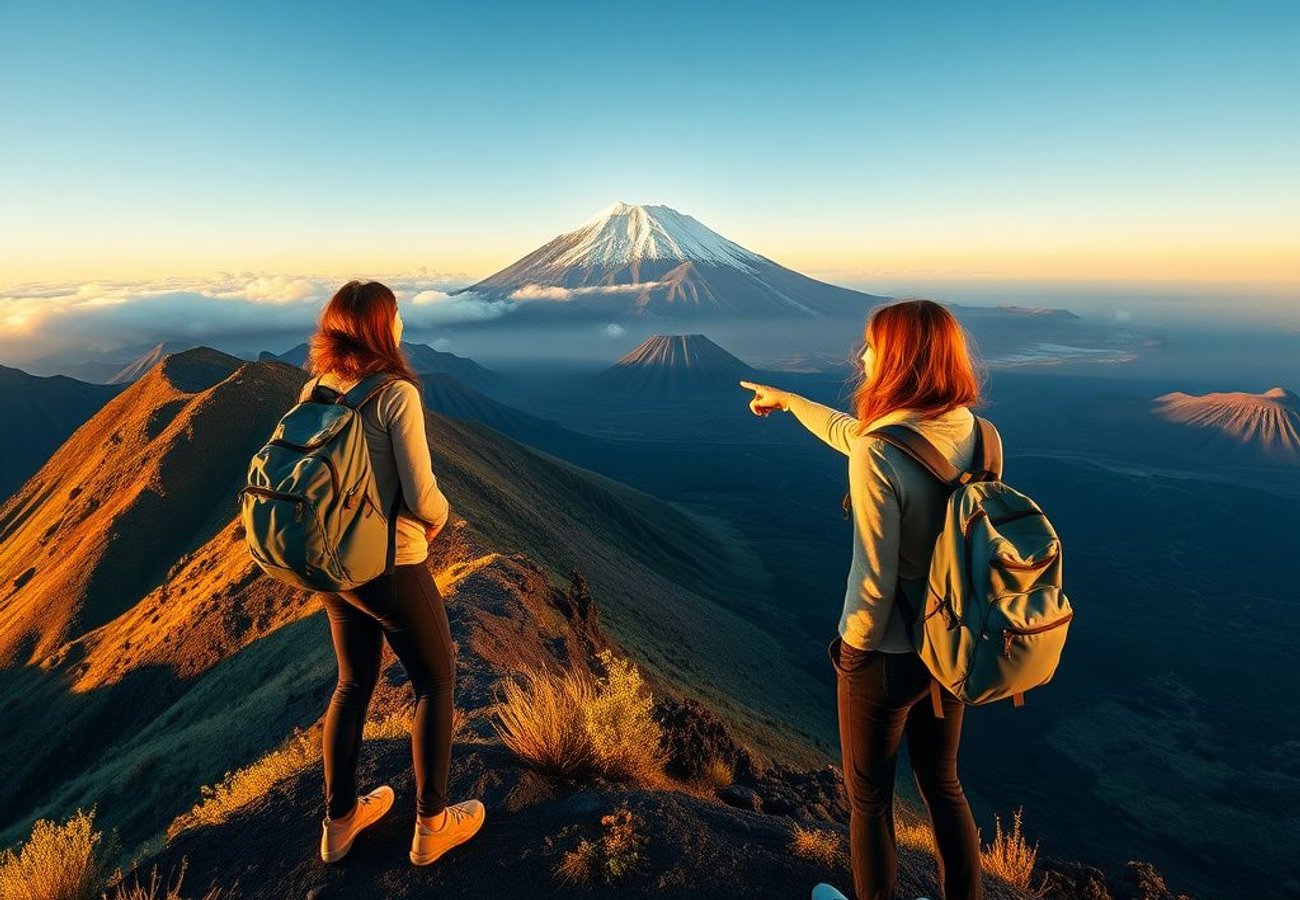
Image generated by AI
Volcanoes aren't just geological wonders—they're some of Earth's most mesmerizing destinations for trekkers. Black lava fields, steaming crater lakes, and dense cloud forests converge at these seven peaks, each offering a completely different adventure. Whether you're a first-time hiker or a seasoned mountaineer, there's a volcano experience waiting for you.
I've researched the most compelling summits globally, and what emerged is a ranking that spans continents, difficulty levels, and unforgettable landscapes. Here's your definitive guide to the world's most epic volcano hikes.
Kilauea, Hawai'i: The Active Volcano Paradox
Elevation: 1,250 metres
Terrain: Muddy paths and steaming craters
Hiking Time: 2-5 hours
Difficulty: Accessible (good fitness required, no altitude training necessary)
Kilauea presents a fascinating contradiction: it's one of Earth's most active volcanoes, yet remarkably accessible to casual hikers. The circular crater rim trail welcomes beginners, though adventurous trekkers should tackle the five-hour Kilauea Iki Trail instead.
The Byron Ledge Trail runs through rainforest where towering koa trees provide shelter and endangered Hawaiian geese dart between branches. Ornithologists specifically praise this section for wildlife spotting opportunities.
The real magic happens underground. Descend into the barren Kilauea Iki Crater—once a molten lava lake, now a surreal ash-covered basin surrounded by verdant ridges. Venture into the Nahuku Lava Tube to witness stalactites formed by ancient dripping lava. The finale: gazing into the blood-red Halema'uma'u lava lake, still boiling after millennia.
Reddit: "The crater floor walk on Kilauea Iki is absolutely otherworldly. You're literally standing inside the volcano." — r/travel
Mount Rinjani, Lombok: Indonesia's Sacred Summit
Elevation: 3,726 metres
Terrain: Sand, savannah, and ashy ascents
Hiking Time: 6-8 hours daily
Difficulty: Moderate to challenging (strength and cardio training advised)
Perched within Indonesia's Lesser Sunda Islands, Mount Rinjani dominates Lombok's landscape with religious significance. The local Sasak community still performs sacred rituals to honor the goddess believed to reside beside its crater lake.
Most expeditions span two to three days, starting from either Senaru or Sembalun village. Bring camping gear—there are zero mountain refuges here. Initial paths wind through rice paddies and villages before ascending through pine-dominated terrain as air temperatures plummet.
The prize is Lake Segara Anak ("child of the sea"), a massive 17-square-mile crater lake with year-round water temperatures of 20-22°C. Many trekkers plunge in for a surreal swim inside an active volcano. The final push along a narrow, ash-covered ridge demands serious commitment, but rewards you with 360-degree views spanning neighboring Bali, smoking craters, and tropical islands stretching toward the horizon.
Cotopaxi, Ecuador: The Equatorial Glacier Challenge
Elevation: 5,897 metres
Terrain: Deep crevasses and glaciers
Hiking Time: 6-8 hours ascent, 2-3 hours descent
Difficulty: Challenging (mountaineering experience essential)
Cotopaxi's perfectly conical silhouette masks a brutal reality: this Andean giant demands serious mountaineering credentials. Located just south of Ecuador's high-altitude capital Quito, it presents glaciers and avalanche risks rarely encountered this close to the Equator.
Your journey begins with a two-hour trek across red-ochre, lava-singed soil, arriving at the José Rivas refuge. Here, guides conduct crampon and rope training on the refuge's indoor climbing wall before the midnight departure.
Departing at 1am, you'll scramble over crimson scree toward the glacier's edge. Then comes the brutal section: a punishing 40-degree incline across ice bridges with vertical drops. The pre-dawn ascent tests every muscle, but sunrise over Cotopaxi's 800-metre-wide crater bathes snow-covered ridges in ethereal blue and orange light—a moment that justifies every aching step.
Mount Fuji, Japan: The Sacred Pilgrimage
Elevation: 3,776 metres
Terrain: Volcanic scree and mountain trail
Hiking Time: 5-10 hours ascent, 5-6 hours descent
Difficulty: Moderate (no technical climbing, altitude awareness advised)
Mount Fuji attracts over 200,000 hikers annually for reasons both spiritual and aesthetic. This sacred peak, ringed by mist-shrouded torii gates marking boundaries between human and spiritual realms, remains Japan's most iconic mountain.
The Yoshida Trail dominates the climbing landscape—easily accessed by bus or train from Tokyo, it begins at the Fuji Subaru Line 5th Station (2,300 metres elevation, the highest road-accessible point). Early sections traverse deciduous forest before opening onto volcanic scree where exposure intensifies and gradients steepen.
Most hikers reach an 8th station mountain hut by late afternoon for rest and acclimatization. Serious summit-seekers depart around 2am for sunrise arrival. This final stretch demands mental fortitude more than technical skill—steep, winding paths and rapidly thinning air make each step deliberate. The Kusushi Shrine, guarded by komainu statues, signals your approach to Japan's spiritual rooftop.
Mount Teide, Tenerife: The Devil's Mountain
Elevation: 3,718 metres
Terrain: Barren moonscapes and steep-sided ridges
Hiking Time: 5-7 hours ascent, 3-4 hours descent
Difficulty: Moderate (general fitness required, high altitude caution advised)
The Guanches people, Tenerife's Indigenous inhabitants, called this the Devil's dwelling place. Mount Teide commands respect through its dramatic landscape transformations: tropical banana plantations and black-sand beaches transition into cold, lunar plains near the summit.
Ascents typically begin at Montaña Blanca car park, positioned high above the tree line within Teide National Park. The route progresses steadily upward through a rainbow-hued scree field dotted with enormous Teide Eggs—massive lava boulders ejected during prehistoric eruptions.
As altitude climbs, the trail steepens and air thins noticeably. A measured pace with frequent breaks aids acclimatization. Beyond the upper cable-car station (3,555 metres), you'll need either a permit or licensed guide—advance planning is non-negotiable. At the summit, Atlantic vistas encompass all the Canary Islands, and geologists note that Mount Teide ranks among Earth's tallest volcanoes when measured from its ocean-floor base.
Mount Kilimanjaro, Tanzania: Africa's Towering Giant
Elevation: 5,895 metres
Terrain: Cloud forests, moorlands, and alpine deserts
Hiking Time: 9 days minimum
Difficulty: Challenging (3-4 months of training essential)
Mount Kilimanjaro holds multiple superlatives: Earth's highest freestanding volcano, a UNESCO World Heritage site, and the centerpiece of countless climbers' bucket lists. Its five distinct climatic zones and cultural significance make it uniquely compelling.
The nine-day Lemosho Route, approaching from the west, ranks as the superior option. You'll begin in cloud forest, where colobus monkeys call overhead and diverse birdlife punctuates the canopy. Gentler moorland sections follow before giant senecio trees dot an increasingly alien landscape. Vegetation vanishes near the 250-metre Barranco Wall escarpment—the trek's steepest section demands patience and deliberate movement.
Beyond lies the final push: additional overnight camps, volcanic scree navigation, and air so thin that each breath becomes conscious work. Uhuru Peak, the "Roof of Africa," awaits at 5,895 metres, marked by a sign plastered with trekker stickers. Standing there, you've summited Earth's tallest freestanding volcano.
Reddit: "Kilimanjaro humbled me. It's not technical, but the altitude and mental game separate casual hikers from serious trekkers." — r/mountaineering
Planning Your Volcano Trek
Each summit demands different preparation levels. Kilauea welcomes beginners; Cotopaxi requires mountaineering certification. Book guides well in advance—responsible operators on Mount Teide, Rinjani, and Kilimanjaro fill months ahead during peak season.
Physical conditioning matters profoundly. Altitude training transforms merely ambitious treks into achievable summits. Research visa requirements for your destination country before committing deposits.
Pack deliberately. Lightweight gear, quality boots, and weather-appropriate layers determine comfort across dramatically shifting climate zones. Kilauea's tropical rainforest demands different clothing than Cotopaxi's glaciers or Fuji's alpine passes.
The volcanoes await. Each summit tells Earth's story—ancient fire, enduring landscapes, and human persistence against geological grandeur.
These peaks demand respect, preparation, and honest self-assessment—but reward trekkers with memories that outlast a lifetime.
Related Travel Guides
Disclaimer
This article is for informational and educational purposes only. It does not constitute legal, financial, or professional advice. While we strive to provide accurate and up-to-date information, travel policies, regulations, and conditions change rapidly. Always verify information with official sources before making travel decisions. Nomad Lawyer makes no representations about the accuracy, reliability, completeness, or suitability of the information provided. Readers should consult qualified professionals for advice specific to their circumstances. The views expressed in this article are those of the author and do not necessarily reflect the views of Nomad Lawyer.
Preeti Gunjan
Contributor & Community Manager
A passionate traveller and community builder. Preeti helps grow the Nomad Lawyer community, fostering engagement and bringing the reader experience to life.
Learn more about our team →