
Scotland's Common Ridings Festival: 700 Years of Rebellious Border History on Horseback
Discover Scotland's most dramatic equestrian tradition—ancient Common Ridings festivals honoring 13th-century independence wars across the Scottish Borders with hundreds of galloping riders.

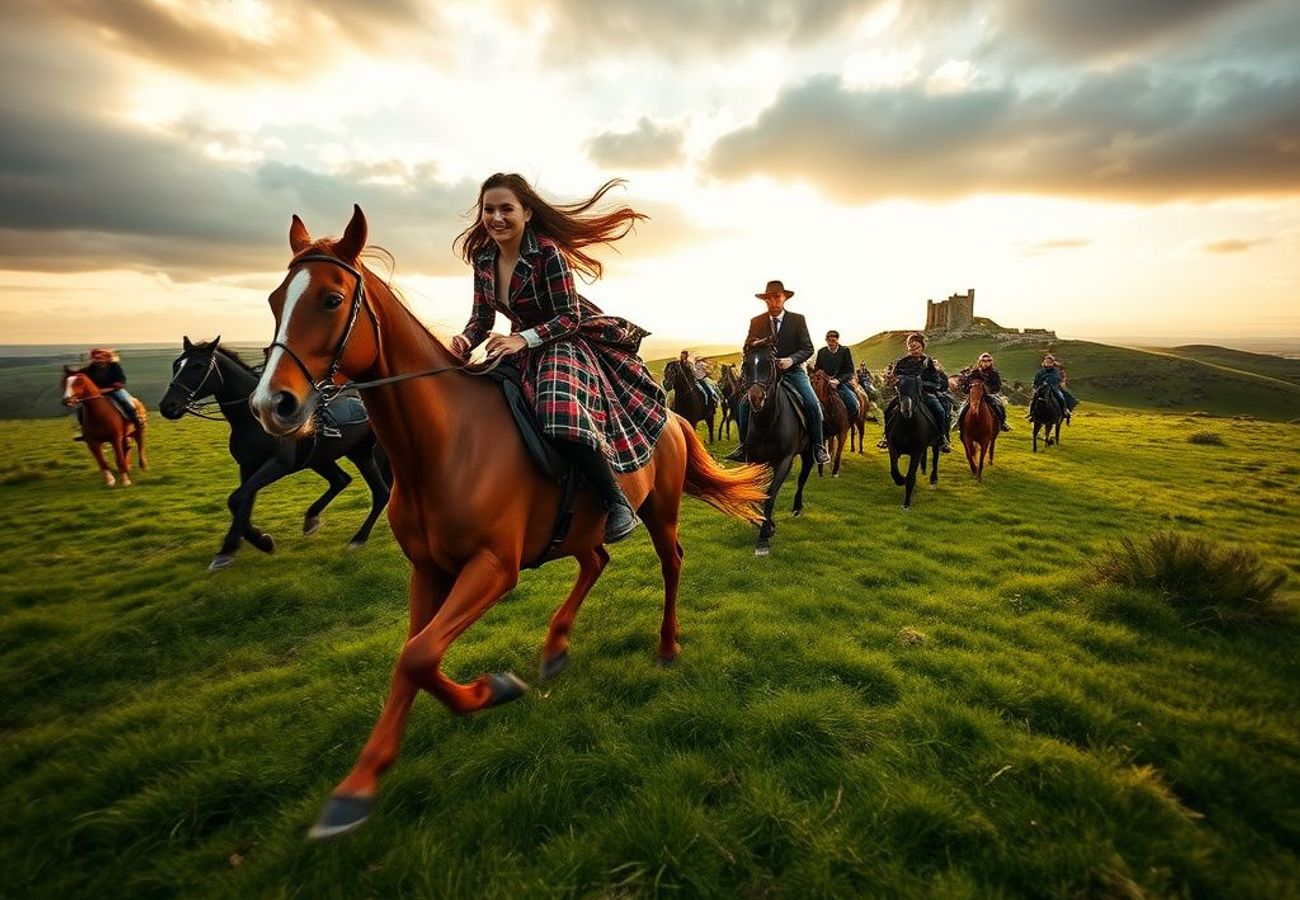
Image generated by AI
Every summer, over a dozen Scottish border towns transform into thundering cavalcades of history. Hundreds of horseback riders—mostly locals—charge across rolling moorlands, their hooves echoing centuries of warfare, rebellion, and clan legacy. These are the Common Ridings, among the world's oldest and largest equestrian festivals, a living, galloping monument to Scotland's violent fight for independence that stretches back to the late 13th century.
But here's what makes them truly magnetic: they're not stuffy heritage reenactments. They're visceral, chaotic, and deeply personal to the communities that stage them each year.
When Borders Burned: The Origins of Common Ridings
The story begins in blood and territory. After Edward I's invasion of Scotland in the late 13th century sparked the Wars of Scottish Independence, the Scottish Borders became a lawless, bleeding frontier. For approximately three centuries, locals patrolled their town boundaries obsessively—not for sport, but for survival.
The violence was staggering. The Battle of Flodden in September 1513 remains etched in regional memory as particularly horrific. King Henry VIII's English forces massacred thousands of Scots in a single day. Many modern Common Ridings directly commemorate this massacre or other defining clashes.
"It's absolutely packed with people, lining both sides of the River Tweed," says Yvonne Keddie, chairperson of The Braw Lads' Gathering in Galashiels, a village of 10,000 residents located 33 miles southeast of Edinburgh. "It's majestic—hundreds of horses crossing this river known around the world."
The Reivers: Scotland's Dark Underbelly
Here's where the narrative gets morally murky. During this same era, violent raiders called the Reivers rode across the Anglo-Scottish border under cover of darkness aboard hardy Hobbler ponies. What started as independence-driven clashes soon devolved into something uglier: cattle rustling, murder, and clan-based marauding driven purely by family loyalty.
These Reiver surnames—Armstrong, Bell, Kerr, Beatty—became synonymous with borderland chaos. Reiver lawlessness peaked in the 100 years before James VI of Scotland ascended the English throne in 1603, becoming James I of England. The new monarch responded with brutal efficiency: he conspired with local chieftains and exiled the worst offending clans entirely. Many were forcibly transported to Ulster (Northern Ireland) during the Plantation of Ulster colonization program beginning in 1609.
Reddit: "The Scottish Borders feel like living history. You walk around and realize the violence here shaped an entire nation's identity." — r/ScottishHistory
Modern Celebrations: From Victorian Nostalgia to Living Tradition
Victorian-era border towns began formalizing their oral histories into annual Common Riding festivals. What started as commemorative parades evolved into weeks-long celebrations. Today, approximately 15 towns participate, each with distinct ceremonial leaders, historic names, and closely guarded traditions.
Hawick (pronounced "hoyk") stages the largest and longest festival—five weeks of thundering ride-outs culminating in a scene of raw emotional power. The town's elected Cornet leads hundreds of riders back to the town square while thousands sing "Teribus," Hawick's ancient war cry from the Battle of Flodden, accompanied by bagpipes that make your chest ache.
In Galashiels, the elected Braw Lad and Lass command a cavalcade through town to re-enact the Raid Stane—a 1337 skirmish where local men overcame English invaders near a wild sour plum tree. The town's emblem? That very sour plum. Before crossing the River Tweed in a final charge, thousands of supporters gather at Galafoot Bridge, Gala Hill, and Scott Street.
"There's an old saying: 'they're the same, but they're different,'" explains Gordon Keddie, former Braw Lad (1972) and past president of the Braw Lads' Gathering. "We've all got the same history behind us, but every town celebrates a different part."
Walking Through the Battlescars
The region itself is a living museum of Border conflict. Just outside Branxton village, the Flodden 1513 Ecomuseum sits next to the actual battlefield where 10,000 Scots fell. The 60-mile Border Reiver Trail winds through stark, beautiful landscapes past landmarks including the Armstrong clan's notorious Gilnockie Tower and Langholm Castle.
Smailholm Tower—perched dramatically near Kelso—and the grimly atmospheric Hermitage Castle (about five miles north of Newcastleton) both exhale this embattled history. The Borderlands Museum in Hawick houses privately owned Iron Age through Reiver-era artifacts.
Sir Walter Scott, the renowned 19th-century novelist, was himself a Reiver descendant. His magnificent home, Abbotsford, sits just two miles east of Galashiels. For ancestry travelers, the Scottish Borders Archives and Registration Service in Hawick offer genealogical resources that can trace clan lineages back centuries.
Joining the Charge: How to Experience Common Ridings
For serious equestrians, mounting up during a Common Riding is the most authentic way to absorb this history. Cathy Joyce of Eventful Riders guides experienced riders through the events with meticulous horse-to-rider matching. Her philosophy: "Better felt than telt"—it's superior to experience these rides firsthand than merely hear about them—plus the safety mantra, "Safe in, safe out."
But fair warning: herd instinct kicks in when hundreds of horses gallop together across open moorlands. Faster events in Hawick can overwhelm even experienced riders.
Lauder, a town of 2,000 located 27 miles southeast of Edinburgh, closes the season with its Common Riding on the first Saturday in August. It's one of the oldest, smallest, yet most social festivals—preceded by duck races, fun rides, and brass-band parades. Crucially for ancestry travelers, it's considered a gentler ride suitable for less aggressive riders.
About 15 towns now participate in these festivals annually from late spring through August, each maintaining distinct traditions. According to heritage tourism data, these events now attract thousands of visitors annually alongside local participants.
Planning Your Common Ridings Adventure
The festival season runs from late May through early August, with Hawick's five-week extravaganza dominating summer. Towns including Peebles, Lauder, Langholm, and Galashiels each stage their signature events.
Accommodation fills quickly. Book lodging in Edinburgh (33 miles from Galashiels) well in advance, or stay in smaller border towns themselves. The landscape demands exploration—rent a car to access battlefield sites, towers, and the Border Reiver Trail.
Consider attending both as spectator and rider. The communal singing, bagpipe wails, and thundering hooves create an atmosphere that photographs cannot capture. You're witnessing not heritage theater, but active cultural continuity—communities still physically embodying their ancestors' desperate patrol routes, still honoring the violence that forged their identity.
Scotland's Common Ridings prove that some histories demand more than monuments—they demand to be ridden.
Related Travel Guides
Disclaimer
This article is for informational and educational purposes only. It does not constitute legal, financial, or professional advice. While we strive to provide accurate and up-to-date information, travel policies, regulations, and conditions change rapidly. Always verify information with official sources before making travel decisions. Nomad Lawyer makes no representations about the accuracy, reliability, completeness, or suitability of the information provided. Readers should consult qualified professionals for advice specific to their circumstances. The views expressed in this article are those of the author and do not necessarily reflect the views of Nomad Lawyer.
Preeti Gunjan
Contributor & Community Manager
A passionate traveller and community builder. Preeti helps grow the Nomad Lawyer community, fostering engagement and bringing the reader experience to life.
Learn more about our team →