
Travel Chaos Plagues North America: 486% Corporate Surge Triggers Massive World Cup Flight Cancellations Across San Francisco, Chicago, and Toronto: Airline News
As the 2026 World Cup overwhelms North American aviation capacity, severe travel chaos and rolling flight cancellations paralyze major transit hubs like San Francisco, Chicago, and Toronto.

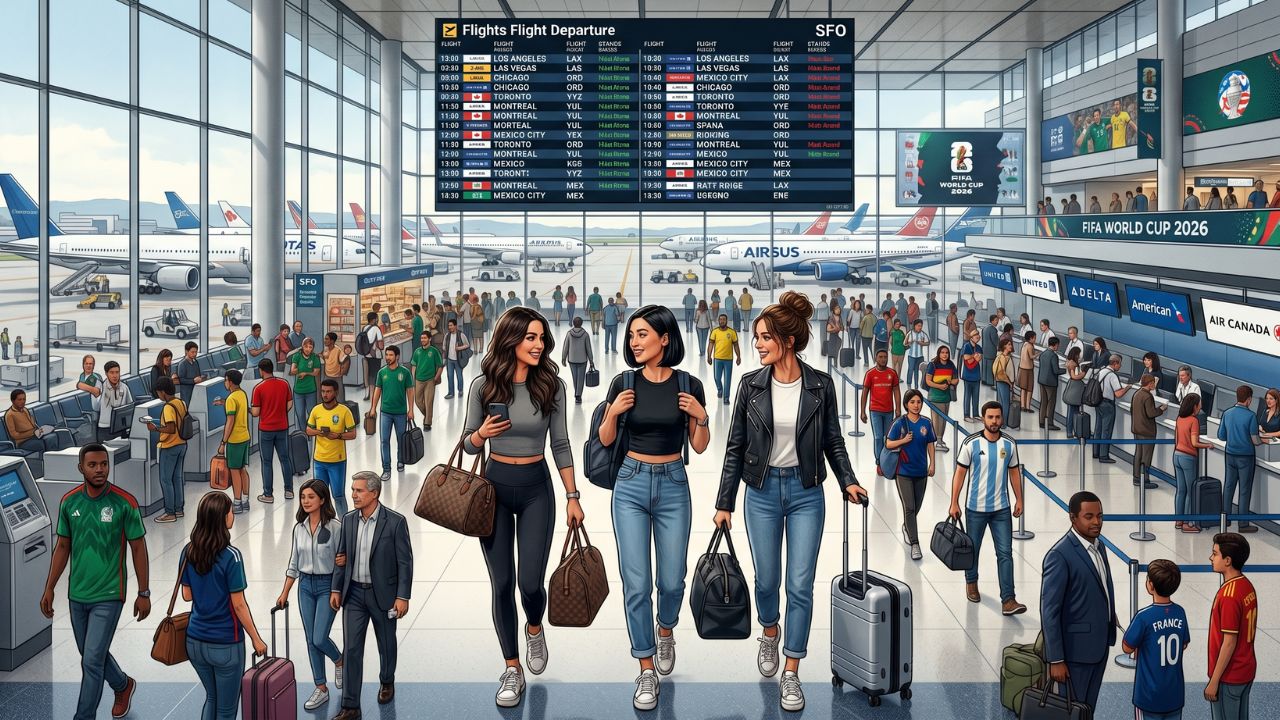
Image generated by AI
In a massive, system-wide infrastructure collapse that has instantly triggered paralyzing travel chaos across North America, the 2026 FIFA World Cup has shattered international aviation capacity. Reported on June 20, 2026, as stranded corporate executives and desperate football fans frantically monitor the latest airline news for an escape from sudden flight cancellations and agonizing terminal overcrowding, massive legacy hubs are buckling under the sheer weight of global tourism. With official data revealing that San Francisco, Las Vegas, Chicago, Toronto, and Montreal are operating far beyond absolute maximum thresholds, the continent is experiencing unprecedented airport disruptions. For passengers attempting to navigate this massive logistical nightmare, understanding these exact transit chokepoints is the only tactical method to bypass today's breaking aviation updates.
By introducing direct passenger coordination and dynamic scheduling backups, the regional aviation hubs target growing passenger demand across vital commerce sectors. The choice to coordinate flight departures in phases helps to manage gate capacity, supporting the country's broader regional transportation network.
Context: Eradicating the Mega-Event Gridlock
For the modern traveler, navigating North American airspace during a massive, continent-wide sporting event is routinely an exercise in mitigating extreme vulnerability and cascading transit failure.
Historically, the aviation network absorbs summer surges through calculated capacity expansion. However, the fundamental driver behind this historic capacity crunch is a stark mathematical failure by the airlines. The 2026 World Cup is the most logistically ambitious tournament in history, expanding to 48 national teams playing 104 matches. Despite this massive influx—with 65% of travelers booking extensive 6-to-12-day itineraries and spending upwards of $5,000 per trip—scheduled US airline capacity increased by a microscopic 0.6% compared to 2025, while Canada saw a mere 4% growth. This lethal deficit of available seats has transformed the entire continent into a massive travel chaos zone. Because direct routes to primary host cities instantly sold out, international fans are building highly fragmented, complex itineraries through secondary hubs, pushing airports like Chicago and Montreal into catastrophic operational failure and sparking a wave of rolling flight cancellations.
To view live flight schedules, verify the active deployment of emergency relief capacity, or to track potential route restorations prior to heading to the airport, travelers must consult official aviation directories. For direct updates regarding how this massive transit meltdown might shield your itinerary from current flight cancellations out of major host cities, travelers should aggressively utilize the official digital portals of major North American carriers. To explore live flight tracking and monitor the exact severity of the cascading bottlenecks paralyzing alternative airspace, passengers can consult the official FlightAware tracking service.
Section-Wise Breakdown: The Tactical Bypass Strategy
Toronto and San Francisco: The Host City Meltdown
As official host cities, Toronto and San Francisco have completely shattered their preliminary operational projections, descending into severe airport disruptions. At Toronto Pearson International (YYZ), a terrifying corporate travel surge has caused hotel and flight booking volumes to skyrocket by 295%, with total corporate spend surging an astonishing 486%. Standard leisure travelers are entirely locked out of the Canadian airspace. On the West Coast, San Francisco International (SFO) is absorbing a massive shockwave from the APAC market. With South Korea (4.1%) and Japan (3.9%) dominating international inbound bookings, and the tech sector driving 51% of all booking spend (pushing average hotel costs to a staggering $1,641), SFO is facing severe terminal gridlock.
The Unlikely Frontlines: Chicago and Montreal
The most terrifying aspect of this travel chaos is the collapse of cities not even hosting matches. Chicago O'Hare (ORD) is buckling as the primary transit corridor for the UK market (which leads all source markets at 19.5%). Because regional direct flights into Dallas (+42% booking surge) and Kansas City (+27%) are entirely exhausted, fans are desperately routing through ORD, completely overwhelming its summer capacity. Similarly, Montreal-Trudeau (YUL) is absorbing massive transatlantic European arrivals because East Coast hubs like Boston (up 17%) are fully saturated, turning Montreal into a highly volatile transit chokepoint.
Las Vegas: The "Shadow Host" Bleisure Crisis
While Allegiant Stadium is not hosting official matches, Las Vegas (Harry Reid International Airport) has become the ultimate "bleisure" epicenter, creating massive localized airport disruptions. Fans are flying into Vegas before transiting to Los Angeles, driving Saturday stayovers from 44% to 52% and causing total flight and hotel bookings to explode by 163%. The corporate shockwave—characterized by professional services spend jumping 130% and booking windows stretching to a massive 119 days in advance—has effectively transformed Las Vegas into a shadow host city buckling under World Cup logistics.
Technical Roster: Official World Cup 2026 Aviation Impact Matrix
To ensure absolute factual accuracy regarding the exact booking surges, financial metrics, and severe capacity deficits defining this massive aviation collapse, the following matrix details the strictly verified data:
Official World Cup 2026 Aviation Impact Matrix
| Affected Hub | Verified World Cup 2026 Operational Impact Data |
|---|---|
| San Francisco (SFO) | Avg hotel cost $1,641; South Korea (4.1%) & Japan (3.9%) top inbound APAC markets; Tech sector 51% spend |
| Toronto (YYZ) | Corporate booking volumes up 295%; Corporate spend surged 486%; Booking window expanded to 119 days |
| Chicago (ORD) | Primary transit for UK market (19.5% inbound); Spillover from Dallas (+42%) and Kansas City (+27%) |
| Montreal (YUL) | Primary European transit hub due to East Coast capacity exhaustion (Boston bookings up 17%) |
| Las Vegas (LAS) | Total bookings surged 163%; Saturday stayovers increased to 52% |
| System-Wide Capacity | US scheduled capacity up only 0.6%; Canada capacity up 4%; 65% of travelers staying 6-12 days |
Data accurately reflects the verified booking percentages, corporate spend surges, and severe scheduled capacity deficits tracking the North American aviation network during June/July 2026.
Industry Analysis: The Lethal Bleisure Displacement
Aviation analysts monitoring the intensely volatile North American transit market note that the current travel chaos is severely exacerbated by the aggressive "bleisure" travel trend.
Analysts emphasize that global enterprises have weaponized the World Cup for client entertainment, deploying executives who are entirely price-insensitive. These corporate travelers booked their Toronto flights an average of 119 days in advance (up from the standard 69 days), actively displacing regular passenger traffic and draining the network of all available excess capacity. The strain has now catastrophically spilled over into private aviation, with Fixed-Base Operators (FBOs) entirely locked down on a strict first-come, first-serve basis. Because airlines failed to inject adequate supplementary flights (yielding only a 0.6% US capacity increase), the network has zero pressure valves left. Any minor disruption—such as a summer thunderstorm over Chicago or a ground stop in San Francisco—will instantly trigger massive, cascading flight cancellations that will trap thousands of passengers for days.
Actionable Advice for North American Travelers
Because this massive operational failure fundamentally alters the logistics of domestic and international transit, all passengers must execute this strategic booking checklist immediately:
- Abandon Major Transit Corridors: If you are flying domestically in the US or Canada during June and July, absolutely refuse to connect through Chicago O'Hare (ORD) or Montreal (YUL). These airports are currently absorbing massive international spillover. Route your connections through secondary Southern or Pacific Northwest hubs to completely bypass the severe travel chaos paralyzing the primary World Cup transit points.
- Avoid the Corporate Bleisure Hubs: Unless absolutely necessary, do not fly into San Francisco, Toronto, or Las Vegas. The 486% corporate spend surge and the 163% booking increase in Vegas mean that if your flight experiences a cancellation, there are literally zero hotel rooms available for rebooking. You will be stranded in the terminal.
- Prepare for the Knockout Stage Shockwave: The travel chaos is about to escalate. As teams are eliminated during the knockout stages, massive reactionary waves of sudden departures will occur, while advancing teams will generate rapid inbound bookings. You must secure your flights immediately and aggressively utilize airline applications to monitor for sudden equipment swaps or last-minute flight cancellations.
FAQ: World Cup 2026 Aviation Crisis
Why are US and Canadian airports experiencing massive travel chaos?
Airlines failed to add enough capacity (only a 0.6% increase in the US) to handle the massive influx of fans and corporate travelers arriving for the 104 matches of the expanded 48-team 2026 FIFA World Cup.
Which non-host cities are severely impacted by flight cancellations?
Chicago, Montreal, and Las Vegas have become massive transit chokepoints, absorbing international spillover as direct flights to host cities rapidly sold out.
How is corporate travel worsening the airport disruptions?
Corporate travelers booked flights up to 119 days in advance and increased booking spend by 486% in cities like Toronto, completely displacing standard leisure travelers and locking down private aviation terminals.
The Reality of Systemic Infrastructure Collapse
The massive, continent-wide travel chaos triggered by the 2026 World Cup proves definitively that legacy aviation infrastructure cannot absorb mega-events without severe, proactive capacity intervention. By failing to inject supplementary flights, airlines have successfully guaranteed that regular passengers and international tourists alike will suffer the terrifying gridlock and route volatility of a completely saturated network. Yet, as passengers frantically attempt to navigate Chicago or Montreal to reach the knockout stages, they must accept a critical new reality: surviving the massive disruptions of modern global commerce demands tactical routing. Navigating the highly compromised North American airspace requires a complete refusal to accept layovers in saturated transit hubs, and the absolute discipline to actively bypass cities currently paralyzed by corporate booking surges and rolling flight cancellations.
Key Takeaways
- Massive Capacity Deficit: US airline capacity increased by only 0.6%, leading to massive flight cancellations as 65% of World Cup travelers attempt 6-to-12-day itineraries.
- Corporate Takeover in Toronto: Corporate hotel and flight bookings surged 295%, with overall corporate spend increasing by an astonishing 486% in the Canadian host city.
- San Francisco APAC Bottleneck: SFO is paralyzed by inbound Asian travel, with the tech sector driving hotel costs to an average of $1,641 per trip.
- Secondary Hub Collapse: Non-host cities like Chicago (UK transit) and Montreal (European transit) are operating at maximum thresholds, causing severe airport disruptions.
- The Las Vegas Shadow Hub: Las Vegas saw a 163% increase in total bookings and a rise in Saturday stayovers to 52%, acting as a massive bleisure corridor for the Southern California matches.
Related Travel Guides
Massive Travel Chaos Paralyzes Chicago O'Hare with 1,425 Disruptions
Disclaimer
This article is for informational and educational purposes only. It does not constitute legal, financial, or professional advice. While we strive to provide accurate and up-to-date information, travel policies, regulations, and conditions change rapidly. Always verify information with official sources before making travel decisions. Nomad Lawyer makes no representations about the accuracy, reliability, completeness, or suitability of the information provided. Readers should consult qualified professionals for advice specific to their circumstances. The views expressed in this article are those of the author and do not necessarily reflect the views of Nomad Lawyer.
Kunal K Choudhary
Co-Founder & Contributor
A passionate traveller and tech enthusiast. Kunal contributes to the vision and growth of Nomad Lawyer, bringing fresh perspectives and driving the community forward.
Learn more about our team →