
World Cup 2026 Fan Crisis: How Security Lockdowns and Rental Surges Force Traveling Groups Into Shared Stays
World Cup 2026 host cities deploy extreme security gridlocks and vehicle exclusion zones, forcing traveling fan groups to abandon traditional hotels for massive shared rentals across 16 North American venues.

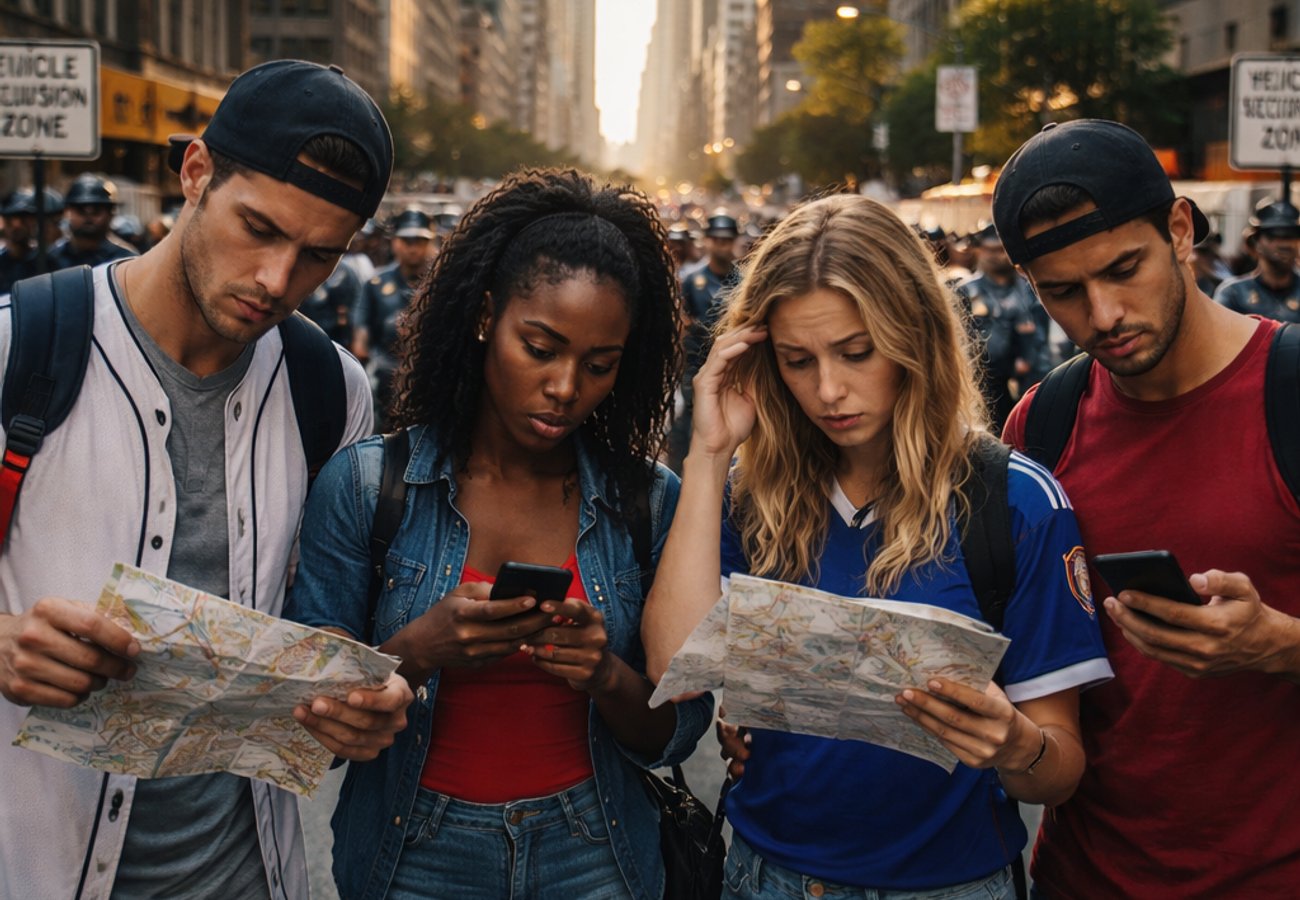
Image generated by AI
The moment your phone buzzes with confirmation that you've scored precious World Cup 2026 tickets, euphoria crashes straight into panic. You refresh your booking app hunting for a simple hotel room near the stadium—and discover they've either vanished or jumped into financial orbit.
For generations, traveling to witness global soccer meant a straightforward playbook: book a flight, secure a comfortable hotel within reasonable distance, grab a rideshare to the stadium, and settle in for unforgettable memories. That classic fan journey just collided head-on with a historic security reality.
Federal Lockdowns Transform Host City Transit Into Fortified Zones
Over 400 coordinated law enforcement agencies across the White House World Cup 2026 Task Force and regional transit ministries have activated sweeping vehicle exclusion zones and intense security gridlocks around match corridors. This isn't theater—it's operational necessity at unprecedented scale.
With 48 national teams competing across three North American countries, metropolitan authorities have deployed extreme vehicular blockades surrounding stadiums, team base camps, and public fan festivals. Standard rideshare networks and private commuter traffic face outright prohibition from core stadium rings. Arriving crowds now depend entirely on heavily regulated public shuttle lines monitored with military-grade precision.
The result? Multi-generational families and lifelong friend groups frantically reorganizing itineraries while major transit avenues snap shut. Watching real people navigate this operational puzzle reveals how differently modern sports tourism operates when security protocols scale to this magnitude.
The Short-Term Rental Explosion Nobody Predicted
Here's where the real disruption lives: demand for alternative lodging across the 16 official host cities is pacing over 15 percent higher than previous seasonal records, with specific match dates seeing demand spikes averaging 66 percent above normal.
Reddit: "We booked for Group 3 tickets and our usual hotel chain has literally no availability. Ended up with 12 people splitting a four-bedroom Airbnb two miles from the stadium. The coordination nightmare is real." — r/travel
Short-term rental analytics firms document how this unprecedented surge has essentially transformed individual properties into live, high-pressure tournament infrastructure. Traditional hotel blocks faced unexpected room releases and sudden adjustments from organizers, forcing visiting fans to pool resources into large shared houses and dorm-style rentals.
This creates cascading coordination headaches: room distributions, expense splits, shifting match-day schedules, and navigating localized transit changes—all after the booking confirmation lands. Groups that planned six-month vacations now scramble to reorganize sleeping arrangements 72 hours before kickoff.
New Stadium Rules and Heat Mitigation Reshape Match Day
Federal safety coordinators have modified stadium entry requirements with controversial new protocols designed to safeguard against emerging global risks. The policy drawing most fan frustration? A strict prohibition on refillable water bottles inside venues.
Security compliance briefs cite concerns regarding frozen containers being weaponized. But here's the operational tension: several unshaded stadiums will experience extreme summer heat indexes. To compensate, organizers are rapidly deploying dedicated public hydration stations to prevent heat exhaustion across the 39-day tournament.
Simultaneously, law enforcement divisions are deploying a $625 million federal funding injection to establish high-visibility patrols across peripheral restaurant and entertainment zones. This creates an ironclad security perimeter—but also an unmistakable fortress atmosphere that transforms casual fan exploration into carefully monitored movement.
The Accommodation Market Fractures Into Winners and Losers
The structural redistribution of sports tourism demand is reshaping entire regional economies in real time. Traditional domestic hotel chains in secondary cities are experiencing softer-than-expected reservation volumes due to elevated ticket pricing and international visa processing barriers. Meanwhile, short-term rental marketplaces are capturing record-breaking financial rewards across primary metro corridors.
Group transit providers are rapidly expanding fleet allocations for specialized private charter buses to bypass public terminal bottlenecks. Independent safety apps are witnessing record download waves from travelers seeking real-time neighborhood verification logs before arriving in unfamiliar cities.
The old-school approach of uncoordinated holiday planning has completely dissolved. Modern sports tourism now demands an emergency-focused strategy for distributing millions of arriving passengers across fragmented accommodation networks.
Legal Defense Networks Mobilize to Protect Vulnerable Populations
As security clampdowns intensify across host communities, civil rights monitoring attorneys have flagged a critical concern: the tenfold increase in municipal police presence creates real risk that local workers and visiting fans could get caught in overlapping enforcement nets.
International humanitarian coalitions are mobilizing localized support systems to guarantee that heightened security doesn't inadvertently violate civil liberties. Civil rights groups have established certified safe spaces across bars, nightlife establishments, and hospitality venues. Rapid-response attorney hotlines and educational outreach campaigns now run continuously through key sectors.
This legal infrastructure recognizes a hard truth: when a city transforms its streets into tournament-scale security zones, vulnerable populations face amplified scrutiny. Community organizers are fighting to ensure that operational lockdowns preserve basic human rights while maintaining the welcoming spirit of international sportsmanship.
The Bottom Line: Coordination Defines the Match Day Experience
For fans proudly wearing their national colors into packed arenas this summer, success depends on perfect synchronization with local safety directives. High-velocity shuttle lines, advanced crowd-monitoring systems, and real-time digital lodging platforms do far more than protect stadium infrastructure—they respect the immense financial sacrifices made by traveling families while safeguarding neighborhoods from disruption.
This World Cup proves that mega-event infrastructure isn't really about concrete and steel. It's about transparent communication, collaborative civic engineering, and communities that welcome the world while keeping everyone safe.
Stay coordinated, stay informed, and remember: your match-day memory depends on respecting the operational reality your host city has built.
Related Travel Guides
Disclaimer
This article is for informational and educational purposes only. It does not constitute legal, financial, or professional advice. While we strive to provide accurate and up-to-date information, travel policies, regulations, and conditions change rapidly. Always verify information with official sources before making travel decisions. Nomad Lawyer makes no representations about the accuracy, reliability, completeness, or suitability of the information provided. Readers should consult qualified professionals for advice specific to their circumstances. The views expressed in this article are those of the author and do not necessarily reflect the views of Nomad Lawyer.
Kunal K Choudhary
Co-Founder & Contributor
A passionate traveller and tech enthusiast. Kunal contributes to the vision and growth of Nomad Lawyer, bringing fresh perspectives and driving the community forward.
Learn more about our team →