
Wildfire Smoke Disrupts Kalimantan Aviation: 21 Flights Delayed at Supadio Airport in 2026
Wildfire haze across Kalimantan is triggering flight diversions and cancellations, with Supadio International Airport reporting 21 delays as visibility drops below 1,000 meters.

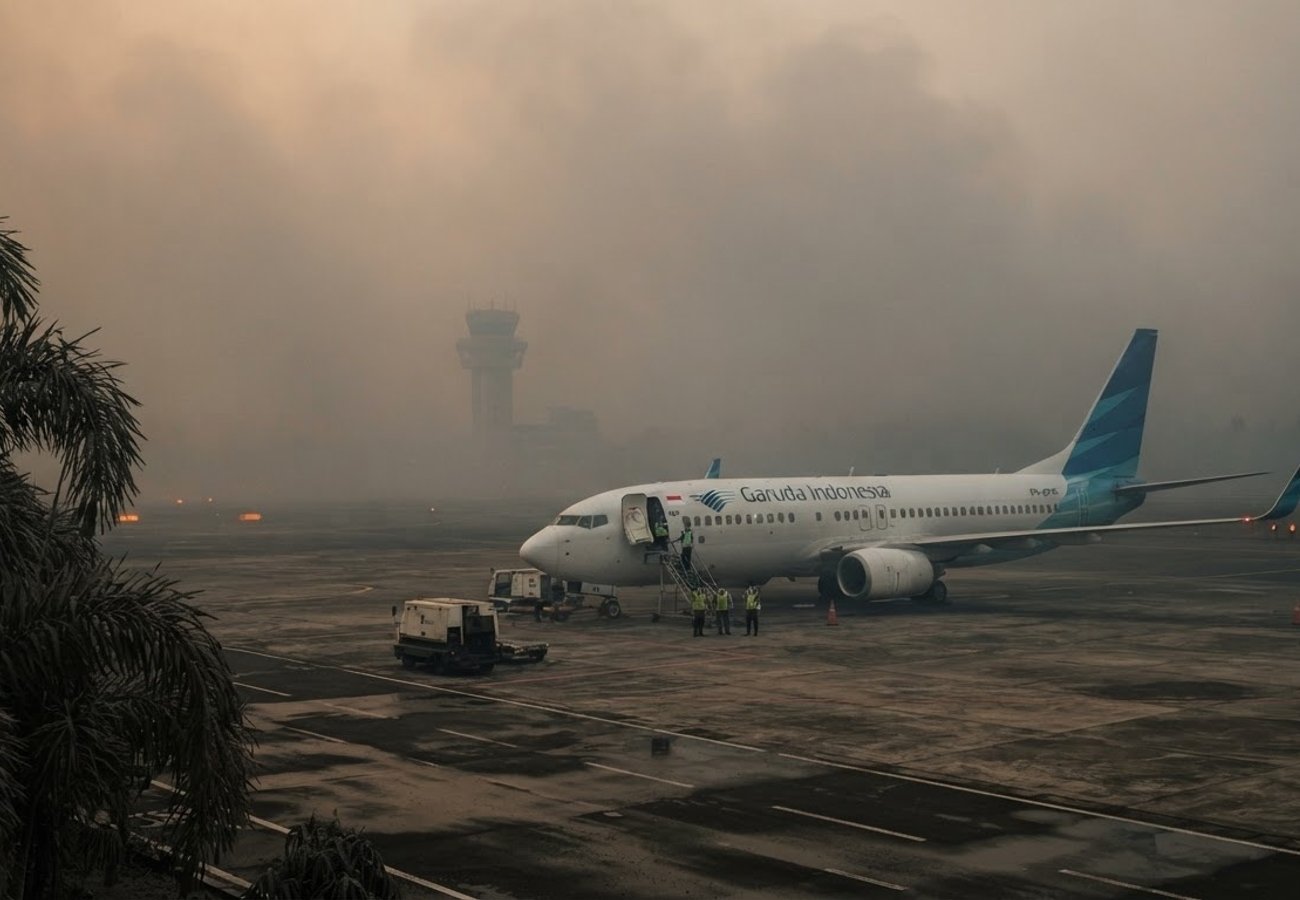
Image generated by AI
Between 18 and 21 August 2026, at least 21 morning flights at Supadio International Airport faced delays as visibility plummeted below 1,000 meters. This systemic disruption across Kalimantan highlights the volatile intersection of seasonal land fires and regional aviation safety.
The Local Trend Revealed: Haze-Driven Aviation Volatility
Kalimantan is currently experiencing a surge in forest and land fires, creating dense smoke plumes that are unpredictably compromising airspace. Unlike scheduled maintenance or weather-related delays, this "haze season" creates a patchwork of operational status across the island. While major hubs may remain open, secondary airports are seeing sudden, total suspensions of service.
The impact is most acute in West Kalimantan. At Supadio International Airport, which serves Pontianak, the disruption is concentrated in the early hours. Data from 18 to 20 August confirms 15 delayed flights, followed by a second wave of disruptions on 21 August. The volatility is high; one Jakarta-bound service was forced to execute a go-around due to poor visibility before eventually diverting to Batam.
Further inland, the disruption scales with the size of the facility. Singkawang Airport in West Kalimantan saw all flights cancelled temporarily as haze pushed visibility beyond safe landing and takeoff limits. In East Kalimantan, Melalan Airport in Melak reported delays of up to 90 minutes for morning and late afternoon departures, as managers opted to hold aircraft on the ground until visibility improved.
Cultural & Environmental Value: The Peatland Crisis
For the visitor, the real impact is seeing how deeply the regional ecology dictates modern mobility. The current disruptions are largely driven by fire clusters near peatlands and agricultural concessions. When these carbon-rich soils ignite, they produce a thick, persistent smoke that traps heat and moisture, often settling near the surface overnight.
This environmental reality creates a specific "morning risk" for travelers. Because daytime heating helps disperse the smoke, flights scheduled for midday or evening are statistically more likely to depart on time. This cycle forces a shift in how regional travel is managed, moving away from rigid schedules toward "rolling assessments" conducted by the Directorate General of Civil Aviation.
The reliance on runway visual range (RVR) and ceiling height assessments means that safety thresholds now supersede schedule reliability. This approach, while frustrating for the passenger, preserves the integrity of the regional aviation network and prevents accidents in low-visibility corridors.
Visitor Insider Tips
Navigating Kalimantan during the haze season requires a strategy beyond checking a flight app.
- The Morning Window: Avoid booking the earliest flights of the day (typically 6:00 AM to 10:00 AM). Smoke concentrations are highest at dawn; midday flights have a significantly higher success rate.
- Strategic Packing: Keep all essential medications and legal documents in your carry-on. Diversions to alternate airports like Batam can result in unexpected overnight stays.
- Health Protocol: While airport terminals are filtered, the transition from curb to gate can expose you to high particulate matter. Use N95 or KF94 masks when moving through the city to avoid "haze lung" or respiratory irritation.
- Alternative Hubs: If you have flexibility, check status at Aji Pangeran Tumenggung Pranoto Airport in Samarinda. As of 21 August, operations there remained normal, suggesting that eastern corridors are currently more stable than the west.
Tourism Outlook
The long-term viability of Kalimantan as a tourism destination depends on the mitigation of these seasonal fires. The current reliance on "conservative decision making" by aviation authorities indicates that until peatland management improves, travel to West Kalimantan will remain seasonal and high-risk during the dry months.
However, the agility shown by airport operators in using real-time meteorological data suggests a growing resilience in the regional infrastructure. As the Directorate General of Civil Aviation tightens its monitoring of smoke plumes, the industry is moving toward a more predictive model of travel, reducing the number of "last-minute" cancellations in favor of planned delays.
Travelers are urged to prioritize flexibility and health safety until the 2026 fire season subsides.
Related Travel Guides
Disclaimer
This article is for informational and educational purposes only. It does not constitute legal, financial, or professional advice. While we strive to provide accurate and up-to-date information, travel policies, regulations, and conditions change rapidly. Always verify information with official sources before making travel decisions. Nomad Lawyer makes no representations about the accuracy, reliability, completeness, or suitability of the information provided. Readers should consult qualified professionals for advice specific to their circumstances. The views expressed in this article are those of the author and do not necessarily reflect the views of Nomad Lawyer.
Raushan Kumar
Founder & Lead Developer
Full-stack developer with 11+ years of experience and a passionate traveller. Raushan built Nomad Lawyer from the ground up with a vision to create the best travel and law experience on the web.
Learn more about our team →